


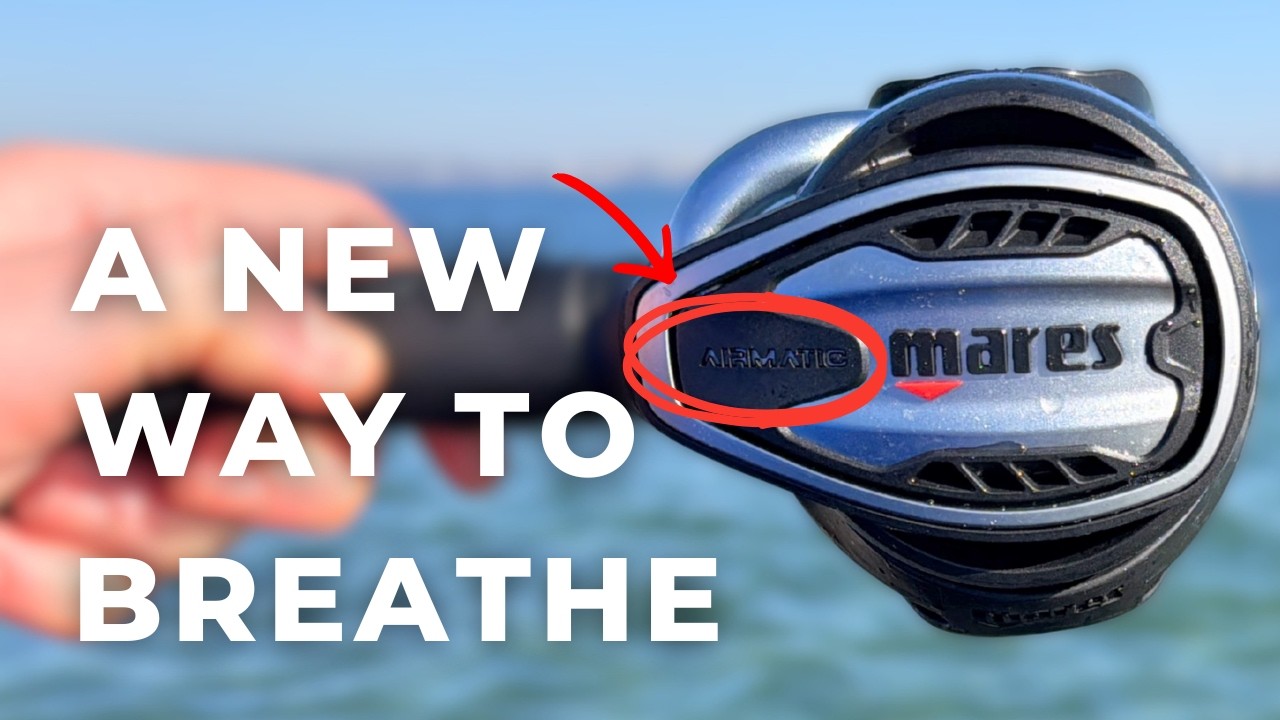


Diving with the Mares Planet 88X TBP and how we tested
We tested the Planet 88X for a month, diving in the Maldives, Turks and Caicos, Mediterranean walls, and cold-water dives with water temperatures at the surface near 32F/0C. In the Mediterranean, we reached depths of 130ft/40m, while in cold water we stayed shallower to focus on free-flow and first-stage performance.
On the Mediterranean dives we dove the regulator with an SPG and a transmitter. In cold water, we did the same plus added a hose for the drysuit inflator. On the tropical Maldives trip, it was just an SPG.
We focused on breathing at depth and under heavy use, cold-water free-flow, hose routing across configurations, comfort on repetitive dive days, and how the sealed first stage performs in real-world use: gear bumping on boat decks, dropped handling, and post-dive rinses.

Performance
Breathing performance
Breathing was smooth and easy at every depth, with almost no effort needed to start each breath.
At 130ft/40m in the Mediterranean, the 88X didn’t have the sudden resistance you sometimes feel with spring-loaded second stages when you breathe hard. The airflow was always steady, whether we were head-up, head-down, or horizontal. Even when we took rapid breaths at depth, it kept up without any issues.
It’s one of the best breathing regulators we’ve tested at DIVEIN. There’s nothing to struggle with, and even a high breathing rate doesn’t overwhelm it.
This really matters when you’re deep, your tank is low, or you’re working hard. At 40ft/12m with a full tank, most regulators feel the same. The real challenge comes when you’re at 100ft/30m or deeper, or with a nearly empty tank and strong currents. That’s when the Planet 88X proves its value.
Cost of ownership and build quality
In a traditional regulator, a spring holds the second stage shut until you breathe in. The Airmatic design uses air pressure from the tank instead. That raised the obvious question for us (and every diver): if airflow is what holds it shut, what happens when there’s no pressure? Will water just flood in?
So we took the whole unit apart to understand it. The upstream airflow controls the valve, and that’s where the smooth, balanced breathing comes from. A small spring is placed only to seal the hose when the reg is depressurized. It has enough tension to close the second stage off from water, but not enough to affect breathing performance. Two jobs, two mechanisms, and it works.
That design pays off in consistency. There’s no spring tension to go out of adjustment, so the regulator stays tuned between services. Balanced regulators slowly drift out of tune as the mainspring tension changes, which is why many tech divers and instructors get their reg breathing checked before a big trip. The Airmatic has no mainspring to drift, so the breathing feel stays the same trip to trip.
The all-metal second stage handles the durability side: gear shuffles on and off boats, occasional drops, and repeated travel without showing wear.
The Auto Sealing Technology (AST) seals the first-stage when the regulator is off the tank, so water and debris can’t get in during rinsing or storage. That’s a durability and cleanliness addition that matters at this price.
Service is the bigger long-term question. Mares lists a 2-year or 200-dive service interval. We’d expect servicing to be the same or cheaper than a traditional balanced regulator, thanks to the simpler design, but that hasn’t been confirmed yet. The service ecosystem is important. Mares is a worldwide brand, so service is available almost anywhere you dive.

Comfort in the mouth
Since it’s a metal second stage, we expected some jaw fatigue, but we didn’t experience any.
Underwater, the regulator felt lighter in the mouth than its 2.75lbs/1.245kg weight suggests. On long or repeated dives, we noticed the weight, but it never became a problem.
Bubble management was clean in normal trim. Looking up is the only position where we noticed exhaust venting more toward the face.
The braided hose and first-stage design helped, too. The hose is flexible enough that it didn’t pull on the mouthpiece when we turned our heads. And the swivel turret gave us enough routing flexibility to keep the hose from fighting us.
Jaw fatigue is one of the most common reasons divers swap regs, and a metal second stage will always be heavier than a polymer one. That’s the cost of cold-water durability.
Port configuration and hose routing
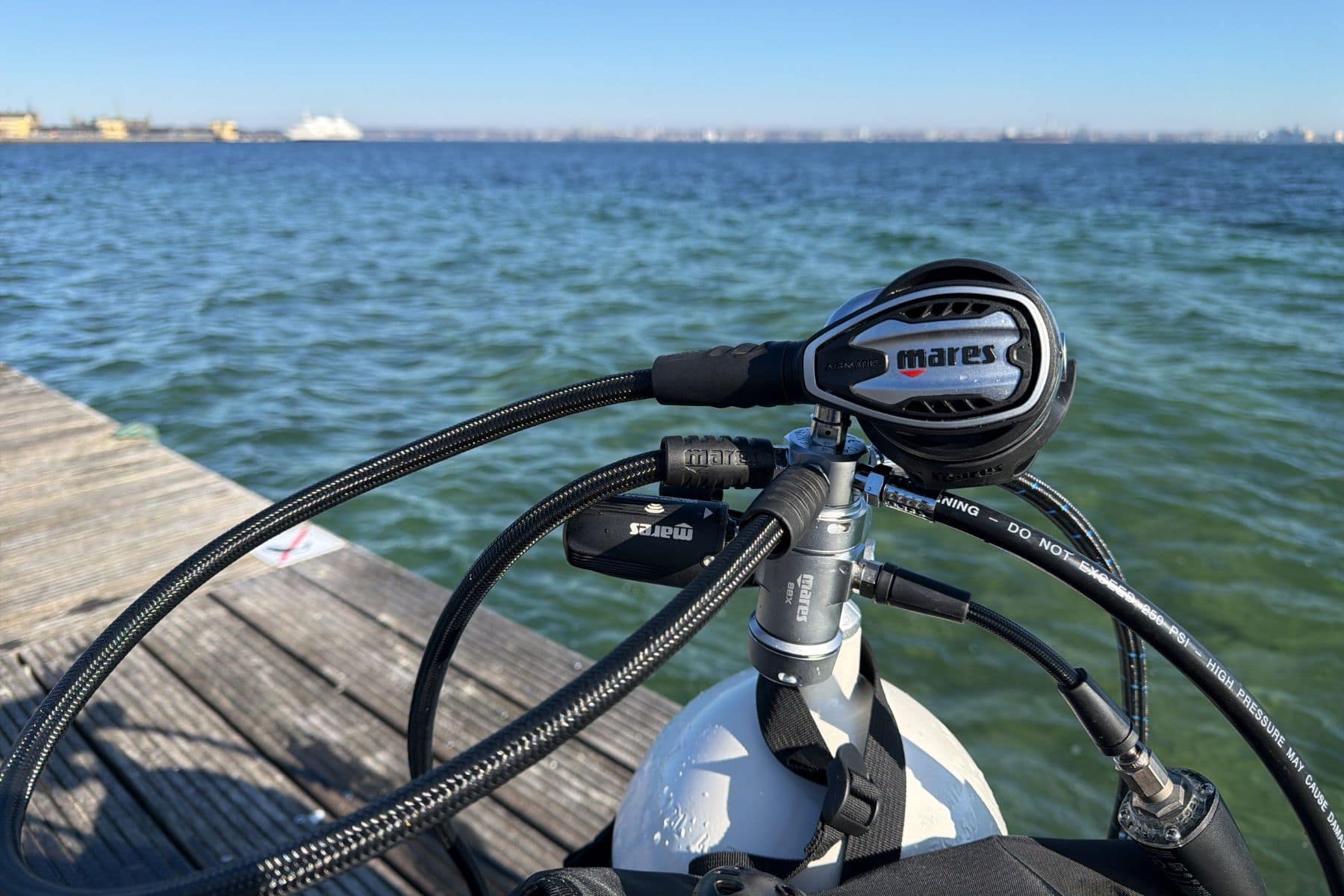
The 88X gives you more routing options than most regs: 360° swivel turret, five low-pressure (LP) ports, two high-pressure (HP) ports angled at a 10° angle.
Swivel turrets are one of the top things divers request when they move to a premium regulator because they let you route hoses without tugging.
Four LP ports sit on the sides of the swivel turret, as well as a 5th LP port that faces in-line with the first stage. Rotate the turret, and you can point hoses almost as you want them. The two HP ports sit at a 10° angle toward the body, which keeps the SPG hose directed toward your body.
In practice, one of the five LP ports is occupied by the over-pressure valve on this unit, leaving four free LP ports. On most of our dives, that’s what you need: primary, octopus, BCD inflator, plus a drysuit inflator on the cold-water dives.

Mares Planet 88X cold-water performance

Cold-water performance is where the Planet 88X really needs to deliver, and it did. With surface temperatures near 32F/0C, repeated purges and heavy breathing didn’t free-flow the regulator.
Though it warmed a bit as we went deeper, no matter what we tried, hard breathing or repeated purges, the regulator stayed smooth.
The sealed first stage with the twin-balanced piston is built for this. The all-metal second stage holds temperature better than a polymer one, helping resist ice buildup that can trigger a free-flow. No reg is truly freeze-proof, but the Planet 88X held up during our test.
Even if you dive mostly in warm water, a sealed first stage is worth the investment because it keeps salt and silt out of the internal mechanism, extending service life and reducing corrosion.

Travel weight and size
At 2.75lbs/1.245kg, the 88X is a heavy regulator, especially compared to travel alternatives. Flying it to the Mediterranean took a substantial chunk of our carry-on allowance.
If you mostly dive in cold water or locally, the extra weight is worth it for the build quality and sealing. If you take only one tropical trip a year, a travel regulator will be easier on your luggage allowance. The Planet 88X is made for serious use, not for traveling light.

Adjustable controls
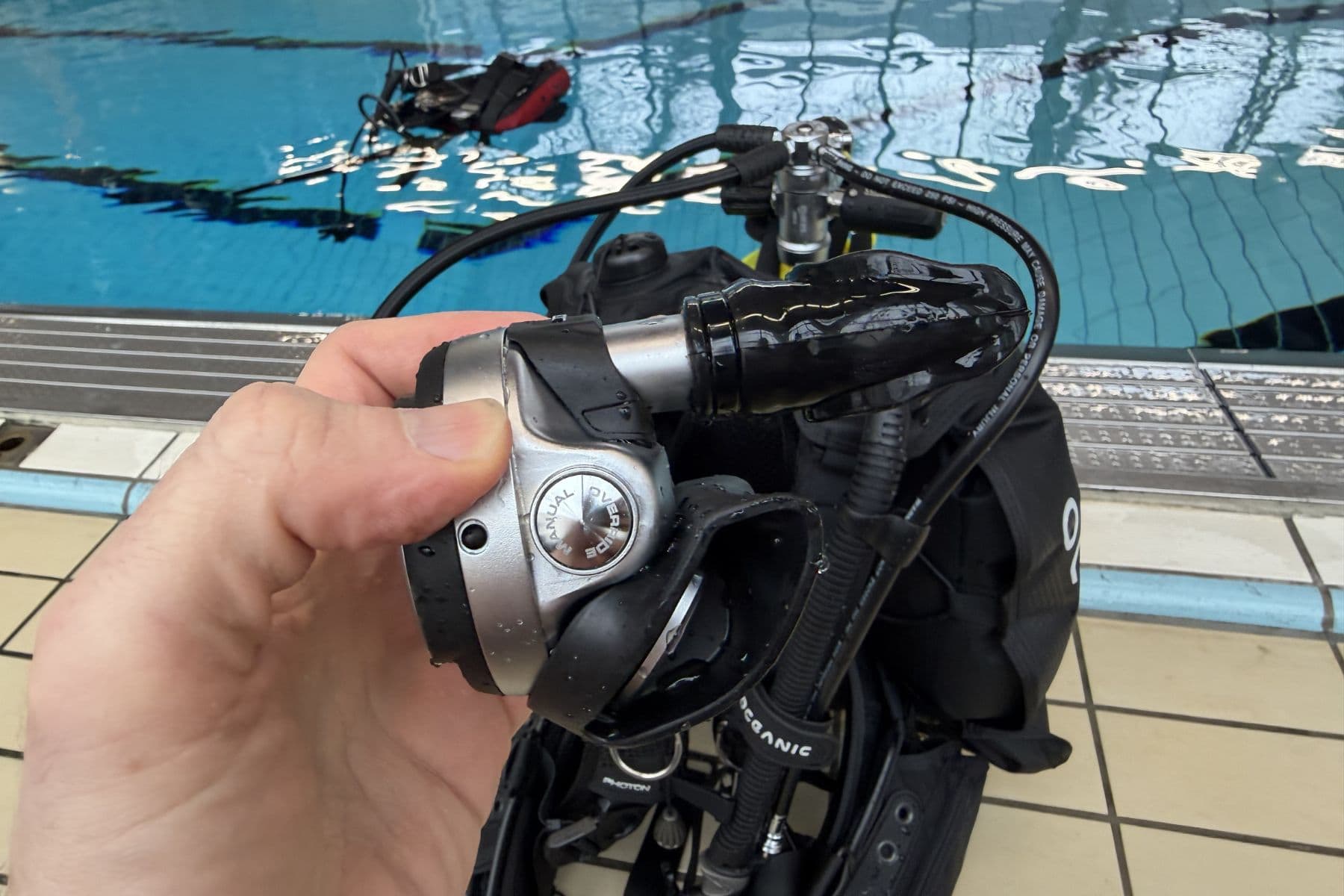
The 88X doesn’t have the usual venturi or resistance knob. Instead, there’s just one override button on the side.
Our hand still reached for the adjustment knob out of habit, but there’s nothing to adjust. The Airmatic design is self-balancing, which means no venturi to prevent surface free-flow and nothing to set between dives. It’s always tuned the same way because the geometry does the tuning. That removes user confusion and technician-setting errors.
The override button is there for a specific failure case. If the first stage releases too much air, the upstream design seals the second stage, instead of free-flowing like a standard regulator. The override button lets you keep breathing while you end the dive. We didn’t trigger this in our testing, but Mares seems to have solved the Upstream issue with good design.
This regulator is different from what most divers are used to. The benefit is that setup is always the same for every dive.
Popular regulator comparisons
The Mares Planet 88X TBP is a cold-water regulator with a pneumatic (uses air pressure instead of a spring) second stage and a sealed twin-piston first stage, setting it apart from most other options. We get into both in the performance section.
If you’re looking at this type of regulator, there are two other models you might want to compare.
Atomic TFX vs Mares Planet 88X TBP
When considering the Mares Planet 88X TBP, you might also look at the Atomic TFX. The TFX stands out for its titanium build and breathing performance. At just 1.58 lbs/720g the TFX is lighter than the 88X and remains a top-performing regulator.
The tradeoff is price. The TFX sits at a completely different price point, well above the 88X. Read our full Atomic TFX review for the details.

Apeks XTX200 vs Mares Planet 88X TBP
If you’re looking at the Mares Planet 88X TBP, the Apeks XTX200 is another good option. The XTX200 is known for its adjustable breathing controls, a venturi switch and a resistance knob you can change underwater. It also has a reversible second stage that switches between right-hand and left-hand routing without tools.
The tradeoff is breathing feel. The Apeks uses a traditional spring-loaded second stage with adjustable controls, so you don’t get the flat pneumatic curve of the 88X. Read more about the Apeks XTX200.
Value for money
If you dive often in cold water or do deep, gas-managed recreational dives, the Planet 88X TBP offers a lot for its premium price. It delivers what many divers want from a top regulator: smooth breathing at depth, a sealed first stage that doesn’t free-flow in cold water, and a design that stays tuned between services. With fewer parts, there’s less that can go wrong.
What you give up is travel-friendly weight and the option to adjust breathing resistance underwater. You’re paying for consistent cold-water performance and a breathing feel that’s the same on dive one and dive 200. If your diving is mostly a once-a-year tropical trip, this isn’t the right fit.

Specs & Features
| Adjustable breathing resistance | No; automatic |
|---|---|
| Cold-water rated | Yes |
| First stage | Sealed twin-balanced piston with Auto Sealing Technology (AST) |
| Second stage | Airmatic pneumatic valve |
| Ports | 5 LP (4 on 360° swivel turret, 1 in-line); two HP (10° angled toward body) |
| Recommended service interval | Two years or 200 dives |
| Tank connection | Yoke or DIN (choose at purchase) |
| Venturi switch | No; automatic |
| Weight | 2.75 lbs/1.245 kg |
Mares Planet 88X TBP FAQ
Airmatic is the name Mares gives its pneumatic second-stage design. It replaces the coil mainspring with air pressure. Instead of a spring holding the valve closed until you inhale, air flowing through the hose keeps the seat sealed. When you breathe in, the pressure balance shifts and air flows.
The result is a flat inhalation curve and a self-tuned feel that doesn’t change between services. A small safety spring remains to close the second stage when depressurized, but it has no role in how the Planet 88X breathes.
The Planet 88X TBP is a sealed cold-water regulator that stayed free-flow-free in 32F/0C surface conditions across heavy breathing, rapid purges, and standard dive stress. The first stage is hermetically sealed with a twin-balanced piston, which is built to resist ice formation.
The all-metal second stage holds temperature better than polymer, which also helps in the cold. No regulator is fully freeze-proof in extreme conditions, but the Planet 88X is built for cold-water use.
A balanced piston first stage delivers constant intermediate pressure no matter what the tank pressure is. That means breathing stays consistent from a full tank down to reserve. A twin-piston design doubles the airflow capacity, which helps during heavy exertion at depth. The hermetic seal on the Planet 88X keeps water and contaminants out, which extends service life and improves cold-water reliability.
The Planet 88X is safe and easy to breathe for a new diver. It’s priced at the premium end and built for cold-water or heavy use. A beginner who mostly dives warm tropical water would get similar breathing comfort from a less expensive regulator. Where the Planet 88X pays off is for divers who dive cold, deep, or often, and want a reg that stays tuned between services.
Both are cold-water regs with sealed first stages at a similar tier. The main difference is the breathing feel. The Planet 88X uses a pneumatic second stage with no mainspring, which produces a flat inhalation curve.
The Apeks XTX200 uses a traditional spring-loaded second stage with adjustable controls. The Apeks has a wider service network and a longer track record. The Planet 88X is a newer design with fewer parts and a longer service interval. Both breathe well in cold water.
The Planet 88X TBP set sits at the premium end of cold-water regulators. Prices vary by retailer and by yoke or DIN configuration. For current pricing, check an authorized Mares dealer.
Mares recommends servicing the Planet 88X TBP every two years or 200 dives, whichever comes first. The pneumatic second stage design has fewer moving parts than a traditional balanced reg, which Mares expects will simplify servicing. A certified Mares technician should do the service.
 Take a moment to look at this.




Looks great would love to try
I would love to try this regulator. I dive a lot in cold water in the UK and find my current regs harder work to breathe compared to air.
I am a new diver. and I am looking for a new regulator for myself. It sounds very promising that this is exactly what I am looking for.