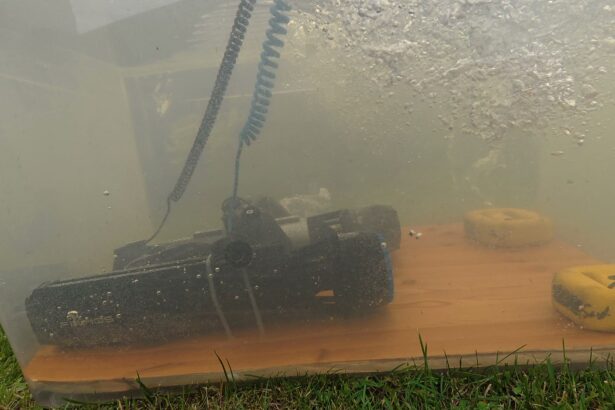



Diving with the Finmos Underwater Scooter and How We Tested

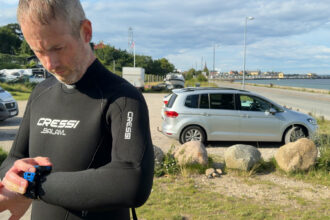
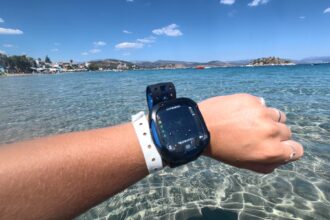
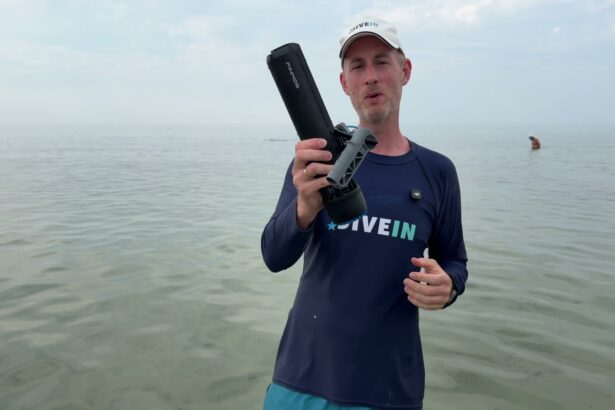
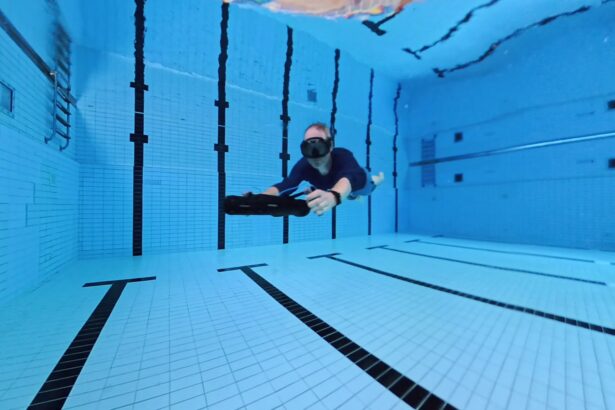
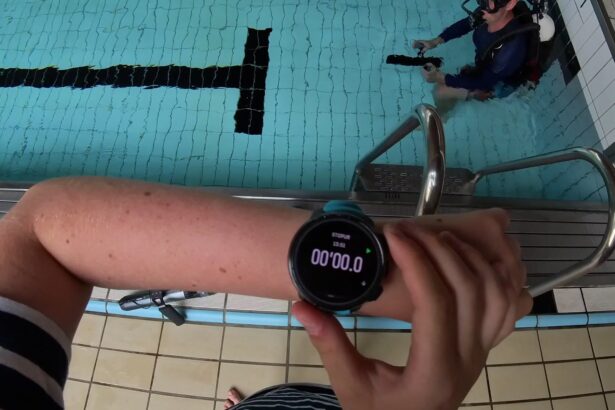
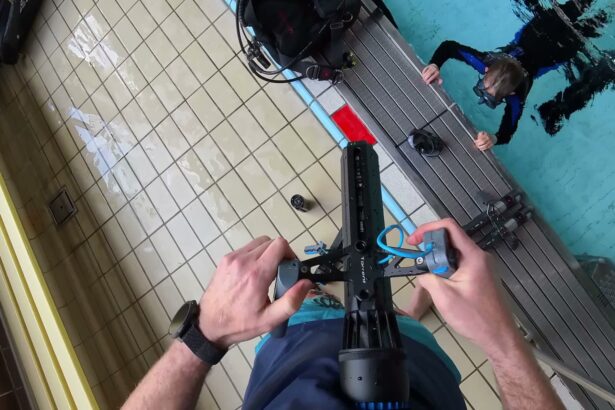
Our unit arrived with two batteries, a small one labeled 99Wh and a 130Wh battery, ahead of the brand’s planned Kickstarter launch. We ran it through the full DIVEIN protocol: full scuba gear, with no gear, and with Carl, our kid tester. Most of the testing took place in pools, including timed sprints over 80 feet (25m) and handling sessions in a 10-foot (3m) pool where both Torben and Carl spent time spinning and flipping it.
Between sessions, we swapped batteries at the pool’s edge, we charged them over USB-C, tested scooter runtime, and broke the unit down to fit in carry-on luggage.
We also took it traveling, which turned into a test of its own. The small battery flew with us without issue. The 130Wh battery was declined at the airport on the first trip because we had not gotten airline approval in advance, and on the second trip the airline rejected our advance application outright.
We focused on speed, battery handling, travel practicality, and whether a brand-new design holds up in real use.
Testing Areas for the Finmos Underwater Scooter
Speed

This is the fastest underwater scooter for its size that we’ve tested. Finmos also sells three battery sizes (we tested two), and the smaller battery delivers the same top speed as the larger one. It just runs out faster. That is different from the Lefeet P1 and Waydoo Subnado, where choosing the smaller battery also lowers the top speed.
At full speed over an 80-foot (25 m) pool, a single unit pulled Torben at 2.1mph (3.4km/h) in full scuba gear and 3.2mph (5.2km/h) with no gear. Carl was the fastest rider in every configuration at 3.7mph (6km/h). Pair two units and the numbers jump: 3.3mph (5.3km/h) in full scuba, up to 5mph (8km/h) for Carl. The same single no-gear trip took 17.2 seconds on the Finmos, against 19.8 seconds on the Waydoo Subnado Plus.
Top runs were done in boost: set the gear selector to red/high, start going, then flip the “gear” once more. Boost only engages while the motor is running, and unlike Waydoo’s Super Gear, which cuts out after 60 seconds, it keeps going for as long as you hold the trigger.
Runtime

Finmos claims 30-60 minutes on the 99Wh battery and 35-70 minutes on the 130Wh.
At full speed, the 99Wh battery lasted 10 min 43 seconds, and the 130Wh battery lasted 14 min 37 seconds. Both runs were in boost, our highest gear setting. Runtime is much longer if you pace yourself or use it on and off in the pool.
There is no automatic step-down to a lower power or “reserve” battery, so it was running all the way to empty.
You’re getting plenty of battery power, especially given the size and speed of this scooter.
Battery: Swap, Cost and Travel

Battery swapping is a easy, and the battery cannot go in the wrong way. One large screw collar runs around the joint where battery meets unit. It needs to go in tight, which takes a moment, but the swap itself is simple: battery off, onto the charger, run the other one (if you have two). Both our batteries, the 99Wh and the 130Wh, are physically identical in size and weight 2.2 lbs. (1 kg); only the capacity differs. That makes mixing sizes easy, so you can use the big battery at home and small battery for flying.
The travel rules are the part to consider, and we learned that the hard way. The small battery flew with us easily since it sits under the 100Wh carry-on limit. The 130Wh needs airline approval, but it was declined at the airport when we had not applied in advance. For a later flight our application was rejected by the airline over battery-fire policy. We know of others who got approval elsewhere with similar-sized batteries, so it’s very much airline-dependent. Finmos also lists a 320Wh battery, which sits well over the 160Wh ceiling and cannot fly on passenger aircraft at all. We do not have that battery and have not tested it.
Charging runs through a bidirectional 100W USB-C adapter, so the battery can also work as a power bank. If you plan to fly with this scooter, buy and pack around the small battery and treat the 130Wh as a home battery unless your airline says yes in writing.
Size and Portability

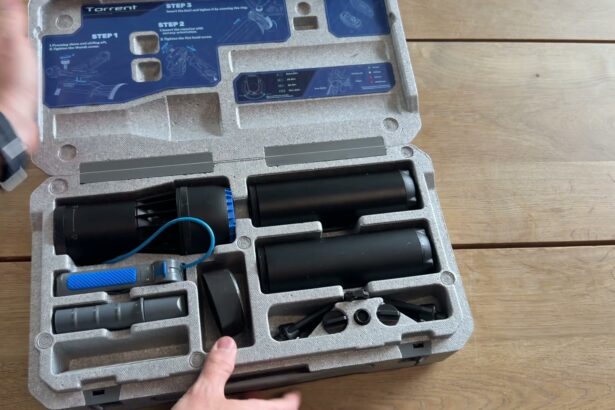
The Finmos offers a lot of power packed into a small size, and because the whole thing comes apart, the portability question answers itself. The full unit weighs 5.3 lbs. (2.4 kg) with a battery fitted, and the propulsion unit alone is just 2.2 lbs. (1 kg). Battery, handle, rail, and handles all detach, so you pack it as small as you want. We packed it and flew with it.
Against the segment, it holds up well: it’s a bit narrower than the Lefeet P1 and about the same length, and far smaller than the heavier DPVs. On a dive, it stashes well, too. It is light enough to clip to your tank or BCD on a carabiner and pull out when you want it.
Ease of Use and Handling

Steering is as easy as any underwater scooter we have used: you turn it and you turn. The controller flips to either hand, your index finger rides a step-less trigger, and your thumb steps through three gears shown by indicator color, green for low, yellow for medium, red for high. Flip once more in red and boost engages as blinking red. The trigger responds the moment you pull, and the prop stops as soon as you let go.
We spent a session in a 10-foot (3 m) pool doing spins, flips, and reverse flips. It steers fine in full scuba gear and stays predictable at full speed. Carl, who has ridden plenty of scooters but is still only 11 years old, never had a control issue.
The handling note on the double setup: our unit shipped with single remotes only, so riding two units meant one controller in each hand, each throttling its own motor. A dual remote appears to be coming, but we could not test it.
Build Quality and Flood Resistance

Flooding has not been an issue at all. The screw collar seats properly; the battery connects firmly every time; and both the propulsion unit and the batteries carry an IPX8 rating with a 197-foot (60 m) depth spec. The core build feels as solid as the top-tier scooters we have tested, and it feels like a product that will actually last.
You can tell it is a new brand in the details. The handles look and feel more 3D-printed than production-molded, which reads as a finish issue rather than a strength worry. The rails are metal and sturdy, and every screw is solid metal threading into metal, not plastic into plastic.
One design feature stands out: the handle position is adjustable. The handles attach to the side of the top rail and rotate 360°, so you can line them up with the body or hold them like a standard rail. We do not know another scooter that can do that, although the adjustment mechanism itself is the part that feels most plasticky. Our one real complaint is the wired controller connector, which is so hard to detach that unplugging it felt like breaking the system.
Safety

When you release the trigger, it stops instantly, and that is exactly what you want around kids and snorkelers. The prop guard keeps fingers out, especially smaller fingers, and a leash comes in the box and clips to the handle.
Check your battery often. The scooter runs at full speed right up to the moment the battery dies. There is no step-down to lower power. Watch the indicator and head back before it runs out.
Drop it, and it sinks, so use the leash. It is light enough that swimming it back is possible, unlike heavier small scooters.
There is no child speed lockout, so a parent’s thumb sets the gear and a parent’s judgment sets the limits.
Versatility and Mounting

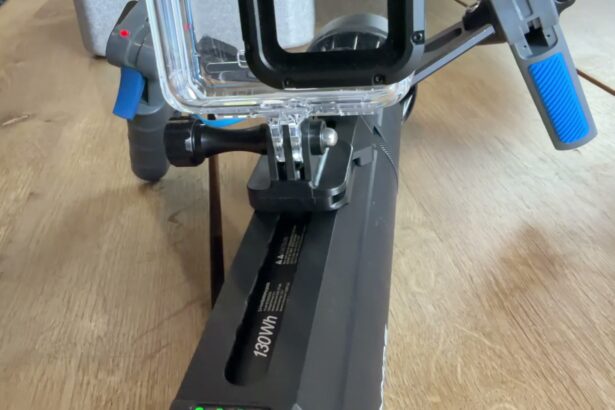
The Finmos has plenty of mounting options, though the Waydoo and Lefeet ecosystems still carry more accessories overall. The Finmos runs as a single or pairs into a double, there is a scuba tank mount among the accessories, and the camera mount is the highlight: it slides up and down the top rail, so you place your action camera exactly where you want it instead of where a fixed mount dictates. Everything arrives in a box that keeps the whole kit in one place.
Finmos markets a wider ecosystem around the same battery, including an outboard-motor conversion and a dive light. We have not tested those, and the dive light as shown looks too bulky to hold. It would make more sense built as a canister setup with the battery on the rig. One battery powering several devices is still a good idea.
Maintenance
Maintenance is the same routine as most other underwater scooter, and it is hard to get wrong. Rinse well after use and run the motor while rinsing so water flushes through everything. The O-rings sit on the battery joint, where the screw collar makes them easy to see and check.
With heavy use, especially in public pools, hair winds into the propeller, so the ability to pull the prop off to clear it is one of the most useful care features on the Finmos.
Noise

It is definitely noisy for an underwater scooter: clearly audible in the water and loud enough that you would hear it on video. Within the segment that is normal. It produces about the same noise as the other scooters in this class, so treat it as par for the course rather than a flaw.
For photo and wildlife use the usual advice applies: drop to the lowest gear or let go and drift the last stretch toward whatever you came to see. A side-by-side listen against the Waydoo Subnado Plus and a fish-reaction comparison are still pending.
Finmos compared to others
The Finmos lands in the portable, travel-first end of the scooter market, where weight, batteries, and flying matter as much as the speed. Its closest rivals are the slim built-in-battery units and the established modular systems.

Waydoo Subnado vs. Finmos
The Waydoo Subnado Plus is for the diver who wants the slimmest possible unit from an established brand with a documented mount ecosystem. It is narrower and lighter at 4 lbs. (1.8 kg), but its 144Wh battery is built-in, which means airline approval paperwork on every flight and no spare-battery option. The Finmos beat it in every matched speed run we timed.
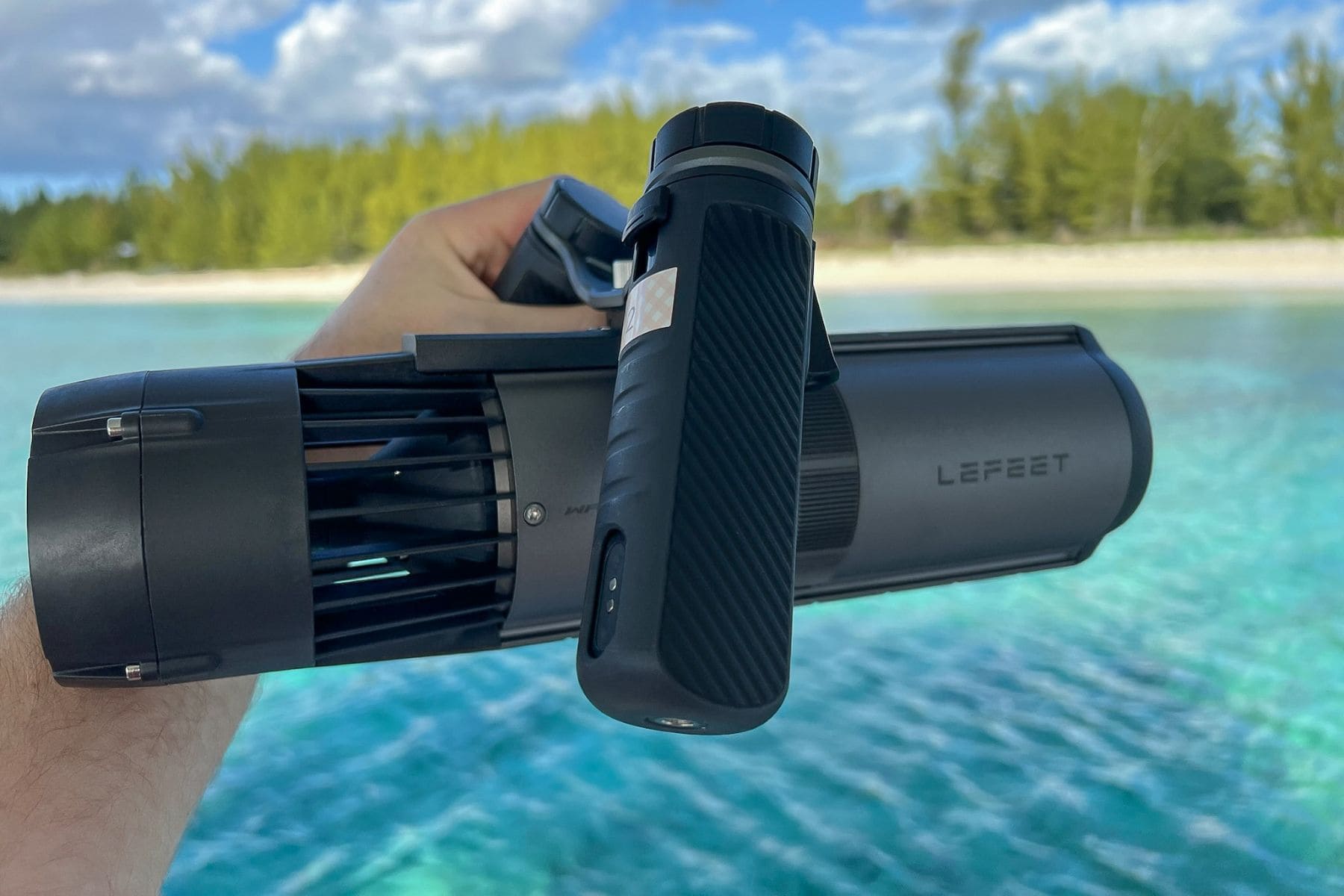
LEFEET P1/P1 Extended Battery vs. Finmos
The Lefeet P1 is the pick for someone who wants the proven modular system, with an accessory range and an owner track record the Finmos cannot yet match. The tradeoff runs the other way on pace: we measured the P1 at about 2.3 mph (1.05m/s) in full gear, noticeably slower than the Finmos in the same conditions.
Value for money
There is no price to judge yet since Finmos has not published one. There is a planned Kickstarter launch in July 2026, so the value question stays open until the tiers are public. No spare-battery price exists yet either.
What we can say is what the money would be buying. Measured speed at the top of the portable class, swappable batteries in a segment where the Waydoo Subnado Plus locks you to a built-in battery, and a breakdown design that turns it into carry-on luggage.
What you give up is a brand history, published warranty terms, and an owner community. If the Kickstarter price lands near the established players, the hardware case is strong; if it lands above them, the missing track record is what you are paying against.
Specs & Features
| Weight | 5.3 lbs. (2.4 kg) with battery fitted; 2.2 lbs. (1 kg) propulsion unit alone |
|---|---|
| Depth rating | IPX8, rated to 197 ft (60 m) |
| Advertised top speed | not published by Finmos (only a 16 kg thrust figure) |
| Our top speed, Torben, full scuba gear | 2.1 mph (3.4 km/h) |
| Our top speed, Torben, no gear | 3.2 mph (5.2 km/h) |
| Our top speed, Carl (kid tester) | 3.7 mph (6 km/h) single unit; 5 mph (8 km/h) on the paired double setup |
| Number of speeds | 3 gears (low / medium / high) plus boost |
| Advertised battery time | 30-60 min on the 99Wh; 35-70 min on the 130Wh (Finmos does not state at which speed) |
| Our battery time at full speed | 10 min 43 s on the 99Wh; 14 min 37 s on the 130Wh (both run to complete depletion, no reserve, no step-down) |
| Battery type | lithium (per the airline-lithium thresholds the batteries triggered in our travel testing; Finmos does not state the specific chemistry) |
| Removable battery | Yes |
| Charge time from empty | pending, measurement over the 100W bidirectional USB-C adapter still in progress |
FAQ’s
We timed the Finmos Underwater Scooter at 2.1mph (3.4km/h) flat out in full scuba gear and 3.2mph (5.2km/h) with no gear. Pairing two units pushed it to 5mph (8km/h) with our lightest rider. Finmos publishes no official top speed, so these measured numbers are the only speed data available.
The small 99Wh battery flew with us in carry-on without any issue, since it sits under the 100Wh airline limit. The 130Wh battery needs airline approval in advance: one airline declined ours at the airport and another rejected the advance application, so treat it as a home battery unless your airline approves it in writing. The 320Wh battery cannot fly on passenger aircraft at all.
No, the Finmos Underwater Scooter sinks if you let go. A leash comes in the box and clips to the handle, and the unit is light enough at 5.3 lbs. (2.4 kg) that swimming it back up is not a problem.
The prop guard keeps small fingers out and the motor stops the instant the trigger is released. Carl, our kid tester, rode it extensively without any control issues. There is no child speed lockout, so an adult should set the gear and supervise.
In our runtime testing the 99Wh battery lasted 10 min 43 s at full speed, and the 130Wh lasted 14 min 37 s, both run to complete depletion. Finmos claims 30-60 minutes on the 99Wh and 35-70 minutes on the 130Wh without stating at which speed, so the published numbers presumably apply to a much lower cruising speed. The scooter runs at full speed right up to the moment the battery dies, with no automatic step-down to lower power, so plan dives around having a margin in the battery.
Yes, two units pair into a double setup, which raised our full-scuba sprint speed from 2.1mph (3.4km/h) to 3.3mph (5.3km/h). Until the dual remote ships, riding the double means one controller in each hand, each throttling its own motor.
Yes, the camera mount takes an underwater action camera and slides along the top rail, so you can position the camera as you want in front of the scooter.
Finmos plans a Kickstarter launch in July 2026. There is no published price or pre-order link yet, and finmos.net is currently the only official source of product information.
 Take a moment to look at this.