

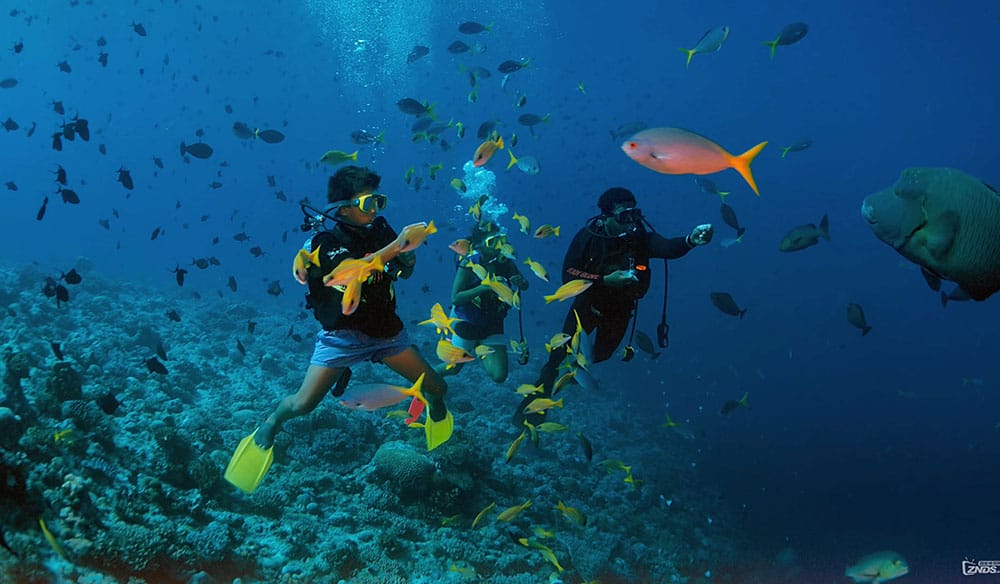
Florida is an incredibly diverse state when it comes to scuba diving.
It’s hard to compile a comprehensive list of the best dive sites in Florida, because that depends so much on what you’re looking for.
Whether you’re a novice diver who wants to see as much as they can while staying as close to the surface as possible, or a grizzled tech pro looking to explore insides of the largest artificial reef in the world, the Florida peninsula offers ample opportunities for every experience level.
In this guide, we’ve collected our 19 favorite dive sites from across the Sunshine State and compiled them here. Filter by our search tags, or feel free to view the whole list below.
The 19 Best Dive sites in Florida?
Blue Heron Bridge
It’s impossible to talk about diving in Florida without mentioning Blue Heron Bridge. Though it seems like a rather unlikely dive site, situated along the Palm Beach intercoastal waterway and nearly underneath an overpass, this aquatic park routinely makes best of lists for the whole United States. It’s relatively shallow and very easy to access and with the exception of tidal restrictions diving here is as easy as parking the car. The pilings of the inlet allow for a variety of tropical reef fish to congregate, and the sandy eel grass surrounding the area is famed by macro photographers. The shallow water can be a great opportunity for nitrox divers to get some serious bottom time
- Great dive site for all skill levels, and snorkel accessible
- Drive-up parking and easy-entry to the water
- Renowned opportunity for macro photography
What You Will See
Blue Heron Bridge is host to an abundance of tropical life in all stages of development. The calm grassy bottom is a nursery for juvenile reef fish, where octopi, flounder, skates and rays hide in the sand. The pilings themselves attract all manner of larger fish from snappers to barracuda. If you’re lucky you might even see a pair of spotted eagle rays floating along with the tide.
Cayman Salvager
It’s hard to tell which part of the Cayman Salvager is more interesting, the 187 feet of artificial reef in a little less than 90 feet of high visibility water, or the story of how it got there. Though it served many purposes, the former buoy tender is most famous for playing a role in the Mariel boatlift. The depth of the wreck and its proximity to Gulf Stream currents can make this a challenging dive, and is best left for divers with some experience. Seasoned wreck divers can penetrate the ship’s cavernous hold.
- Big artificial reef in manageable depths
- Opportunity for experienced wreck divers to explore compartments
- Coral-covered cable pulley near the front of the boat is locally renowned
- Depth and currents make this for divers with some experience
What You Will See
The Cayman Salvager is heralded as one of the best wreck dives in the Key West area. The wreck itself rises from the sandy bottom dramatically, with the bow jutting up at the highest point. Massive goliath groupers hover in open compartments. Barracuda, baitfish, and other groups of fish both large and small inhabit the uncluttered wreckage.
Rainbow River
Florida is famous for its coastline, but it also contains some of the largest freshwater aquifers in the world. Fish, birds, and turtles are as common here as in marine environments, but that’s where the familiarity stops. If you want a truly unique dive experience that emphasizes a diverse ecosystem in an atypical diving environment, Rainbow River may be the place you’re looking for.
- Unique dive opportunity in the middle of Florida
- Drift dive through a river in easy currents
- Good dive for beginners and experienced divers alike
- Snorkel accessible
What You Will See
Among waving gardens of eelgrass and bleached limbs of trees you’ll find all manner of freshwater fish ranging in size from smallish bluegill to looming and toothed alligator gar. Anhingas and other diving birds prowl the slow moving water for minnows and other opportunistic treats. Keep an eye out for wide varieties of turtles, box turtles, massive snapping turtles.
Panhandle Shipwreck Trail
In 2012 the Florida State Department’s Underwater Archeology Team launched a project that sunk 12 different ships at a variety of depths along the length of the Florida Panhandle. The ships range in size from small tugboats, to coal freighters, to the truly massive USS Orinsky aircraft carrier that has its own section later in the guide. The ships were selected for the diversity of their make, and for the diversity of sea life they would attract in their own respect.
- 12 Ships were scuttled off of the Florida Panhandle specifically for dive-related artificial reefs
- Difficulty ranges from shallow novice dives to deep and technical excursions
- Created in an effort to increase habitat options and generate tourism following the Deepwater Horizon spill in 2010
What You Will See
As always, huge groupers love to hide in shipwrecks. Tuna, wahoo, and other larger schooling fish are also often found along with smaller sharks and rays. Moonjellies and other invertebrates float in the waters above the ships as starfish and anemones cling to their bodies. Because of how recently these ships were scuttled, they tend to be in pretty good condition making the biggest draw of these wrecks are the wrecks themselves.
Williston Spring Dives
When you hear the words “Prehistoric Sinkhole” the first thing that comes to mind probably isn’t that it would be a great place to dive. But the spring-fed caverns near the city of Williston are routinely listed as some of the best places to dive in Florida. Devil’s Den, Blue Grotto, and Ginnie Springs all offer a relatively similar experience diving in caverns filled with water from underground aquifers. Typically these are very good places to explore if you are a new diver, or if you have interest in another of Florida’s unique diving experiences. Ginnie Springs also offers opportunities for real cave diving if you have the proper training.
- Ancient limestone aquifers provide a truly spectacular diving experience
- Great place to do some unique diving for beginners
- Uncommonly clear water is accommodating for snorkelers
What You Will See
The springs near Williston offer a special glimpse into a prehistoric network of freshwater tunnels that run nearly the entire length of Florida. If you’re a cave diver who wants to explore the networks, check out Ginnie Springs, if you’re a new diver and to approximate the cave experience, check out Devils Den. If you’re claustrophobic and don’t like the idea of enclosed spaces, Blue Grotto is probably your best bet.
Hog Heaven
Lying upside down off the coast of Fort Lauderdale in around 70 feet of water is the scuttled wreck of a barge known as Hog Heaven. This artificial reef is joined by a large section of pipe and the remains of a small lighthouse. The wreck is covered with a nice layer of Broward county corals, and hosts a surprisingly dynamic variety of reef life. It’s a relatively easy wreck to enter with the proper training.
- Good wreck dive for open water divers with a little bit of experience
- Artificial reef made up of an interesting variety of objects
- Located close to a couple more wrecks for a multi-dive day
What You Will See
Hidden underneath the wreck you’ll see spiny lobster poking their antennae inquisitively out toward you. Parrot fish and sergeant major swim circles around coral encrusted passageways. Barracuda stalk the waters in the distance, and flatfish hide in the sandy bottom blending in with skates. Big sponges sway gently from any rocky surface. Keep a lookout for hawksbill turtles munching on the corals covering the wreck.
USS Spiegel Grove
The Spiegel Grove is a top contender among the numerous artificial reefs in Florida. It’s also another one of those wrecks whose position has changed dramatically with the pushing of storm currents. Situated on its starboard side around 80 feet of water, the USS Spiegel Grove is a must-see site for advanced divers who want to explore the coral encrusted exterior of deep wreck. If you’re a seasoned wreck diver, the interior of the ship poses a technical challenge worthy of your respect.
- One of the best artificial reefs in the Florida area
- Rich and diverse reef life on a big ship
- Good dive for advanced divers who feel comfortable with some depth
What You Will See
If you check out the Spiegel Grove, be prepared to be met with large schools of jacks, silent stalking barracuda, the occasional bull shark, and as always large hulking goliath grouper. Look for brightly colored corals clinging to the bulk of the wreck, but make sure to keep an eye on your depth and never penetrate the lower portions of the wreck, regardless of your experience.
Dry Tortugas National Park
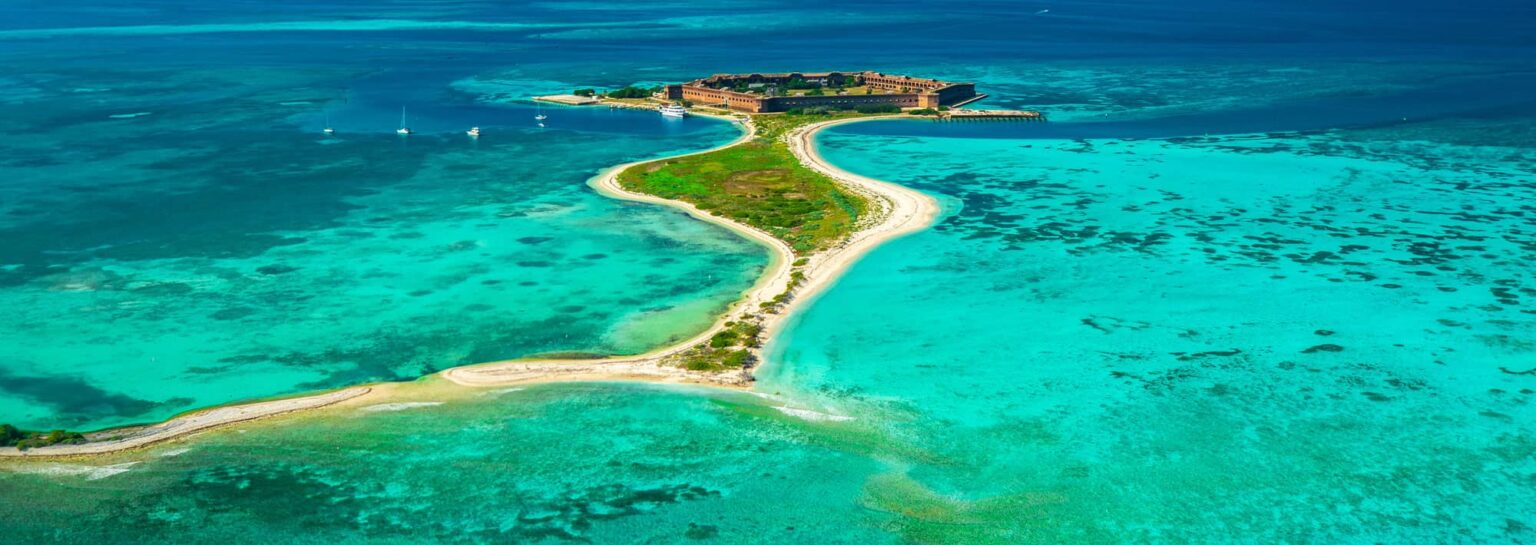
Dry Tortugas National Park is a cluster of islands in the Gulf of Mexico 70 miles from Key West. Aside from housing the unfinished maritime fortress Fort Jefferson, the park holds 104 acres of preserved tropical savanna and marine sanctuaries. Dry Tortugas is known for the quality of its coral and the abundance of tropical reef life. It’s also a historically significant area, littered with century old shipwrecks and masonry.
- Among the highest quality reefs in the gulf of mexico
- Accessible only by boat or seaplane
- Wide variety of diving opportunities for all skill levels
- Unique opportunity to dive in a historic area
What You Will See
It’s easier to talk about what you won’t see at Dry Tortugas than what you will. From shallow coral gardens, to steep wall dives and deep technical wrecks, there’s more than a little bit of everything. If you’re looking to see some of the larger and more exciting tropical gulf life, the park supports populations of turtles, eagle rays, massive swarms of bait fish, black tip and hammerhead sharks, and hogfish.
Barracuda Reef
Broward County is a hotspot for healthy, shallow reefs. Barracuda Reef is one of the better trafficked and more easily accessible boat dives available right off of the shore. Surrounded by nearly 30 mooring balls, the reef is at most in 25-30 feet of water. The most prominent feature of this reef is a 15 foot tall reef ledge which rises dramatically from the sandy floor below. Barracuda Reef is a great open water dive for newer divers, and another great shallow site to stop by if you have boat access.
- Surrounded by nearly 30 mooring balls
- Excellent dive site for beginners
- Dramatic coral shelf hosts a wide variety of life
- Heavily trafficked area
What You Will See
Barracuda Reef is a healthy ecosystem surprisingly close to the crowded beaches near Fort Lauderdale. If you go on a day when the seas are calm, you’ll be greeted with excellent visibility on colorful splashes of reef. Spiny lobsters, moray eels, and purple urchins like to live underneath the shelves hovering above the sea floor. Be on the lookout for the occasional turtle that will drift by, and reef sharks cruising off in the distance.
Wreck of The Eagle
Islamorada is hot-spot for diving in and of itself, and the Wreck of the Eagle ranks among the best dive sites accessible from it. Another of the artificial reefs of the Keys, The Eagle is another example of how well placed aids can create spectacular reefs that rocks can’t. Solid steel girders framed in verdant corals are enough to sway even the most jaded of divers. The Eagle is also significant because it was split in half by a hurricane, letting divers without any wreck experience get the chance to see inside the vessel without the risk of overhead cover.
- Wreck is at a depth of 70-115 feet, experience is necessary
- Awesome coral coverage on the majority of the wreck
- Interesting view into the split compartments of the ship
What You Will See
Sharks like to cruise the open water out around the ship, but keep an eye on the wreck itself and you can find smaller creatures scuttling around the brightly colored corners of the decks. Angelfish and parrotfish cruise through holes in the wreckage, and good sized sponges dot the exterior. Chromatic tarpon and eagle rays dart through have also been known to hang out in the area.
Emerald Reef
It wouldn’t be a stretch to call Emerald Reef one of the best beginner dive sites in Florida. The dive itself is great, but what makes this place special is its proximity to other good beginner dive sites. It’s a flourishing patch reef mixed with eelgrasses hosting a healthy assortment of juvenile reef fish, all in under 30 feet. The quality of the coral here has been compared to that of more tropical areas, and definitely is at the top of the class for the Lauderdale area.
- Among the best beginner dive sites in Florida
- Close to a number of other good beginner reefs
- Good mixed environment dive, opportunity to see a lot of life!
What You Will See
Emerald Reef feels like its own self-contained world. As you move from patch to patch, you can search the grasses and smaller rocks for brightly colored juvenile reef fish. You’ll see big clutches of spiny lobster sheltered under shelves, sponges holding cowfish and boxfish, and the occasional eel lurking in crevices.
Spanish Anchor
This dive site takes its name from the large, 17th century anchor situated among the reef. The site is another good opportunity for beginners to get multiple boat dives, and is part of the widely praised Molasses Reef. Spanish Anchor would also make a great site to try for a night dive, with octopus and spider crabs being common as the sun goes down.
- Max depth of 40 feet makes this a great entry level dive
- This end of Molasses Reef gets passing pelagic life
- Historic site
- Sharks have been known to frequent the area
What You Will See
Spanish Anchor is a great place to get close to the coral. It’s relatively calm and shallow waters harbor a wide variety of brightly colored blennies and small crustaceans. Arrow crabs and garden eels like to congregate on the sandy bottom in the breaks in the coral. It’s not uncommon for sharks and rays to pass through the open waters surrounding the coral heads.
Hammerhead Reef
Hammerhead Reef is often touted as one of the finest places in the Miami area to drift dive. At two miles in length and ranging in depth from 60 to 90 feet, this is a dive for people with some experience handling deep water and strong currents. The reef is structured in a series of ledges and crevices stretching from the sand to a couple stories from the bottom.
- Among the best drift dives in the Miami area
- Depth and strong current makes this best for advanced divers
- Overhangs and crevices contain a great abundance of life
What You Will See
As you drift by the craggy coral heads protruding from the bottom, look for lobsters and morays nestled in the cracks and crevices. Reef fish of all varieties are common here, make sure to check inside of barrel sponges for slow-moving boxfish hiding from the current. Stingrays have also been known to hunker down in the sand near the bottom.
Ten Fathom Ledge
If dive sites were judged purely by diversity, Ten Fathom Ledge would be at the top of this list. Coral structures start anywhere from 35 feet all the way to the bottom at 115 feet of water on the oceanic side of the ledge. The Gulf Stream keeps the visibility high, and the ledge offers views of large pelagic fish you wouldn’t normally see while diving. This site also features a 75 foot tugboat wreck that attracts larger ocean life.
- Great site for intermediate and advanced divers
- Opportunity to see a wide variety of life
- Great visibility from the Gulf Stream
- Bonus wreck dive for more advanced divers
What You Will See
Aside from the tropical fish you would see anywhere else in the Gulf, spotted eagle rays and sharks are frequent visitors to the reef and to the shelf below. Also worth noting are the schools of tuna, mahi, marlin, and sailfish one might see swimming out in the open ocean from the top of the ledge. The wreck of the All Alone makes a good additional point of attraction for more experienced divers.
Fort Pickens Jetties
In terms of North Florida shore diving, the jetties are among the best for anyone who wants to have a quality dive without the commitment of getting out on a boat. The rubble waller is made up of broken pieces from the fort along with miscellaneous vehicles and machinery, making for a series of eclectic and unlikely habitats for the resident fish. The out and back nature of diving jetties makes this ideal terrain to practice basic underwater navigation, and the abundance of smaller organisms here is enough to keep anyone’s attention.
- Good opportunity to practice navigation and night dives
- Abundant small oceanic life and invertebrates
- Easy shore access
What You Will See
If you’re an underwater photographer with interest in using your macro lens, don’t miss out on the hordes of shrimp, crabs, and other small examples of reef life. Invertebrates like octopus blend into the rubble, alongside cleverly disguised stone fish and seahorses. Jellyfish are in the area seasonally, so be sure to cover up and watch beware when relevant.
Twin Ledges
Twin Ledges is another Lauderdale reef with incredibly good health when you consider where it’s located. The rather straightforward layout of the reef makes it easy to navigate and thus is a good option for novice divers looking to practice moving around a reef without a guide. The site, true to its name, is made up of two distinct coral ledges with a max depth of 50 feet. Feel free to explore the tops of the ledges where lobsters like to congregate, or travel to the bottom to investigate any life that might be hiding underneath.
- Good beginner site with straightforward navigation
- Top of the reef is still visible to snorkelers
- Convoluted ledges means there’s plenty of room for exploration
What You Will See
As mentioned above, lobsters have been observed gathering in large numbers near the top of the reef. There are also reef fish: angelfish, parrot fish, and striped sergeant majors. Trumpet fish can often be seen hiding amongst the gorgonians, and along the shore facing ledges, blennies and other small reef creatures are present in large numbers.
Navarre Beach Marine Sanctuary
Another great option for shore diving on the Panhandle, the three reefs inside Navarre Beach Sanctuary require a manageable swim to reach, but are certainly worth the effort. The most interesting thing about this site is how quiet and tranquil it can feel in comparison to busier, more traditional reefs. This sandy bottomed reef in very shallow water isn’t just for beginners, photographers and those with the patience are rewarded with glimpses at slow, unhurried marine life cruising by in clear water.
- Three shallow shore dive sites present the opportunity for an all day adventure
- Clear calm water and sites that are relatively close to shore
- Great opportunity for photographers
What You Will See
The sanctuary is home to a rotating cast of turtles who float lazily along the pilings munching jellyfish, and stingrays nestled in the shallow, sandy waters. All manner of invertebrates make an appearance here. Scuttling crabs, cucumbers, and mindless pink meanies and moon jellyfish aren’t difficult to find. Octopuses and urchins can often be found hiding in the pilings of the sanctuary.
Key Largo Northern Dry Rocks
Key Largo Dry Rocks, the Minnow Caves area in particular is one of the more popular sites in the Keys alongside the nearby Grecian Rocks and Christ of the Abyss. The site takes its name from an amazing swim through that fills nearly completely up with Atlantic Silverside minnows during the summer. The site is a great option for people looking to avoid the crowds, and an awesome novelty dive when the minnows are in full season. Nearby are a few more sites such as Horseshoe Reef that allow the opportunity to hammer out a couple shallow water dives.
- One of the most famous swim throughs in the Keys
- Less crowded than nearby sites
- Situated for multiple boat dives
- Great dive for beginners looking for something different
What You Will See
The massive minnow balls are definitely the biggest draw to this area, and are enough in themselves to make the dive worth checking out. But, you can also find anything here you’d be able to see in the surrounding areas. Spiny lobsters, turtles, green moray eels and the usual cast of reef fish are residents of the area. Those who look into crevices might be rewarded with the occasional octopus. Grouper feasting on the bait balls have also been known to roll through the area.
1000 Mermaids
This is an artificial reef that was started with the aim to replenish a dying reef off of Riviera Beach. Eventually there will be 1000 statues, cast from the bodies of real people at the Miami Body Cast. The goal of the project, sponsored by the Ocean Rescue Alliance and run by the 1000 Mermaid Artificial Reef Project is to promote eco-tourism and responsible diving. When completed, the statue park will have 88 tons of sculptors lying at 45 feet on Coral Lok plugs which foster the growth of corals.
What You Will See
With more than 20 statues since 2020, watching this dive site grow will be uplifting and beautiful as it lies in waters that attract larger fish like barracuda and rays. Eventually, this will like be home to schools of fish, which will bring with them octopus, eels and the full splendor of reef fish typical of these waters.
Paradise on a Peninsula
When you think of Florida, you probably imagine crowded beaches and the routine bustle of Miami nightlife. While the bars and the beaches are great, what about watching coral crusted ghost ships rise out of the blue toward you?
Or drifting next to manatees down a crystalline freshwater river?
Or poking your head through a collapsed section of cave wall, and staring into a few million years of prehistory?
Florida is an incredibly unique and diverse landmass- between the everglades and the keys Florida is home to over 700 endemic vertebrate species, countless more spineless, and the largest number of endemic plants of anywhere in the States. Aside from having coastline on both the Gulf of Mexico, and the Atlantic, the Florida Peninsula also supports some impressive chains of sand and coral islands, as well as one of the most productive freshwater aquifers in the world.
Diving In Florida
Florida has always been known for its bustling tourism industry, and there are no exceptions to this in the dive world. There are unmissable opportunities here, whether you are a technical wreck diver looking for a logistic challenge, or someone looking to book their first open water course. While there are options for any skill level essentially across the state, what you’ll see and the conditions you can expect vary widely from the Gulf to the Atlantic.
In the rest of the guide we provide a cursory overview of the regions we grouped our dives by, and what kind of sites and conditions you can generally expect from them.
Panhandle
The Florida Panhandle refers to the stretch of land along the northwestern most part of Florida along the Gulf of Mexico. The overall feel of the area is a little more laid back than southern Florida, geographically it’s basically part of Georgia so you won’t miss out on the southern hospitality.
The Panhandle is culturally and ecologically very distinct from the rest of the state. Known for its wide white sand beaches, seagrass dune habitats, and wide brackish estuaries, here the natural beauty of the Gulf of Mexico is shown in its best light. Large patches of sargassum hold an untold number of macro life and the sandy shoals off its shore are a stalking ground for larger reef fish.
When you’re diving here be prepared for hidden surprises. Though the area lacks the diversity and the dynamic quality of the coral reefs to the south, Panhandle waters have just as wide an array of different fish and invertebrate species as the rest of the state. Imagine floating slowly toward a wreck through a cloud of dish sized moon jellies, and turning corners to be met with massive monochrome tarpon. Or floating across sand dollar and seastar gardens as massive bait balls of glass minnows swirl in the emerald waters.
The Panhandle is also the home of the Shipwreck Trail mentioned earlier in the guide, as well as the celebrated USS Oriskany. Whether it’s just a stop along your dive trip, or the focal point of your adventure, the Panhandle is not to be missed.
Florida Keys
Running southwest off of the southernmost point of Florida south of Miami are the Florida Keys. This archipelago has a reputation as a great place to get stuck for a while, according to the locals, there’s only three things to do in the Keys: fish, drink, and dive.
There are dives from the first and largest of the islands, Key Largo, running all the way down the island chain to Key West and the southernmost tip of the U.S. and west deeper into the Gulf on Dry Tortuga. The coral here is truly world class, and the density and quality of the dives makes this an easy option for any dive trip. Another thing to note is the ease of access to most of these sites. Much of the popular dive spots are marked with mooring balls, and are relatively shallow and sheltered from inclement weather.
If you’re planning on diving in the Keys, expect to be dazzled every time you duck under the water. Wandering from dive site to dive site should feel like hopping between aquariums, take your time and enjoy the colors of every self-contained climate.
Miami Area
The Miami area is famous for its high-class restaurants, cultural arts attractions, and being a high-class metropolitan area with some attitude. But nestled among the highrises and the crowded beaches are a multitude of high-quality dive sites. The high density and quality of shore diving in Broward County is one of South Florida’s best kept secrets, and aside from the established sites you can reach from boats, there’s endless potential for exploration for low commitment shore dives that you can reach from the beach.
While it’s hard to live up to the coral quality of the Keys, there are some truly spectacular opportunities for diving around Miami. There’s a ton of beachfront rental properties, and a strong shore diving presence in the community. If you’re planning an extended stay here you could easily book a couple boat dives from any of the local charters, and grab a few tanks so you can dive off the shore on your own. If the season is right, you can even bag a couple spiny lobster on your way back to shore.
The greater Miami area is for those looking for a place where they can have maximum accessibility and the freedom to dive on their own time without compromising on culture and nightlife. If you’re around be sure to check out Blue Heron Bridge!
Florida Freshwater
Florida is known for a lot of things- fish, fruit, bugs, eclectic people; but certainly not it’s streams and springs. Despite its reputation as a seaside paradise, the Florida aquifer is an absolutely massive network groundwater that feeds into over 750 springs across the peninsula. It’s one of the most productive sources of freshwater in the world.
Diving in the aquifer’s waters is more than just a novelty. When you enter one of these sinkholes, you enter an area that has remained geologically unchanged for milenia.No matter what your experience with cave diving, you can creep around ancient stone pillars and watch catfish and bluegill scatter from the unfamiliar glare of your dive light.
Even more impressive than the springs, are the rivers. Diveable areas like Rainbow River, even though they completely defy the normal expectations of a dive experience, should be on any serious scuba fanatic’s list. It’s the ultimate drift dive in a totally alien environment, who would have guessed that they could look over underwater and see birds darting by, or even a lumbering manatee.
Frequently Asked Questions about the 19 Best Dive Sites in Florida in 2026
There are a lot of extraordinary places to dive in Florida.
These are some of our favorites: 1. Blue Heron Bridge
2. 1000 Mermaids
3. Cayman Salvager
4. Hog Heaven
5. Dry Tortugas National Park Take a look at all 19 sites to Dive in Florida.
These are some of the best dive sites for beginners in Florida: 1. Williston Spring Dives
2. Barracuda Reef
3. Emerald Reef
4. Spanish Anchor
5. Fort Pickens Jetties
6. Twin Ledges See more great Dive sites in our Florida Dive Guide.
 Take a moment to look at this.


I’m heading to Orlando end of March for vacation and am looking to do some scuba diving. Where is the better location gulf coast or Atlantic coast