DIVEINDIVEIN
  • Scuba Gear Reviews
    Editor's Pick15+ Best Dive Computers in 2026Read review →
    Masks17 Best Dive Masks
    BCDs21 Best Scuba BCDs
    Fins25 Best Scuba Fins
    See all scuba gear reviews
    Dive Computers
    • Best Dive Computers
    • Best Beginner Dive Computers
    • Best Air-Integrated Dive Computers
    • Best Smartwatch Dive Computers
    Masks
    • Best Dive Masks
    • Best Snorkel Masks
    • Best Prescription Dive Masks
    • Best Prescription Snorkel Masks
    • Best Full Face Dive Masks
    • Best Full Face Snorkel Masks
    BCDs & Wings
    • Best Scuba BCDs
    • Best Backplate & Wings
    Fins
    • Best Scuba Fins
    • Best Freediving Fins
    Wetsuits
    • Best Wetsuits
    • Best Women's Wetsuits
    • Best Kids Wetsuits
    Dive Watches
    • Best Dive Watches
    • Best Seiko Dive Watches
    Underwater Cameras
    • Best Underwater Cameras
    • Best Waterproof Cameras
    • Best Action Cameras
    • Best Underwater Phone Housings
    • Underwater Cameras & Housings Buying Guide
    Dive Lights
    • Best Dive Lights
    • How to Choose a Dive Light
    Bags
    • Best Dive Bags
    • Best Dry Bags
    Regulators
    Drysuits
    Scuba Tanks
    Underwater Scooters
    Dive Boots
    Dive Knives
    Spearguns
    Metal Detectors
    Reef-Safe Sunscreens
  • Liveaboards
    Indian Ocean · Most popular10 Best Liveaboards in the MaldivesRead review →
    South America · Ecuador10 Best Liveaboards in the Galapagos
    Red Sea · Egypt10 Best Liveaboards in Egypt
    South-East Asia10 Best Liveaboards in the Philippines
    See all liveaboard guides
    CaribbeanReefs, wrecks, blue water
    • Bahamas
    • Belize
    Central AmericaCenotes & big-fish action
    • Costa Rica
    • Mexico
    South AmericaGalápagos & beyond
    • Galapagos Islands
    Red Sea & Middle EastCoral walls & wrecks
    • Egypt
    Indian OceanManta & whale sharks
    • Maldives
    South-East AsiaCoral triangle macro
    • Indonesia
    • Thailand
    • Similan Islands
    • Philippines
    • Myanmar
    PacificSharks & remote atolls
    • Australia
    • Fiji
    • Micronesia & Palau
    Plan Your TripTips · Operators · Resorts
    • All Liveaboards
    • Aggressor Fleet
    • Best Dive Resorts
    • Travel Tips & Tricks
  • Snorkeling Gear
    • Snorkeling Gear
    • Best Snorkeling Sets
    • Best Snorkels
    • Best Snorkel Masks
    • Best Full Face Snorkel Masks
    • Best Snorkel Fins
    • Difference Between Scuba and Snorkeling Fins?
  • Dive Destinations
    South-East Asia · 50 sitesBest Diving in IndonesiaRead review →
    South America · Bucket listBest Diving in the Galapagos
    Red Sea · IconicBest Diving in Egypt
    Indian OceanBest Diving in the Maldives
    Most popular destinations
    CaribbeanReefs, wrecks, blue water
    • Antigua & Barbuda
    • Aruba
    • Bahamas
    • Barbados
    • Bonaire
    • British Virgin Islands
    • Cayman Islands
    • Cuba
    • Curacao
    • Dominica
    • Dominican Republic
    • Grenada
    • Guadeloupe
    • Jamaica
    • Martinique
    • Puerto Rico
    • St. Lucia
    • St. Maarten & Saba
    • Tobago
    • Turks & Caicos
    Mexico
    • Mexico
    • Cozumel
    Central AmericaCenotes & big-fish action
    • Bay Islands
    • Belize
    • Costa Rica
    • Panama
    South AmericaGalápagos & beyond
    • Colombia
    • Galapagos Islands
    United States
    • California
    • Florida
    • Hawaii
    • North Carolina
    Europe & Mediterranean
    • Denmark
    • Mallorca
    • Malta
    • Turkey
    Red Sea & Middle EastCoral walls & wrecks
    • Egypt
    Indian OceanManta & whale sharks
    • Maldives
    AsiaCoral triangle macro
    • Indonesia
    • Bali
    • Gili Islands
    • Komodo
    • Raja Ampat
    • Sulawesi
    • Cambodia
    • Japan
    • Philippines
    • Thailand
    • Vietnam
    South PacificSharks & remote atolls
    • Australia
    • Fiji
    • Palau
    • Solomon Islands
    Plan Your TripThemed picks · Tips
    • All Destinations
    • Best of the Caribbean
    • World's Best Wreck Diving
    • Travel Tips & Tricks
  • Articles
    Recent ArticlesView all
    Infinity Bay Resort for Groups: Dive Trips, Family Reunions, & Everything In Between
    SunBreeze Hotel: Easy Reef Diving in the Heart of San Pedro
    Passport to Paradise: The Stress-Free Way to Dive North Sulawesi with Murex & Lembeh Resort
    Infinity Bay Spa & Beach Resort: West Bay Ease & Reef-Front Diving
    Ibagari Boutique Hotel: Intimate Luxury Meets Roatan’s Reef
    Dive Science Demystified: Gasses, Partial Pressure And Air For Diving
    Utila Lodge Resort & Marina: Where Relaxation Meets the Reef
    Where to Snorkel in Egypt: 5 Top Snorkel Spots
    Dive, Dine and Discover – A Culture & Cuisine Expedition through Raja Ampat with Tait Miller
    Golden Rock Resort: A Botanical Escape For Underwater Explorers
    Wave Goodbye to Underwater Hand Signals and Say Hello to Garmin’s SubWave Tech
    BVI Wreck Week 2025: Unveiling the Treasures of the Deep
    Featured Articles
    Featured
    Anthony’s Key: Sustainable & Stylish Dive Resort
    Featured
    Margaritaville Beach Resort: Subtle Sophistication at Ambergris Caye
    Featured
    Barefoot Cay Resort: A Private Paradise on Roatan’s South Shore
    Featured
    Choosing the Right Shearwater Dive Computer
    Browse Categories
    Scuba95Dive Travel11Scuba Gear8
  • Join our cool newsletter
  • About DIVEIN
  • Contact DIVEIN
Find Us on Socials
Reading: A Complete Guide to Diving in Tobago in 2026
DIVEINDIVEIN
  • Gear
  • Liveaboards
  • Destinations
  • Cameras
  • Snorkeling
  • Travel
  • Best Scuba Diving
  • Home
  • Dive Computers
  • BCDs
  • Regulators
  • Masks
  • Fins
  • Wetsuits
  • Egypt
  • Maldives
  • Galapagos
  • Philippines
  • Thailand
  • Bahamas
  • Egypt
  • Galapagos
  • Costa Rica
  • Cozumel
  • Bay Islands
  • St. Maarten & Saba
  • Action Cameras
  • Waterproof Cameras
  • Snorkels
  • Snorkel Sets
  • Snorkel Masks
  • Snorkel Fins
  • Full Face Snorkel Masks
Search
  • Scuba Gear Reviews
  • Liveaboards
    All Liveaboards
      • Bahamas
      • Belize
      • Costa Rica
      • Mexico
      • Galapagos Islands
      • Egypt
      • Maldives
      • Indonesia
      • Thailand
      • Similan Islands
      • Philippines
      • Myanmar
      • Australia
      • Fiji
      • Micronesia & Palau
      • All Liveaboards
      • Aggressor Fleet
      • Best Dive Resorts
      • Travel Tips & Tricks
  • Snorkeling Gear
    • Snorkeling Gear
    • Best Snorkeling Sets
    • Best Snorkels
    • Best Snorkel Masks
    • Best Full Face Snorkel Masks
    • Best Snorkel Fins
    • Difference Between Scuba and Snorkeling Fins?
  • Dive Destinations
    All Dive Destinations
      • Antigua & Barbuda
      • Aruba
      • Bahamas
      • Barbados
      • Bonaire
      • British Virgin Islands
      • Cayman Islands
      • Cuba
      • Curacao
      • Dominica
      • Dominican Republic
      • Grenada
      • Guadeloupe
      • Jamaica
      • Martinique
      • Puerto Rico
      • St. Lucia
      • St. Maarten & Saba
      • Tobago
      • Turks & Caicos
      • Mexico
      • Cozumel
      • Bay Islands
      • Belize
      • Costa Rica
      • Panama
      • Colombia
      • Galapagos Islands
      • California
      • Florida
      • Hawaii
      • North Carolina
      • Denmark
      • Mallorca
      • Malta
      • Turkey
      • Egypt
      • Maldives
      • Indonesia
      • Bali
      • Gili Islands
      • Komodo
      • Raja Ampat
      • Sulawesi
      • Cambodia
      • Japan
      • Philippines
      • Thailand
      • Vietnam
      • Australia
      • Fiji
      • Palau
      • Solomon Islands
      • All Destinations
      • Best of the Caribbean
      • World's Best Wreck Diving
      • Travel Tips & Tricks
  • Articles
    All Articles
    Browse categories
    • Scuba95
    • Dive Travel11
    • Scuba Gear8
    • Anthony’s Key: Sustainable & Stylish Dive ResortFeatured
    • Margaritaville Beach Resort: Subtle Sophistication at Ambergris CayeFeatured
Follow US
Home » World's best scuba diving » A Complete Guide to Diving in Tobago in 2026
Travel

A Complete Guide to Diving in Tobago in 2026

Sylvia Jenkins
Last updated: December 9, 2025
Published: March 31, 2022
By
Sylvia Jenkins
BySylvia Jenkins
Content Specialist at DIVEIN.com
Coming from London, UK, Sylvia has always loved traveling. During a family trip to Thailand in her early teens, it was of course a no-brainer to...
Follow:
- Content Specialist at DIVEIN.com
Share
coastal cliffs overlooking the blue Caribbean sea in Tobago
View of the beautiful Bay of the Caribbean sea. The Island of Tobago
Diver swimming past a large brain coral formation on the reef
Pinky & the Brain Coral
School of yellow and white fish swirling around a soft coral fan
Black Jack Hole
Organ pipe coral colony with a feather star crinoid perched on top
Organ pipe coral
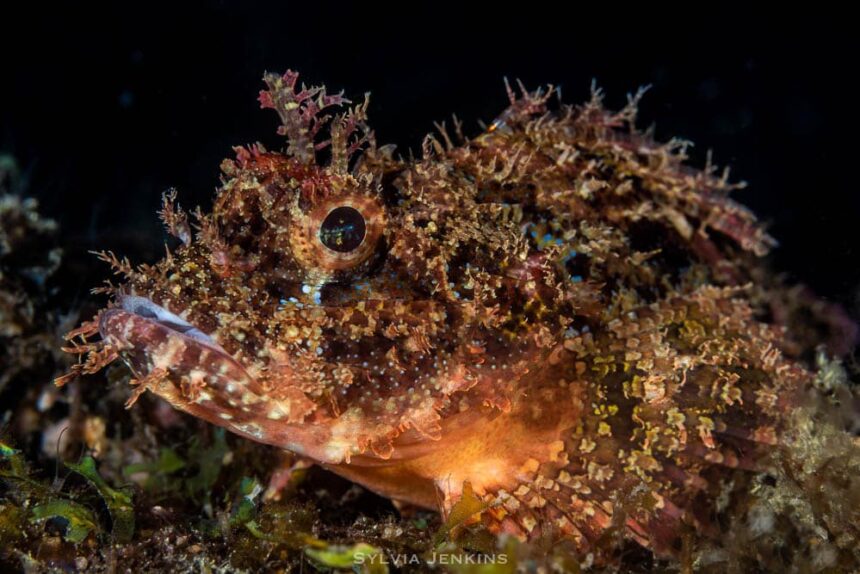
Camouflaged scorpionfish resting on the reef with mottled, textured skin
Scorpionfish
Baby leatherback turtle hatchling crawling across the sand toward the surf
Baby leatherback crawling back
Green moray eel with mouth open peering out from the reef
Green moray eel
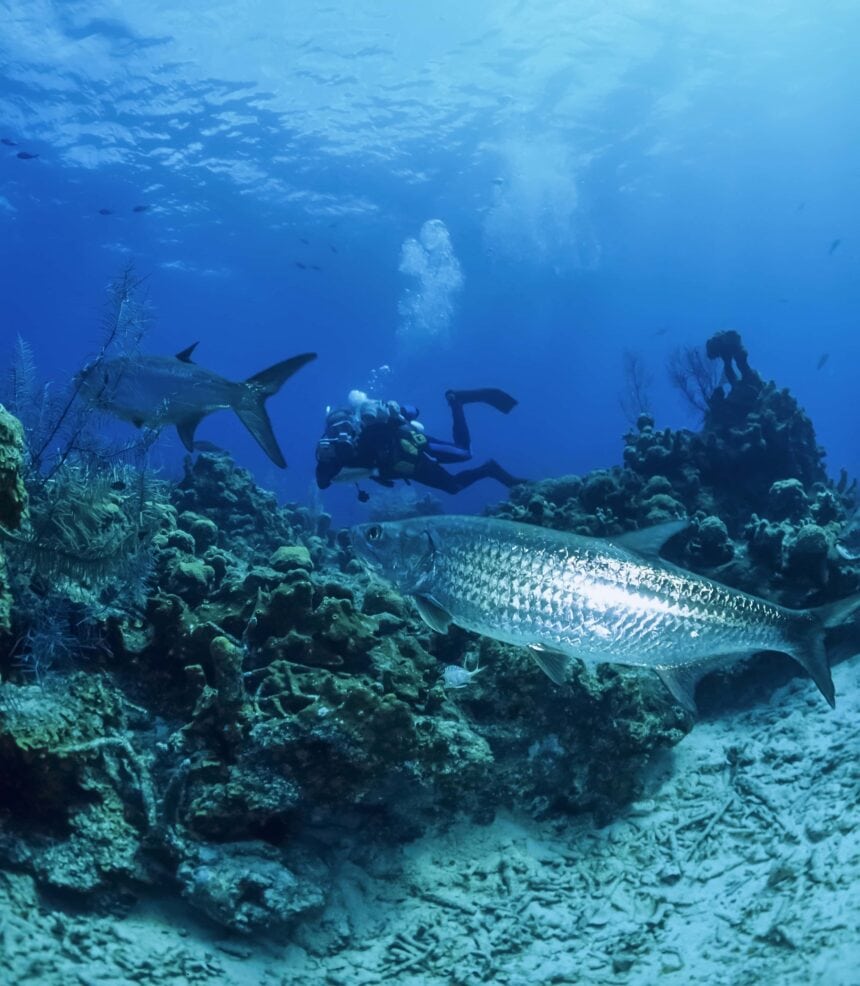
Scuba diver exhaling bubbles near a large tarpon over a Caribbean reef
Caribbean Sea, Belize, U.W. photo, diver and tarpons (Megalops atlanticus) - FILM SCAN
Green sea turtle swimming over a coral reef with sunlight filtering through the water above
Green turtle
Spotted moray eel peering out from a reef crevice with its mouth slightly open
Moray eel
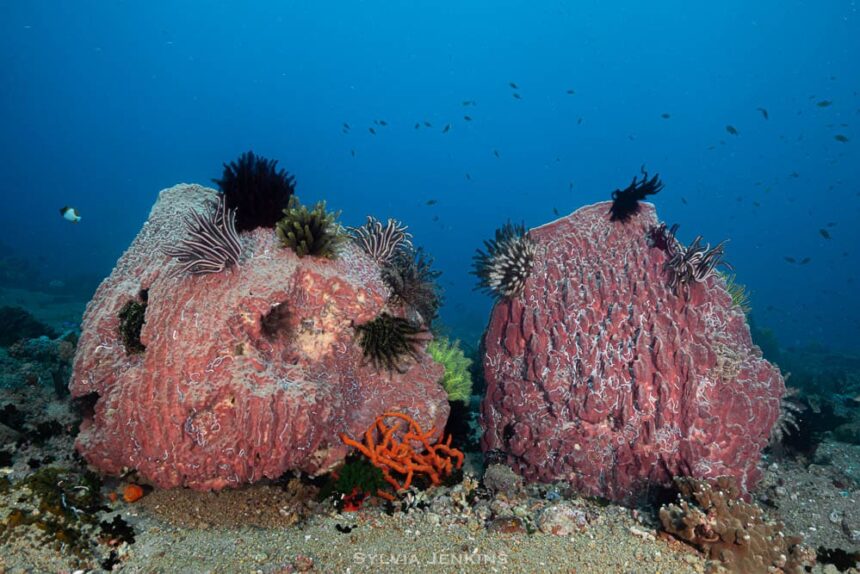
Two large barrel sponges on the reef seabed topped with black feather stars
Barrel sponges
Manta ray gliding over two divers surrounded by schooling fish
Manta ray with divers
Dense school of barracuda swirling together in open blue water
School of barracudas
List of Images 1/13
coastal cliffs overlooking the blue Caribbean sea in Tobago
Diver swimming past a large brain coral formation on the reef
School of yellow and white fish swirling around a soft coral fan
Organ pipe coral colony with a feather star crinoid perched on top
Camouflaged scorpionfish resting on the reef with mottled, textured skin
Baby leatherback turtle hatchling crawling across the sand toward the surf
Green moray eel with mouth open peering out from the reef
Scuba diver exhaling bubbles near a large tarpon over a Caribbean reef
Green sea turtle swimming over a coral reef with sunlight filtering through the water above
Spotted moray eel peering out from a reef crevice with its mouth slightly open
Two large barrel sponges on the reef seabed topped with black feather stars
Manta ray gliding over two divers surrounded by schooling fish
Dense school of barracuda swirling together in open blue water
SHARE

Way down south, at the tip of the Lesser Antilles and the Caribbean, this modest sized island holds some big adventures! Half of the Trinidad & Tobago twin nation, this isle lies apart from the central Atlantic coast. This geography grants it special qualities, from stable weather to amazing migratory fish.

Blessed by some of the most diverse fauna, Tobago has dive sites dotted all around its main island for every experience level.

These sites can be split into three regions: Northern Speyside, generally intermediate diving with the largest coral colony worldwide at Kelleston Drain; Caribbean Coast – sheltered from the open Atlantic ocean here beginners can enjoy the calmer conditions and mesmerizing reef scenes; and South Atlantic Coast where deeper advanced sites carved by strong currents harbor pelagic life.

Tobago is the perfect destination for those wanting to get away from the crowds and experience a true Caribbean holiday.

Northern Speyside Coast

Kelleston Drain
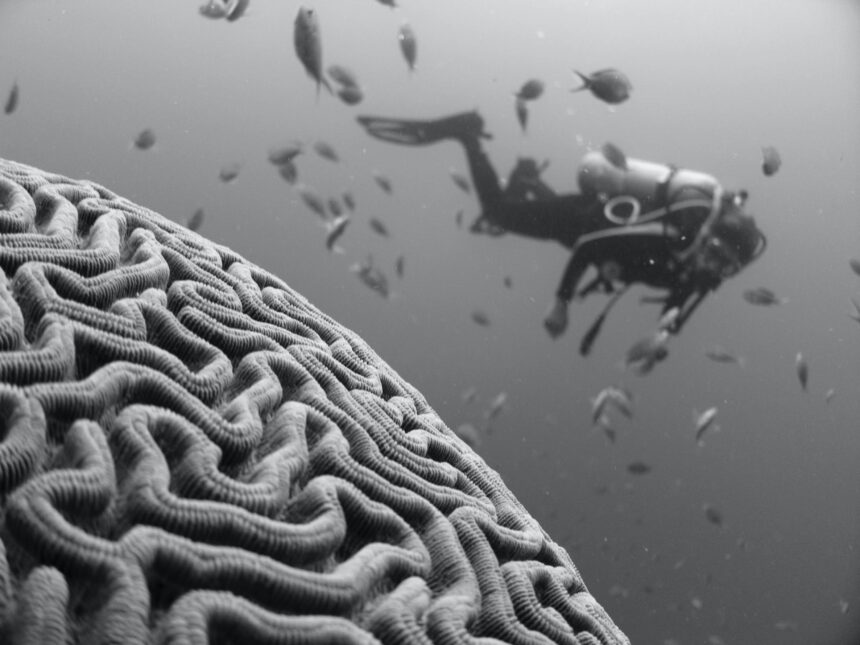
Diver swimming past a large brain coral formation on the reef

If diving with corals is how you get your underwater kicks, then Kelleston Drain is a must-do for you, and everyone else to be honest! This dive site is known for being home to the largest brain corals worldwide – some reaching a staggering 15ft/5m across! Kelleston Drain is located on the southern side of Little Tobago, a small island 1.8miles/3km east of Speyside. This creates a strong current with a high nutrient level, which sustains these massive brain coral colonies, as well as barrel sponges, sea whips and gorgonians.

With higher currents, Tobago supports larger pelagic marine life and common sightings include nurse sharks, schools of jacks and barracudas and the chance manta ray.

Black Jack Hole
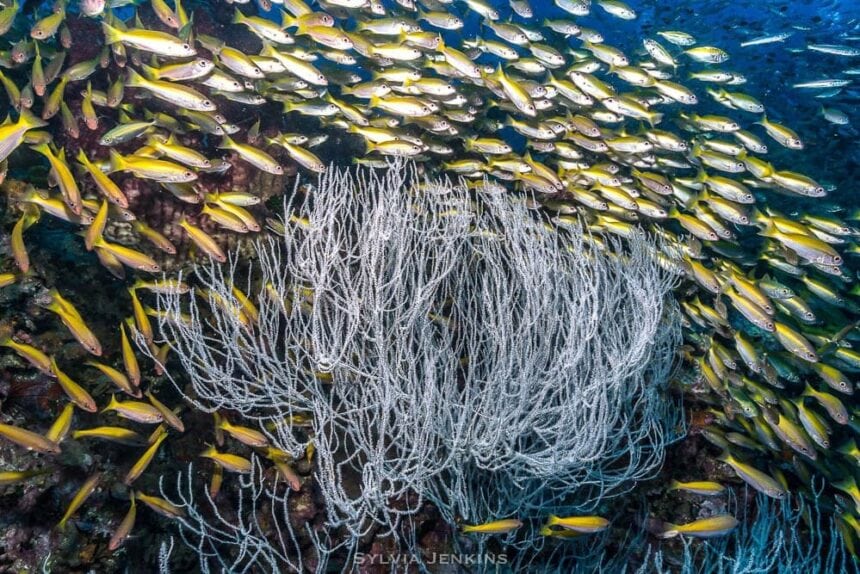
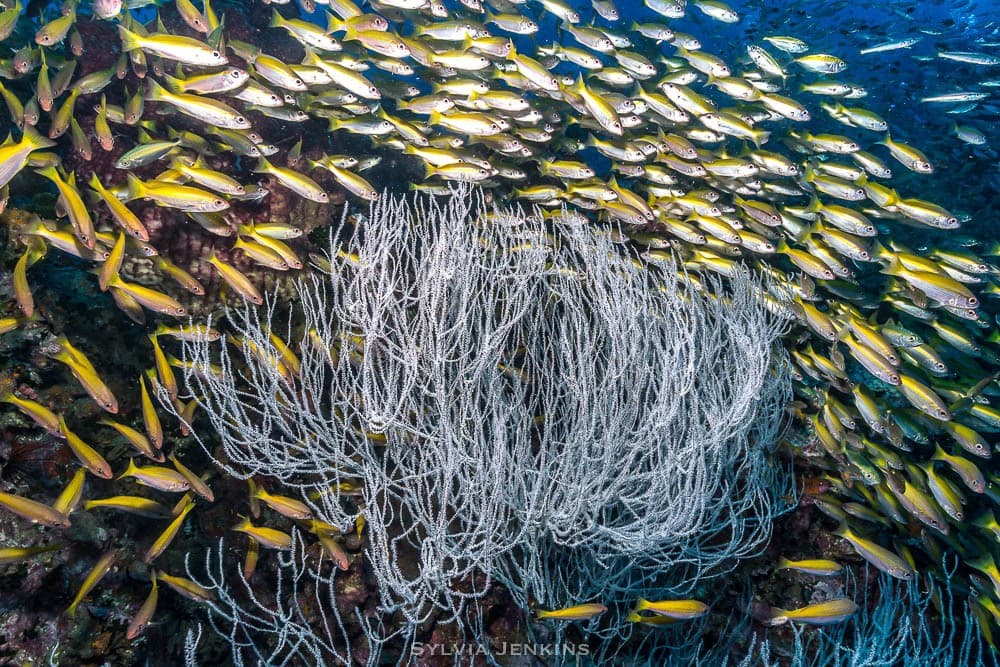
School of yellow and white fish swirling around a soft coral fan

Another spot on the southern side of Little Tobago and next door to Kelleston Drain is Black Jack Hole. The origin for its name comes from the large schools of black jacks that migrate here between May and July.

This dive site ranges from 30-130ft/10-40m, and is made up of a sloping coral reef with dramatic overhangs and ledges. Similar to its westerly neighbor, the currents here are relatively strong and with its sharp descents, Black Jack Hole is considered an intermediate dive site.

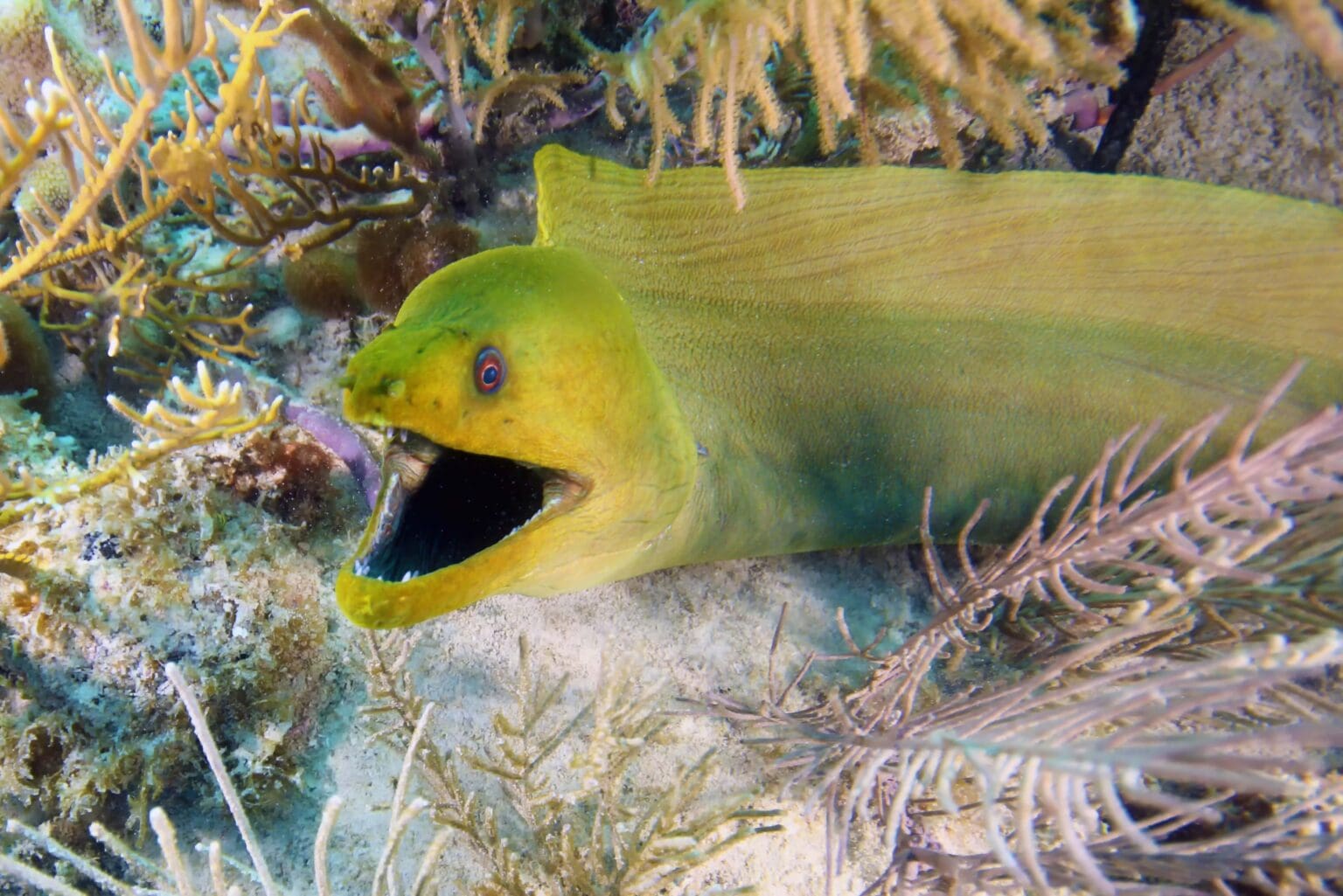
This dramatic seascape welcomes large schools of Chromis and anthias, and larger life such as hawksbills and reef sharks. And remember your torch to find the spiny lobsters and green morays hiding out in the crevices.

Japanese Gardens (Goat Is)
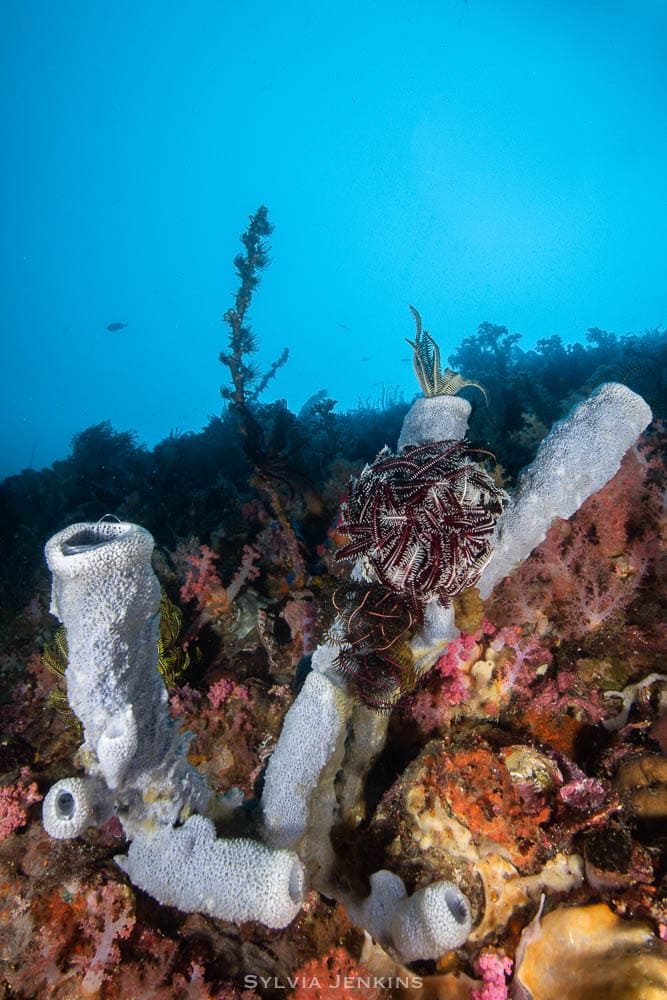
Organ pipe coral colony with a feather star crinoid perched on top

Directly opposite Speyside and Tyrel’s Bay, just a mile away is Goat Island, a popular snorkelling and diving destination. One of the more popular dive spots is to the south, known as Japanese Gardens.

Starting off at just 15ft/5m, and slowly descending a steep slope, you very quickly understand how it got its name. Japanese Gardens is full of colorful organ pipe corals and broad barrel sponges. With its southerly position, the currents are more than mild and often divers drift over Japanese and continue through Kamikazee Cut – a passageway that opens up to a sheltered spot, home to some resident nurse sharks.

Angel Reef (Goat Is)

Situated on the western side and sheltered by Goat Island, Angel Reef is a shallow reef with calmer waters. With its quiet current and good visibility, Angel Reef is a fantastic spot for the underwater photographers amongst us!

Dotted around this protected piece of paradise are a number of cleaning stations, providing the chance to snap up some macro shots of cleaner shrimp busy at work. These cleaning stations provide rare opportunities to catch a photo of their regular clients – parrotfish, butterflyfish and angelfish- who are normally dashing and darting over the reef scene, enjoy a moment of pause.

Thanks to its serene conditions, Angel Reef is just as popular at night.

Bookends

Acquiring its name from the two opposing pinnacles rising above the water’s surface, this striking seascape creates a grand underwater amphitheatre.

Diving here is limited as the current can be very turbulent, making the descent only possible at favorable conditions and descents quick. For those that have the experience to dive such an advanced site and are there at the right time, Bookends really deliver quite the magnificent underwater treat.

Divers can encounter sharks such as blacktips and nurse, tarpon, turtles, rays and shoals of numerous fish, all against a beautiful backdrop of rich and healthy coral.

SHARK DIVING 101 ~ FOR DIVERS & BY DIVERS

Caribbean Coast

Sister’s Rocks

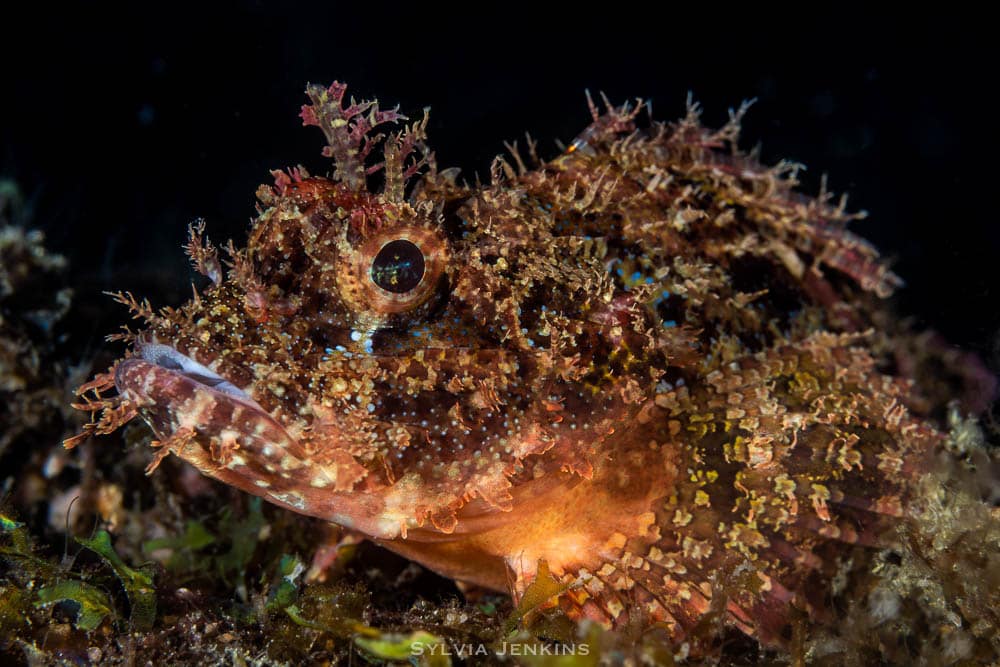
Camouflaged scorpionfish resting on the reef with mottled, textured skin

1.5miles/2.5km north of Tobago is a small cluster of islands known as the Sisters, with a collection of pinnacle dive sites that extend beyond 140ft/40m.

On the northern and western landward sides, advanced divers can experience steep wall faces and the larger pelagic species -sharks, barracudas, mantas- that cruise by. It is also a reliable fact that between October to May large schools of scalloped hammerhead sharks migrate here.

For the slightly less experienced, there are shallower reef sites on the eastern side, which are teeming with colourful morays, scorpionfish, octopus and lobsters tucked into every crevice.

All the sites dotted around the Sisters are an underwater safari and a true magical Tobagian experience.

Castara Reef

Castara, a tucked away bay with local eateries and postcard oceanfront views are the perfect stopover as you travel along the Caribbean coastline.

Here the beach is long, flat and sandy, making shore entries to the nearby reef seamless. The reef is generally shallow, 10m/30ft, and only starts to get deeper as you head out of the bay, heading northeast. With its sheltered bay, sandy bottom and shallow reef, Castara is a great place to snorkel with the little ones or even have them experience diving for the first time!

Whether your head is above or below, enjoy underwater views of elkhorn coral, stingrays hiding in the sand and juveniles enjoying their safe haven.

SCUBA DIVE 101: Learn Scuba Diving: What You Need to Know

Culloden Reef

Projecting seaward from the two headland tips of Culloden Bay and then curving to meet in the middle, Culloden Reef is a horseshoe mirrored parallel to its beach.

This reef is an unique “spur and groove” reef, which means that the ocean movement has, over time, caused the reef to separate to elongated segments, with sandy tunnels separating them. This constant flux of water means a variety of coral life, such as brain coral, pillar coral, whip coral and the bushy black coral. With all these corals and sandy channels comes an assortment of fish life – green morays, reef sharks, turtles, rays, angelfish, anthias and macro critters.

Although not as thrilling as some the dives further south, Culloden Reef offers distinctive topography and swim throughs, making for a peaceful yet intriguing dive site.

Arnos Vale Reef
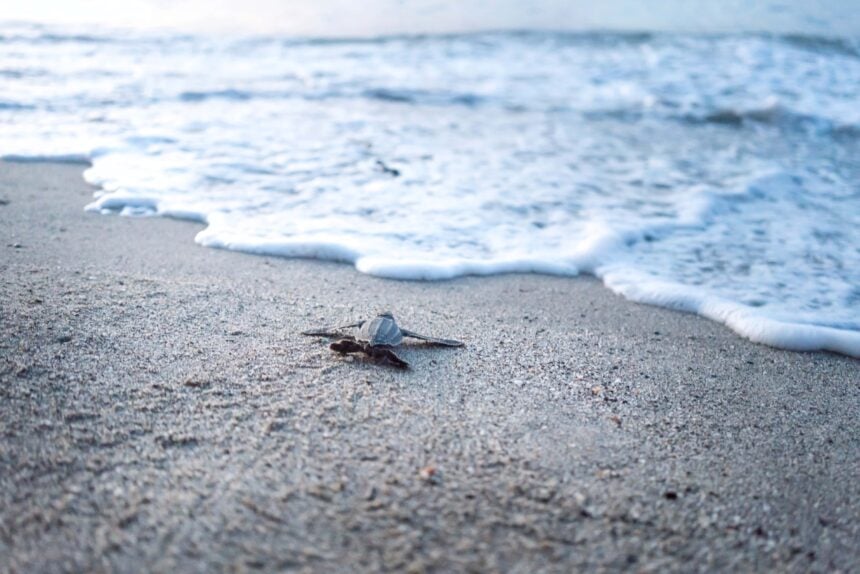
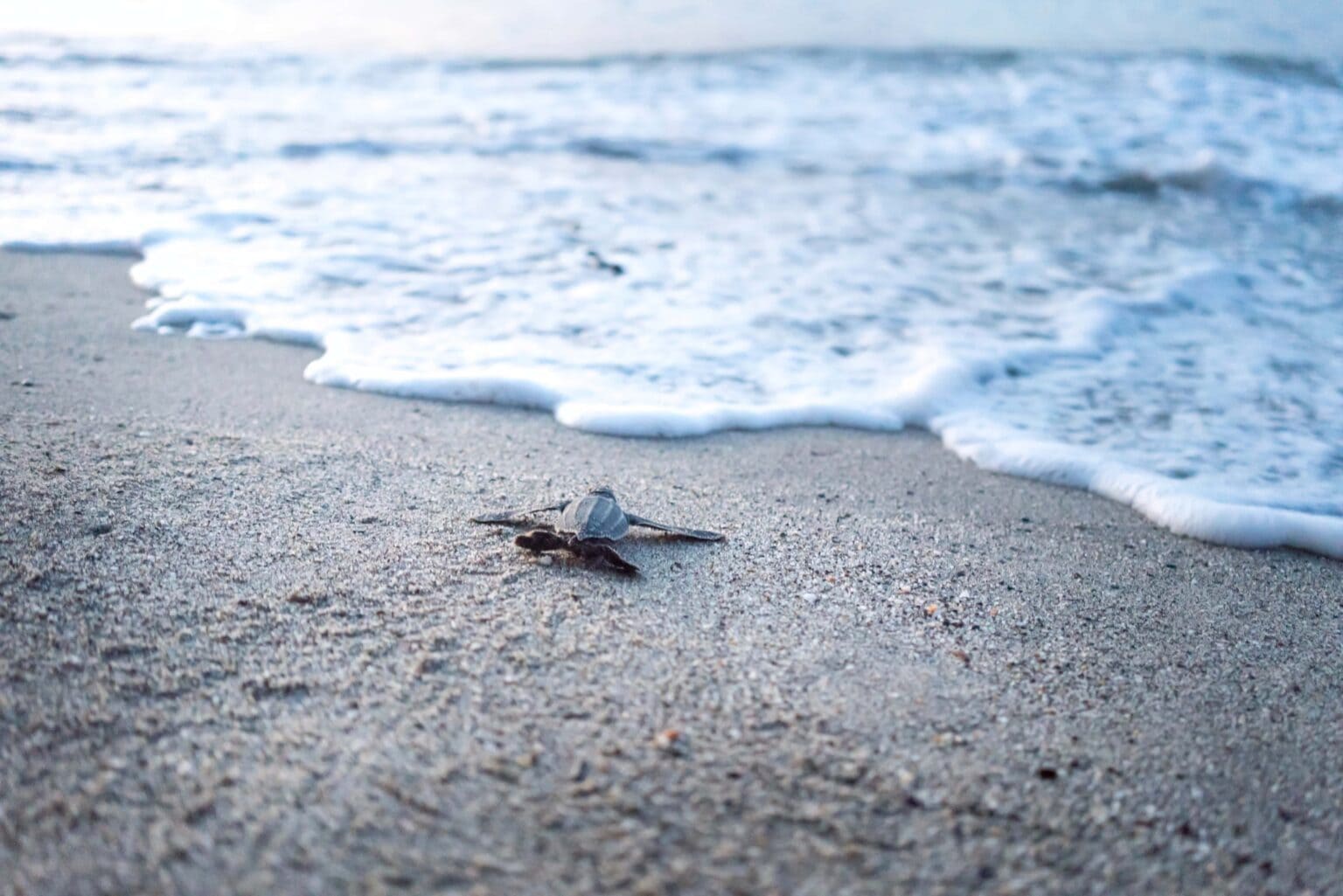
Baby leatherback turtle hatchling crawling across the sand toward the surf

This secluded 650ft/200m wide beachfront is the perfect place for a lazy day sitting on the beach, enjoying an easy diving day or a time-out with some casual snorkeling instead.

Like many of the reefs of Tobago, enjoying their underwater world is just a short swim from the beachfront. Arnos Vale is a rocky shelf, so the reef is always undulating with shallower (15ft/5m) and deeper (40ft/12m) coral outcrops.

This protected bay is a nursery and many juvenile reef fish seek refuge here. Whether it’d be with your professional camera or your casual compact, be sure to capture the undeniably cute boxfish, turtles, parrotfish wrasse. As is often the case with shallow easy to access shore sites, Arnos Vale is the perfect candidate for night diving, where crustacean critters came to life, along with squid and moray eels.

Through the summer months, it is possible to catch a glimpse of the magnificent mother leatherback turtles coming up onto the beach to lay their eggs.

The 15 Best Underwater Cameras In 2026

Maverick Wreck

Although there aren’t many shipwrecks sites around Tobago, the Maverick -a purposely sunk car ferry- is the perfect playground for the wreck lovers amongst you!

Sitting on a relatively featureless sandy bottom, the Maverick is the perfect hangout for the local marine life. The fact that it was deliberately sunk, standing upright and only 26 years old, means the wreck is in pretty great condition. A perfect candidate for those new to wreck diving or want to do their speciality.

All over the wreck are healthy patches of coral and polyps, with reef fish and the occasional turtle weaving around. At the base of the wreck,100ft/30m, amberjacks are a common sighting, along with massive stingrays and cobias.

Mt. Irvine Wall

Probably the most popular of all on the Caribbean coast and around Tobago, Mt Irvine Wall has something to offer all divers.

Just beyond its local bay, Mt Irvine breaks the surface inviting beginners and snorkelers alike. Due to its offshore location, Mt Irvine is-yep you guessed it!-a shore dive.

Starting off shallow, approximately 10m/30ft, this elongated pinnacle is only 10 feet deep, with a sandy bottom. The rocky reef holds a spectrum of life, many of which are hiding in crannies and crevices. Finding shelter here are lobsters, nudibranchs, eels, octopus and morays.

Become a Better Diver through Shore Diving

Mt. Irvine Wall Extension

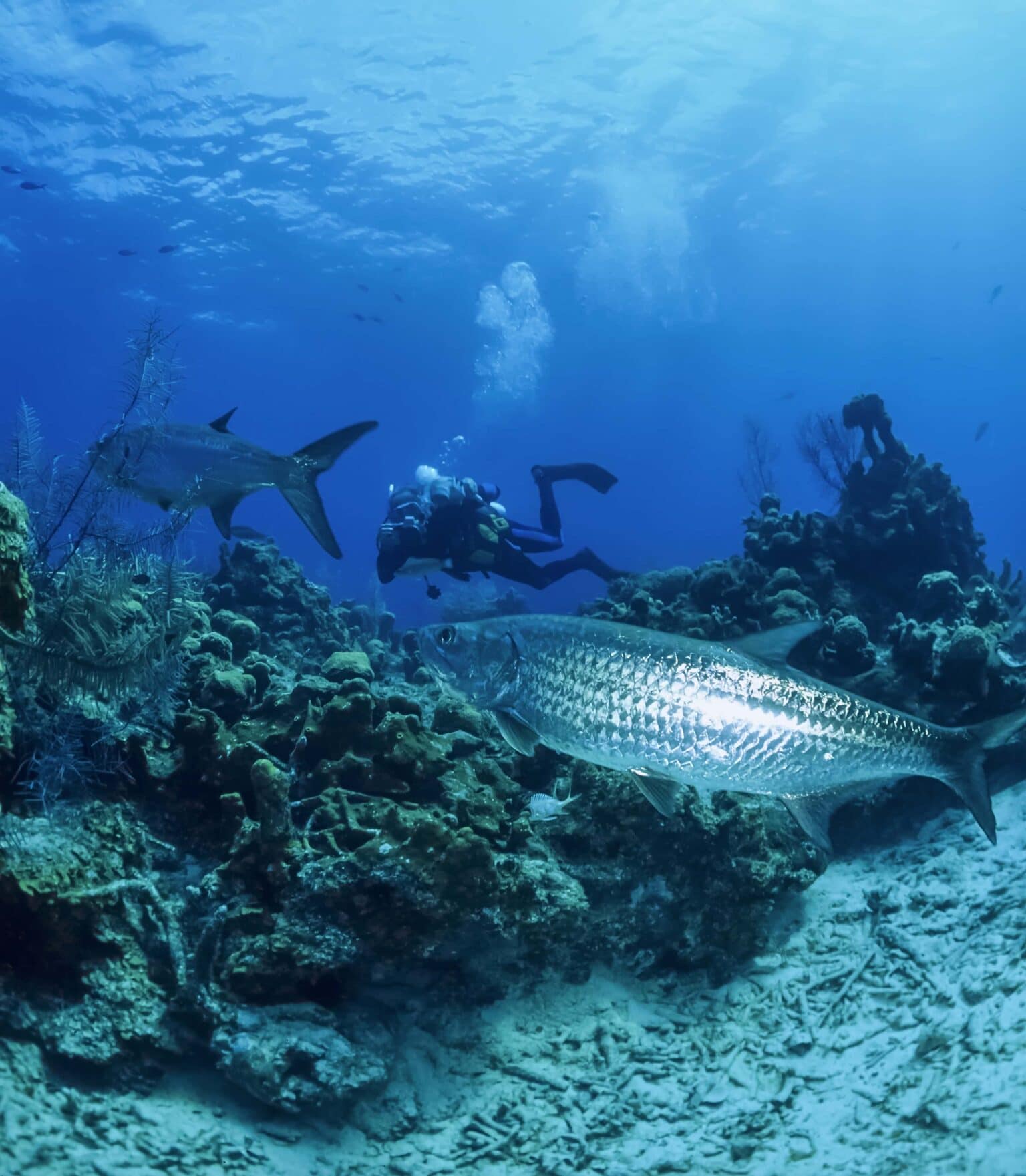
Scuba diver exhaling bubbles near a large tarpon over a Caribbean reef

For those that can, Mt Irvine Wall continues beyond its friendly neighborhood reef to a maximum depth of 80ft/25m. Beyond Mt Irvine, this extension transforms into a seascape of outcropping volcanic boulders, creating an almost lunar experience. It is along this segment where there are larger schools of larger fish such as tarpon and barracuda, with beautiful coral plumes and fans as their backdrop.

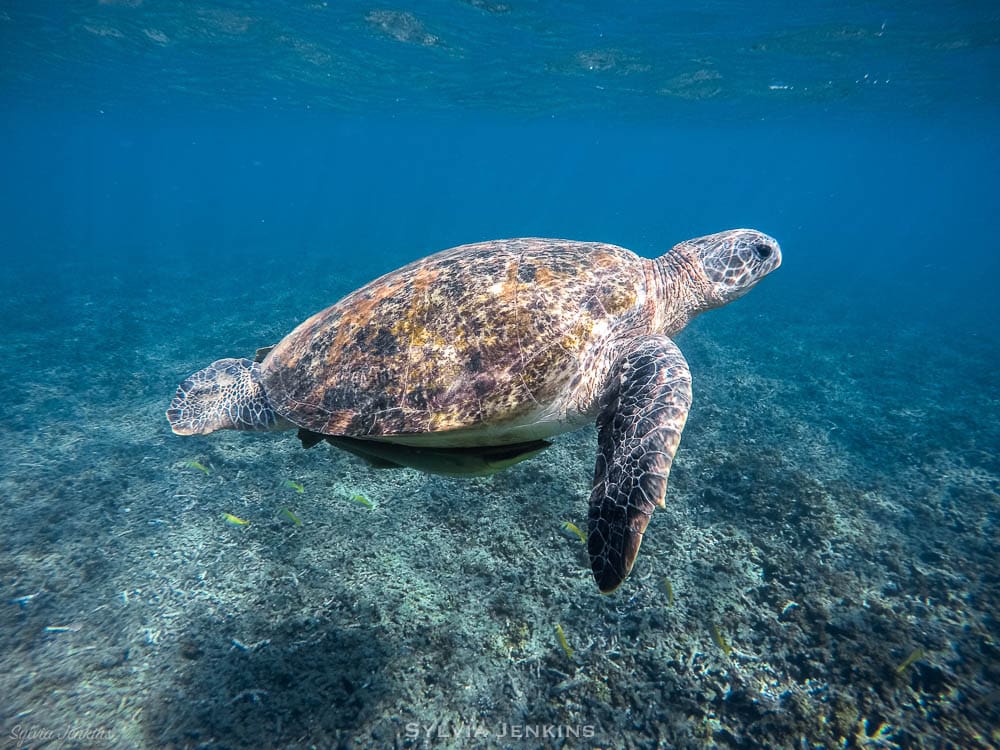
Gliding effortlessly over this volcanic landscape are also hawksbill turtles and rays, and perhaps even a manta will grace you with her presence.

South Atlantic Coast

Kariwak

South West of Crown Point’s main beachfront, Store Bay, is Kariwak Reef. It is easily accessible both from shore or by boat if you want to go a little further/deeper.

The Reef itself is a shallow 10-50ft/3-15m and being so close to shore and sheltered by the bay, the currents are very mild if not at all. These easy breezy conditions make it the perfect place for those wanting a trial dive, check-in dive or just some family friendly snorkelling. This absence of currents make it a photographer’s paradise, with the chance to snap up turtles, groupers and rays, surrounded by an array of colourful reef fish.

Kariwak’s convenient position and calm conditions also make an ideal spot for night diving.

Flying Reef
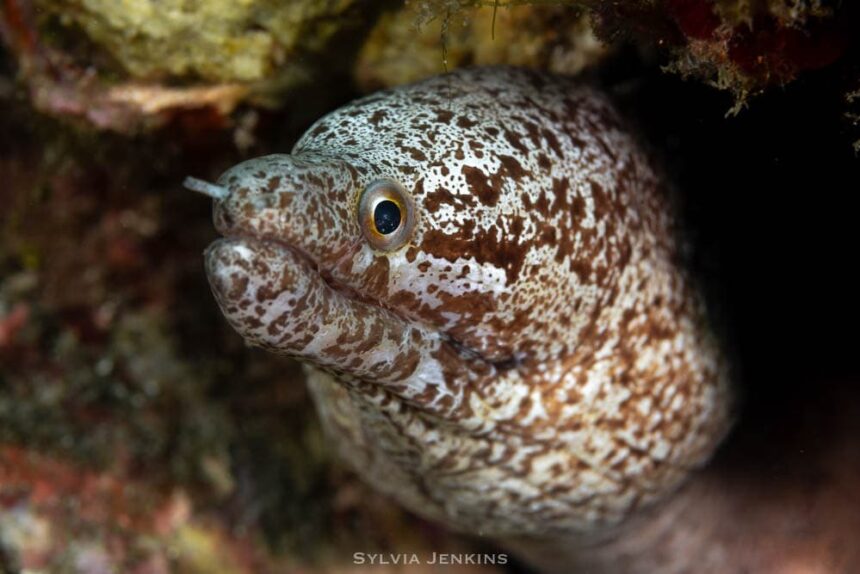
Spotted moray eel peering out from a reef crevice with its mouth slightly open

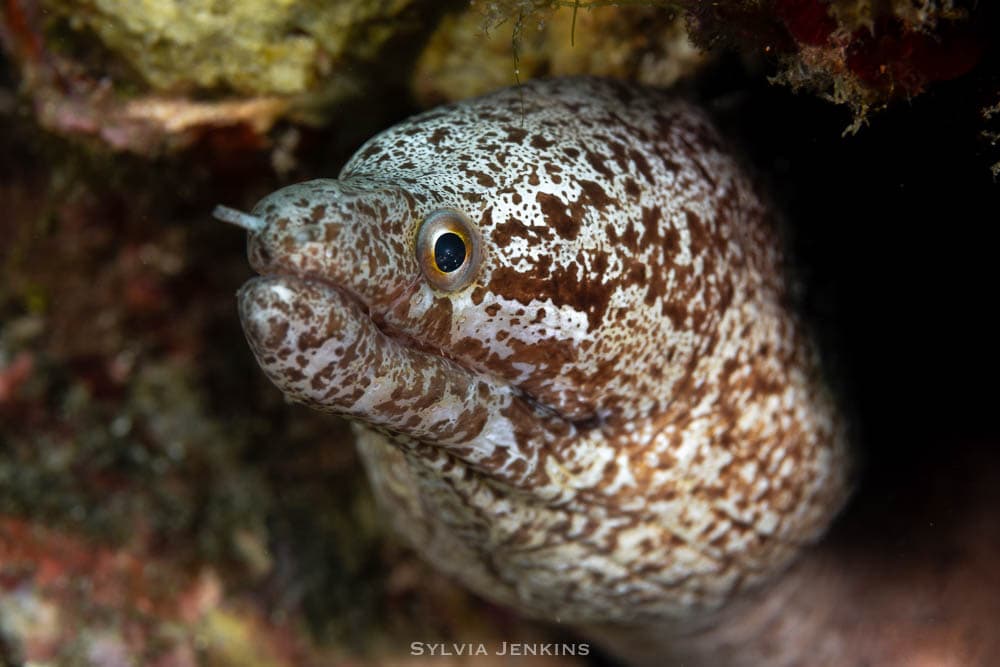
This popular dive site is just a quick boat ride from the main town, Crown’s Point, and is a good place for beginners to get introduced to drift diving. The Atlantic waters are reasonably calm as you drift over Flying Reef, and so a way to get acclimated to the stronger currents further south.

The depth range is 18-45ft/5-15m and is accessible for all divers. The generally flat seascape harbors a dense population of colourful reef fish such as angelfish, moray eels, parrotfish and snappers, along with rays, sharks and turtles. A special highlight and interesting photo opportunity is an anchor, a popular hangout for the local marine life.

Drift Diving 101: All you need to know about Drift Diving

Cove & Crack

Two large barrel sponges on the reef seabed topped with black feather stars

Although only 5km/ 3 miles east along the coast from the Flying Reef, the Cove is more open to the Atlantic Ocean and noticeably stronger currents. You’ll be glad that you did Flying Reef first just to ease yourself into it!

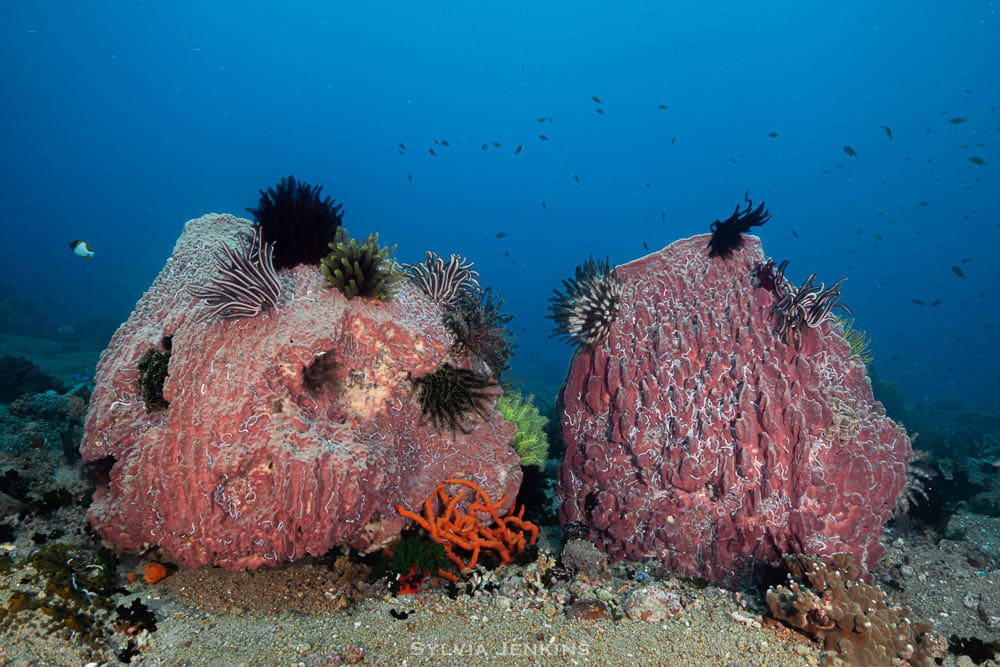
The underwater seascapes consist of steep slopes with nooks and crannies. Although the average depth of the site is not so much (40-66ft/12-20m), the currents paired with the extreme topography calls for intermediate experience. Here coral life is particularly abundant, with the likes of brain, sea fans, barrels sponges and fire corals.

Continuing from the Cove is the Cove Crack, a curious extension of the dive site with even more overhangs. Be sure to bring a torch as many spiny lobsters, rays, morays eels and nurse sharks tend to live in these hideouts.

Diver’s Thirst
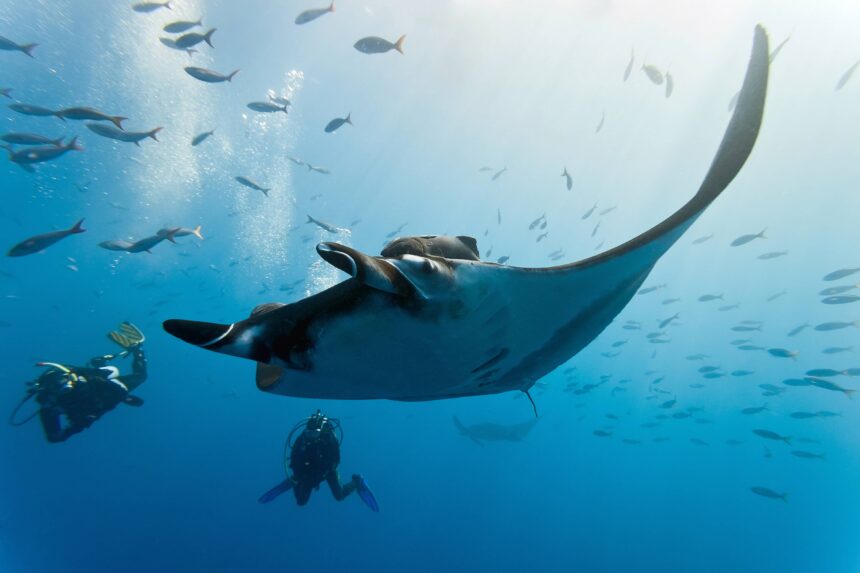
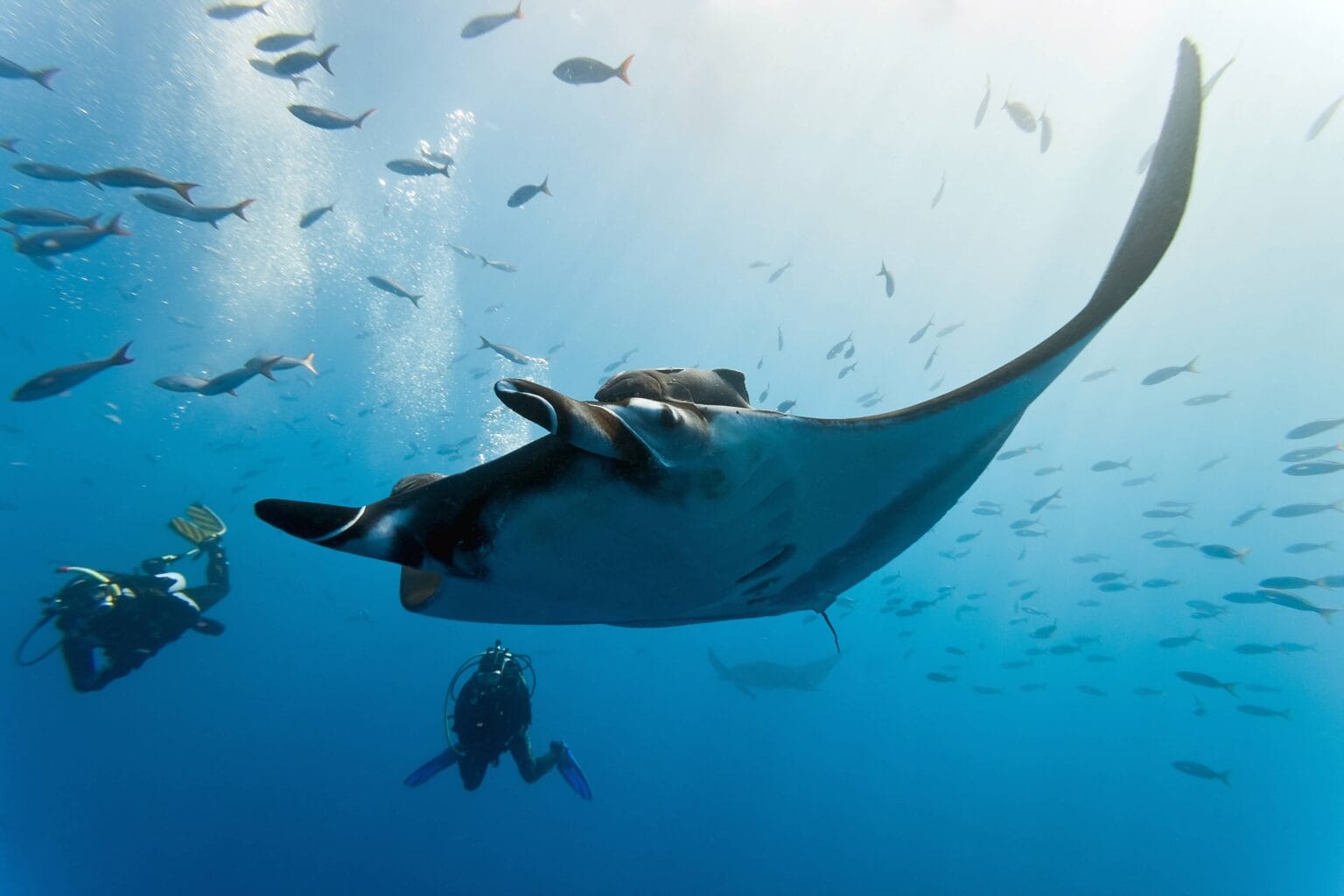
Manta ray gliding over two divers surrounded by schooling fish

Around 3 miles/5km south from Crown’s Point, and so a little longer boat ride than its neighboring coast huggers is Diver’s Thirst. Its more offshore location and proximity to the Atlantic Ocean means there are mild currents and depths, making it reserved for advanced divers.

The topography ranges from 60-100ft/20-30m, with rocky ridges and sandy undulating bottoms. A great spot for underwater wide angle photography as common sights include massive barrel sponges, schools of larger fish, turtles, nurse sharks and – if the sea gods are in a good mood – a manta ray as well.

Diver’s Dream

Dense school of barracuda swirling together in open blue water

1 mile/1.5 km southwest from Diver’s Thirst is Diver’s Dream, and so often these dive sites are paired together. Diver’s Dream is a shallower – 50-70ft – rocky reef plateau and generally more open seascape than Thirst.

Due to its more open (Atlantic) ocean location, to dive here you have to be sure of your drifting dive skills as the current can pack a punch! But as the name suggests, Diver’s Dream is one of the top sites around the island, with a marine abundance of coral and fish life – sharks, rays, turtles, barracudas.

Like its more sheltered partner, Diver’s Thirst, there are also barrel sponges here, yet here they have been molded into curious sculptures thanks to the stronger currents.

WEATHER IN TOBAGO

Temperatures: 20-35°C/68-95°F.

Rainfall/month: 20-250mm/0.8-10.5 inches

*July-November are the wettest months, with monsoon-like rains occurring frequently. Off the back of that, January is the coldest month (80℉ on avg.), slowly getting hotter and drier in May (83℉ on avg.). Tobago lies at the southern border of the Atlantic hurricane belt, so extreme weather can happen but it is less vulnerable than its northern neighbors.

WATER TEMPERATURE IN TOBAGO

75-84°F/24-28°C

CURRENCY

Trinidad and Tobago Dollar

LANGUAGE

English & Creole

MAP

Subscribe
Notify of
guest
guest
0 Comments
Take a momnent Take a moment to look at this.
It's genuinely free…
Look at this
Shearwater Newsletter Form (widget sidebar) (#26)

Join our newsletter to win:

Free Scuba Gear!

We’ve partnered with Shearwater Research and are giving away a brand new Shearwater Peregrine TX with a Swift GPS Transmitter.

To enter the competition – Join the DIVEIN and Shearwater newsletters:

You can always unsubscribe for free
Learn more about our giveaways here!

Most read this week:

Divers on a boat looking out over turquoise water at the edge of Belize's Great Blue Hole

Diving the Great Blue Hole in Belize

Dozens of hammerhead sharks schooling in open blue water above the camera

Best Diving in South America: Pacific Pelagics & Atlantic Reefs

School of spadefish gliding over a coral outcrop in Panama's Pearl Islands

Best Diving in Central America: Calm Caribbean Reefs & Pacific Pelagics

Black and white view of a shipwreck resting on its side on the seabed in Egypt's Red Sea

Best Shipwreck Diving in Egypt | Eight Iconic Red Sea Wrecks

Aerial view of the German Channel cutting a dark line through Palau's shallow turquoise reef flats

Best Diving in Palau | 10 Top Dive Sites

Limestone cliff and sea stack on the Roatan coast with a small boat on flat blue water

20 Best Dive Sites in Roatan, Honduras in 2026

Aerial view of a marina in St Lucia lined with yachts against a tropical hillside

Diving in St Lucia

Hilltop view over a sheltered Antigua bay full of moored yachts, with green hills beyond

12 Best Dive Sites in Antigua and Barbuda in 2026

Show More

DIVEIN.com was founded in 2009 by the two brothers Torben and Nicolai.

We’re a free review guide – run by passionate Divers, Sports, and Outdoor fanatics.

Follow Us

YOUTUBE
FACEBOOK
INSTAGRAM

Our reviews: We can make the world a little bit better with great in-depth reviews.

Why? Because great in-depth gear reviews will help you select the right products for your specific needs, budget, and interests. And when you have the right product, you’re a little bit happier which affects the people around you!

Income disclosure: We are reader supported, and may earn affiliate commissions when you buy via links found on DIVEIN.com: If you find a good deal on our site, you click to the retailer and you buy the product, we get a commission of the sale. This is how we pay ourselves. It does not make the product pricier for you.

All content is copyright protected by either DIVEIN.com or respected copyright holders – © 2026

Your rights:

California Residents: Do Not Sell My Personal Information
EU Residents: If you have a dispute, you can use the Online Dispute Resolution platform. Our data practices comply with the GDPR.
Australian Residents: Your consumer rights are protected under the Australian Consumer Law (ACL).
Canadian Residents: Our data practices comply with PIPEDA.
UK Residents: Your rights are protected under the Consumer Rights Act 2015.

About this image

Related to:

wpDiscuz