




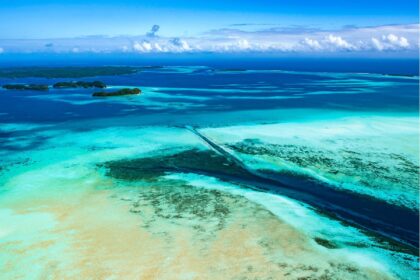
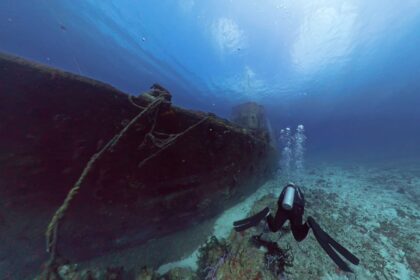
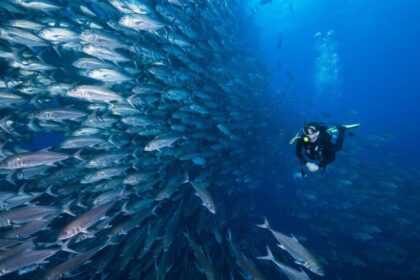
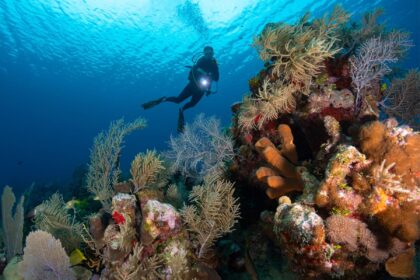
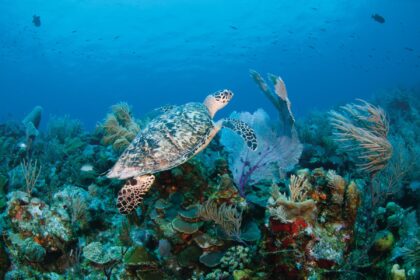










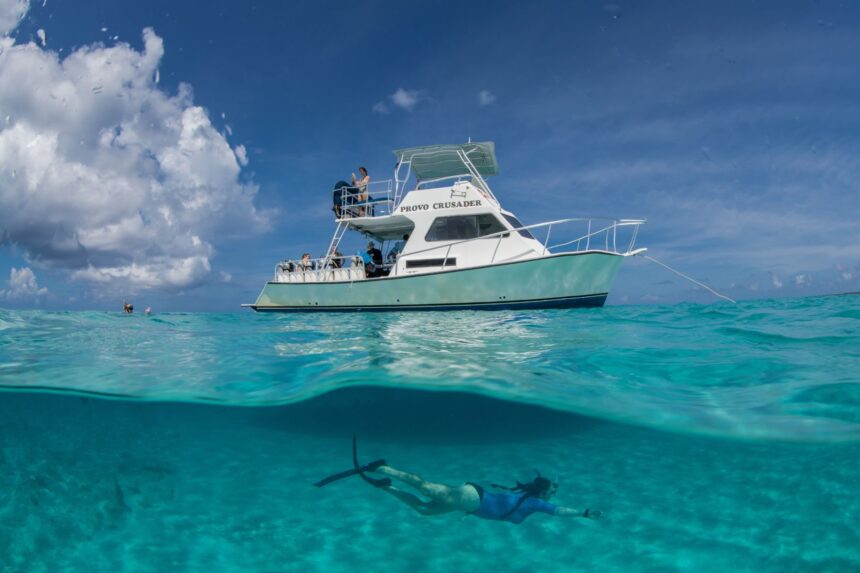
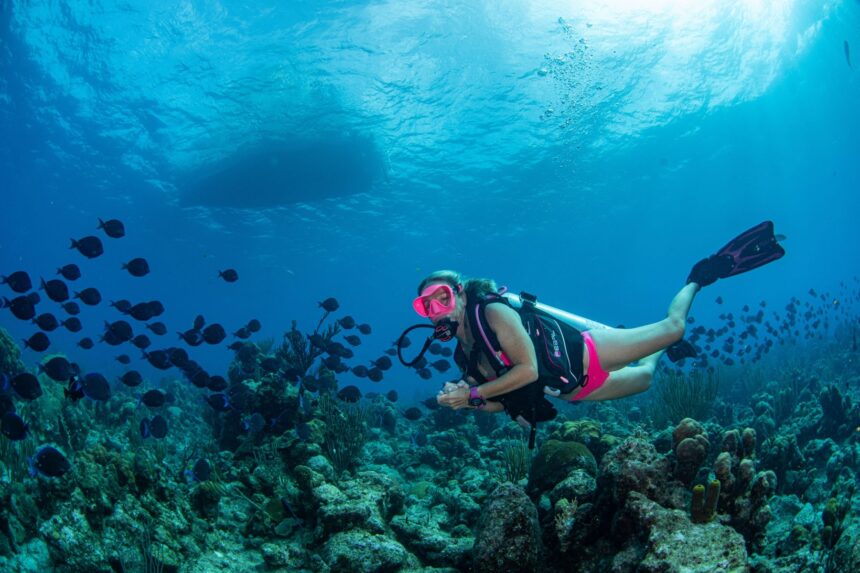
The Turks and Caicos sit at the southeastern edge of the Bahamas chain. This string of low limestone islands and cays is surrounded by some of the clearest water in the Atlantic. The main draw here is the wall. All around the archipelago, the fringing reef rolls out from shore before falling away into a vertical drop that plunges thousands of feet into the blue. You hover at the wall’s edge, look down, and take in the vast blue abyss beneath you.
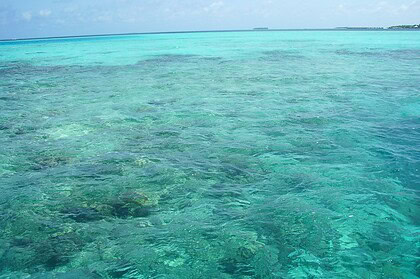
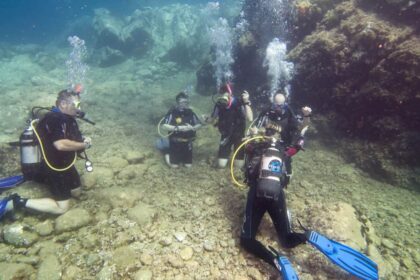
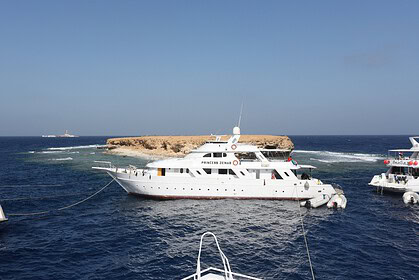
Whether you’re looking to get certified or you’ve logged hundreds of dives, the Turks and Caicos has an appropriate dive site. Most dives take place off small boats, with short rides to the site. There are gentle, if any, currents through much of the year. Visibility regularly tops 100 feet (30 m). The wall is the main attraction, but the reef tops, sand flats, and swim-throughs reward those who slow down and pay attention.
In this guide, we’ll focus on three islands: South Caicos, Grand Turk, and Providenciales. Here are DIVEIN’s picks for the best dive sites in the Turks and Caicos.
What makes diving in the Turks and Caicos so good?
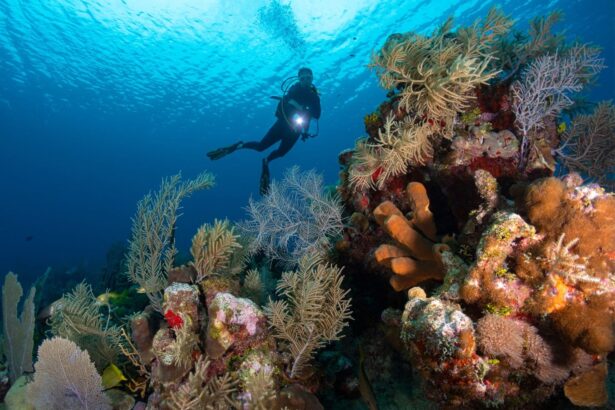
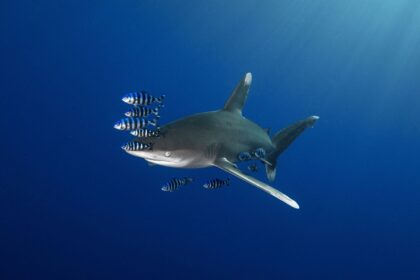
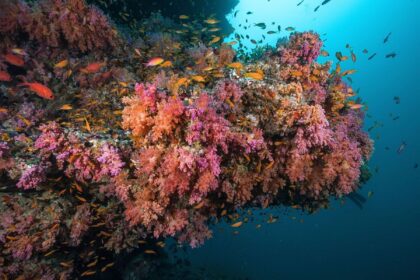
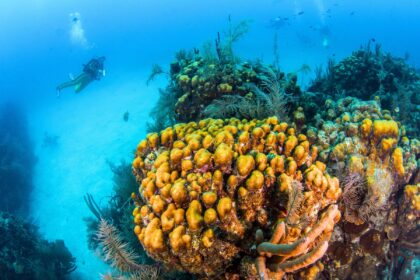
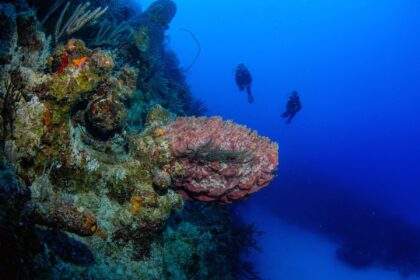
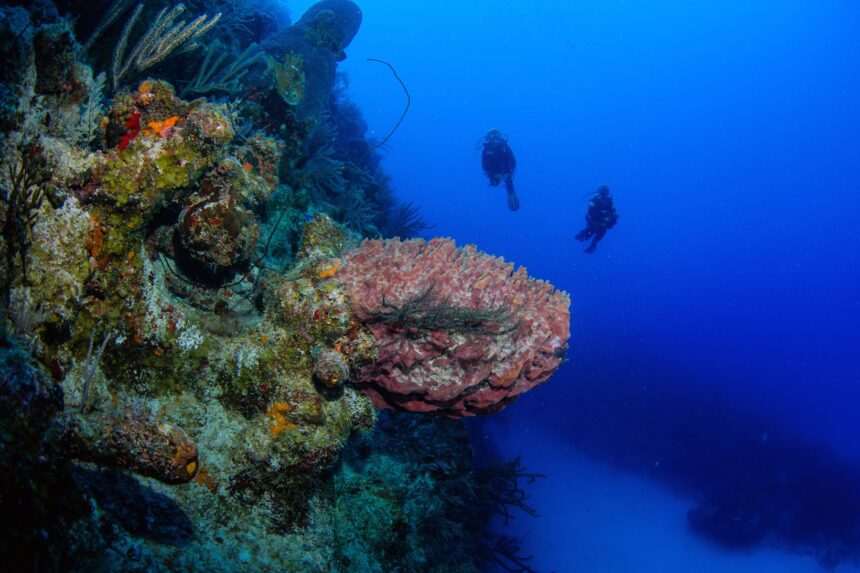
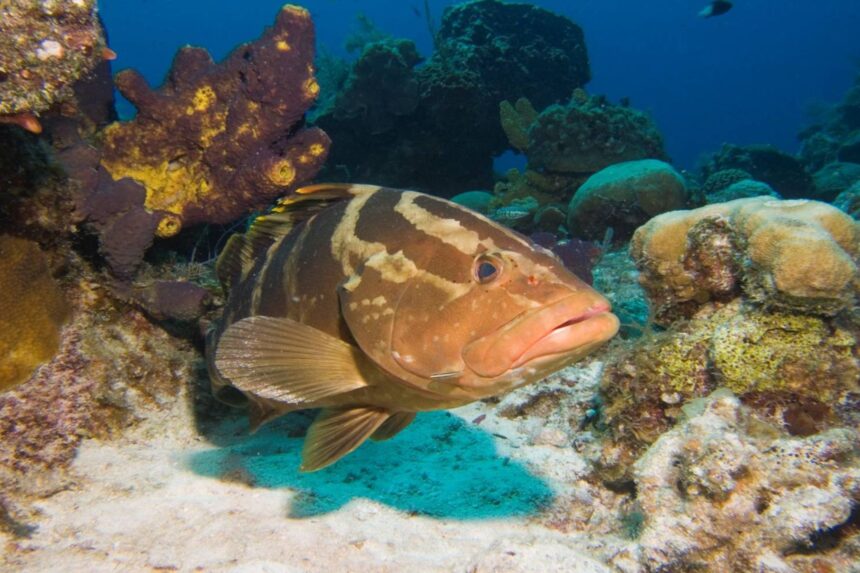
The short answer is the wall, and the long answer is everything living on it. These islands sit on a shallow limestone bank, and where that bank ends, the reef drops straight into the Turks Island Passage and the open Atlantic. That edge concentrates life. Caribbean reef sharks and spotted eagle rays cruise the drop-off, turtles and Nassau groupers patrol the reef top, and the sheer face is upholstered in barrel sponges, tube sponges, and deepwater gorgonians.
The water helps too. Visibility is consistently excellent, currents are usually mild, and temperatures stay warm enough that a 3 mm wetsuit is adequate most of the year. Add short boat rides and uncrowded sites, and you get a destination that rewards beginners and seasoned divers alike.
Where to dive in the Turks and Caicos
The country splits neatly into two groups separated by the deep Turks Island Passage. The Caicos group sits to the west and the Turks group to the east, and the diving shifts character as you move between them.
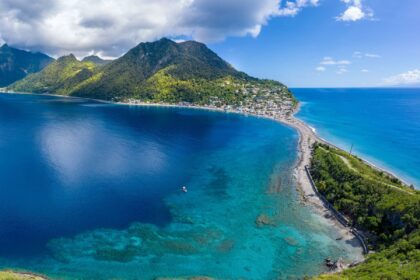
South Caicos is the quiet one, a tiny island off the southeastern corner of the Caicos Bank with an unspoiled wild coastline, carefully mapped wall sites, and very few divers in the water beside you. Grand Turk packs a remarkable density of fish and coral onto a wall that sits minutes from the beach. Providenciales, or Provo, is the busy hub with the most resorts and the longer boat rides. It serves as the jumping-off point for the dramatic walls of Northwest Point and West Caicos. We’ve organized the nine sites below by island, three apiece.
South Caicos

South Caicos is the island for divers who like to fall a little off the map. It is small, low-lying, and famously uncrowded, with wild rocky shores and the ruins of an old salt industry scattered across the land. The diving happens on the windward side, where the reef gives way to mini-walls and drop-offs, and the sites here lean into topography and big-animal encounters.
The Grotto

There’s a good reason the Grotto sits at the top of just about every South Caicos dive list. As an advanced diver, you can drop down to the lip of the wall and follow it around, keeping the reef on one shoulder and open water on the other, until the site’s namesake swim-throughs and coral formations open up at the deeper eastern end. The real magic is in the hovering, hanging weightless at the edge and watching to see what cruises past. People ask to dive this one again and again because there is always so much to take in.
Things to See:
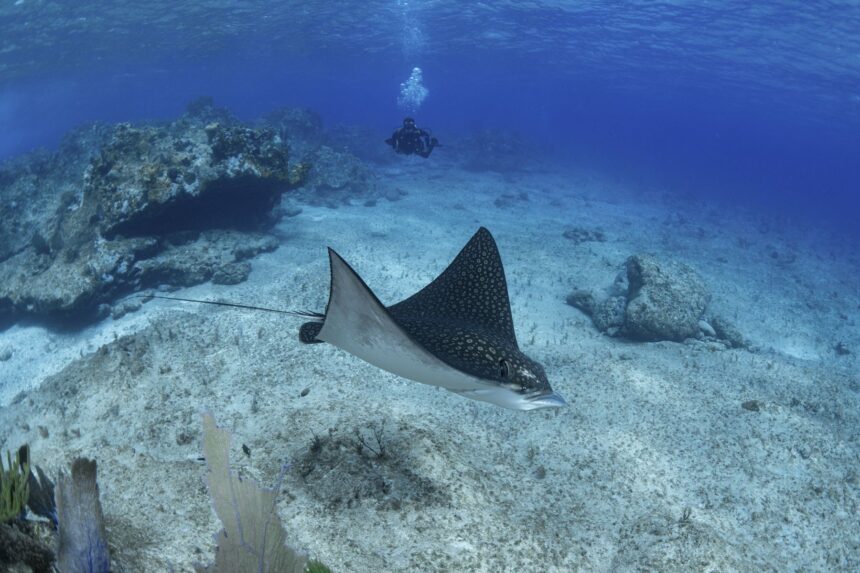
This is where the wall earns its reputation. Eagle rays and turtles glide along the drop-off; horse-eye jacks swirl overhead; and a reef shark will often make an unhurried pass to size you up.
Down on the medium-deep sand flats, big roughtail rays lie half-buried and content to pose for a photo. Spend your time watching the open water rather than racing along the reef, because the larger animals can show up at any time.
Highlights:
- A true wall dive with swim-throughs at the deeper end
- Regular eagle rays, turtles, and the occasional reef shark
- Roughtail rays resting on the surrounding sand flats
Type: Wall, swim-throughs
Skill level: Advanced
Access: Boat
Spanish Chain

Spanish Chain is one of those sites that gives you a bit of everything. Swim out from the mooring and you will come across the heavy chain left behind by an old ship, a tangible reminder of the era when South Caicos shipped salt across the region. The history is only half the draw, because the site is also reliably full of life and home to one of the island’s coral nurseries.
Things to See:
The marine life here is the kind that keeps you coming back, with healthy reef fish working the coral and larger animals passing along the deeper edge. The coral nursery is the part worth lingering over.
South Caicos runs a genuine reef-restoration effort through a consortium that brings together Salterra, the School for Field Studies, the Turks and Caicos Reef Fund, and the Reef Institute, all working to rebuild the reefs around the island. Watching young coral grow on the frames is a quiet highlight you will not find at most sites.
Highlights:
- A historic ship’s chain from the salt-trade era
- An active coral nursery you can dive
- Dependable reef fish and passing pelagics
Type: Reef, wall, coral nursery
Skill level: Intermediate
Access: Boat
Eagle Ray Alley
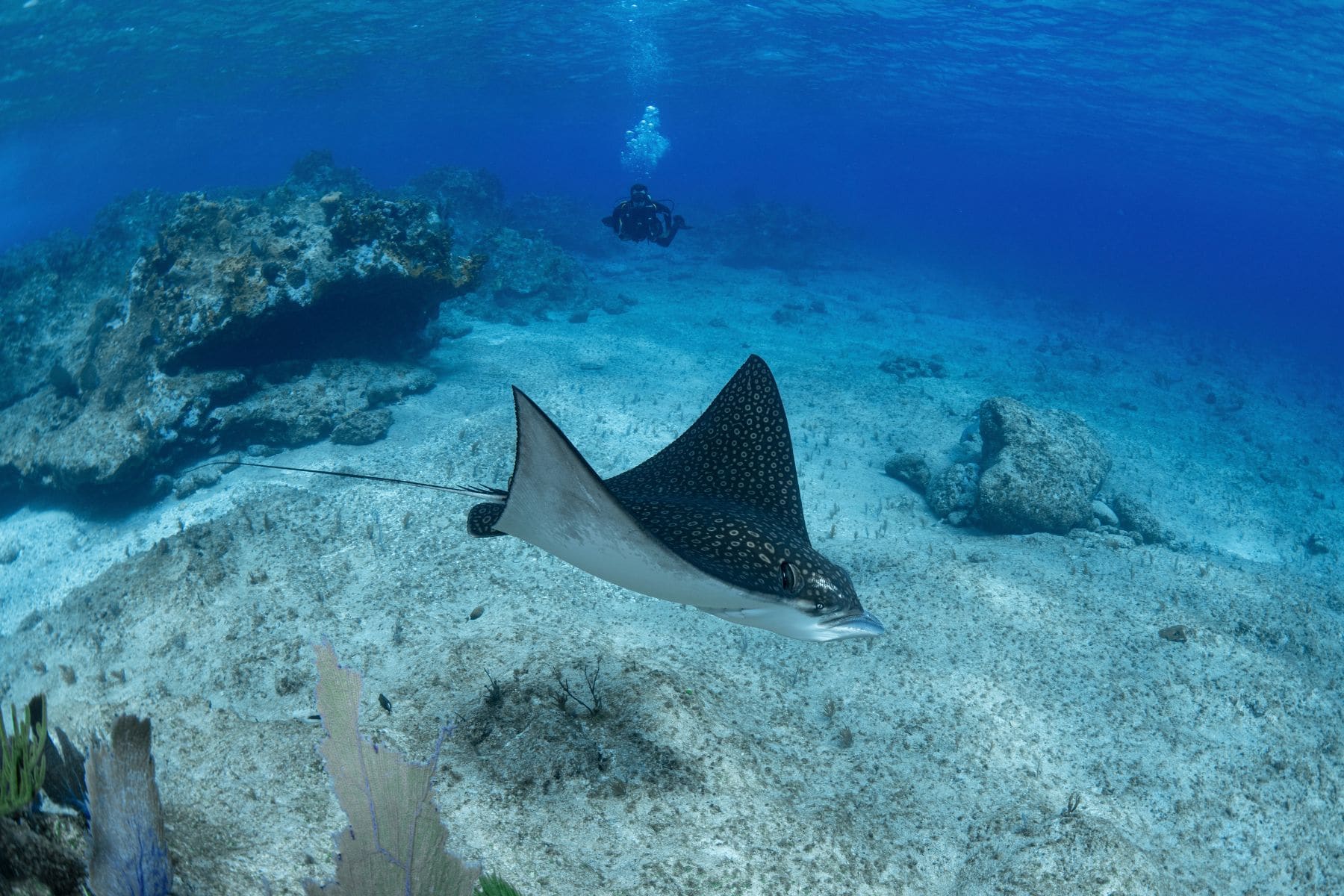
Eagle Ray Alley is a shallower site that works for just about everyone. The name is not just hype, because large groups of eagle rays really do tend to pass through here, gliding by in formation while you watch from the reef. It is a rare site that suits a first-timer and a veteran equally well, which makes it a go-to for Discover Scuba participants and certified divers alike.
Things to See:
Eagle rays are the headline act, and when they move through in numbers it’s a beautiful sight to behold. The site sometimes catches a faster current, which is part of why the soft corals here are so lush and full. Between drifts, the shallow reef gives you plenty of color and reef fish to enjoy, and the bright, easy conditions make it a forgiving place to get comfortable.
Highlights:
- Frequent eagle ray encounters
- Shallow and beginner-friendly
- Lush soft corals fed by the current
Type: Shallow reef
Skill level: Beginner
Access: Boat
Grand Turk
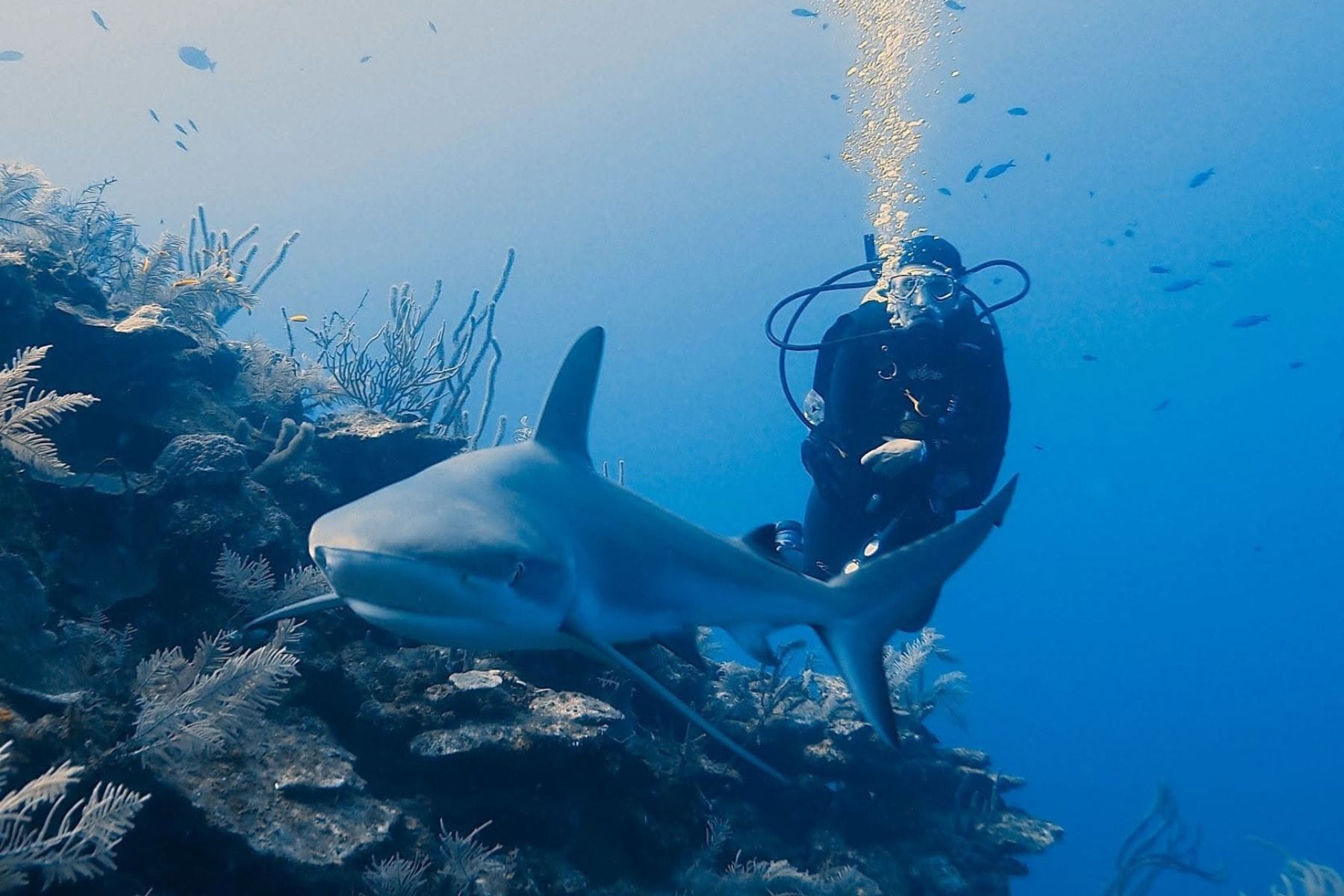
Grand Turk is compact, historic, and built for divers. The famous wall runs the length of the island on the sheltered western side, often just a 5-minute boat ride from the beach. It drops from around 25 to 30 feet (8-9 m) straight down toward depths of 7,000 feet (2,100 m). What sets Grand Turk apart is the sheer density of life packed onto each site. You really can feel as though you are swimming inside an aquarium.
McDonald’s
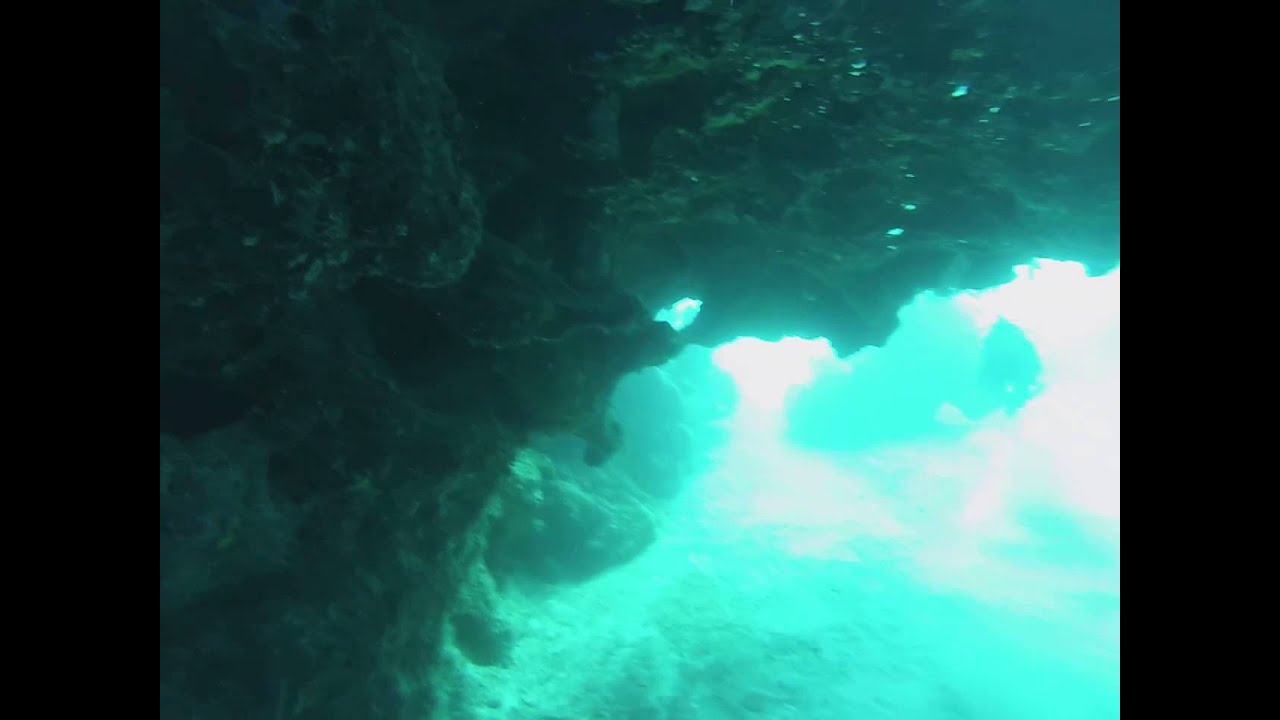
McDonald’s earns its grin-inducing name from a coral arch that looks just enough like a certain set of Golden Arches to make the comparison stick. It is wide enough for two or three divers to pass through comfortably, and gliding under it onto the open drop-off is the highlight of the dive. Bright corals and sponges crowd the structure, and the arch frames the wall beyond like a doorway.
Things to See:
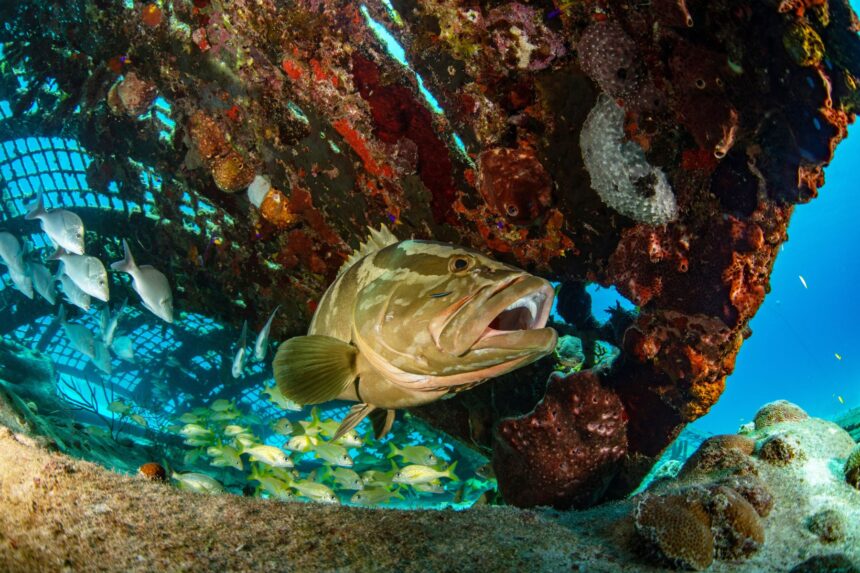
A cleaning station sits near the arch, which means groupers and parrotfish tend to gather to get tidied up, often paying you no mind at all. Keep an eye out for green moray eels tucked into the coral, eagle rays cruising the wall beyond, and chilled-out sea turtles munching on the algae. The whole site has the friendly, fish-heavy feel that Grand Turk is known for, so don’t be surprised if a curious Nassau grouper decides to tag along for the dive.
Highlights:
- A swim-through coral arch that opens onto the wall
- A working cleaning station with groupers and parrotfish
- Moray eels, eagle rays, and sociable groupers
Type: Wall, swim-through
Skill level: Intermediate
Access: Boat
Finbar’s
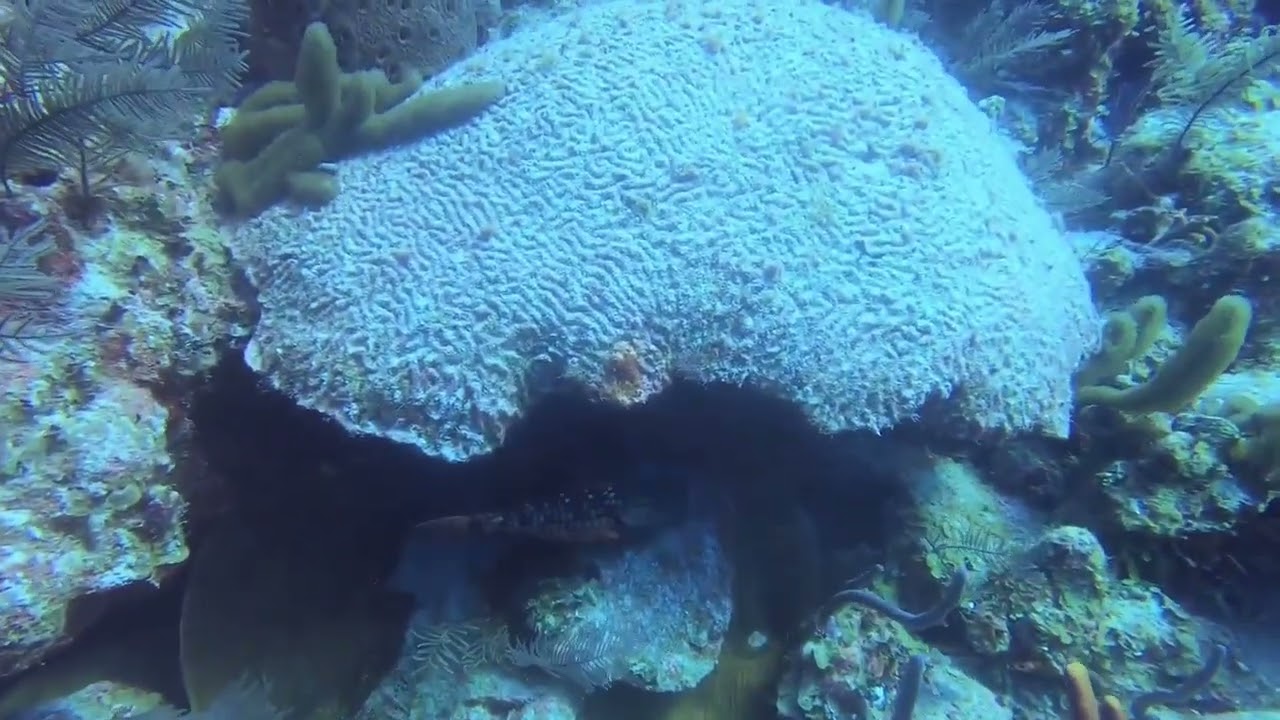
Finbar’s, sometimes logged as Finbars Reef, is built around a massive coral mound that rises from around 80 feet (24 m) and is draped in red deepwater gorgonians. It has a different texture than the classic arches and swim-throughs nearby, trading drama for a slower, more painterly kind of beauty. The deeper gorgonian growth gives the site a rich, almost velvety look that photographers love.
Things to See:
The gorgonian-covered mound is the centerpiece, and it draws the usual Grand Turk cast of characters along the adjacent wall. Expect spotted eagle rays and reef sharks patrolling the drop-off, with snappers, jacks, and groupers cruising the reef. Because the best of it sits a little deeper, this is a site that rewards good buoyancy and an eye for the smaller creatures living among the sea fans.
Highlights:
- A deepwater mound covered in red gorgonians
- Eagle rays and reef sharks along the wall
- A more atmospheric, photogenic profile
Type: Wall, deep reef
Skill level: Intermediate to advanced
Access: Boat
The Aquarium
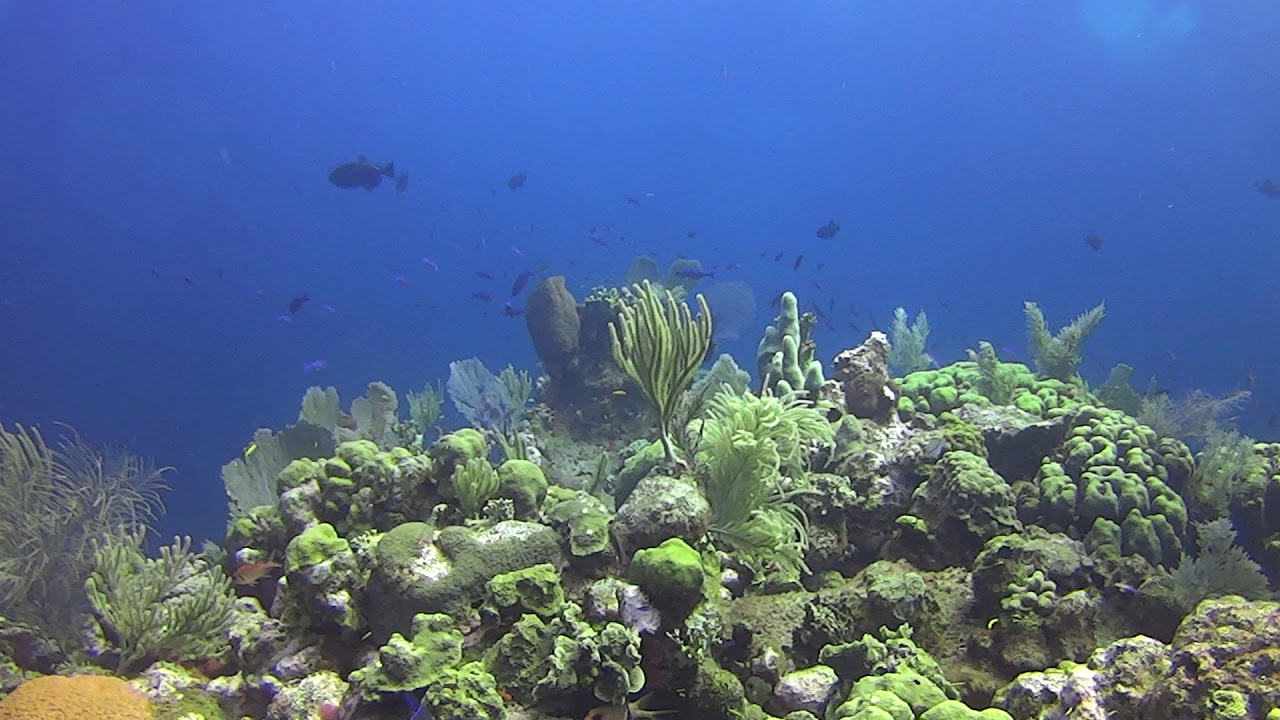
The Aquarium sits at the northern end of the Grand Turk wall, and it is named for exactly what you would hope. Fish here turn up in genuinely staggering numbers, with near-continuous schools blanketing the top of the wall. The terrain is an exaggerated spur-and-groove formation, with sand chutes running down through the coral toward the drop-off around 100 feet (30 m).
Things to See:
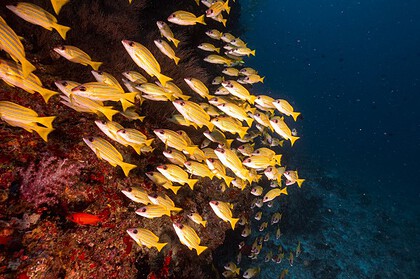
This is the spot for big schools. Ocean triggerfish, schoolmasters, crevalle jacks, blue runners, yellowtail snappers, and barracuda all move through in good numbers, and the reef itself is dense with boulder star coral, brain coral, sea rods, and sponges. Friendly Nassau groupers and green turtles are regulars too. With shallow, easy conditions, it works nicely for newer divers while still giving experienced ones plenty to enjoy.
Highlights:
- Huge schools of fish over the wall
- Healthy hard coral and sponge growth
- Easy enough for beginners, rich enough for everyone
Type: Wall, spur-and-groove reef
Skill level: Beginner to intermediate
Access: Boat
Providenciales
Provo is the country’s main gateway, home to the international airport, the widest spread of resorts, and the largest dive industry in the islands. The trade-off for all that convenience is longer boat rides, but they take you somewhere worth the trip: the sheer, sponge-clad walls of Northwest Point and the sites off nearby West Caicos. These are some of the finest drop-offs in the Turks and Caicos, and the boats here tend to be larger and better equipped for the run.
Elephant Ear Canyon
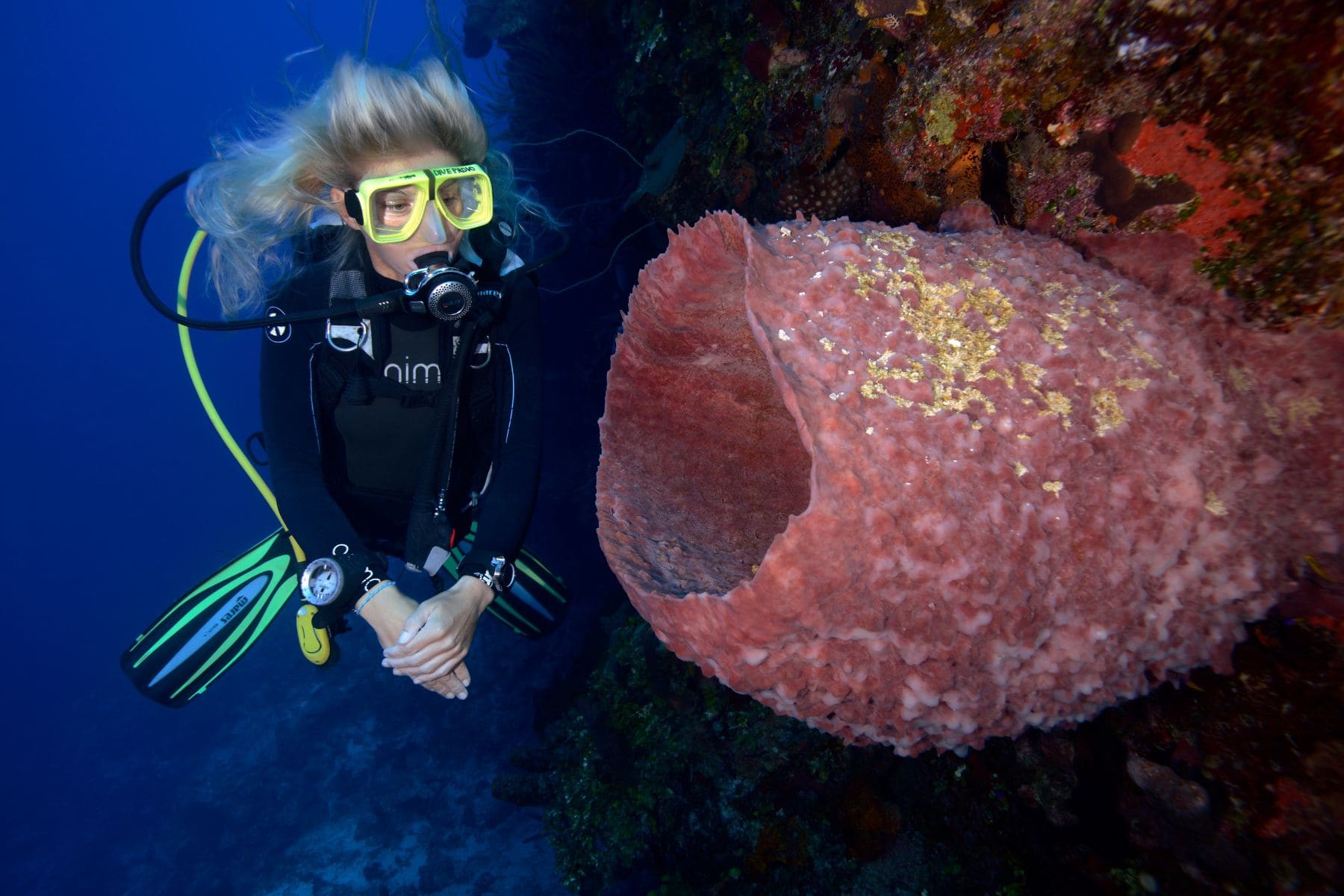
Elephant Ear Canyon took its name from a particularly huge elephant ear sponge that, sadly, was damaged in a hurricane some years back. The reef carries on regardless, and the site remains thick with large sponge formations. The coral reef along the top of the wall sits around 50 feet (15 m), broken into sections by sandy chutes that funnel you toward the edge.
Things to See:
The big sponges are the signature, decorating the wall in oranges and purples as it drops away. Work your way back toward the boat at the end of the dive and take a close look at the sandy bottom, with garden eels swaying in the current, stingrays cruising low, and tilefish hovering over their burrows. It’s a satisfying mix of dramatic wall and gentle sand flat in a single dive.
Highlights:
- Large sponge formations along the wall
- A reef top around 50 feet split by sand chutes
- Garden eels, stingrays, and tilefish near the mooring
Type: Wall, reef
Skill level: Intermediate
Access: Boat
Hole in the Wall at Northwest Point
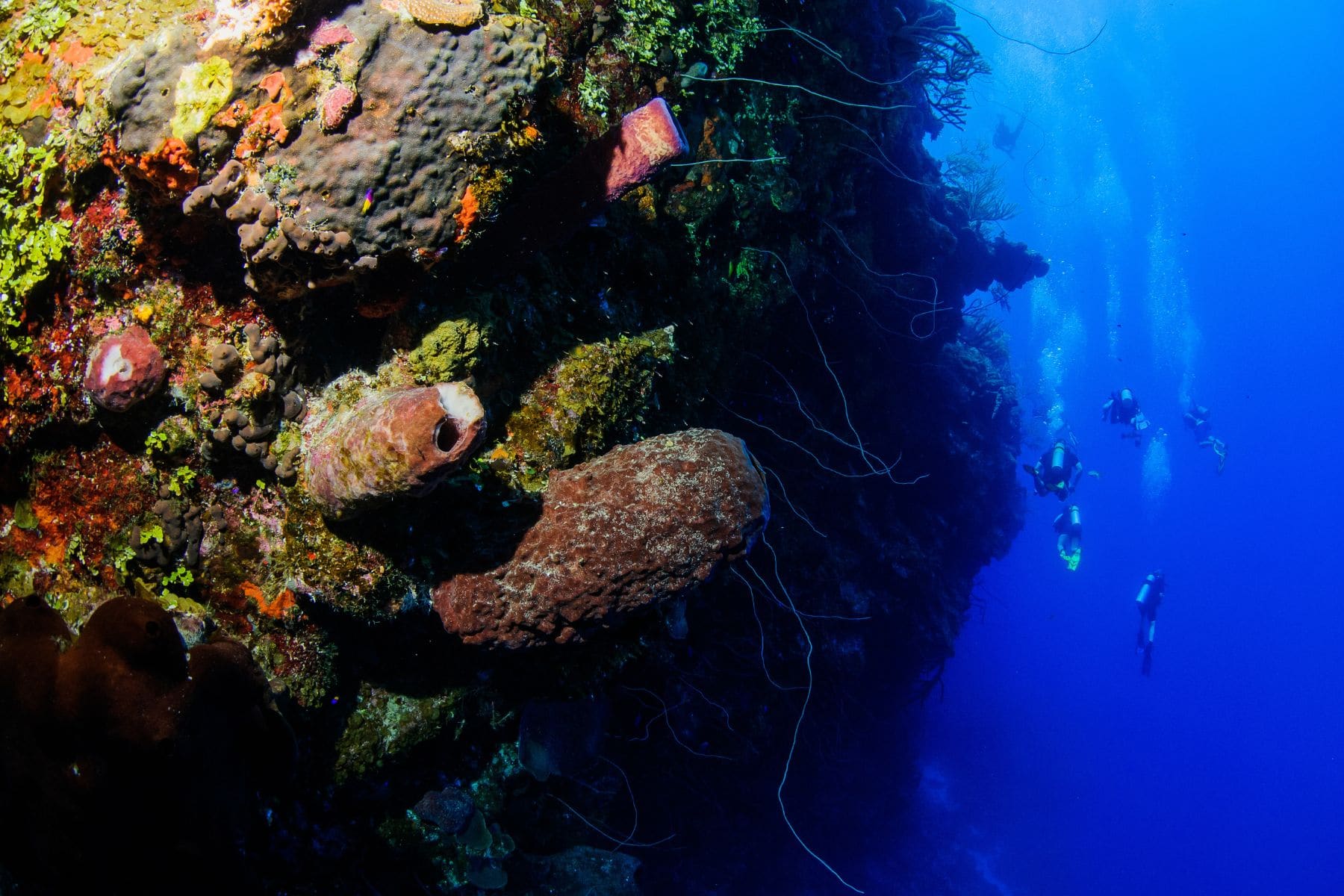
Hole in the Wall is exactly what it sounds like, a vertical crack that opens at around 55 feet (17 m) and runs down through the reef before emerging from the face of the wall near 95 feet (29 m). There is only room for one diver in the hole at a time, so you take your turn, but the payoff is worth the wait. Sliding out of the rock and into open blue water is one of those sensations that stays with you long after the dive.
Things to See:
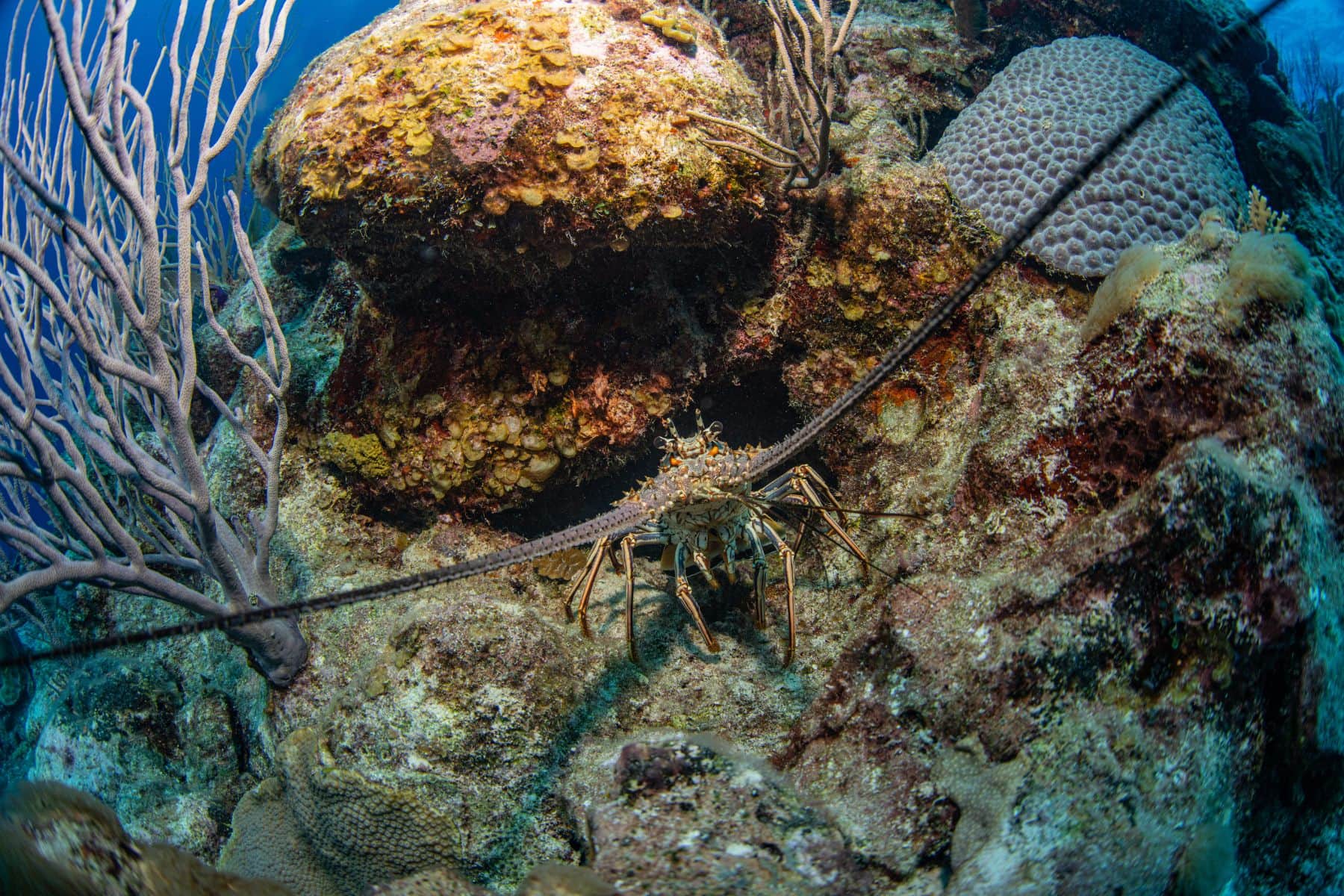
Inside the chute you will find brittle corals, lobsters wedged into the cracks, and small reef fish sheltering in the structure. The walls around the hole carry extensive sheet coral formations, and once you pop out onto the face you have the full sweep of the Northwest Point wall in front of you. Take it slow on the way through and let your eyes adjust, because the contrast between the tight passage and the open drop-off is the whole experience.
Highlights:
- A vertical swim-through from 55 to 95 feet
- The rush of emerging onto the open wall
- Sheet corals, lobsters, and sheltering reef fish
Type: Wall, swim-through
Skill level: Advanced
Access: Boat
Pinnacles in Grace Bay
Pinnacles is the gentle, endlessly re-diveable site of the three. Large stands of pillar coral make this stretch of reef genuinely distinctive, rising in soft columns that you don’t see in such quantity at many sites. Each stand has its own little population going about its business, which is exactly what makes the site so easy to dive again and again.
Things to See:
The pillar corals are the stars, and the fun is in how different each one feels. One cluster will be busy with a particular crowd of reef fish, the next will hold something else entirely, and you can drift between them noticing new details every time. It’s a relaxed, shallow-leaning dive with plenty of color, well-suited to slow exploration and to anyone who likes to linger and watch rather than cover ground.
Highlights:
- Distinctive stands of pillar coral
- A different cast of characters at every stand
- A relaxed site that rewards repeat dives
Type: Reef
Skill level: Beginner to intermediate
Access: Boat
About the Turks and Caicos
The Turks and Caicos is a British Overseas Territory of around 40 low-lying islands and cays, southeast of the Bahamas and north of Hispaniola. For divers, the main decision is which island to base yourself on. Providenciales has the international airport, the most resorts, and the widest range of accommodation, from family all-inclusives to quieter independent stays, and it puts you within boat range of Northwest Point, West Caicos, and French Cay.
Grand Turk trades that bustle for charm, with the wall just minutes offshore and a small, laid-back cluster of hotels and dive shops along the waterfront. South Caicos is the off-the-radar choice, reachable by a short hop from Provo, with a few luxury resorts, very few crowds, and wild salt-pond scenery ashore.
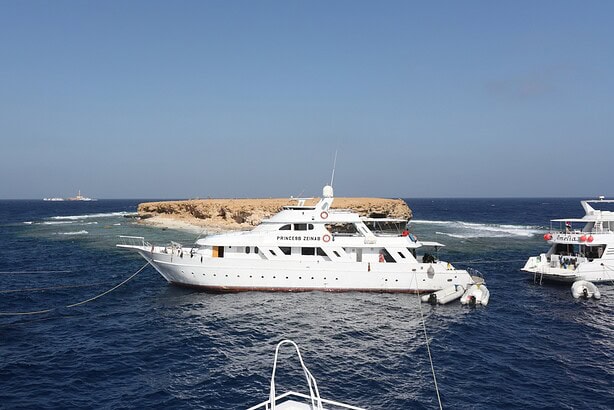
Diving here is almost entirely boat-based, and nearly all the popular sites sit inside national parks and protected reserves. The wall is the constant, but the character shifts island to island, from the fish-packed reefs of Grand Turk to the sheer drop-offs reachable from Provo.
Water stays warm year-round, dipping to the mid-70s F (21 C) in winter and climbing to the mid-80s (30 C) in summer. Late summer often brings the calmest water and the best visibility, though it overlaps with hurricane season, so keep an eye on the forecast when you plan.
If you time a winter trip right, you may get a bonus. Humpback whales pass through the Turks Island Passage roughly from January to March on their way to the Silver Bank, and Salt Cay and Grand Turk put you close to their route. Above water, the islands reward a slower pace too, whether that means cycling past the old salinas on South Caicos, watching for stingrays at Gibb’s Cay, or simply doing very little on a stretch of impossibly white sand.
Where to Stay & Dive
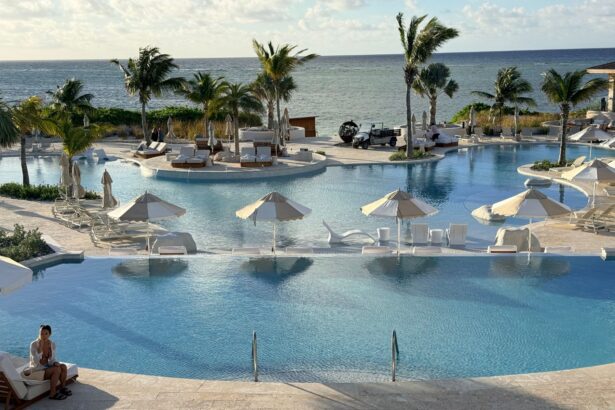
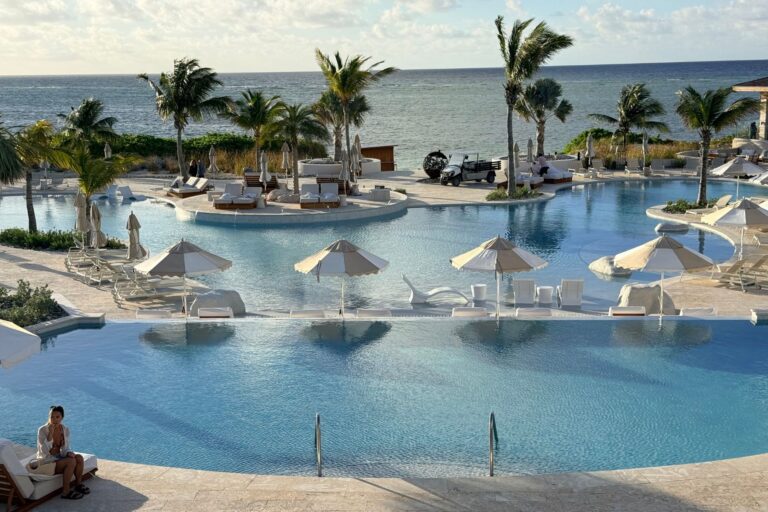
Salterra on South Caicos offers true luxury and a stunning beach-front setting on quiet South Caicos. The on-site dive center, Adventures By Salterra, has all your dive needs covered, plus topside adventures like kayaking, deep-sea fishing, and paddling.
The charming Osprey Beach Hotel on Grand Turk sits right on Duke Street in historic Cockburn Town, an easy walk to several restaurants and beach bars. Grand Turk Diving Co. is right across the street.
The condo-style Ocean Club East makes a great base on bustling Grace Bay, with most rooms featuring full kitchens. Dive Provo will pick you up at the hotel for your day underwater.
Providenciales images courtesy of Dive Provo
South Caicos images courtesy of Salterra
 Take a moment to look at this.