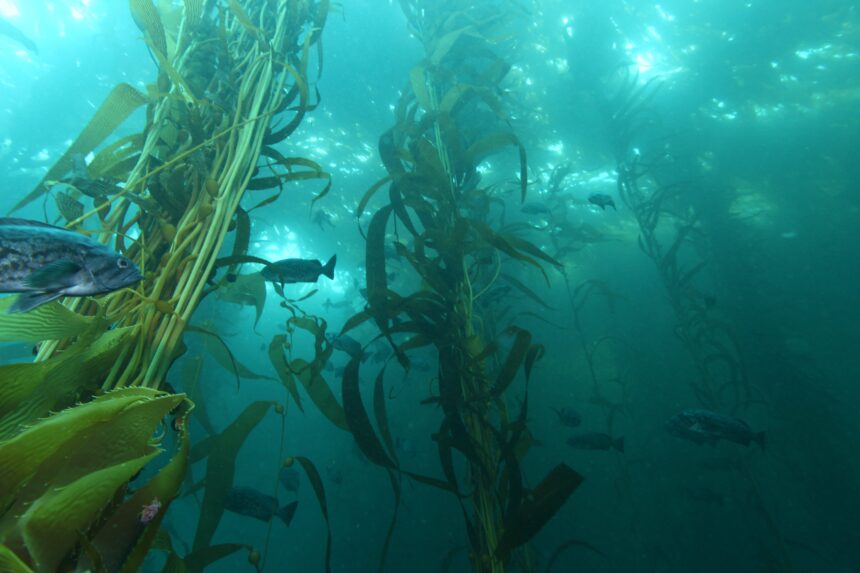
California researchers at UC Santa Cruz are diving Monterey Bay every week to track how giant kelp forests respond as El Niño conditions develop. This is ongoing fieldwork with no results yet.
The team, led by assistant professor Joshua Smith, is testing a hypothesis: that warmer water and fewer nutrients reduce the drifting kelp debris sea urchins normally eat while sheltering in cracks and crevices. If that food supply drops, the researchers think urchins may leave shelter and graze live kelp instead, which can turn a healthy kelp forest into a barren with little live kelp remaining. That’s what happened during California’s last major marine heatwave, from 2014 to 2016, which caused widespread kelp loss and a large urchin outbreak.
See the UC Santa Cruz research update for the full account.
Kelp habitat in Monterey Bay. Photo: Chad King/NOAA, public domain. NOAA photo rights
 Take a moment to look at this.