


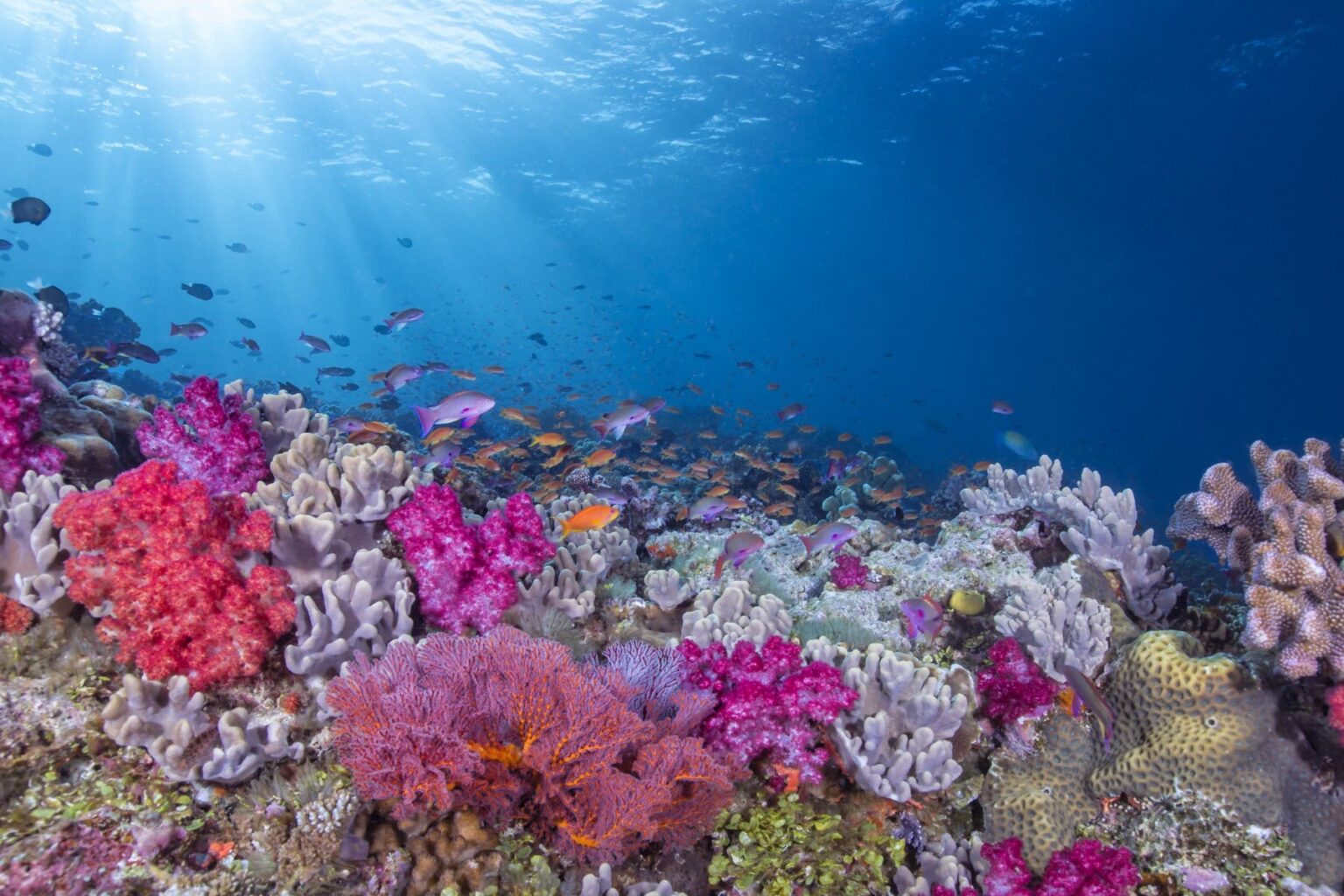
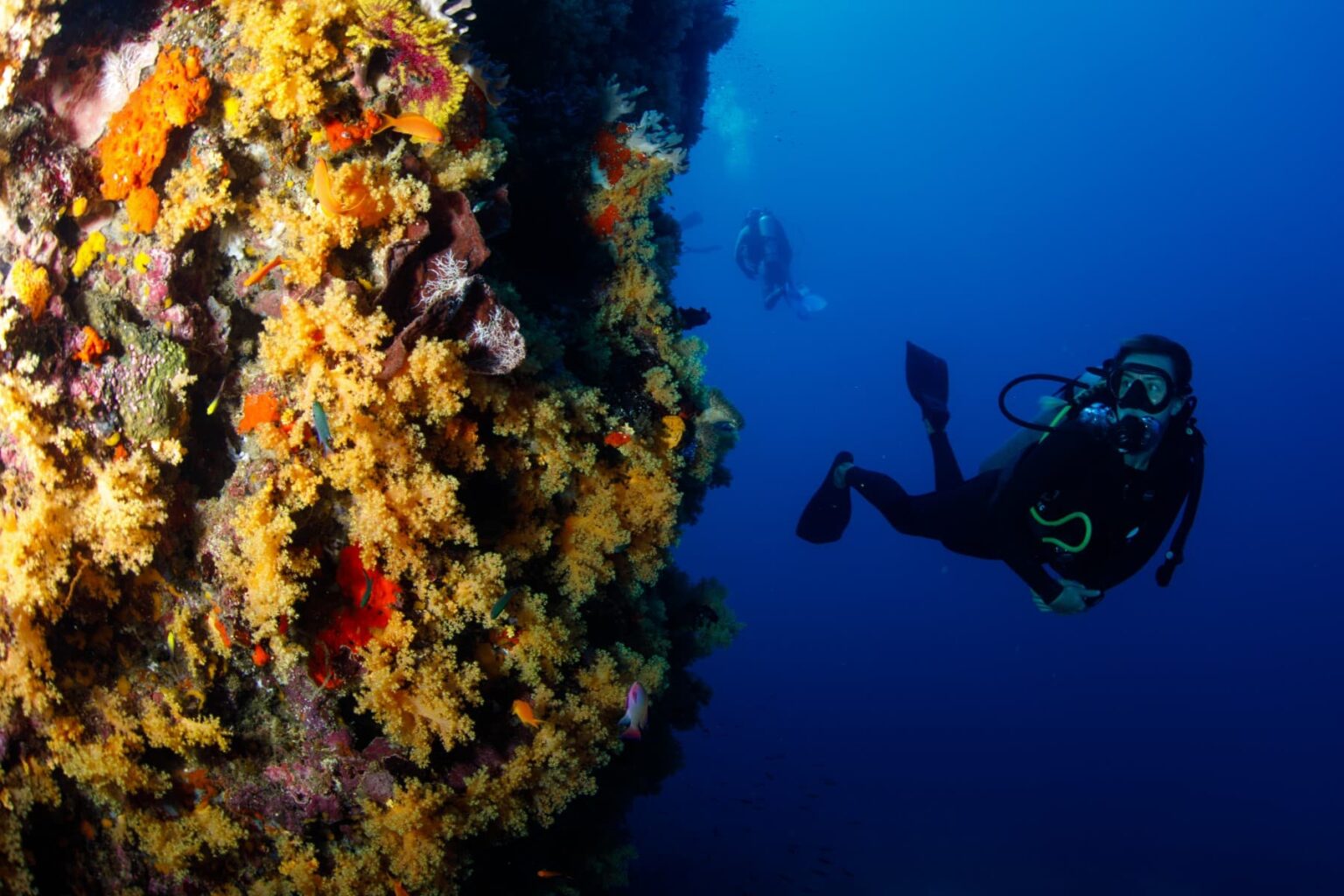
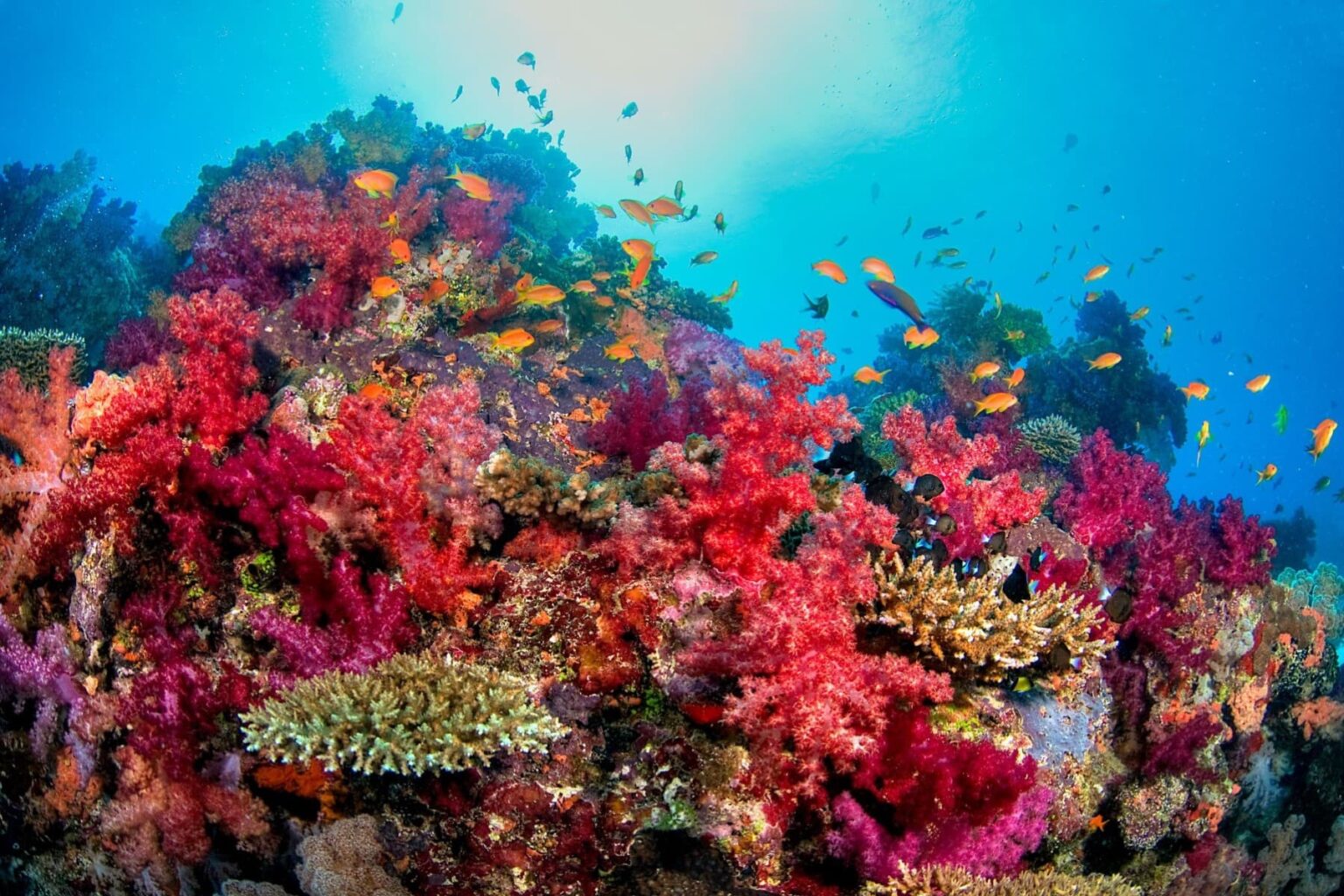
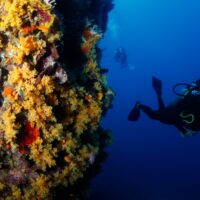
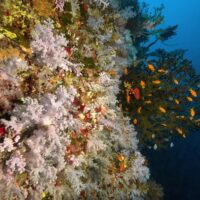
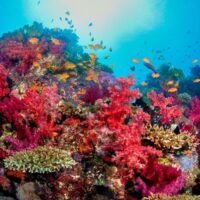
Fiji isn’t nicknamed “The Soft Coral Capital of the World,” for nothing. Nestled in the heart of the South Pacific, this archipelago country consists of over 300 islands and 500 islets, with over 4,000 square miles (10,360 square kilometers) of pristine coral reefs stretched between and all around the islands—the best diving in Fiji is truly something spectacular to behold.
What makes Fiji so good for diving?
The astonishing diversity of marine life tucked into the vibrant soft-coral landscape and the spectacular clarity of the warm, inviting waters make diving Fiji an unrivaled pleasure for divers—and snorkelers.
The flowing, nutrient-rich water supports dense corals and reef fish and attracts larger fauna like reef sharks, sea turtles, and migrating whales. Fiji is also one of the select places in the world for divers to reliably swim alongside manta rays—and Fiji’s beaches aren’t bad either. In short, there is something for everyone in these dynamic waters, so dive into the sunny Bula spirit with us as we explore the best diving in Fiji.
Beqa Island and Pacific Harbour
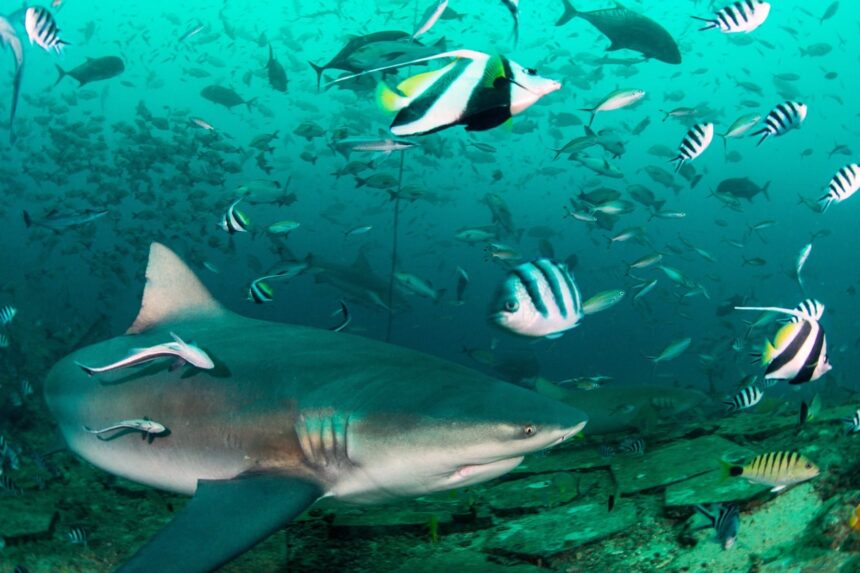
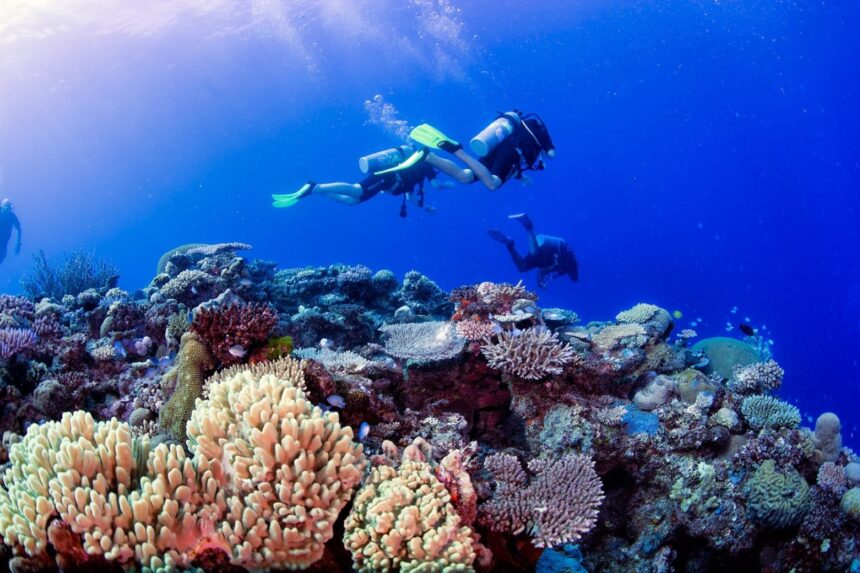


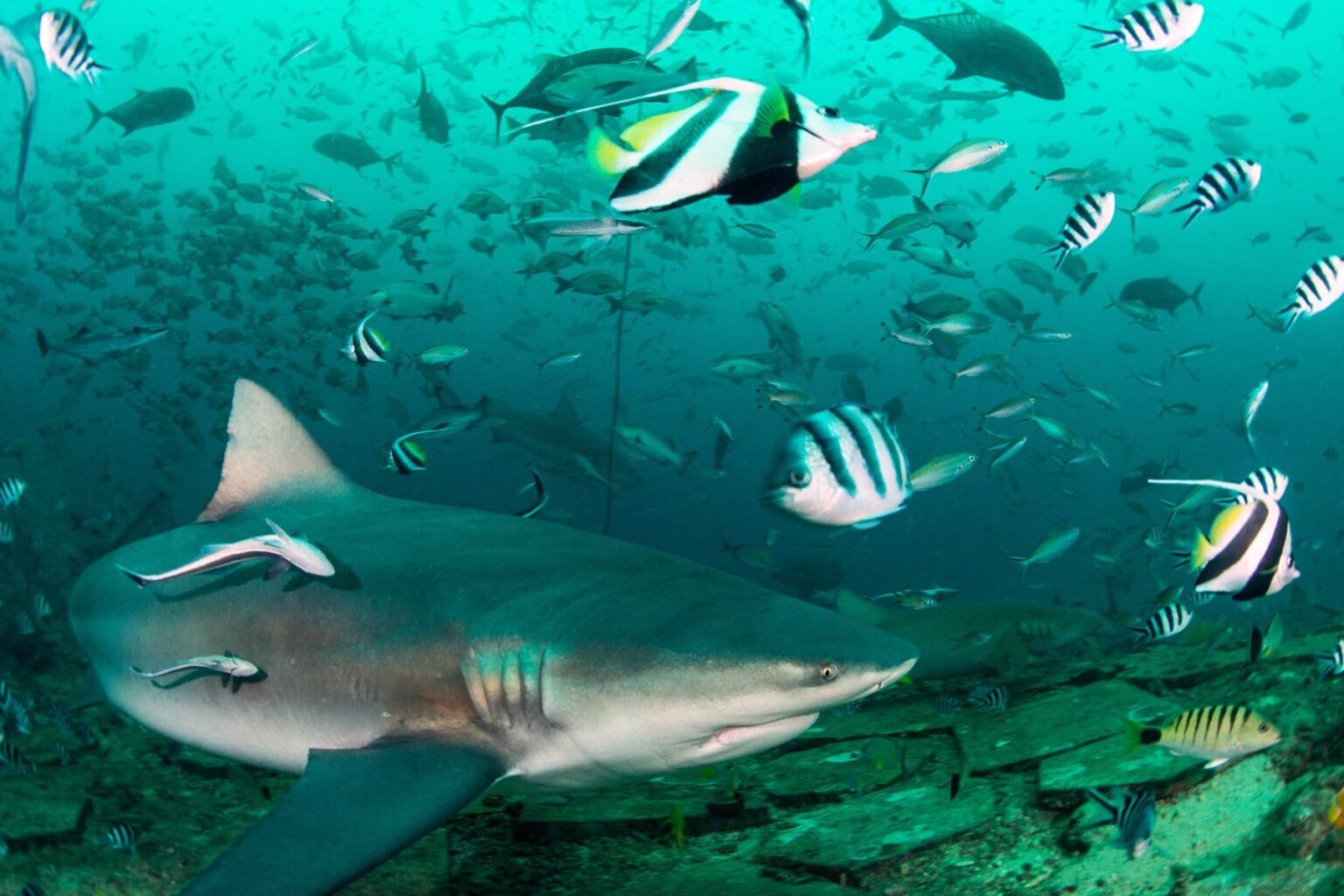
This area is famous for its shark diving, where divers can get up close and personal with some of the most powerful and majestic predators in the ocean. Stunning coral reefs, wrecks, and caves round out the offerings in this area. Our top dive site picks are:
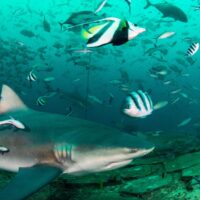
- Shark Reef Marine Reserve: This is the ultimate dive site for shark lovers. Located near Pacific Harbour, this reserve holds a feeding station where divers can witness up to eight species of sharks, including bull sharks, tiger sharks, lemon sharks, and nurse sharks, alongside schools of snapper, grouper, barracuda and more.
- Tasu II wreck: Divers can explore a 130-foot-long (40 m) sunken fishing vessel that sits at around 90 feet (28 m). Encrusted compartments serve as home for abundant marine life, including lionfish, scorpionfish, and pufferfish, as well as secretive octopus, cuttlefish, and lobsters.
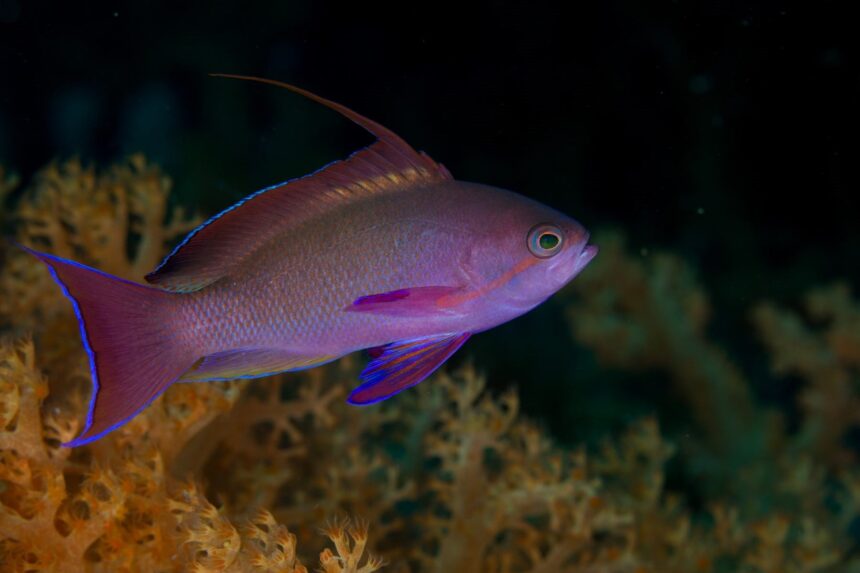
- Seven Sisters: A series of spectacular pinnacles that lie between 40 to 100 feet deep (12 to 30 m) are covered with vivid soft corals, sea fans, and sponges. These dramatic features attract schools of colorful inhabitants, such as fusiliers, anthias, and butterflyfish, along with larger fish like napoleon wrasse, grouper, and snapper.
Bligh Water Passage
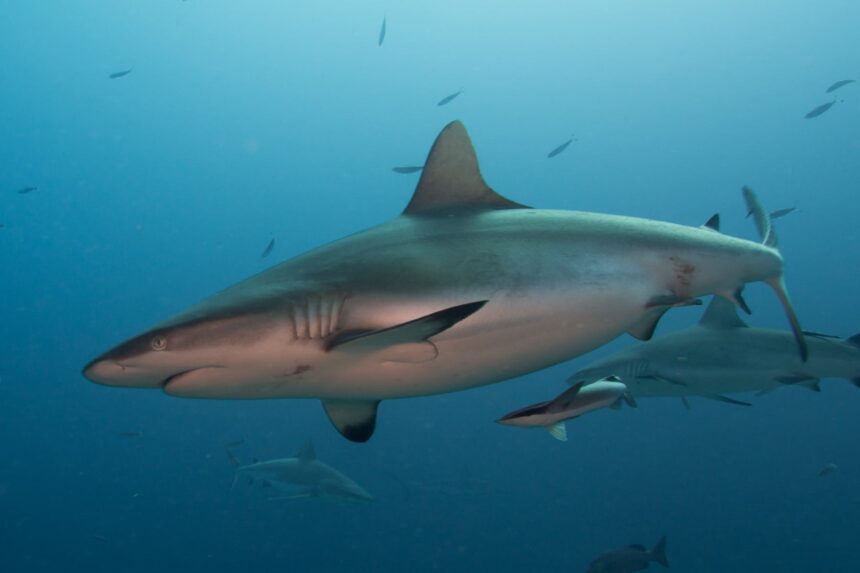
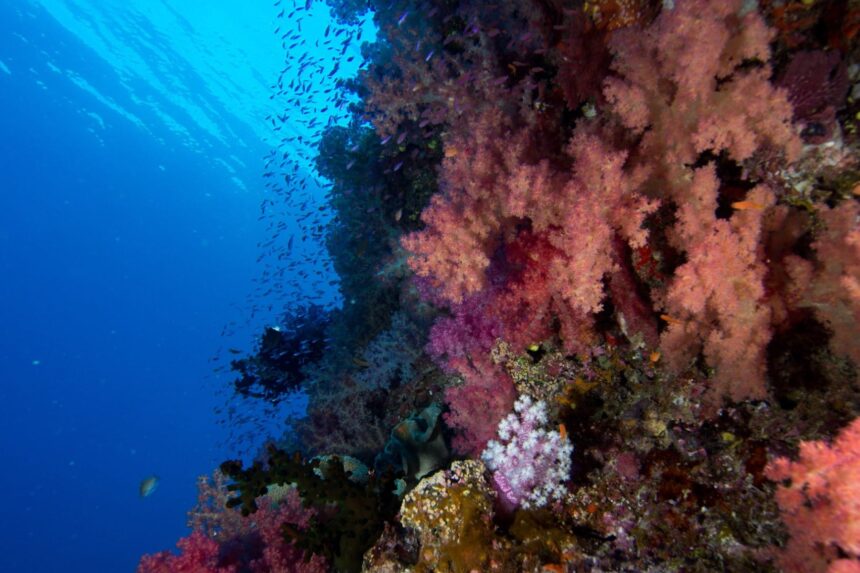
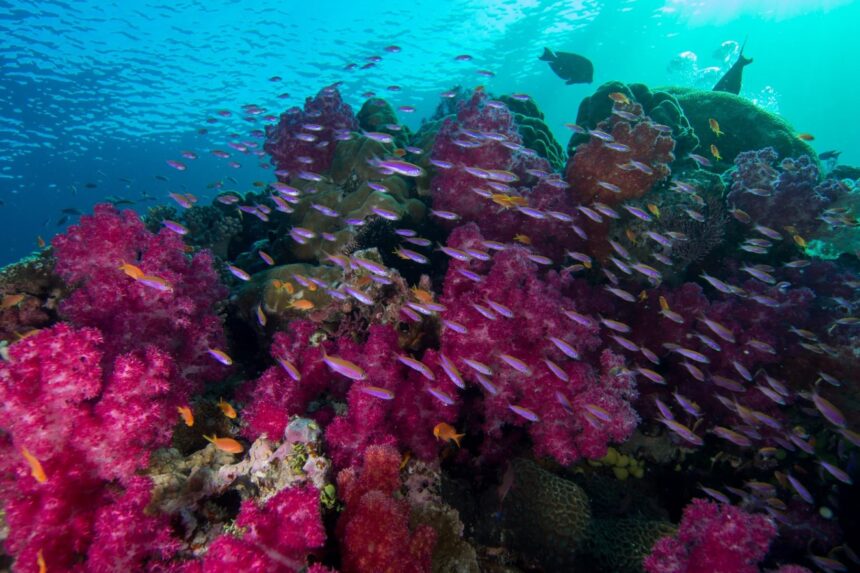


The Bligh Waters stretch between the two main islands of Viti Levu and Vanua Levu, offering strong, rich currents of clear water, abundant marine life, and some of the most stunning and iconic coral formations in the South Pacific. Some of the best dive sites are:
- E6: This impressive site holds a huge submerged pinnacle encrusted with colorful, filter-feeding corals and gorgonians thriving in the rich currents of the Bligh Water Passage. A swim-through called the Cathedral filters sunbeams through rocky caves where lobsters, crabs, and moray eels dwell. The pinnacle also attracts larger megafauna like manta rays, sharks, and tuna.
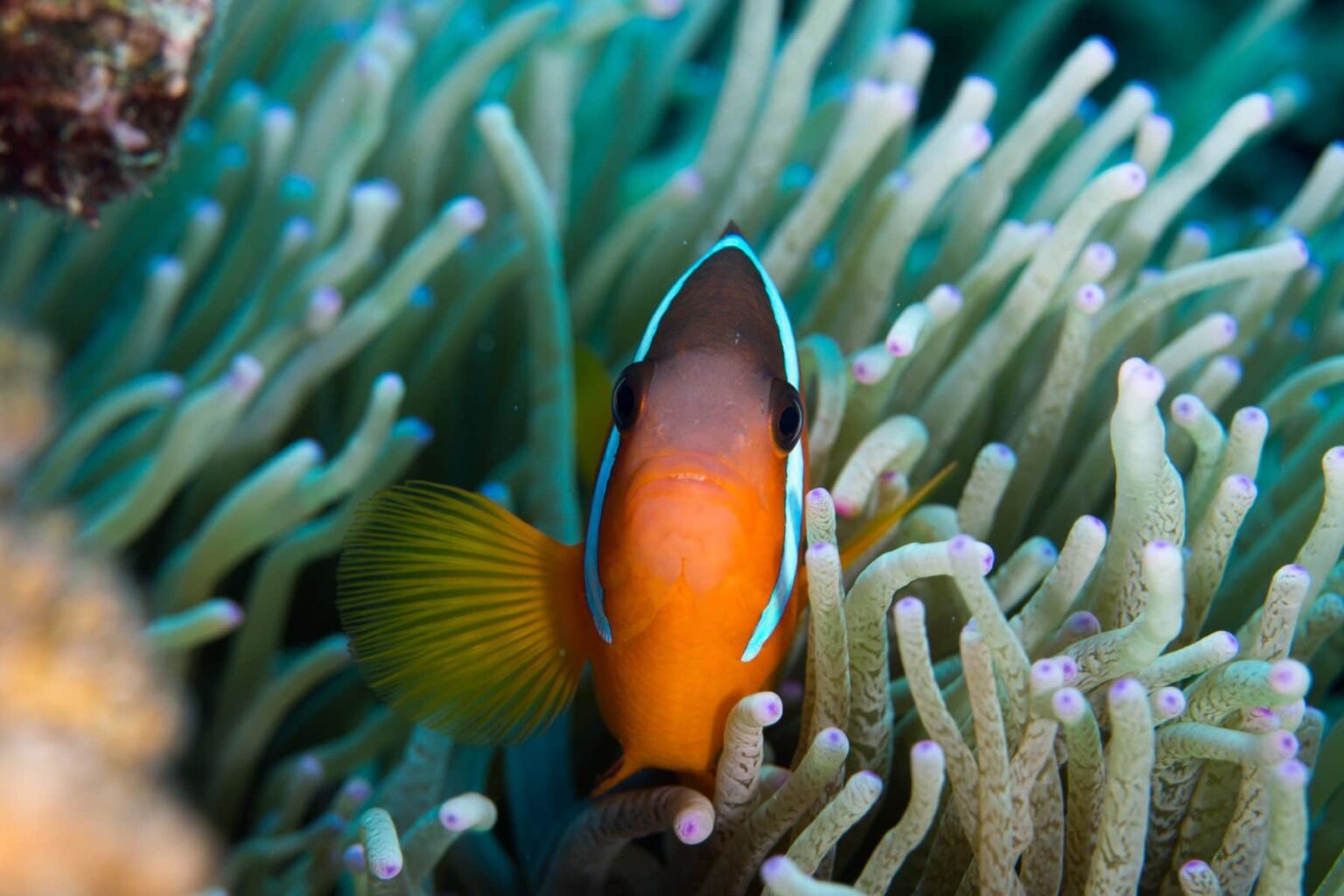
- Mount Mutiny: This is another pinnacle dive that takes you to a volcanic peak covered with staghorn, brain, and table corals and a kaleidoscope of soft corals. A wide variety of reef fish circle the structure, such as clownfish, damselfish, wrasse, and surgeonfish. You can also spot sea turtles, rays, and sharks around the peak, especially hammerheads during winter.
- Cat’s Meow: This drift dive takes you along a sloping reef, where you can see hard and soft corals and sea whips that host plenty of small creatures, like nudibranchs, pipefish, and seahorses, as well as roaming catsharks, barracuda, snapper, eagle rays and more.
Koro Sea
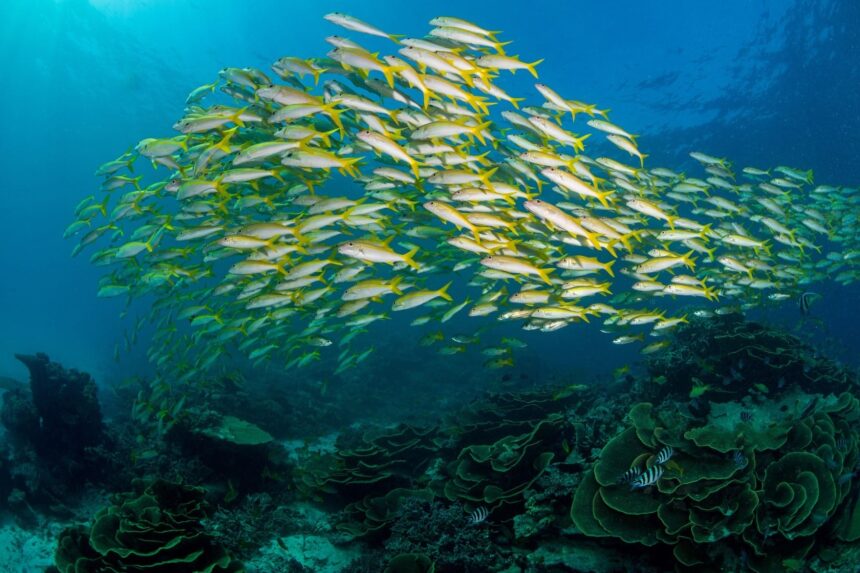
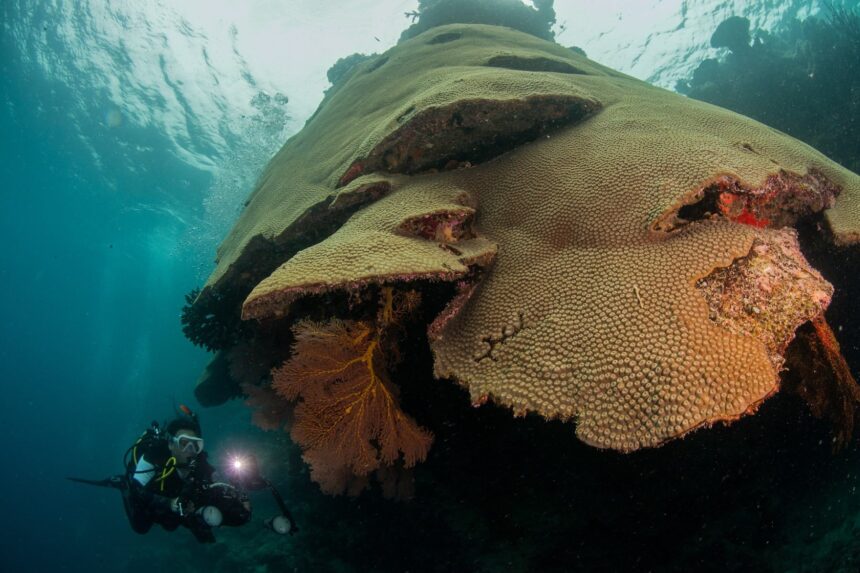
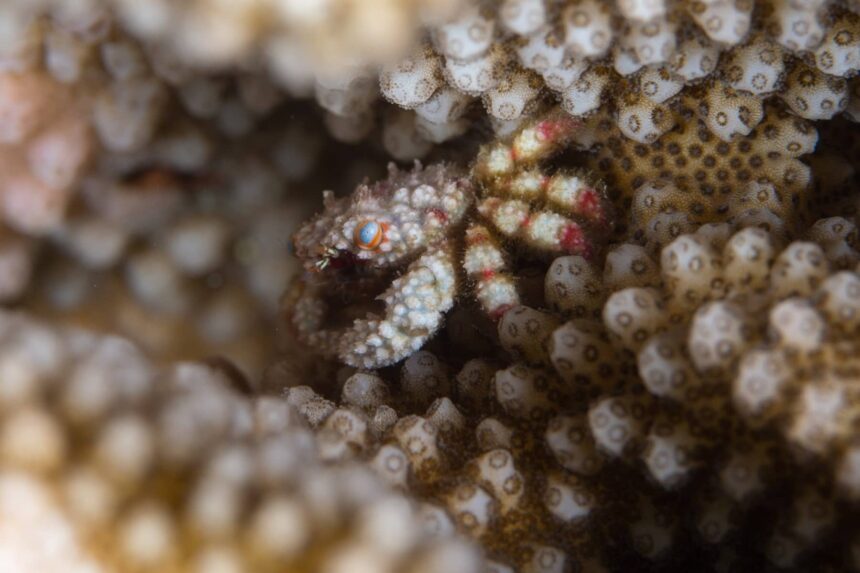


The Koro Sea is a deep body of water separating the main islands of Fiji from the outer eastern chain, ringed with pristine coral reefs and smaller islands, providing a haven for divers to explore. Some favorite dives in the Koro Sea are:
- Nigali Passage: This thrilling dive through a narrow channel that connects the lagoon and the ocean is a magnet for marine life, with schools of fish like barracuda, trevally, snapper, surgeonfish, and large Malabar grouper. The passage attracts a slew of pelagic fish, including gray reef, whitetip, blacktip, and hammerhead sharks. Timing with the tides is important.
- Jim’s Alley: This is a shallow dive in a coral garden full of staghorn, brain, and table corals that attract a variety of reef fish, such as clownfish, damselfish, wrasse, and surgeonfish. Small groups of manta rays also frequent the site. Jim’s Alley is a relaxing and easy dive that is suitable for beginners and photographers.
- Makogai: This macro dive paradise takes you to submerged bommies and a rubble bottom that hosts plenty of small critters like dragonets, nudibranchs, ghost pipefish, along with octopus and pygmy seahorses tethered to colorful gorgonians.
Kadavu Island
Kadavu is famous for its pristine and diverse coral reefs, which are part of the Great Astrolabe Reef, the fourth largest barrier reef in the world. Top picks for the area include:
- Naiqoro Passage: This wall dive near Ono Island offers a spectacular view of a vertical reef that drops from 15 to over 130 feet (5 to 40 m), covered with soft corals in various shades of purple, pink, yellow, and orange, creating a stunning contrast with the blue water. Schooling barracuda, trevally, surgeonfish, anthias, fusiliers, and leaf scorpionfish all congregate here.
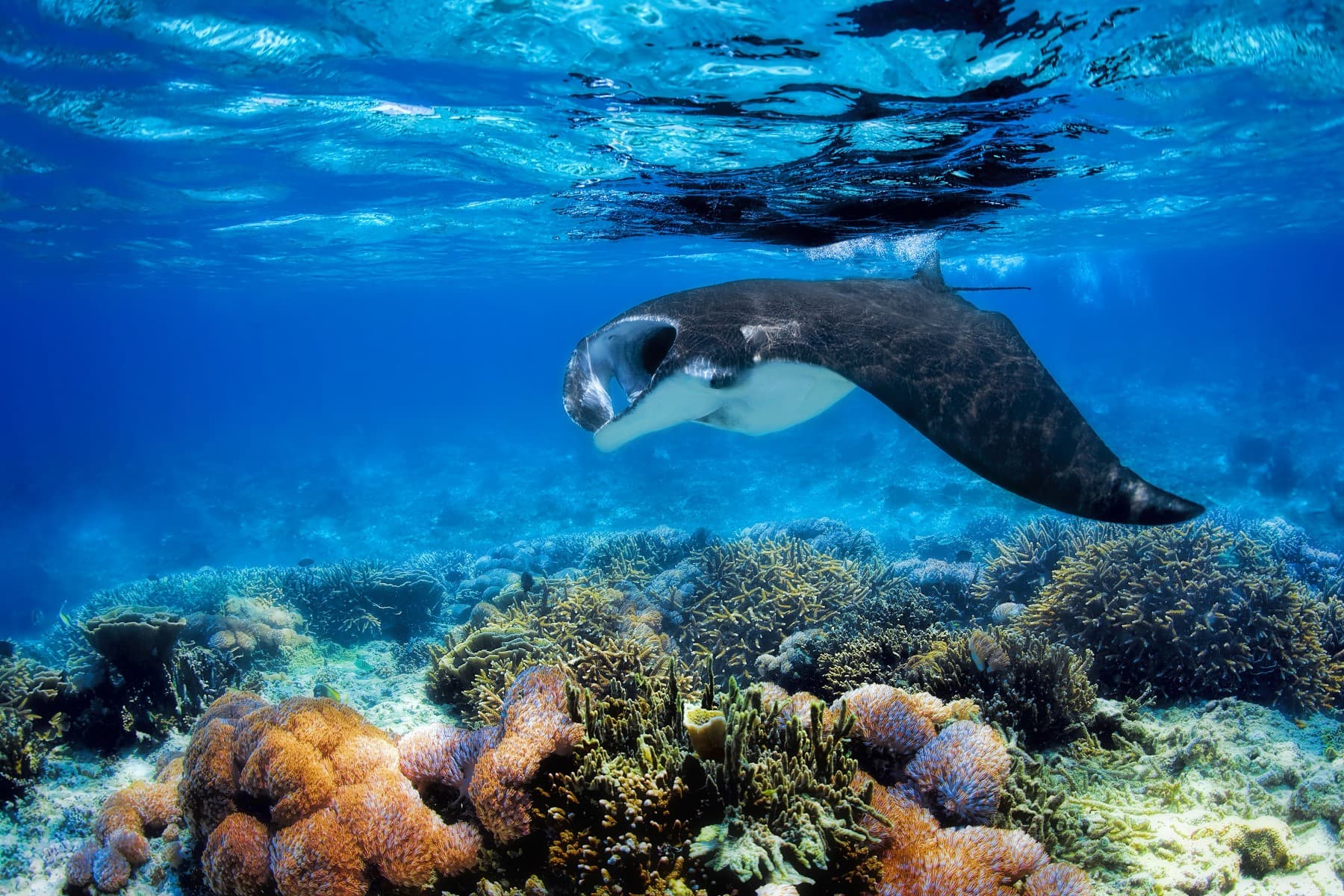
- Manta Reef: The highlight of this shallow dive is a cleaning station where manta rays come to get rid of parasites and dead skin. Reef mantas (Mobula alfredi) can be seen in Fiji year round and commonly reach wingspans up to 15 feet (4.5 m), whereas giant oceanic mantas (Mobula birostris), which can have wingspans of up to 23 feet (7 m), are most common from November to February.
- Yellow Wall: Living up to its name, this wall drops from 15 to 100 feet (5 to 30 m) and is covered with yellow soft corals, alongside hard corals, sea fans, and sponges. Butterflyfish, angelfish, parrotfish, wrasse, and damselfish swim through the corals, and occasionally you can spot sea turtles, octopus, cuttlefish, and seahorses.
Yasawa Islands

The Yasawa Islands are a remote, northern chain of islands surrounded by turquoise water. Here, you’ll find a variety of exciting dive sites that cater to different levels of experience and interest. Some of the top dive sites are:
- Manta Ray Alley: This passage between Drawaqa and Naviti Islands funnels nutrient-rich water and concentrates planktonic food sources for foraging manta rays, with dense aggregations formed from May through October. A vibrant reef with craggy overhangs provides a lively backdrop for these giants, worthy of exploration on its own.
- Black Rock: The dark volcanic substrate here provides home to a forest of striking black corals, gorgonians, and sponges, with countless clouds of reef fish like brightly colored anthias, cardinalfish, and chromis darting through the coralline matrix. Sharks, rays, and dolphins also commonly visit the site.
Mamanuca Islands
The Mamanuca Islands are a lush group of islands just north of the main island of Viti Levu that offer some of the most scenic and diverse diving in the world. Popular dive sites in the Mamanucas include:
- Supermarket: This site of sandy bottoms, coral patches, and caves is feeding grounds for an abundant reef community, including schools of trevally and snapper. Its most famous visitors are its plentiful reef sharks, with species such as whitetips, blacktips, and gray reef sharks.
- Gotham City: This complex coral reef of swim-throughs and overhangs is named for its schools of batfish. The resident long-fin batfish are often curious, and angelfish, parrotfish, triggerfish, and others make this reef a thriving ecosystem.
- Castaway Wall: A steep wall and rocky pinnacles are covered with hard and soft corals that provide homes for dynamic reef life, including clownfish, damselfish, wrasse, and larger fauna like sea turtles, rays, and moray eels.
Namena Marine Reserve
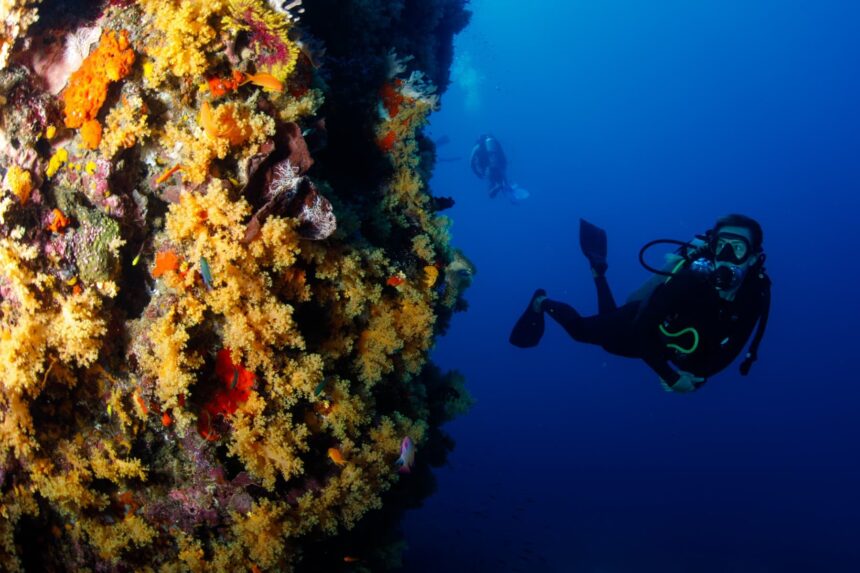
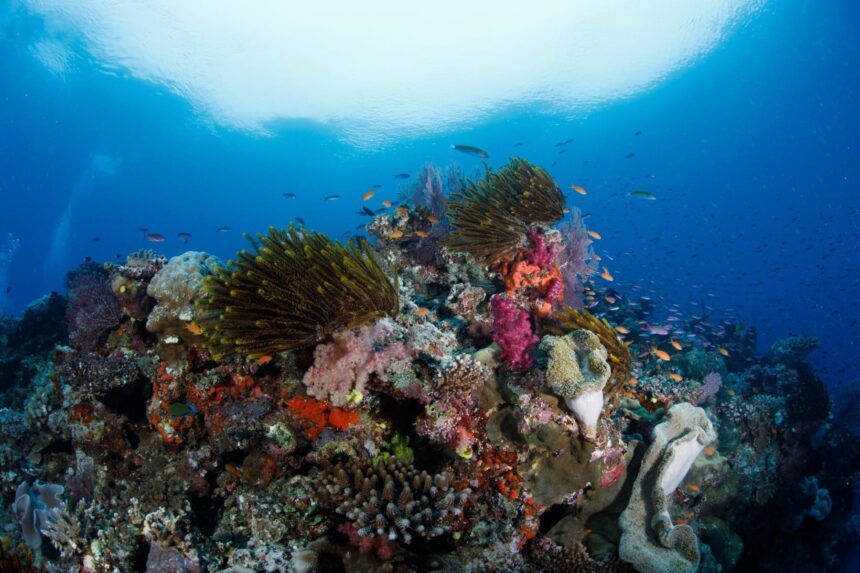
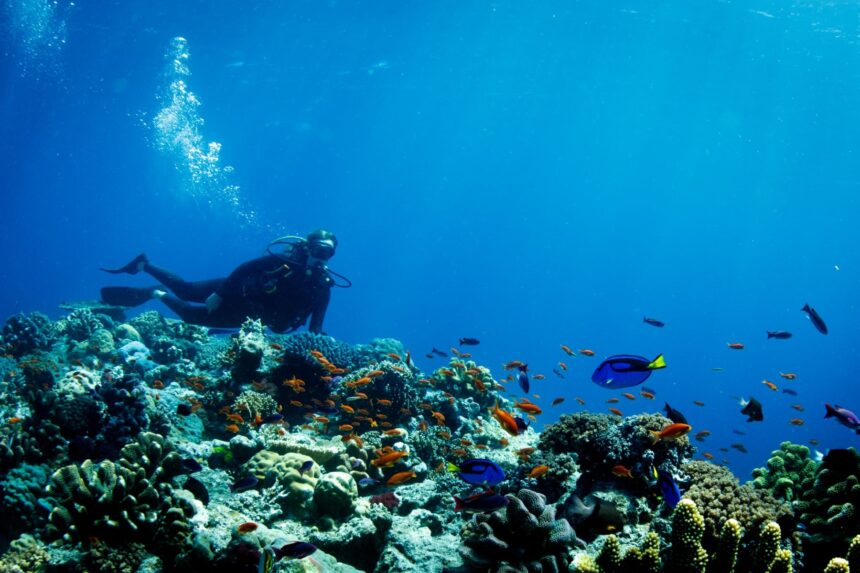


As one of the largest no-take reserves in the country, covering an area of 23 square miles (60 km2), this area protects a diverse and healthy ecosystem with astounding biodiversity—and some of the best diving in Fiji. Some popular dive sites in the reserve are:
- North Save-a-Tack Passage: A deep channel cuts through the barrier reef, creating one of Fiji’s most thrilling dives with bommies and walls painted in multihued soft corals, sea fans, sponges, and anemones alongside sandy bottoms. Schools of pelagic fish, such as trevally, dogtooth tuna, and reef sharks, scour the water column for a meal.
- Two Thumbs Up: Two pinnacles enshrouded with dense sea fans and corals attract bright schools of fusiliers and anthias. Check the plateau tops that serve as cleaning stations, where cleaner shrimp and gobies groom passersby. Divers can spot moray eels, lionfish, and nudibranchs galore, including the impressive leaf gilled slug that hides among patches of turtle weed.
- Mushrooms: These coral bommies resembling giant mushrooms are home to many small fascinating creatures, including pipefish, cuttlefish, and scorpionfish. Sandy bottoms are filled with small beauties like bobbing garden eels, dancing jawfish, gobies, and dartfish.
Rainbow Reef, Somosomo Strait
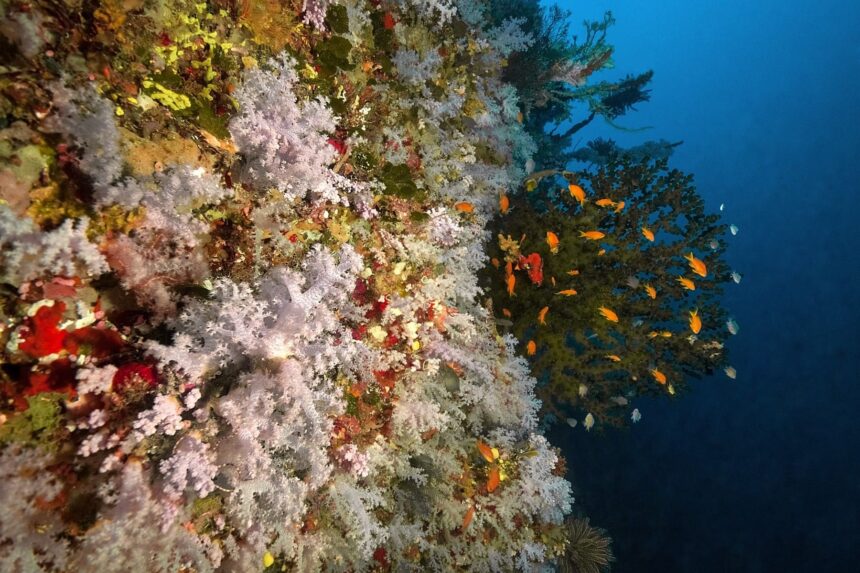
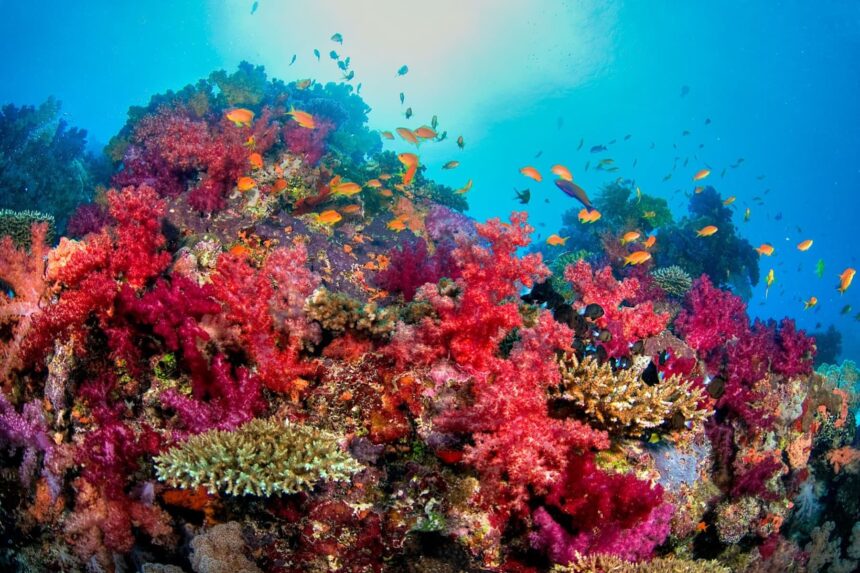
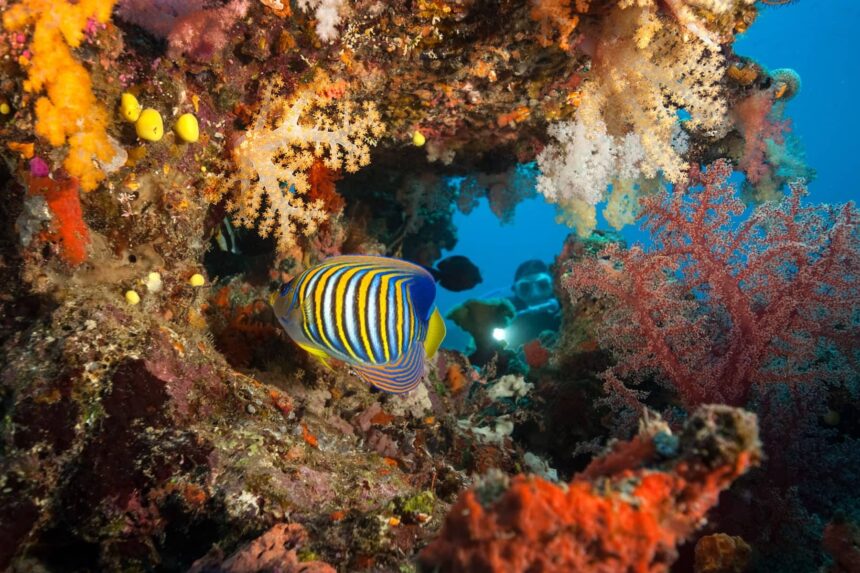


Diving in Fiji doesn’t get much better than at Rainbow Reef. One of the most renowned dive sites in the South Pacific, it hosts breathtaking reefs, expansive stretches of soft corals along sheer walls, and innumerable residents small and large alike. Some of the best known sites are:
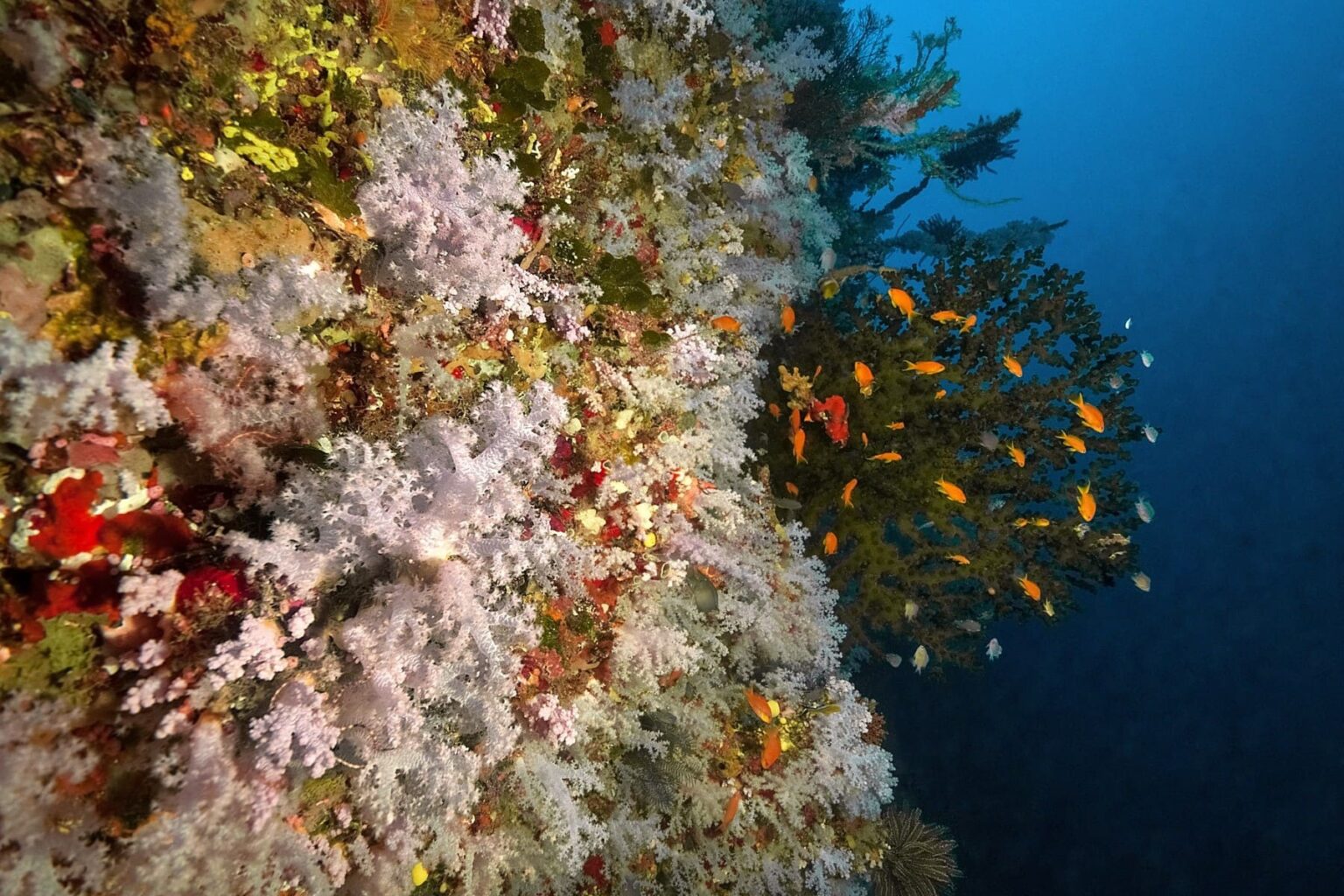
- The Great White Wall: When it comes to iconic diving in Fiji, this awe-inspiring wall dive is at the top of the list. It begins with a vertical swim-through, exiting at about 86 feet (26 m) deep. The wall itself is draped with white soft corals that give it a luminous appearance in the deep blue. Sea fans, sponges, algae and anemones live among the soft corals, making a rich tapestry that supports a wealth of other small creatures and pelagic fish.
- The Purple Wall: This is another magnificent wall adorned in purple soft corals, alongside hard corals, gorgonians, and sea whips, creating a vibrant contrast with the blue water. The wall drops from 20 to 200 feet (6 to 60 m) and attracts a variety of fish, including everything from mackerel and trevallies to anthias and fairy basslets.
- Fish Factory: This drift dive takes divers along a sloping wall and is named for the abundance of fish that swarm around it, including bannerfish, blue ribbon eels, humphead parrotfish, and leaf scorpionfish, just to name a few.
Lau Islands
The Lau Islands are the most remote group of islands lying on the eastern side of Fijian waters. Tourists do not regularly visit, and the islands have limited access and facilities, but divers can join occasional cruises to the area to enjoy some of the most untouched ecosystems in Fiji with lagoons, mangroves, and beautiful coral reefs. Dive responsibly and sustainably. Top areas are:
- Vanua Balavu Island: This island hosts a large lagoon surrounded by remarkable reefs which cater to different levels of experience and interest, such as Qilaqila Marine Reserve, Susui Island, and Cakau Levu. The reefs here host a rainbow of residents, and chances are better for spotting rare giant clams, which are actively restocked from hatchery larvae after overharvesting of wild stocks.
- Cobia Island: This volcanic island has a cone-shaped peak that rises to 1350 feet (412 m) above sea level. On its underwater slopes lie many reef systems and a sunken shipwreck about 200 feet (60 m) long with several explorable compartments. Look for scorpionfish, pufferfish, octopus, and more.
- Fulaga Island: The waters of this southern island are dotted with mushroom-shaped limestone islets that provide havens for reef dwellers. Sites such as Mushroom Rock Reef, Coral Garden, and Shark Alley offer encounters with a huge variety of reef fish, macro critters, and larger fauna like rays, sea turtles, reef sharks, and nurse sharks.
Ready, Set, Dive
With so much to explore both underwater and topside in Fiji, you probably can’t see it all in one trip, but just a single dip down to this soft-coral wonderland is bound to amaze you and leave you wanting more.
Before you go, make sure your dive gear is complete and ready for a safe dive, and brush up your skills with a refresher course or check out our tips on tuning up!
If we missed your favorite dive sites, let us know in the comments below.
 Take a moment to look at this.


