


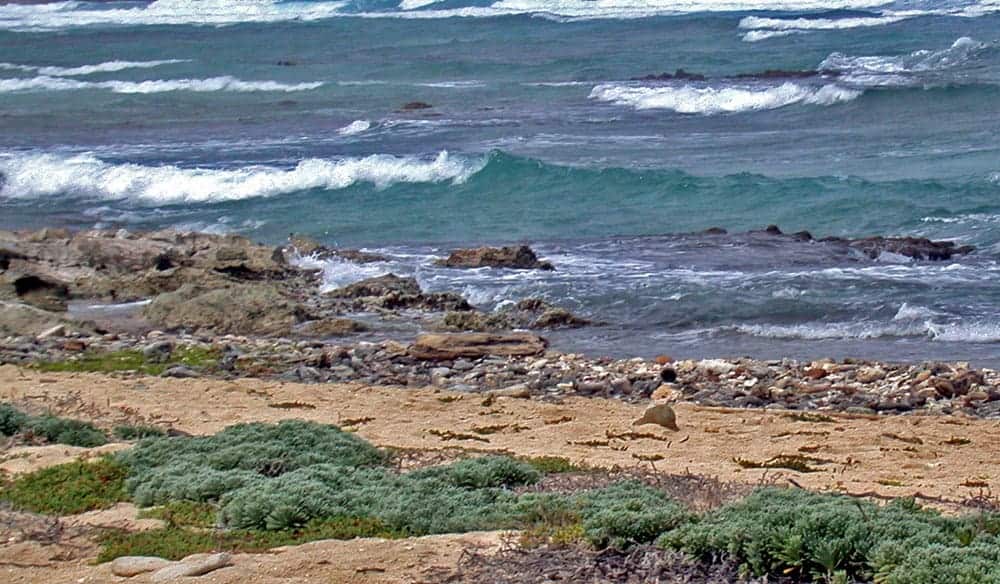
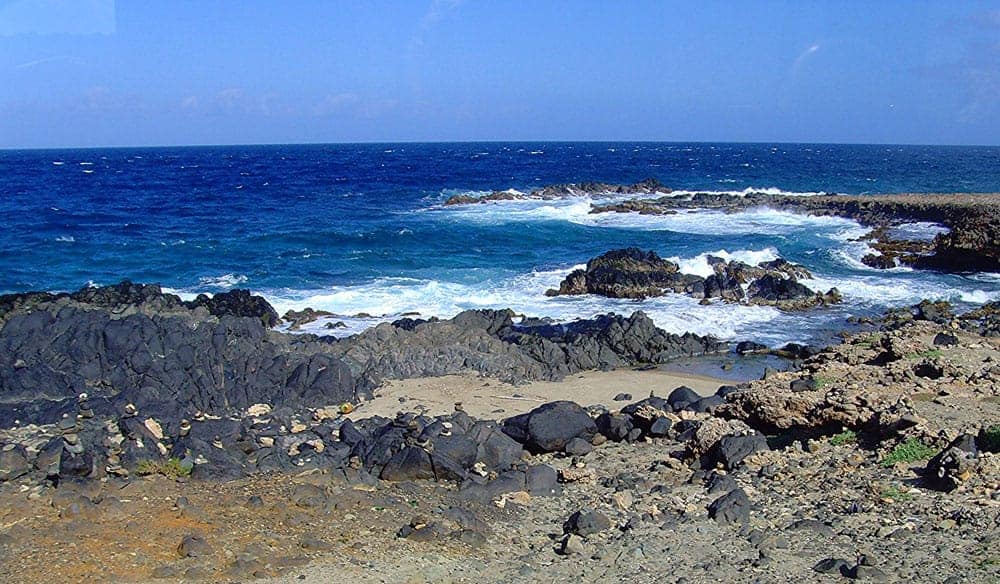


On an island better known for wind sports such as kitesurfing, sailing, and windsurfing, don’t discount the scuba diving — Aruba features over 30 recognized dive sites. Located in the southern Caribbean, Aruba experiences near-constant, unobstructed trade winds coming from the northeast. Thus, most of the scuba diving in Aruba takes place along the relatively protected west coast.
As a bit of background, Aruba is one of four countries that form the Kingdom of the Netherlands, including the Netherlands, Curacao, and St. Maarten. Arubans are Dutch nationals, and speak Dutch, the local dialect of Papiamento, and typically English as well.
Unlike many Caribbean islands, Aruba features a dry, cactus-strewn landscape. The island’s iconic divi divi trees all bend at a nearly 90-degree angle and face west, thanks to those ever-present trade winds. Although it’s not a lush destination, Aruba does have abundant warm and sunny weather, as well as sublime beaches where you can easily spend your time topside relaxing in the sun.
Fortunately, the island lies outside of Hurricane Alley, and therefore most of the major Caribbean storms pass right by.
The best time to visit Aruba is from April to August, when the weather is pleasant and the high season hasn’t kicked in. January through March has potentially the most pleasant weather. This is also the time, however, when most visitors flock to the warm weather and prices skyrocket. Staying at one of our favorite all-inclusive resorts in Aruba may help with your planning.
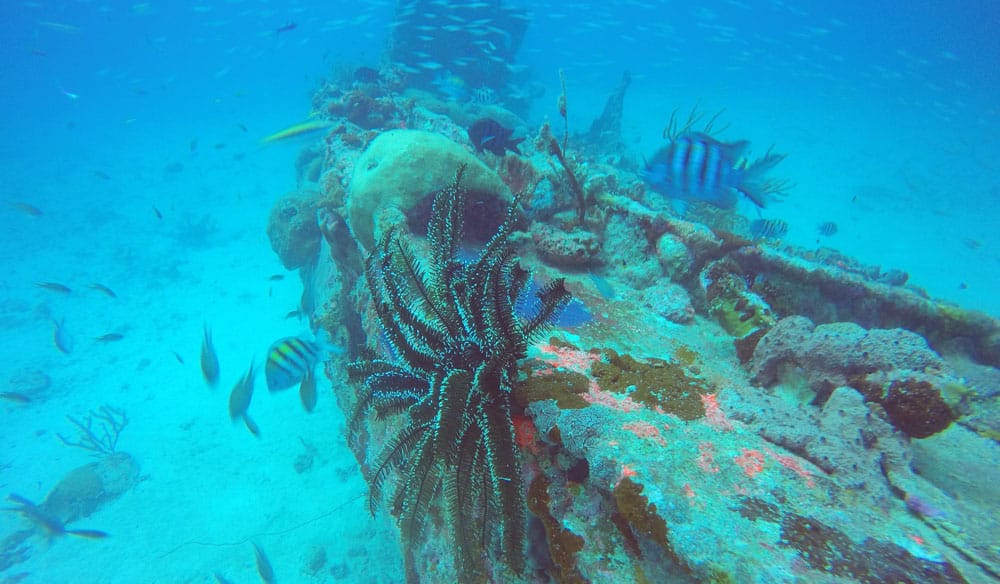
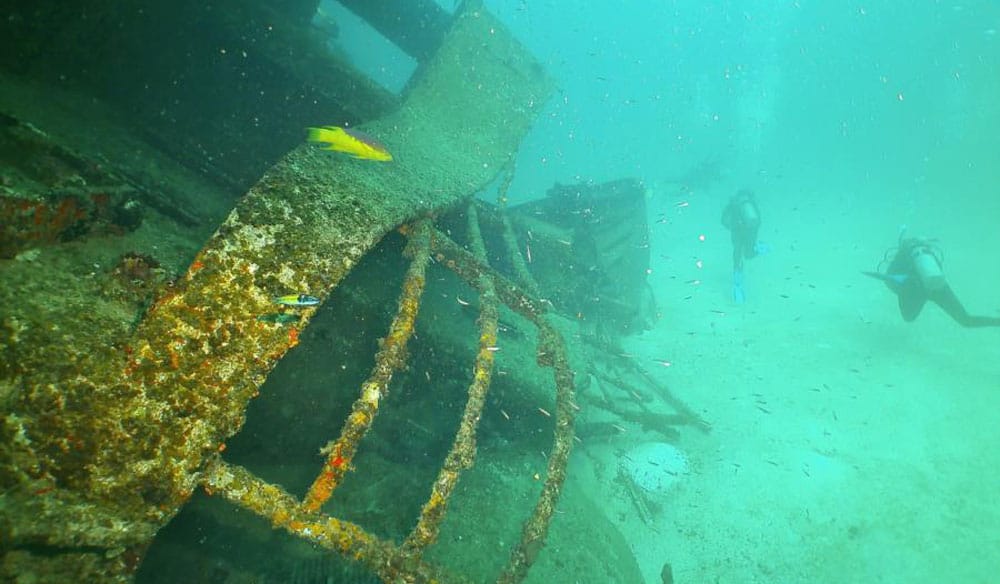
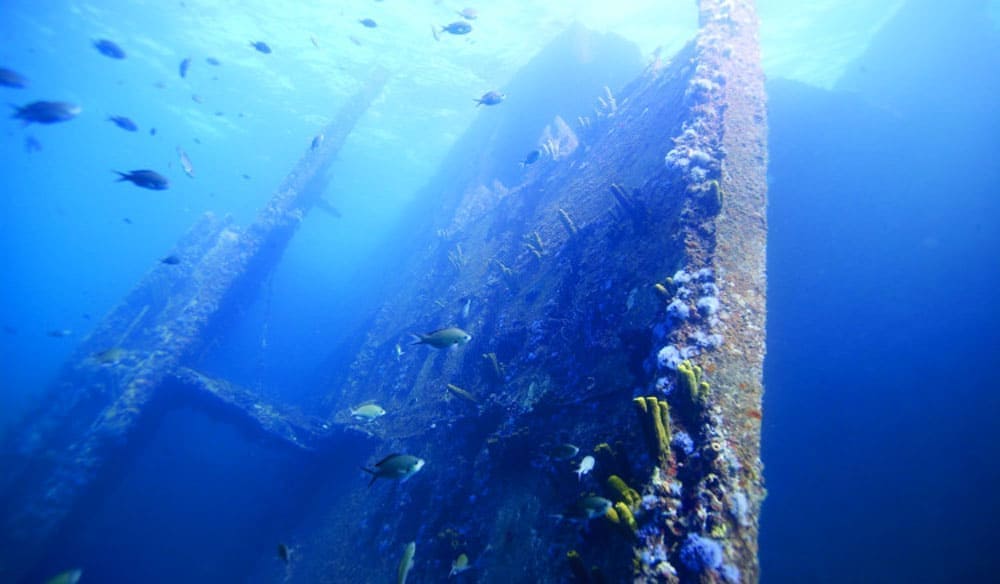
Scuba diving in Aruba offers brilliant natural reefs, shipwrecks, artificially built substrate, and plenty of marine life. Many of the wrecks sank during storms, though some were purposefully scuttled for recreational divers.
In terms of experience, the sites on the south side of the island are better suited to beginners. Here, the clear visibility and protected waters are ideal for novices. The north coast of the island features more currents, so more-experienced divers who are comfortable in current may prefer these sites. Here are our picks for the 15 best dive sites in Aruba.
The 15 Best Dive sites in Aruba
Antilla Wreck
If there’s a must-do, it’s the wreck of the Antilla, one of the best dive sites in Aruba. It’s also one of the most beautiful spots in Aruba. One of the Caribbean’s largest wreck dives, this German freighter is 400 feet (122 m) long. The ship lies on its port side, with the bow facing the island. In early May 1940, war broke out between Holland and Germany when Germany invaded — immediately making Aruba enemy territory for the Antilla.
When Dutch marines tried to board the ship, the German captain refused to lower the gangway and told them to come back the next day. Instead, Captain Ferdinand Schmidt ordered his crew to open the valves and set fire to the ship. The crew were all subsequently arrested and the ship listed and sank within a few hours.
- One of the biggest wrecks in the Caribbean
- Only a 10-minute boat ride off the coast of Aruba
- Has safe and large compartments that allow penetration
What you will see: The massive shipwreck lies in 55 feet (17 m) of water, and features large compartments in the center of the ship, which you can penetrate safely. Dives on the Antilla also offer a great opportunity to get your wreck certification.
The ship has been underwater for so long that an entire ecosystem has developed on the steel, including beautiful tube sponges and large coral formations covering the ship’s skeleton, providing a home for many tropical fish.
Pedernales Wreck
With depths ranging from 20 to 33 feet (6 to 10 m), the Pedernales is an oil tanker sunk by a German torpedo in 1942 during WWII. Because it’s so shallow and there’s little to no current, this dive offers excellent bottom time and lots of opportunities for photographers to practice their macro skills.
- Historic wreck from World War II
- Many large groupers hang around the ship
- The shallow water makes it an ideal dive site for beginners and snorkelers
What you will see: Since the ship went down during WWII, many of its items are still in place. Divers can see sections of cabins containing washbasins, toilets, and a pipeline system. The wreck has now become home to many large groupers, angelfish, damselfish, moray eels, and many more critters.
Jane C Wreck
Sitting between 60 and 90 feet (18 to 27 m) the Jane C wreck is best suited to advanced divers, thanks to both the depth and frequent strong currents. Although dive shops do not visit the wreck with regularity, you should ask around if it’s on your must-dive list. The ship was purpose-sunk in 1988 after a lengthy embargo for failure to pay harbor fees, and now offers divers lots of sea life.
- Strong currents and big depths mean the dive site is suited for advanced divers
- Qualified divers can explore the cargo hold
- Large schools of barracuda and other megafauna congregate here
What you will see: Strong currents attract many sea creatures to the Jane C including barracuda, manta rays, and other rays. The freighter is also covered by coral growth, features a large cargo hold to explore, and offers an abundance of diverse marine life.
Debbie II Wreck
Another of the best dive sites in Aruba is the Debbie II wreck, purpose-sunk in 1992 to serve as an artificial reef. It was scuttled directly in front of high-rise hotels, with a maximum depth of 70 feet (21 m), making it extremely accessible for most divers.
- Easily accessible dive site
- Purpose-sunk wreck for scuba diving
- Located in 70 feet (21 m) of water
What you will see: The 120-foot (36 m) fuel barge is covered with lettuce and brain coral, sponges, and a few sea fans poking out here and there. There are schools of fish, lobsters, rays, and plenty of turtles swimming around. If you’re a fan of seahorses (and who isn’t), then keep an eye out for them as well.
Serito Pinnacle
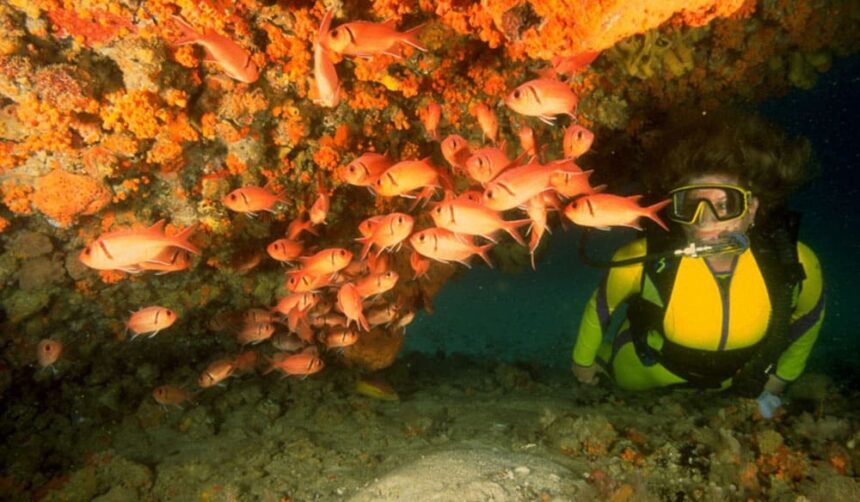
On the southern side of the island, the stunning Cabez Reef stretches along until it reaches the Serito Pinnacle on the reef’s southeast side. Local dive shops and guides consider the pinnacle to be one of the best kept secrets in Aruba, as the isolated location and strong currents keep the pinnacle washed in nutrient-rich, seldom-visited waters. The site is only suitable for experienced divers and only accessible via private charter, so ask around before your visit if you want to dive this site.
- Little-dived dive site with untouched coral
- Only available by private charter
- Known as the best kept secret in Aruba
What you will see: The pinnacle that rises from the ocean floor attracts marine creatures from all around. The coral reef covering the structure is exquisite, with many soft, hard, and sponge corals in a variety of colors fighting for space.
Reef fish dance around the colorful outcrops while masters of camouflage hide in the structures. Watch for nudibranchs, cleaner shrimp, ornate crabs, and frogfish, expertly concealed in their environment.
Renaissance Planes
This unique dive site features the wrecks of two airplanes, both accessible by either shore or a short boat ride, and both purpose-sunk. The DC-3 was confiscated in a late-1980s drug bust, and later sunk in the shallows just off Sonesta Reef. In 1991, however, Hurricane Lenny dragged the DC-3 across the sand, split it in half, and deposited it in about 80 feet (24 m) of water.
The YS-11 turboprop passenger aircraft belonged to Air Aruba, but when it reached the end of its life in 2004, it was sunk in 45 feet (14 m) with its tail section at 75 feet (23 m), making it appear ready to take off.
- Two airplanes purpose-sunk for recreational diving
- YS-11 features an intact cockpit and the chance to dive through the fuselage
- Great opportunity for photographers and macro lovers
What you will see: Apart from the unusual view of airplanes lying on the seabed, these metal structures have now been somewhat overgrown with colonies of coral polyps. Entire ecosystems have developed and you can easily swim around the airplanes to watch the batfish, angelfish, eels, crabs, shrimp, and more scuttling around.
Harbor Tugboat Wreck
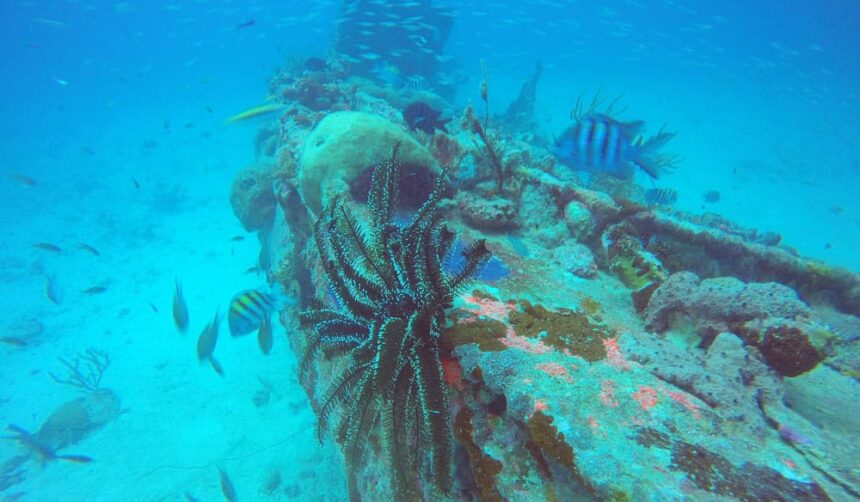
Located a short distance from the cruise ship port, in a comfortable 80 feet (24 m) of water, this sunken tugboat is an easy, fun dive for any level of diver. It is also surrounded by a gentle reef slope, which is covered in spectacular coral and provides ample spots for macro photographers to test out their skills. Encrusted in coral and sponges, the wreck is bursting with life.
- Tugboat wreck is located off the cruise ship port
- Shallow and well-sheltered dive
- Plenty of marine life hiding in reef
What you will see: The coral reef and wreck are home to plenty of angelfish, surgeonfish, frogfish, moray eels, octopus, and reef fish. To enjoy the full spectrum of color living on this reef, bring your torch and take your time exploring the nooks and crannies. If you look at the sand, you may also spot some rays or occasional garden eels.
Finger Reef
This huge, finger-shaped coral reef is located at the center of Aruba’s protected southern side. It sits in 40 to 130 feet (12 to 40 m) of water, and strong currents mean this site is better suited to more advanced divers. The coral reef is extraordinary, and there are plenty of beautiful sea creatures living here.
- Deep water and strong currents make this dive best for experienced divers
- Colorful coral reefs
- Great opportunity to see sea turtles
What you will see: This coral reef is home to plenty of sea turtles hiding among the soft and hard corals. There are also plenty of eels, crabs, and shrimp lurking about. The strong current also attracts some bigger pelagic fish and, if you look out into the blue, you might spot a couple of rays cruising past.
Mas Bango Reef
This stunning coral reef grows on a slope that ends in a large, sandy area. Located on the southeast corner of Finger Reef, it offers great diving opportunities for beginner and experienced divers alike. The top of the reef is at a mere 5 feet (1.5 m) and slopes down to a depth of 130 feet (40 m).
- Well-suited for beginners and experienced divers alike
- An abundance of healthy corals growing along the slope
- A deep sandy bottom with plenty of rays
What you will see: Toward the deeper part of this dive site, you will be able to spot plenty of Masbango fish, tuna, and barracudas swimming around the blue. In the coral reef, there are plenty of shrimp, crustaceans, and other invertebrates hidden away. Angelfish, surgeonfish, and other reef fish are also swimming around the reef. The bright colors and clear water make this a great spot for macro photography.
Star Gerren
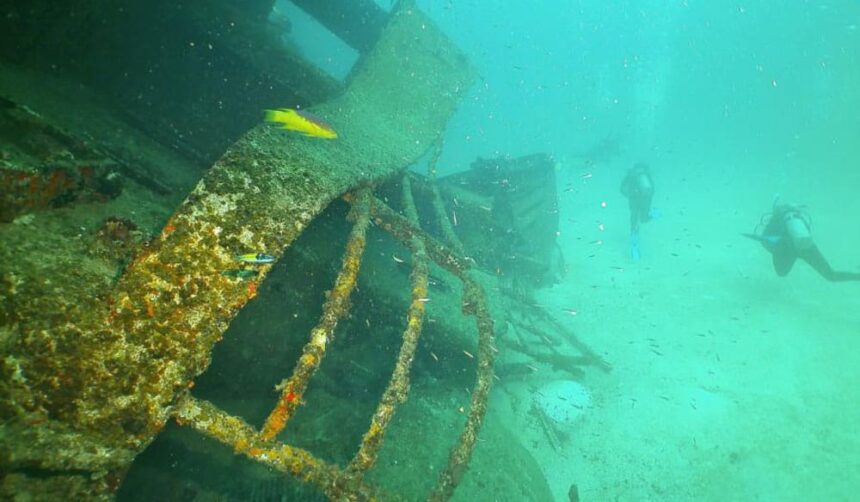
Star Gerren is yet another German cargo shipwreck that was sunk in 2000. It was originally known as the Santa Maria until its name change in 1994, when it relocated to Belize City and suffered an engine failure. The wreck is an impressive 300 feet (91 m) long and is lying upside down in 63 feet (19m) of water. Skilled divers and even snorkelers will enjoy this wreck, as there’s plenty to see from the surface as well as deeper down.
- Great wreck dive for beginners or experienced divers
- An abundance of reef fish congregate here
- Though it’s not very shallow, snorkelers will also enjoy this wreck
What you will see: Just like many of the other wrecks around Aruba, the Star Gerren has attracted many species of fish. There are schools of barracuda, along with a whole array of reef fish that hide in the ship’s skeleton. The upside down hull creates a cave-like environment for dark-dwelling creatures, which divers can spot with their torch.
Kappel Wreck
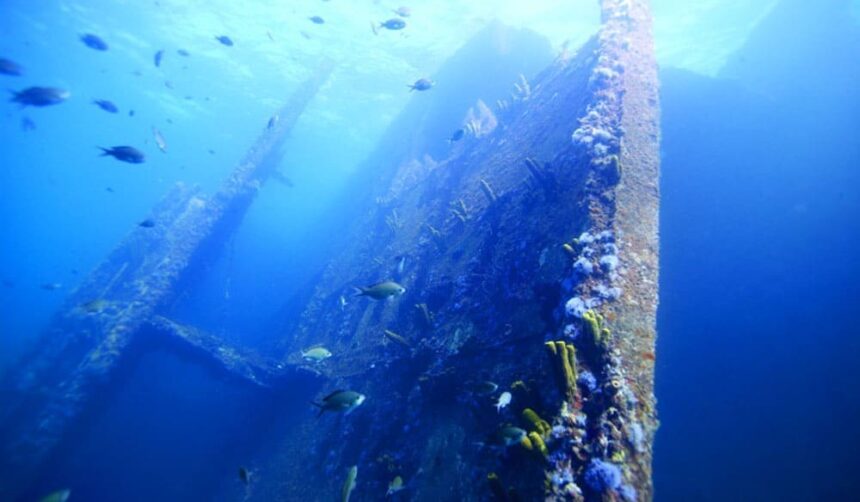
This dive site was created in 2009 when JADS Dive Center sank the Kappel in a sandy patch of sea next to the Mangel Halto reef. At depths of only 35 to 45 feet (11 to 14 m) the Kappel is a great dive site for beginners. Because the wreck is so shallow, there is plenty of light for photographers without requiring massive lights or expensive camera technology.
- Purpose-sunk near the Mangel Halto reef
- Beginner friendly wreck dive
- An abundance of healthy coral
What you will see: Since the boat has only been underwater since 2009, hard coral is still growing. However, soft corals which grow faster, have taken over certain sections of the boat, and have provided a safe habitat for many sea creatures. There are plenty of angelfish, damselfish, eels, and even the occasional sea turtle swimming around.
Pet Cemetery
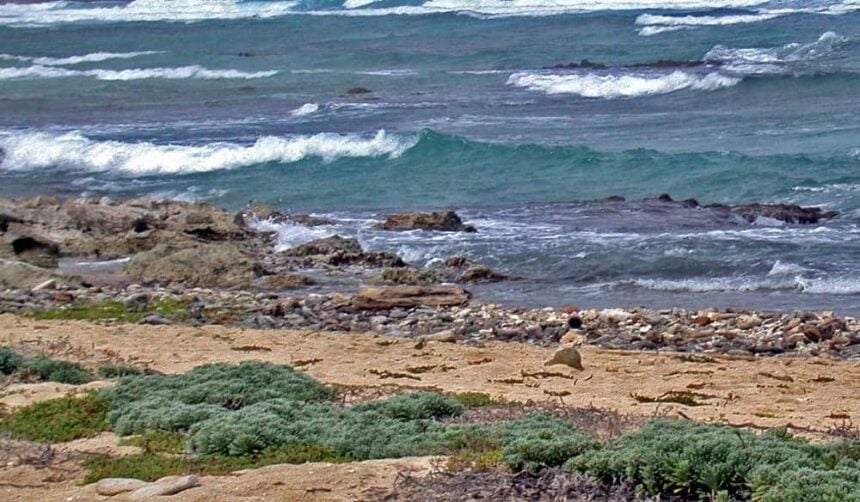
The Pet Cemetery dive site is part of a wide reef that stretches along the coast and teems with various species of coral. The reef continues from the Pet Cemetery past Baby Beach, where it becomes narrower and steeper. The shallow water, clear conditions, and beautiful coral structures make it a diver favorite.
- Extensive range of finger, pencil, and giant brain coral
- Abundant fish life swimming around the healthy reef
- Frequently visited by large schools of surgeonfish
What you will see: Among the healthy growths of pencil, giant brain, mustard hill, and fire coral, there are occasional sea fans and other, lesser-known species of coral. This diverse reef ecosystem is the home to plenty of reef fish. On any given dive, you may see some trunkfish, cowfish, triggerfish, schools of parrotfish, damselfish, gobies, and large congregations of surgeonfish.
Hole in the Wall
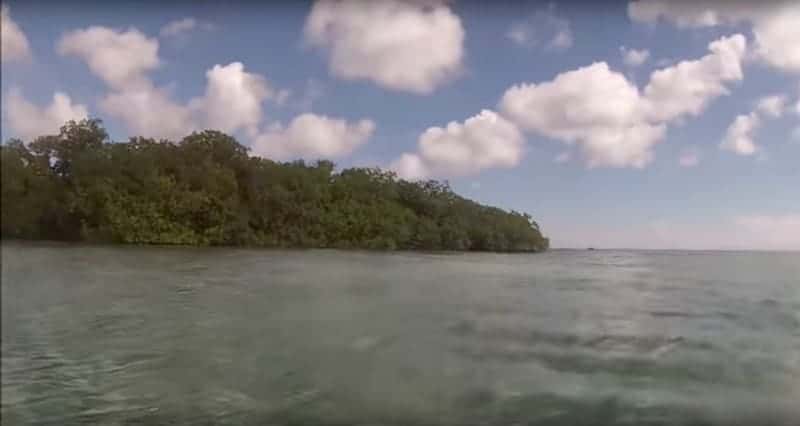
The Hole in the Wall is a beloved dive spot, well known for drift dives. The strong current pushes you along the narrow reef all the way to Mangel Halto. The Hole in the Wall is an impressive structure in the reef, where many fish take shelter from the current.
- Great drift dive for experienced divers
- The dive ends in a shallow lagoon that snorkelers can enjoy
- Plenty of marine life lives along the steep wall dive
What you will see: Along with brightly colored corals flashing past as you drift, you will also see vast numbers of fish tucked under ledges to keep out of the way of the current. The end of the dive brings you through a sandy channel into a lagoon, which has minimal water movement and beautiful visibility. This is a great spot to have your safety stop in the warm water.
Black Beach
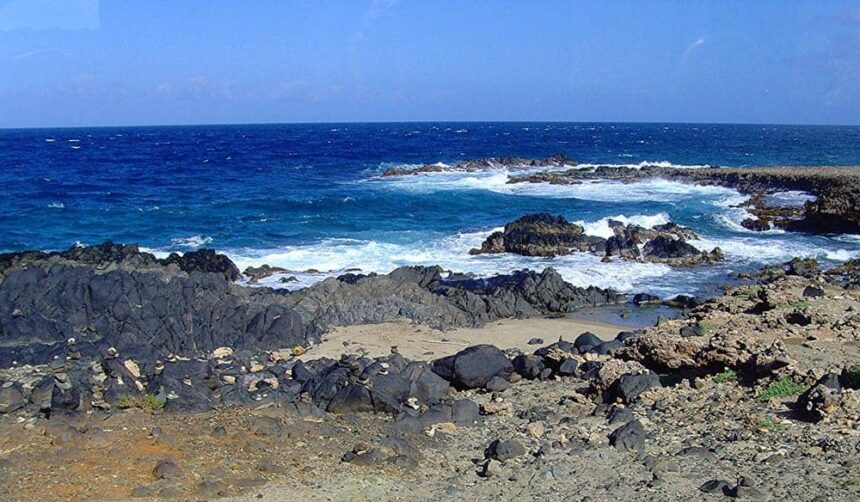
This beach and the subsequent dive site is named for the rounded black stones that line the shore. It is the only bay on the island’s north coast, where it is hidden from the waves and creates a great spot for some easy diving.
- Protected bay for easy diving
- Plenty of sea life lives in the shallow waters
- Great dive spot for beginners
What you will see: The clear water and minimal current allow divers to enjoy a calm dive while plenty of fish swim by and lobsters hide under rocks. There are also lots of sea fans and other coral reef structures growing in the area.
Punta Basora
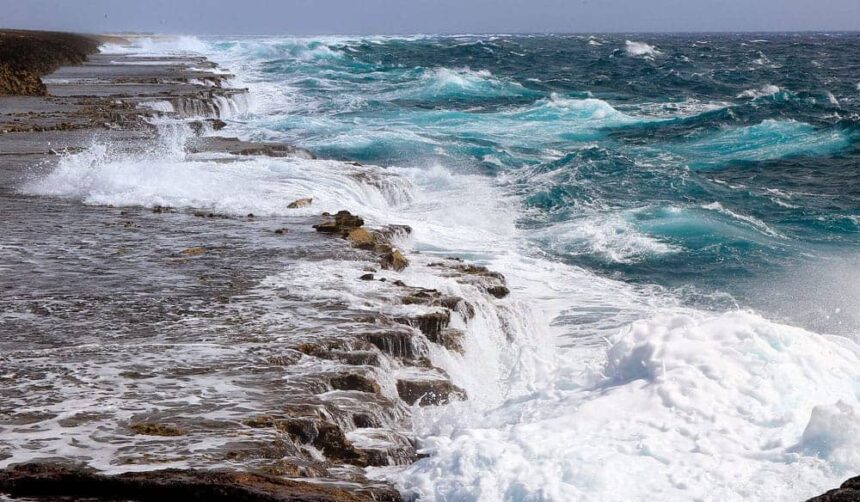
This narrow reef stretches out from the southeastern tip of Aruba into the sea. It is a great place to snorkel from the shore, or to get out for a dive on a calm day.
- Great shore dive or an option for snorkeling
- There is a chance to see hammerhead sharks, hawksbill, and loggerhead turtles
- The deep blue has plenty of passing fish
What you will see: The beautiful reef is a spectacular sight; however this part of Aruba also features deeper blue water, which attracts megafauna. If you look into the blue, you might spot some ballyhoo, eagle rays, stingrays, barracudas, dorados, hammerhead sharks, and turtles.
The Best Dive Sites in Aruba — and so Much More
Did we miss your favorite dive spot in Aruba? Tell us in the comments below.
If you’re planning a trip here, Aruba has a lot to offer both divers and non divers. Aruba allows visitors to enjoy the beauty of the natural world, including some stunning beaches, gorgeous national parks, iconic lighthouses, and other beautiful swimming holes.
Whether you are interested in history, arts and culture, or simply want to view the stunning nature, there are plenty of options for you and your family. There are plenty of museums, and old ruins to visit which will give you an insight into the rich history of the island, interwoven from many cultures stopping by on their ships.
Unlike many of the islands in the Caribbean, the ABC islands had no Spanish colonization, which is evident by the architecture and languages spoken on the streets. There are many hiking trails and spectacular views on the rocky island, where you can be mesmerized by the views of turquoise waters crashing onto the white sand beaches.
 Take a moment to look at this.


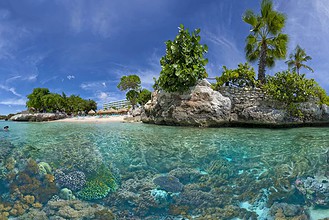
The Antilla is one of the best Caribbean wrecks. A German freighter scuttled during WWII, today she sites at 45ft (18m) and extends to the surface. Open water should be fine
My husband and I are both PADI certified open water divers. What is the prerequisite for the Antilla wreck?
My son, who was 13 at the time, and I were able to dive this wreck with just our open water certs. It is a great dive and a lot of fun.