








































Archaeologists believe they have found the world’s oldest shipwreck off Turkey, with cargo dating back as much as 4,700 years.
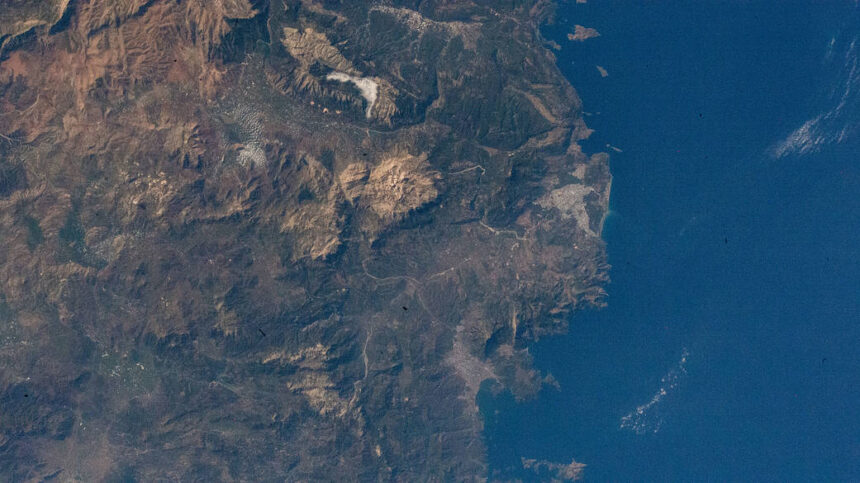
At about 98 feet (30m), divers uncovered more than 30 ceramic storage jars, known as amphorae. They lay scattered on an underwater slope near Kekova Island, on Turkey’s Mediterranean coast. Some still held visible traces of their contents.
The Discovery
“I looked inside and nearly fainted,” archaeologist Karin Sowada told the BBC after examining the recovered pottery. The residue was glossy and thick enough to see without a microscope. Researchers are investigating whether it came from olive oil, wine or tree resin.
The find began with clues from local seafarers. Hakan Öniz, an archaeologist at Akdeniz University, located the wreck in 2024. This year’s excavation took months, with divers freeing pottery from marine growth on the rocky slope, according to Sowada’s account of the research.
Cargo From the Pyramid Age
The jars have two handles, flat bases and, in many cases, a raised band of clay around their widest point. Those shapes and the methods used to make them helped the team estimate the wreck’s age: around 2700-2400 BCE, during the Early Bronze Age. That puts the voyage in the age of Egypt’s great pyramids.
Seaborne trade from that period is known through Egyptian texts and goods found in tombs. Here, researchers have cargo from a voyage itself. Sowada says some jars, or the clay used to make them, may have come from the Central Jordan Valley. Examining the pottery and its contents could help explain how goods traveled across the eastern Mediterranean.
Life Aboard
One jar has nine markings and two holes in its body. Akdeniz University says it could have been a churn used to make butter or cheese. That interpretation remains tentative.
For Öniz, diving the site brings the people behind that cargo to mind. “We are always thinking of the sailors,” he told the BBC. He also thinks about the potters and the people who carried the heavy jars aboard.
Checking the Age
The claim to be the oldest wreck also needs further study. In a report by TÜBİTAK’s science magazine, Edinburgh archaeologist Jon Henderson cautioned that pottery styles can persist for long periods. He gives the Dokos wreck in Greece a date range of 2700-2200 BCE, overlapping Kekova’s proposed dates. The wooden hull has not survived, so the team’s dating relies on the cargo.
Diving Ancient Cargo
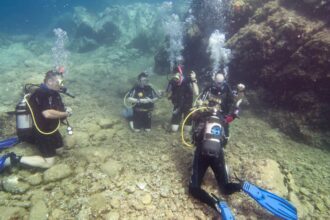
Recreational visits to this particular wreck have not been confirmed. Divers can, however, explore ancient cargo at the separate Peristera wreck in Greece’s Alonissos Underwater Museum. Dating to about 425-420 BCE, it lies at roughly 82 feet (25m). The museum offers summer visits and requires an Advanced Open Water certification and a guide.
 Take a moment to look at this.