







































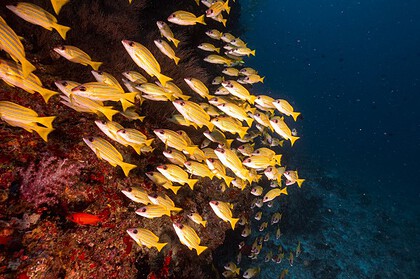






 ZEAGLE Scuba Fins
Zeagle Recon: Power Fins Without the Cramp
Our favorite paddle fins, and near the top in every test we scored. Reinforced rails and a smart bend deliver real thrust with control, not calf cramps. Heavy, negative rubber, stainless spring straps, and roughly two-thirds the price of fancy tech fins. Power that pays off.
 CRESSI Scuba Fins
Cressi Origin: Full-Foot Fins With Punch
Full-foot fins usually trade power for packing, but the Origin skipped that memo. Stiff, durable rubber and a proper blade give real push on every kick, enough to hold a line in light current instead of just stirring water. Mid-range price, travel-friendly, with bite.
 CRESSI Scuba Fins
Cressi Maui: Light Travel Fins
Some fins move water, the Maui moves with you. Featherweight and compact, they vanish into a carry-on and shrug off the airline scale, the easy pick for warm-water trips and lazy snorkel days. Not built for ripping currents, and that is fine, that was never the job.
 See here
Win Free Scuba Gear
We test new gear weekly and give most of it away to newsletter subscribers.
🤿 Join our newsletter to learn how you can get your hands on some free scuba gear!
New giveaways every month!

The World's Best Dive Sites
From the Great Blue Hole in Belize to Sipadan and Indonesia — our ranked list of must-dive sites worldwide, with depth, season, and difficulty notes for each.

Best scuba diving masks
Frameless, low-volume, prescription — we tested 30+ masks across multiple face shapes to find the best fit, seal, and field of view.


Choosing the right scuba fins directly impacts your air consumption, control, and overall diving experience. To find the best options on the market, we conducted one of the most extensive fin test programs in the industry. Our team evaluated 25+ pairs of scuba fins in controlled pool conditions, measuring and comparing key performance metrics including thrust, efficiency, maneuverability, and long-session comfort.
What sets this guide apart is the scale and rigor of our testing. DIVEIN operates the largest dedicated test pool setup for fins of any competitor, allowing us to benchmark products under consistent, repeatable conditions rather than relying on anecdotal use or manufacturer claims. Each fin was tested across multiple kick styles and assessed for real-world usability across different diver skill levels.
The result is a data-backed, experience-driven guide that cuts through marketing noise, so whether you’re a beginner looking for easy propulsion or an advanced diver prioritizing precision and efficiency, you can confidently choose the fins that match your needs.
Cressi Origin


Where to buy
We compare prices daily across all major online stores.
See all 4 pricesCressi Origin Scuba Fin review
Compact, durable, and comfortable to use, Cressi Origin fins offer intermediate divers a reliable option for both wetsuit and drysuit diving. Each fin is made from a single piece of rubber to ensure continued strength in every kick and eliminate any weak points.
The strong string strap helps with donning and doffing, and provides a secure fit around the foot pocket. Available in two buoyancy profiles, they’re suitable for both wetsuit and drysuit divers.
Atomic Aquatics SplitFins


Atomic Aquatics SplitFins Scuba Fin review
Divers know that the name “Atomic Aquatics” means quality scuba gear, and that includes their split fins. Made from composite plastic polymer, the Atomic Aquatics SplitFins are tough. Securing them to your feet are EZ-LOK squeeze-style straps and quick release buckles. The split fins come in seven different colors to match all your other gear, so you can look sharp while diving comfortably.
Split fins, by their very design, take pressure off of divers’ knees, ankles, and hips, making them a great choice for divers with mobility or lower extremities’ issues. Split fins can also help new divers reconcile their tendency to “bicycle kick,” by making the kicking motion feel more natural.
Let’s dive in and take a closer look at the Atomic Aquatics SplitFins.
Apeks RK3


Where to buy
We compare prices daily across all major online stores.
See all 4 pricesApeks RK3 Scuba Fin review
Apeks is leading the way when it comes to high-quality and high-performance scuba equipment, and the Apeks RK3 fins are a prime example. Made from rugged thermoplastic rubber, the Apeks RK3 fins will hold up in any environment and conditions, and will last for years. The material also makes these fins some of the lightest channel fins on the market, so they travel well.
Using a frog kick or flutter kick or anything in between, you won’t be disappointed. The RK3 fins are perfect for warm-water divers who want a more neutrally buoyant fin, or for cold-water divers who want a wider foot pocket to accommodate their rock boots.
Let’s dive in and take a closer look at the Apeks RK3 fins.
ScubaPro Jet Fins


Where to buy
We compare prices daily across all major online stores.
See all 5 pricesScubaPro Jet Fins Scuba Fin review
Based on the same design that first appeared in 1965, the ScubaPro Jet Fins have been the industry standard for quite a while. The Jet Fins, or simply “Jets,” are channel fins that are comfortable, deliver the perfect amount of control, come with a sturdy, rugged stainless steel heel strap, and provide just the right amount of force.
There’s a reason you’ll see the Jet Fins on the feet of your instructors, guides, and technical divers your instructors’ feet, on the feet of your guides, on the feet of technical divers, and on the feet of everybody in between. They flat out work.
Let’s dive in and take a closer look at the ScubaPro Jet Fins.
ScubaPro Seawing Supernova


Where to buy
We compare prices daily across all major online stores.
See all 3 pricesScubaPro Seawing Supernova Scuba Fin review
ScubaPro means quality. New divers, seasoned divers, and everybody in between knows that distinctive “S” logo, and they know it means top-notch gear. Some of the most powerful and fastest fins on the market, the ScubaPro Seawing Supernova fins are perfect for any conditions, especially where you might run into strong currents.
Outside of being comfortable and powerful, the ScubaPro Seawing Supernova fins travel really well too. Designed as a two-part fin, the Supernovas break down into two pieces to fit nicely into your gear bag. This versatility, combined with a light weight, makes them an ideal fin for divers who can’t wait for their next adventure.
Let’s dive in and take a closer look at the ScubaPro Seawing Supernova fins.
Fourth Element Tech


Where to buy
Track this priceFourth Element Tech Scuba Fin review
Fourth Element is changing the scuba world, and that’s not hyperbole. They redesigned a scuba mask by simply tilting the tempered glass so divers get a more natural line of sight; they just revealed the new Argonaut 3 drysuit; and they added the new Fourth Element Tech Fins to their line up.
Don’t let the name fool you though, the Fourth Element Tech fins aren’t just for tech divers. These are great all-around fins that performed well during testing for all styles of kicks.
In addition to producing well-performing gear, Fourth Element is also committed to environmentally conscious manufacturing. Their Tech fins are made from recycled, natural, recyclable materials, and are shipped in zero plastic. Not to mention, these fins are completely recyclable at the end of use.
Let’s dive in and take a closer look at the Fourth Element Tech fins.
Zeagle Recon


Zeagle Recon Scuba Fin review
It doesn’t get much safer or top-notch than Authorization for Navy Use (ANU) by the Naval Sea Systems Command (NAVSEA)—but that’s what’s in store when you choose Zeagle equipment. All of their gear is extremely durable, high-quality, and surprisingly—due to the quality—affordable. Take the Zeagle Recon fins, for example. These fins could go head-to head with other technical inspired fins at two-thirds the cost.
Two thick rails along the edge of the fins, and a 25-degree angled bend between the foot pocket and the blade deliver greater thrust and more control. Negatively buoyant and made from high-quality, durable rubber, Zeagle Recon fins will deliver benefits to divers across the spectrum.
Let’s dive in and take a closer look at the Zeagle Recon fins.
Mares Avanti Quattro +


Where to buy
We compare prices daily across all major online stores.
See all 4 pricesMares Avanti Quattro + Scuba Fin review
One of the most popular fins on the market is back with a new upgrade. Divers love the Mares Avanti Quattro, and now with new technology to ensure a more powerful thrust, the Quattro + has hit the shelves.
This new technology and upgrades, called channel-thrust technology, allows the optimal amount of water per kick cycle to be captured and channeled along the fin, lessening the dead space found in other fins. This means divers can optimize every kick and generate the highest level of thrust.
Lightweight and affordable, the Quattro + fins should be in any traveler’s dive bag. Along with the new technology that makes these fins more proficient, a host of brand-new colors makes it easy to match your other gear.
Let’s dive in and take a closer look at the Mares Avanti Quattro + fins.
Dive Rite XT


Where to buy
We compare prices daily across all major online stores.
See all 4 pricesDive Rite XT Scuba Fin review
You won’t find five different regulators or 10 different BCDs on the shelf from Dive Rite. The same goes for fins. But there’s no need for variety for variety’s sake, because the equipment they do make is top-notch, including the Dive Rite XT fins.
Following the same design that’s been going strong since the 1990s, the XT fins are made from an injected, molded monoprene with a monoprene center strip. This gives the fins a stiffness with a snap to them.
Great for all types of kicking styles, especially frog kicking, the Dive Rite XT fins are a great addition to your gear, one that’s bound to make your diving that much better.
Let’s dive in and take a closer look at the Dive Rite XT fins.
Aqualung Storm Fins


Where to buy
We compare prices daily across all major online stores.
See all 4 pricesAqualung Storm Fins Scuba Fin review
Aqualung has been making top-notch equipment for years, from wetsuits, to regulators, to fins, including the Aqualung Storm fins. They’re lightweight, comfortable, come in many sizes, and can be worn barefoot, making these fins a great option for travelers and warm-water divers.
Many instructors have switched to barefoot fins to save their boots while teaching in the pool. They not only save neoprene, but they are also easy to get on and off, making herding students that much easier.
We also love barefoot fins for young divers. We don’t know too many kids who dive in the cold, and the Storm fins come in many sizes to fit those little feet. Having a low price point only helps. Kids will outgrow footwear before you know it, so you can feel better about having to buy new fins next year.
Let’s dive in and take a closer look at the Aqualung Storm fins.
TUSA Solla


Where to buy
We compare prices daily across all major online stores.
See all 3 pricesTUSA Solla Scuba Fin review
Most well-known for masks, TUSA manufactures high-quality equipment at reasonable prices across a wide range of categories. Our pick for the top budget fin, the TUSA Solla, will fit the needs of a wide variety of divers.
These good all-around fins are lightweight and built with a reinforced side rail. Because they’re made from a strong thermoplastic elastomer, you might be surprised to find these fins leading the way in the budget category. Worth every penny—and then some—the TUSA Solla fins make a great travel fin, a nice backup fin for warm water, or a great starter fin for new divers.
The Solla fins come in seven colors and are equipped with an EZ Strap and buckle system. Not only do these fins perform well, but they are also comfortable—and they look nice too. There’s no doubt your buddy will always know where you are while diving.
Let’s dive in and take a closer look at the TUSA Solla fins.
Cressi Maui


Where to buy
We compare prices daily across all major online stores.
See all 3 pricesCressi Maui Scuba Fin review
In recent years, many of the scuba diving brands have released their take on a snorkel-scuba hybrid fin, and the Maui is Cressi’s entry into that market.
Slimmer and lighter than most of its competitors, the Maui can easily lay flat in your luggage without taking up much space or weight. The foot pocket is made of soft rubber, anatomically molded, flexible, and comfortable enough to wear barefoot. Although a hybrid, we did find that these fins are more snorkeling inclined, and not designed for heavy scuba use.
ScubaPro S-Tek


ScubaPro S-Tek Scuba Fin review
ScubaPro makes some of the best equipment on the planet. There’s a reason you’ll find ScubaPro gear on every boat you get on, every hot walk-in location, and as part of the kit of instructors and other dive leadership the world over. The ScubaPro S-Tek fins are right in line with the company’s other gear, and we know that before long you’ll start seeing these fins as much as any other fin on the market.
One of the most innovative pieces of equipment to hit the market in recent memory, the ScubaPro S-Tek fins are designed to be either negatively buoyant or neutrally buoyant, depending on when you need it. In this way, one pair takes the place of two separate sets of fins.
How did they do it? It’s all thanks to a removable stainless steel weight attached to the bottom. In addition to this innovation, S-Tek fins also feature a two-piece design, making it easy to pull them apart and stash them in your travel bag.
Let’s dive in and take a closer look at the ScubaPro S-Tek fins.
Aqualung Phazer


Where to buy
We compare prices daily across all major online stores.
See all 4 pricesAqualung Phazer Scuba Fin review
Aqualung is known for its durable scuba products and their Phazer Fins are a testament to this. Becoming a recreational diver favorite when they came on the scene in 2019, the Phazers are still a great scuba fin with fast, efficient power.
Aqualung’s ‘wave rib’ technology combines softer rubber and stiff plastic and gives that extra push and speed with every kick. They propel you through the water fast, and very efficiently. While it is a longer fin—so you will need strong legs for your kicks—you do not need a lot of effort to move.
Dive into our full review for all the details on the Aqualung Phazer fins.
Atomic Aquatics BladeFin


Atomic Aquatics BladeFin Scuba Fin review
Atomic Aquatics designs equipment for divers by divers. In fact, every Atomic Aquatics design starts with a sketch—every detail is questioned, examined and reexamined, and then improved with advanced materials that raise the bar and redefine each related dive category.
The Atomic Aquatics BladeFins are no different, and are designed with divers in mind. With sleek lines and quality performance, the BladeFin offers high-quality at a great price. Divers will love the way they perform and everybody else on the boat will be jealous of their looks.
Let’s dive in and take a closer look at the Atomic Aquatics BladeFins.
Cressi Thor EBS


Where to buy
We compare prices daily across all major online stores.
See all 4 pricesCressi Thor EBS Scuba Fin review
Born and manufactured in Italy, but loved by the world, Cressi produces high-quality equipment for the discerning diver. Their regulators, BCDs, masks, and fins are loved by divers across the world. Designed with the newest technology, the Cressi Thor EBS fins are making their mark on the diving industry.
Made from high-quality blended polypropylene and containing two central ribs, the fins promote greater flow with what is known as the “spoon effect.” This technology helps generate power and thrust with more efficiency.
Four colors and four sizes mean almost every diver can find the perfect fit and the best design to stand out on their next dive trip.
Let’s dive in and take a closer look at the Cressi Thor EBS fins.
Hollis F1 LT


Where to buy
We compare prices daily across all major online stores.
See all 4 pricesHollis F1 LT Scuba Fin review
How do you improve on the wildly popular Hollis F1? You make it lighter, neutrally buoyant, shorter, and wider—and call it the Hollis F1 LT. The F1 LT fins are designed and molded to deliver efficiency and more power per square inch than the original F1 fins. They can help divers fit into narrow spaces where a full kick isn’t possible, while still delivering the power they need.
Built with multiple conditions in mind, the F1 LT is light enough to use in a thin wetsuit, yet heavy enough to wear with your drysuit and rock boots. Made with a stainless steel spring strap and an easy to use pull-tab, the F1 LT fins are easy to get on and off, meaning you can use them in a variety of water conditions, from calm waters to rough seas rocking and rolling you around.
Let’s dive in and take a closer look at the Hollis F1 LT fins.
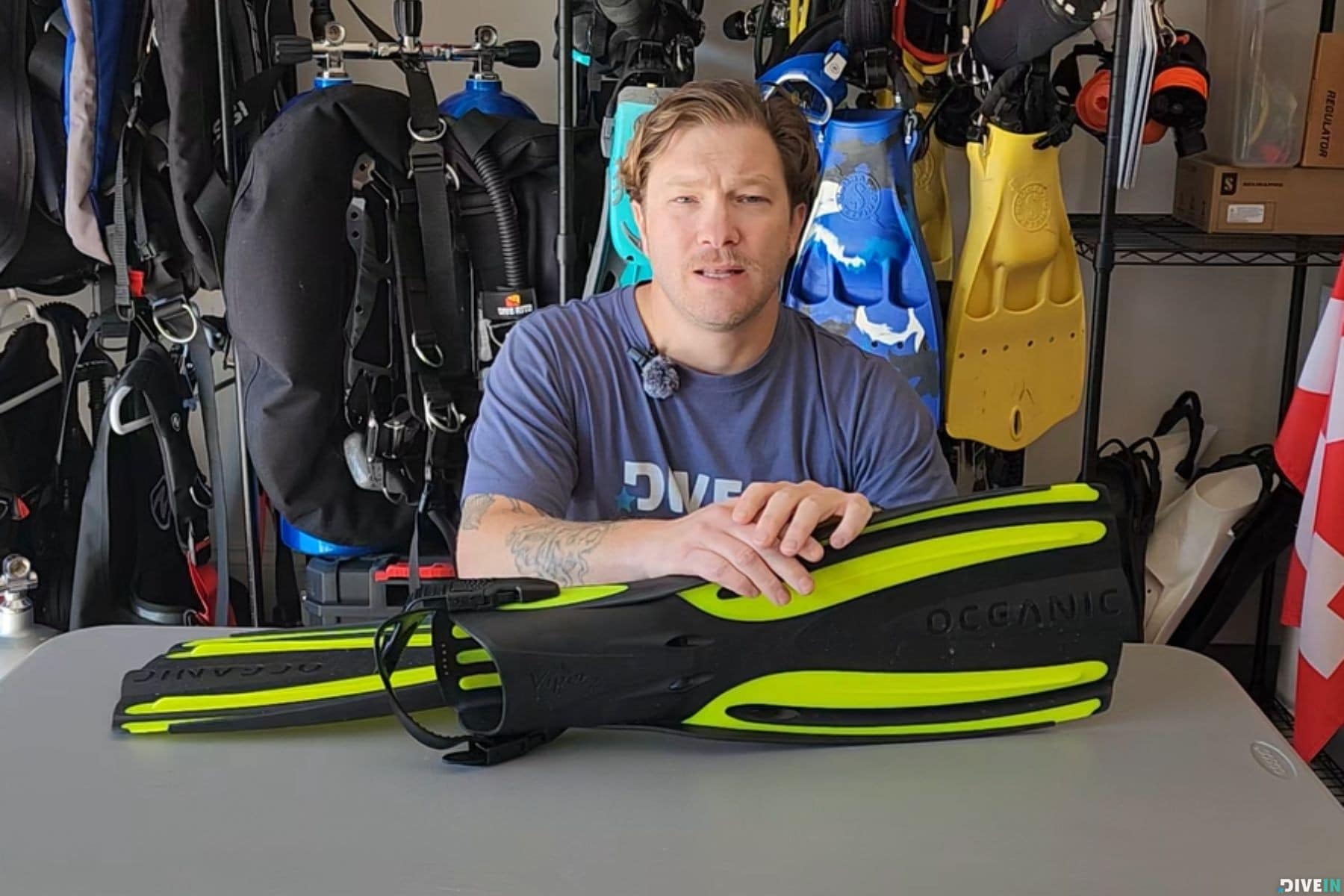
Oceanic Viper 2





Where to buy
We compare prices daily across all major online stores.
See all 3 pricesOceanic Viper 2 Scuba Fin review
Oceanic is known for making quality dive equipment that serves a wide variety of divers. The one thing all of this equipment has in common is that it’s tough, rugged, lasts a long time, and won’t break the bank. The Oceanic Viper 2 fins are no exception.
Traditional paddle-style fins with a little bit of shine, the Oceanic Viper 2 fins are a great addition to your personal dive locker, and are excellent for divers who travel to warm waters.
Adjustable heel straps with a quick-release button make getting these fins on and off a breeze. With availability in five colors, you’re sure to stand out on your next dive trip.
Let’s dive in and take a closer look at the Oceanic Viper 2 fins.
TUSA Hyflex Switch


Where to buy
We compare prices daily across all major online stores.
See all 3 pricesTUSA Hyflex Switch Scuba Fin review
For over 65 years TUSA has been innovating and developing diving gear. Their gear is top of the line, and their masks are second to none. Their equipment is affordable and user-friendly, including a complete line of quality fins. The Hyflex Switch fins are their lightweight, technology-driven model designed for travel.
Perfect for warm-water diving with ideal water conditions, the Hyflex Switch fins come in a variety of sizes and colors to meet almost any diver’s needs.
Let’s dive in and take a closer look at the TUSA Hyflex Switch fins.
TUSA Travel Right


Where to buy
Track this priceTUSA Travel Right Scuba Fin review
For over sixty-five years TUSA has been innovating and developing diving gear. Their equipment is affordable and user friendly, and they’re well-known for a complete line of quality fins. The Travel Right fins are their lightweight, barefoot model, designed for divers that like to travel.
Perfect for warm water diving with ideal water conditions or for snorkeling after a day of diving, the Travel Right fins are budget friendly and come in a variety of sizes to meet almost any diver’s needs. Great for kids, great for travel.
Let’s dive in and take a closer look at the TUSA Travel Right fins.
ScubaPro GO Travel



Where to buy
We compare prices daily across all major online stores.
See all 3 pricesScubaPro GO Travel Scuba Fin review
The ScubaPro name is synonymous with quality. Divers love their regulators, BCDs, masks, and fins, including the GO Travel fins. They’re not as high performance as the Jet Fins; they’re not quite as powerful as the Seawing Supernovas; and maybe they’re not quite as innovative as the S-Tec fins, but they are lightweight and comfortable, making them a traveler’s dream.
Small enough to fit in your carry-on luggage and light enough to serve as a second set of fins on your trips, the GO Travel fins are perfect for frequent warm-water travelers. Also, being a barefoot fin, they’re great for scuba instructors and divemasters who spend a lot of time in the pool—not having to wear boots that corrode means you save money.
Let’s dive in and take a closer look at the ScubaPro GO Travel fins.
ScubaPro GO Sport Gorilla


Where to buy
We compare prices daily across all major online stores.
See all 4 pricesScubaPro GO Sport Gorilla Scuba Fin review
Divers love ScubaPro, and ScubaPro loves divers. That’s why they have such a vast selection of equipment to choose from. Their fins alone offer something for every diver, from the finesse of the Jet Fins to the power of the Seawing Supernovas and the portability of the GO Travel fins.
The ScubaPro GO Sport Gorilla fins give divers even more options. Ultra-lightweight and stiffer than the GO Travel fins, the GO Sport Gorilla fins offer a perfect combination of travel capability and diving control.
Affordable and technologically sound, the GO Sport Gorilla fins are a perfect match for almost any diver, regardless of water conditions or the thickness of their exposure suit.
Let’s dive in and take a closer look at the ScubaPro GO Sport Gorilla fins.
Fourth Element Rec




Fourth Element Rec Scuba Fin review
Fourth Element’s Rec Fins stand out as the first scuba fins made from recycled post-consumer plastic waste, giving them a genuine edge for eco-conscious divers. The design sticks to a proven formula with a 4-channel blade that produces thrust on both the up and down kick, while stiffening ribs add control and stability.
They come with spring straps as standard and feel solid in the water, holding up well across different kicking styles and in different environments. Choose Fourth Element Rec fins for a tough, reliable pair of fins that perform well without adding to your environmental footprint.
Mares Volo Race


Where to buy
We compare prices daily across all major online stores.
See all 4 pricesMares Volo Race Scuba Fin review
The Mares Volo Race fins are lightweight, comfortable, and efficient. Designed for warm-water diving and snorkeling, they deliver smooth propulsion with minimal effort, making them a great choice for divers and snorkelers who value comfort and reduced leg fatigue over raw power.


How We Test: Fins
Why trust us
Since DIVEIN began 15 years ago, we have tried and tested dive fins from all the major players—ScubaPro, Cressi, Aqualung, TUSA—in all shapes and sizes. Some fins we purchase ourselves and some are submitted for review, but we are never paid to write a falsely glowing review of a product.
All of our reviews are unbiased and our selections are the result of thorough testing based on our dive team’s knowledge from a combined 50 years of diving experience. We have curated a list of the top fins according to different wants, needs, and budgets, so no matter what kind of diver you are, we are sure there is one for you.
How we tested
Fin tests are some of the most thorough we run, mainly because we can quantify our testing data with hard numbers. It’s hard to do that with other gear such as BCDs and regulators. We can have an opinion based on experience, but at the end of the day it’s still subjective.
As for fins, there were two separate parts to the test. The first half measured kick cycles. We used a local pool that is 50 feet long (15 m) for our testing. We swam down and back, giving us 100 feet (30 m) of testing space. We used both flutter and frog kicks, and measured how many kick cycles it took to get down and back. We then simply divided that number by the distance of the pool to give us a “feet per kick cycle” rating.
The next test was based on maneuverability. This section was a bit more subjective in nature. We tested two variables—a helicopter turn from a stand still and back-finning. Each of these was scored from one to five, with five being the highest.
Each fin was graded based on each criteria. Some had great numbers in the flutter, but not the frog kick, and vice versa. Once these scores were added up, that gave us a running list of overall best performing. We then divided the fins into categories such as channel, paddle, split, and travel.
Kick Cycle Testing: Flutter Kick

The first set of data comes from testing the flutter kick. This is the traditional kick that all new divers start with, and many experienced divers still use in certain scenarios. We measured every kick cycle for this test exactly the same. A “kick and glide” approach was used.
Takeaway
While the numbers might look quite similar on the graph, remember that this test was completed using a pool measuring 100 feet (30 m). And while there might not be a large difference between 20 kick cycles and 25 kick cycles in the pool, expand that out to 300 or 400 feet (91 to 122 m) while diving on a large wreck and those numbers separate quite a bit.
Another data point to remember is that the test was done in calm water. The lower “feet per kick cycle” measured means the fin has less power potential. In calm waters this shouldn’t be of any concern, however, in a stronger current or on a drift dive those numbers again become more separated.
The chart below shows how the fins were measured in feet per kick cycle.

Kick Cycle Testing – Frog Kick

Seasoned divers and the select few new divers who have the ability often favor the frog kick. This kick style uses less energy and, once perfected, will help with buoyancy. We felt that measuring this kick style separately would benefit the testing. The data for the frog kick was collected in the exact same manner as for the flutter kick portion. The same “kick and glide” format was used.
Takeaway
Just as with the flutter kick, some of the numbers look similar—but expanded to a longer distance the numbers start to separate at greater rates.
The graph below shows how each fin performed, measured in “feet per kick cycle.”

Another key factor to keep in mind when selecting fins based on our testing data is the combination kick cycle. Imagine that you generally use the frog kick, but like to dive in drifts or where there might be a strong current. You might want to switch between the two kick styles for efficiency or strength.
Final Thoughts on Kick Cycles
The graph below shows our data compiled to include both kicking styles to generate a total between the two styles. You can see that some fins start to separate themselves from the rest of the pack. This made it clear that some fins excel in a single kick style, while others do well in both.

Maneuverability Testing: Turn Rating

While helicopter turning may not be listed as a top skill for all divers, the more advanced use this skill to stay positioned in a nice trim body position and maintain good buoyancy. We thought that testing this specific kick would be beneficial in grading the fins. We tested them all the exact same way, by getting into and maintaining a nice buoyant position and trying to spin in each direction in a complete 360-degree turn.
Takeaway
Shorter, stiffer fins performed better during the turn testing. Some fins were simply too floppy to generate the force needed to comfortably turn. This is important to note if you dive around reefs or wrecks where how you turn is just as important as how you kick. Diving as to not disturb the habitats is quite important.
In the graph below you will see our rating for the fins we tested. This section is a little bit more subjective than simply measuring kick cycles. However, we judged each fin based on the same inputs. Individual divers may find slightly different results based on their own experience or style.

Maneuverability Testing: Back-finning Rating

Much like helicopter turning, backfinning may not be a skill every diver uses. However, being able to back out of a tight reef pocket or section of a wreck is an important skill to have for two reasons—first, you don’t want to disturb or hurt the habitat or environment and second, it might be your only option.
Takeaway
We tested every fin in the same manner, starting by getting neutrally buoyant and staying in nice trim. Then we attempted to back-fin. As above, these results are a bit more subjective than kick cycles. However, each fin was tested and evaluated the same way.
You can see in the graph below that there is a large gap between the fins that are proficient at this skill, while others struggled.

Final Thoughts: Maneuverability
As the graph below shows, when you combine the ability of the fins to turn and how well they can backfin the gap between the fins widens. Some fins were above average in one category while struggling in the second category and vice versa. Some fins performed exceptionally in both, and this absolutely helped propel them higher in the rankings.

Overall Ratings based on scores
In the final graph below, you can see that we’ve combined each fin’s feet per kick cycle, using both flutter and frog, and the fin’s maneuverability, grading both turn capabilities and backfinning, for a final tally.
Based on the data you can see how and why we ranked fins based on these results. The ScubaPro Jet Fin has the highest combined scores, and thus was awarded our top all-around fin.

Final Thoughts
Fins are quite subjective to the individual user. If all a diver uses is one kind from one manufacturer, they may have difficulty making a switch. Another factor is what kind of fins local dive shops sell and what other local divers are wearing.
Regional preferences play a large part in what divers wear too. That is why we tested several fins from the same category to give fair, overall, well-rounded data sets.
Buyer’s Guide: Choosing the best scuba fins
You’ll have to make several key decisions when it comes to choosing the right pair of scuba fins, but first, ask yourself a few questions: What is your swimming style? Do you want power or an economy of effort? Will you be mostly shore or boat diving? Will you be traveling often with your fins? This guide will help you make the right selection for your needs.
Full-Foot vs. Open-Heel Scuba Fins
First, you should decide which type of scuba fins you want: full-foot or open-heel. You’ll slip your bare feet right into full-foot fins, which fit like shoes. They are great if you’re looking for something light to travel with, if you’ll be diving in warm, easy conditions, and are not shore diving. They are lighter than pocket fins and do not require booties, so the energy needed to swim is reduced. Full-foot fins are also generally better for snorkeling.
Open-heel scuba fins, on the other hand, require divers to wear booties. This type of fin is generally much more versatile when it comes to scuba diving. The fins are sturdier and can withstand a much wider range of underwater conditions, and the addition of a bootie means you can use this type of fin for shore diving. Unless you will only be boat diving in calm, shallow, current-free waters, open-heel fins are typically a better choice.
Blade Styles
Now, what about blade style? Again, what you choose depends largely on the type of diving you intend to do. Scuba fins typically fall into one of the following categories:
Paddle Fins
Generally speaking, paddle fins have a one-piece design and the foot pocket is structurally attached to the blade. With new fin designs, however, this is not always the case. If you look at the ScubaPro Seawing Supernova fins, you’ll notice that they are designed with a two-piece framework.
On the whole, paddle fins deliver more power than their counterparts, but they lose some of the maneuverability you would find in a channel fin. This is because paddle fins are longer and more pliable. They have more of a “whip” feeling with every kick. While some divers find paddle fins acceptable for frog and alternative kicks, they are built more for using the flutter kick.
It doesn’t get much clearer when it comes to describing what a traditional paddle-style fin looks like than noting the design of the Dive Rite XT fins. These fins are a great example of the one-piece design mentioned above. They also perform exactly how you’d expect a paddle fin to perform. They are fast, both in flutter and frog, and they are slightly less maneuverable than shorter, stiffer fins.
Traditional paddle-style fins are great for a handful of different divers, especially those who are new to diving, those who like to travel, those who dive exclusively in warm water, and those who like the feeling of a lighter fin on their feet. Depending on the manufacturer, you can get paddle fins with either a spring strap or a quick-release buckle with an adjustable strap.
Channel Fins
Channel fins are easy to identify—they look like a duck’s foot. The best fins to demonstrate this design are the ScubaPro Jet Fins. They are short and wide. This makes them a little bit less powerful that their paddle counterparts, but it makes them ideal in situations where maneuverability and even backfinning are needed.
Another easy way to identify channel fins is that they have channels, as the name suggests. These channels are located where the end of the foot pocket meets the blade. Generally speaking, there are three channels on each fin, and for the most part they are rectangular in shape.
These channels work by allowing some water to slip through the fins on every kick. We face constant resistance from the water while diving, and science shows that the water always wins. When you try to kick harder, the water pushes back. These channels are designed to lessen that resistance.
For the most part, channel fins are heavier and more negatively buoyant than paddle fins. Technical divers love this type of fin, but they are not made exclusively for technical divers. Many divers can reap the benefits of using channel fins. There are even young divers who have made the switch and are diving exceptionally well.
While they may not be the best for travel, channel fins are great for any diver who wears a wetsuit more often than not. The negative buoyancy will counteract the positive buoyancy of the wetsuit. And while they may be heavier than some like to travel with, by their short and wide design they are easy to pack. Generally with a few exceptions, it is also easier to frog kick in channel fins.
Split Fins
As the name suggests, split fins are divided into two pieces lengthwise. The split starts roughly 3 inches (7.6 cm) from where the foot pocket meets the blade, and continues along the entirety of the fin. The Atomic Aquatics SplitFins exemplify this design.
Split fins function the same as any other kind of fin. Your kick cycle should be smooth. What differentiates split fins from other fins is the design. Every time you kick, the separate parts of the blade will twist. This design is based on something we find in nature, the whale’s tail.
Split fins don’t generate a ton of power, but they do take the pressure of your legs every kick. This makes them very efficient because you don’t expend any extra energy.
Generally, split fins are slightly heavier than traditional paddle-style fins due to the reinforced edges, but not overly so, so they travel fine. They are great fins for individuals with lower extremity issues, such as ankle, knee, and hip problems. There is also some anecdotal evidence that they can help new students who struggle with bicycle kicking.
Force Fins
Also resembling a whale’s tail, these unique fins are supposed to provide quite a bit of power. They are light and efficient, but cost an arm and a leg. Swim with a short flutter stroke for best effect.
Buckles vs. Straps


Once you’ve chosen your blade style, the next consideration is your buckle. There are a few different ways open-heel scuba fins can stay attached to your feet. There are three main types of heel straps: spring straps, adjustable straps with a buckle, and bungee straps. Let’s look at each in more detail.
Spring Straps
Spring straps are exactly what they sound like—a big spring seals your foot in your fin. These types of heel straps are not adjustable, however, they do come in various sizes and you can switch them out. They also stretch up to 2 inches (5 cm) so you can fit your foot.
The springs are made from marine-grade stainless steel, and can hold up in the harshest conditions. Some come wrapped in nylon webbing and others have a handy pull tab so you can get them on and off easier.
Adjustable Straps


Adjustable straps are just that—you can adjust them before and after you put them on. They also have a quick-release buckle that undoes the strap when you push it. Some like this kind of strap so they can adjust it to meet their needs; other divers find it hard to adjust the straps while wearing gear. It does take some practice.
These straps are made from rubber or rubber composite, meaning they will last a long time, but they are susceptible to dry rot.
Bungee Straps

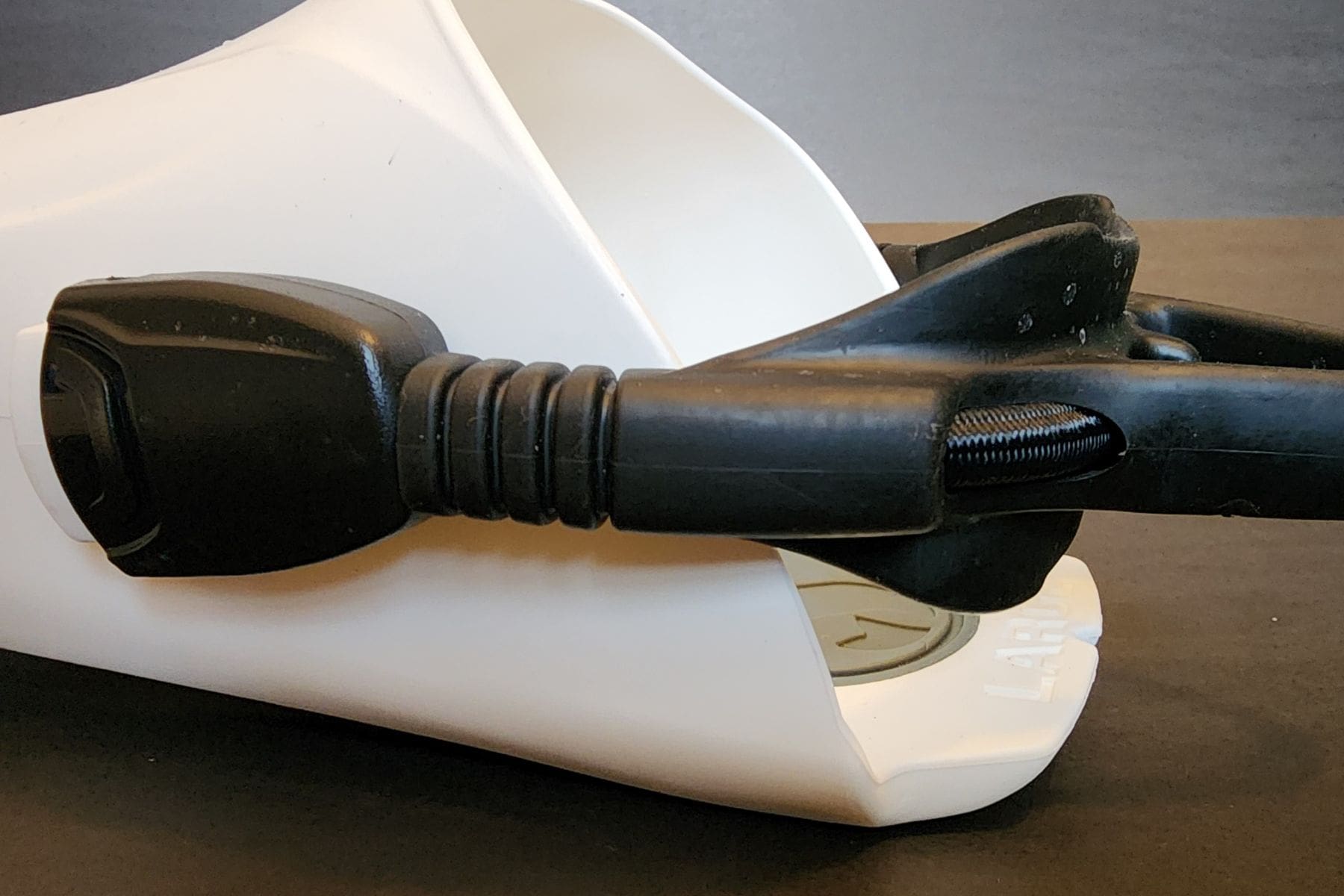

The last type is a bungee strap. While most common on travel fins, you can find them on various other fins on the market. They work just as the name sounds, with a simple bungee that stretches to fit your foot inside the fin.
Depending on the brand and model, the thickness of the bungee will vary. The bungee straps will come with either a small heel pad or a pull tab to ensure the strap doesn’t roll off. These are generally the lightest straps, and can, over a period of time, stretch out a little.
Fin Buoyancy
Another consideration when selecting fins is buoyancy. For a quick refresher on buoyancy, the simple rule is that if something floats, it’s positively buoyant, if it sinks, it is negatively buoyant and, if it stays in the middle of the water column, it is neutrally buoyant.
With that said, let’s look at what that means for fins, why it matters, and which type of fin will fit your needs the most.
Positive Buoyancy
rn
Positively buoyant fins will try to float up while you are wearing them. If you have heavy legs, dive in swim trunks, or can keep your legs even with your body, these fins could work for you.
Having a very positively buoyant fin will tend to push your head down as your feet are being pulled up. If you favor a frog kick with your feet above your back, this makes getting comfortable in the water pretty difficult.
Negative Buoyancy
rn
Negatively buoyant fins are the exact opposite—these fins will tend to drag your lower half down. Many people wear these fins to counteract the positive buoyancy of wetsuits and drysuits.
Some people wear them because they keep their fins above their hips, thus pushing their lower half down. This leads to a more in-line trim position. Some anecdotal evidence shows that backfinning may be easier in negatively buoyant fins.
Neutral Buoyancy
rn
Right between positively and negatively buoyant fins are neutrally buoyant fins. It really depends on your diving style and your exposure suit when deciding on these fins. You must consider how trim you are to start, how your weight is divided, how thick of a wetsuit you’re wearing, and your preferred kicking style.
A neutrally buoyant fin will suit the greatest number of divers. Use these as your primary fins, and then go more negative or positive depending on the conditions and other topics discussed.
Choosing the right scuba fins for you
Absolutely nothing beats putting fins on your feet and trying them, even if it’s just an afternoon in the pool. If you’re a new diver, ask your instructor if you can try a few different kinds of fins with different buoyancy characteristics, different heel straps, and from different categories such as channel, paddle, and split.
If you have already been through class and you’re either ready to upgrade or just aren’t happy with the fins you have, we have a few tips for you.
If you plan on diving in only warm locations where you’ll need only a very thin wetsuit or even just a swimsuit, look into neutrally buoyant or even positively buoyant fins. On the other hand, if you wear a heavier wetsuit or even a drysuit, you should consider negatively buoyant or neutral fins.
If you dive in a lot of current, consider something with a lot of power. If you dive around and in wrecks you should look for a fin with a lot of control and maneuverability. If you dive with one type of kicking motion, you check out our reviews and see which fins are best for each kicking style.
Some people think fins are the least important piece of equipment you own. We couldn’t disagree more. We all know your regulator is your life source, your BCD is your trim source, and a good mask can make a ton of difference. But a good set of well-fitting scuba fins can make your diving experience improve exponentially. Borrow from your friends; rent from the shop; ask people their opinions. It may take you a while to find that perfect fin, but once you do, you’ll know it.
Beginners typically do best with medium-stiff paddle fins or soft blade fins. They’re easy to kick, forgiving on technique, and provide good control without requiring much leg strength.
Open-heel fins are worn with dive boots and feature adjustable straps, making them a better choice for cold water, shore diving, and rugged entries. Full-foot fins are worn barefoot, are lighter and more compact, and are ideal for warm-water diving and travel. Most divers prefer open-heel fins for their versatility across different conditions.
It depends on your diving style. Split fins require less effort and are ideal for relaxed cruising or reducing leg fatigue, while paddle fins deliver more power and control, making them better suited for strong currents, precise movements, and technical diving. Neither is universally better, they simply serve different purposes.
Scuba fin sizing varies by brand, so fit should always be confirmed with a manufacturer’s size chart. In general, full-foot fins should match your shoe size closely, while open-heel fins should be sized to accommodate dive boots for a secure and comfortable fit.
You need boots if you’re using open-heel fins. They provide warmth, protection, and a secure fit. Full-foot fins are typically worn barefoot or with thin socks in warm water.
Stiff paddle fins are best for strong currents. They deliver maximum thrust and control, especially for frog kicks and precise movement in challenging conditions.
Rinse with fresh water after every dive, especially after saltwater use. Store flat in a cool, shaded area and avoid prolonged sun exposure to prevent material degradation.
Higher-end fins often offer better materials, efficiency, and comfort. They’re worth it if you dive frequently or need specific performance (e.g., currents, tech diving), but many mid-range fins perform well for most divers.
Technical divers typically use stiff paddle fins, often rubber-based, for maximum control, precision, and effective frog and back kicks.
Yes. Scuba fins can be used for snorkeling, but they may feel heavier and stiffer than snorkeling fins. Many snorkelers prefer lighter, more flexible fins for surface swimming.
 Take a moment to look at this.


To sleep with them: No, it’s not harmful :) You might dream about diving, but that’ll just make everything better.
My fins are Beuchat Contact Spirit.
They are so comfortable that I sleep with them !
But is it harmful to the feet ?
Hi. We recently qualified as rescue divers and now looking for new fins. I prefer full foot, lightweight and small for packing. We tried the mares volo race fins (love these) but way too long for my suitcase. Can you advise on a suitable alternative?
Ps : we only dive once a yr in tropical waters
Many thanks
Rosie
The Scubapro Seawing Nova is a great fin, but not the best for frog kicks. Really good for your knees and great for swimming, also in current.
The Scubapro Jet Sport would fit better if you’re serious about checking out that frog kick :)
Hi, I have an oppurtunity to get Scubapro Jet Sport OR Scubapro Seawing Nova both for very friendly price. What do you think would be better for woman? In the past with my old fins (no idea about brand) I had problem and needed help from my buddy to swim against currents. I am more like beginner diver, not really strong legs and mostly use slutter kick – but want to teach/try the frog kick this year too. Thank you for advice!
I have an artificial leg. I discovered a dive shop in Key Largo several years ago that had a bin full of Scubapro jet fins. I bought one. Now I’m looking for someone else like me or looking for a seller of fins that will sell me a single fin. Anyone got ideas?
Hi Greg,
It’s a good choice. Similar to the Mares Quattro+, the Scuba Pro Go Sport is a simple but good fin. Not a lot of fuss, but it works as a great all-around fin.
I’m considering the Scuba Pro Go Sport but am concerned about power in currents. Am also lookin at Mares Quattro+. I wear a size 7 men + 3 mm boot. Am advanced diver, recreational, warm water. Any advice.
Hi Ilke,
That’s a hard one. I’d say the most important part is protecting your feet, so keep the boots/socks as “fit” as possible. Otherwise, you’ll end up with sore feet and also risk making small wounds on your feet.
Booth will do great in propelling you forward. I’ve used the ScubaPro Twin Jet for many years, and I can strongly recommend them.
Hope it helps.
I’m looking for a set of fins that will provide the best speed, I was considering the Mares Avanti Quattro Plus or the ScubaPro Twin Jet Max. Any thoughts?
Hello,
I have bought Cressi Frog Plus Fins, in XS size(the smallest size possible) with a pair of Cressi Isle boats, 5mm. However, the fit of the boats was a bit loose so I found a different pair of diving boats to use with my Cressi Fins. Now, the boats that I have fits perfectly to my feet but the fins are really loose.
Should I return to Cressi boats and try to wear them with extra socks, or try to fill them with extra neoprene, or should I try to use my current boats and try to fill the extra space between the fin and the boats?
Unfortunately, returning the fin is no longer an option.
Hi Caroline,
Which fins does he use now? And what kind of fin-kick is most common for him?
My husband always ends up with a sore on the top of his foot even with his boots on. Any suggestions on the best type of fin for him?