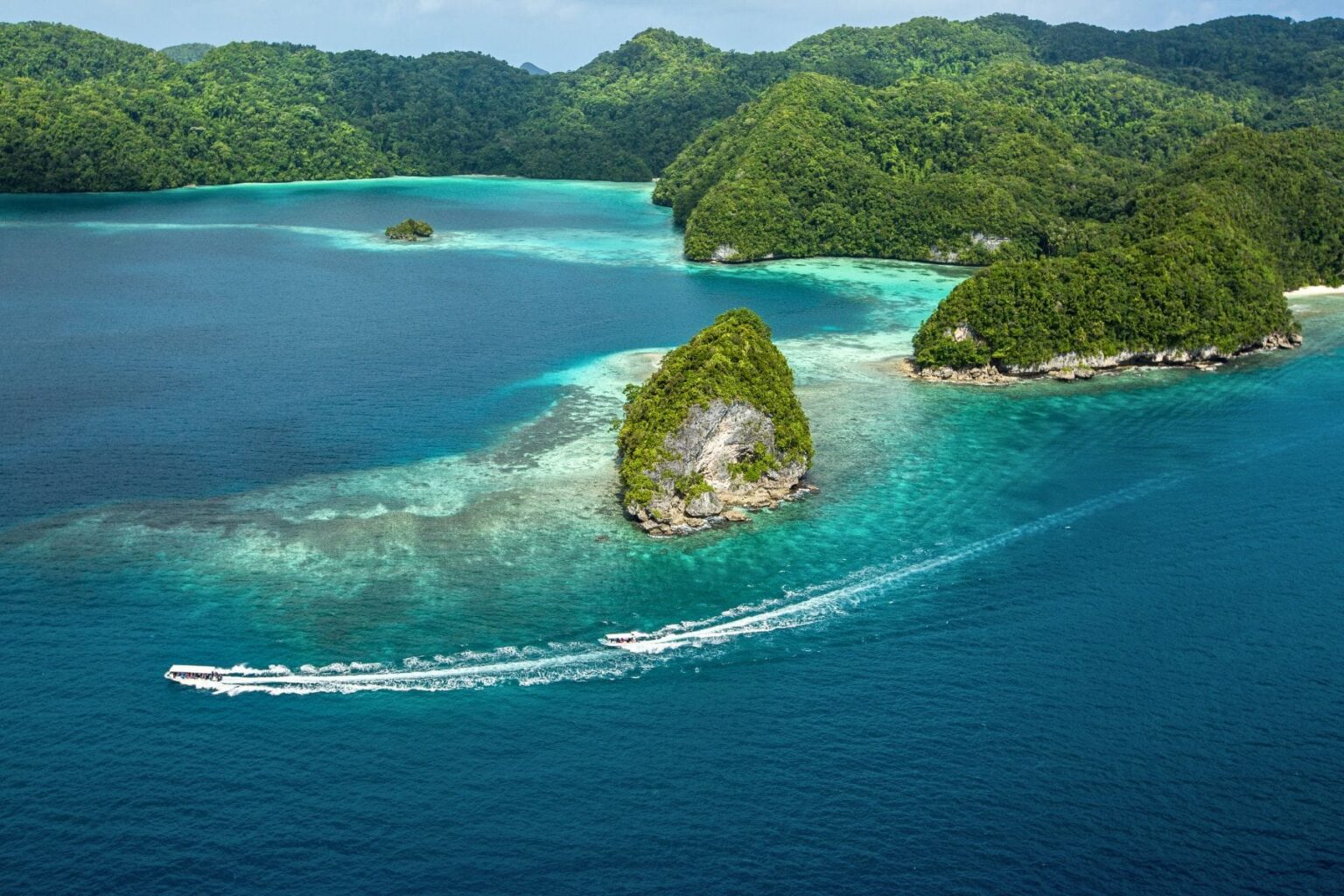

Nestled in the heart of the Pacific and bathed in the waters of Micronesia, Palau is about as off the beaten track as you can get. This island nation, recognized as a World Heritage Site by UNESCO, is a breathtaking labyrinth of limestone islands with a stunning underwater realm to match.
Most dives are drifts along a wall, plunging to extreme depths. When it comes to currents, the question isn’t if, but how strong. At some sites, the waters can get particularly wild, and using reef hooks is common practice. But with great drifting comes great diving.
What makes scuba diving in Palau so special?
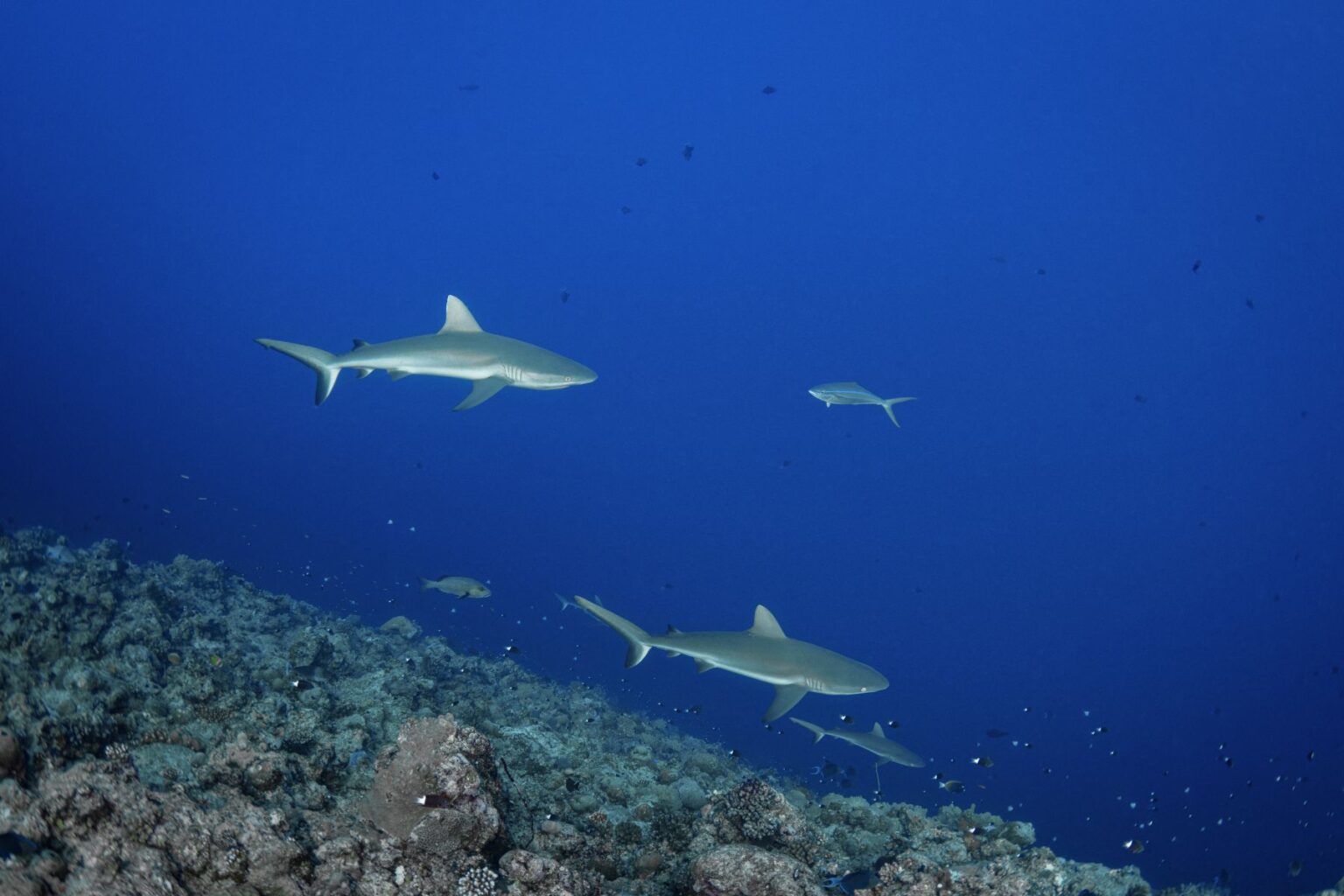
With no other major islands or continents within a 560-mile (900 km) radius, Palau is, to say the least, remote—and you don’t have to be an avid scuba diver to understand that remote locations equal great underwater adventures. Palau is famed for its bounty of coral reefs and thriving shark population, which is always a good sign of a healthy underwater ecosystem. Of course, Palau’s secluded limestone islands have made it a great melting pot for marine life, but the Palau people have made sure it stays that way.
In 2009, Palau founded the world’s first shark sanctuary, protecting all 135 shark species around the nation. Following that, in 2014, they created the biggest marine sanctuary in the world—a no-commercial fishing zone area the size of France. By doing this, fish populations and coral reefs are flourishing, as is understandably the country’s recreational diving industry.
Due to its mid-oceanic position, Palau experiences moderate to strong currents, and much of the diving involves drifting along steep-sided walls. Some sites, such as Blue Corner, are a conveyor belt of life passing through. If you want to stick around to see the pelagics passing by, you’ll need a reef hook and to be comfortable in strong currents.
Chandelier Cave
Chandelier Cave is a 5–10 minute boat ride from Koror, the main city in Palau, adding to its popularity as a dive site for day boats. This limestone wonder is one of Palau’s most majestic and unique dive sites.
Typical of limestone caves, there are stalactites hanging from the ceiling inside Chandelier Cave, which consists of four main chambers. Because there’s air within the chambers, this dive site is accessible to those who aren’t cave certified. The incredible water clarity inside the cave makes it perfect for underwater photography. Divers can surface inside the chambers for a novelty breath, but the lack of fresh air circulation means the regulator must go right back in afterward.
Type: Caverns
Skill level: Beginner to intermediate
Access: Boat
Ulong Channel
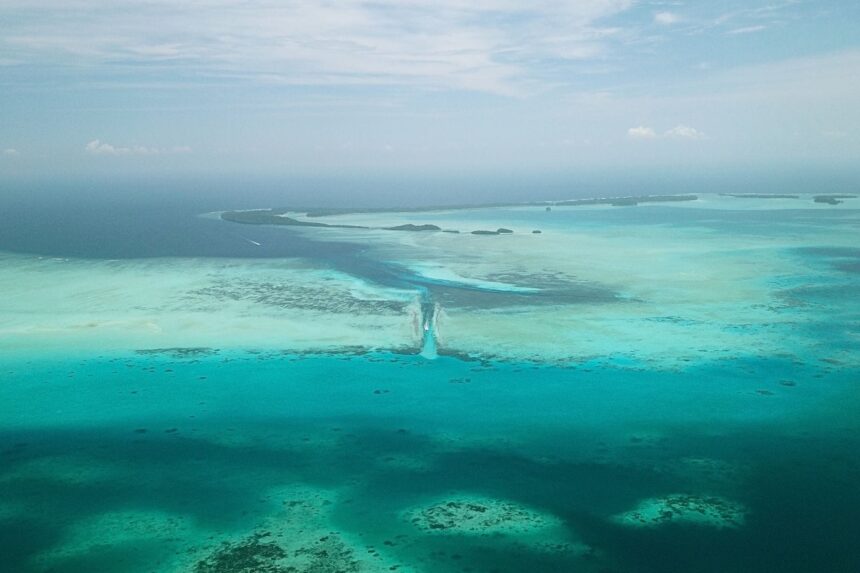


Ulong Channel is characteristic of Palau diving, featuring walls with strong currents. This passage dips from 10 to 50 feet (3 to 15 m) and connects the inner lagoon to the open ocean. The current can get particularly fierce and divers need to be extremely comfortable with drift diving.
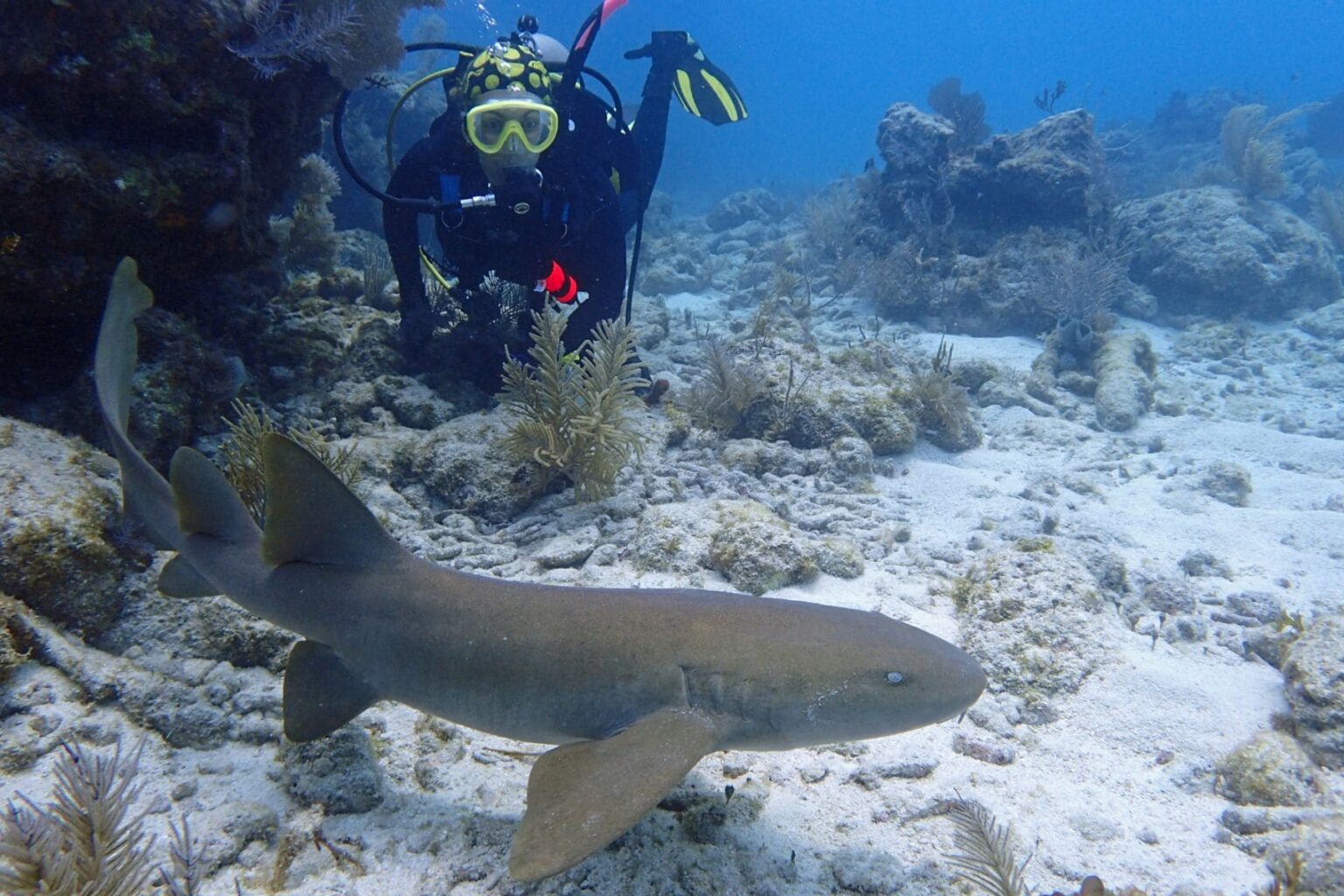
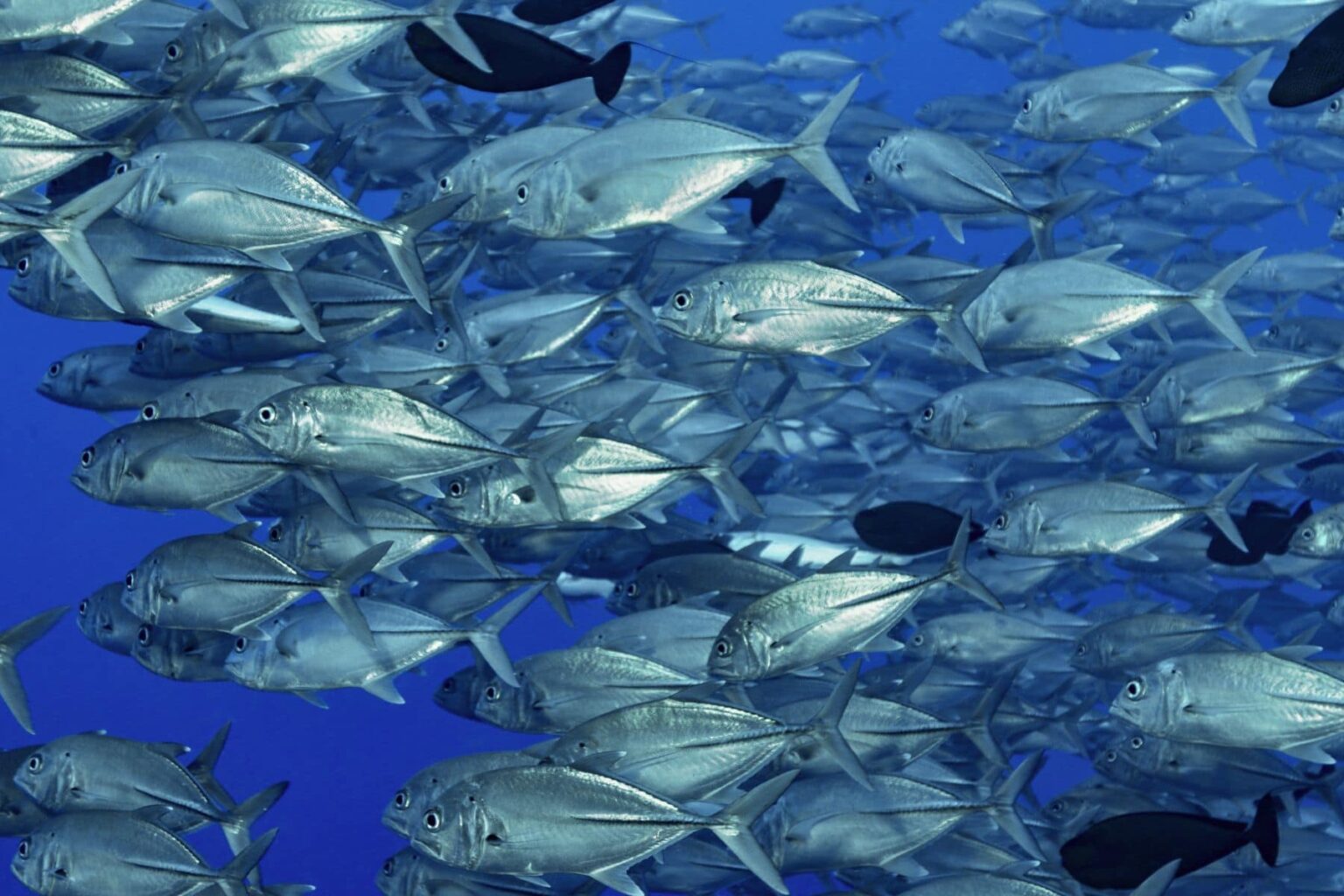
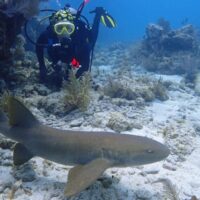
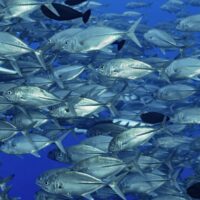
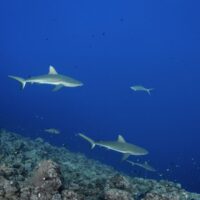
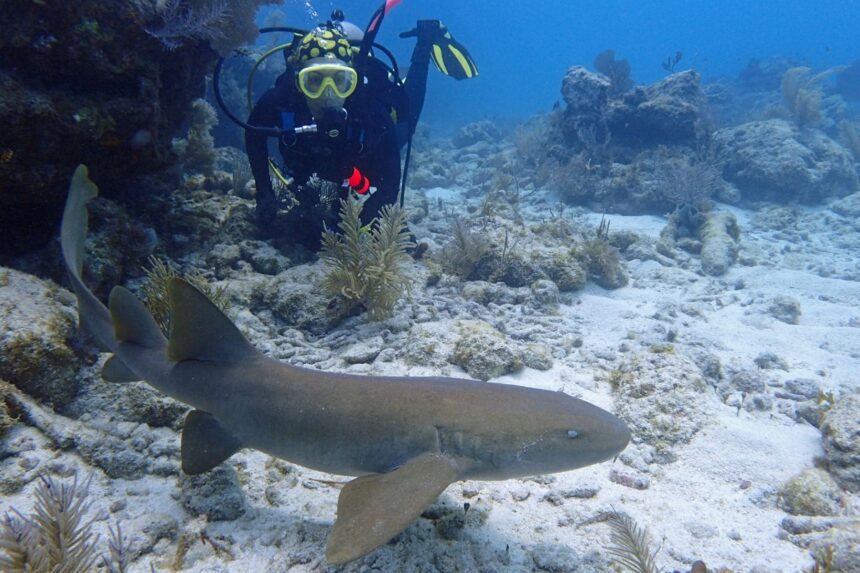
Dives typically start along the wall, then you’ll duck into the channel’s mouth where the current hits its peak. Buckle up for the ride as you fly among swirling schools of barracuda, jacks, and snapper. Closer to the sandy bottom, gray reef and nurse sharks are hunting at the channel’s entrance.
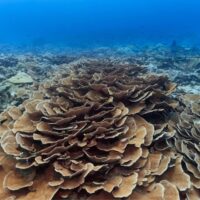
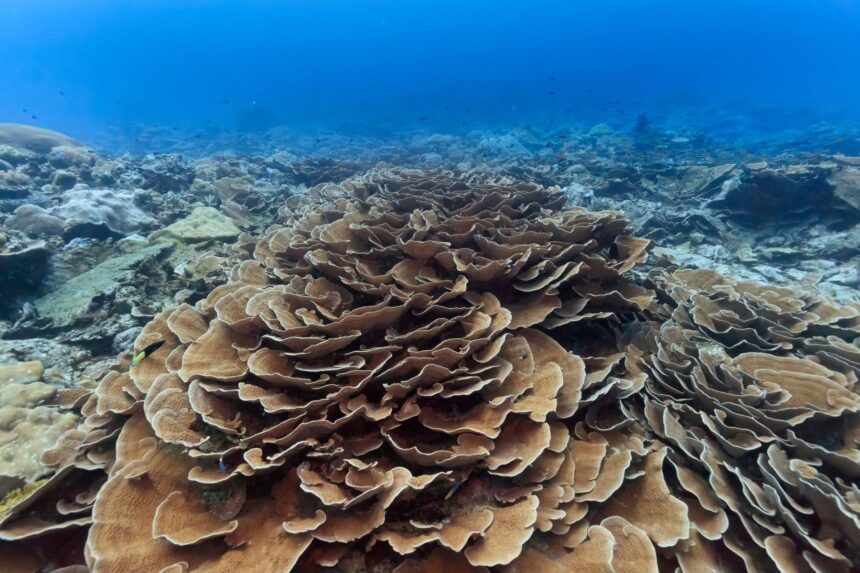
At the end of the ride, the current will spit you out into a calm coral garden, filled with more cabbage coral, giant clams, and diverse fish life. With visibility often surpassing 100 feet (30 m), this site offers both thrills and stunning beauty.
Type: Wall and drift
Skill level: Intermediate to Advanced
Access: Boat
Iro Maru
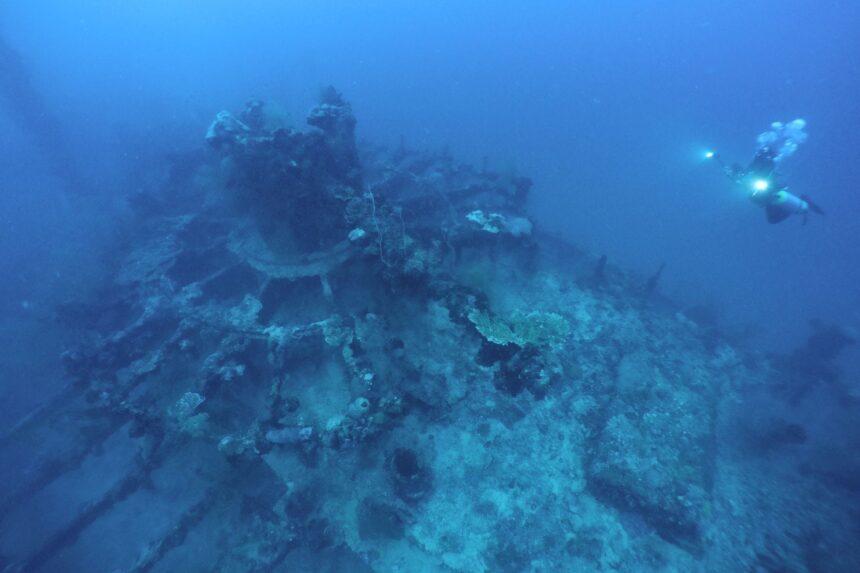
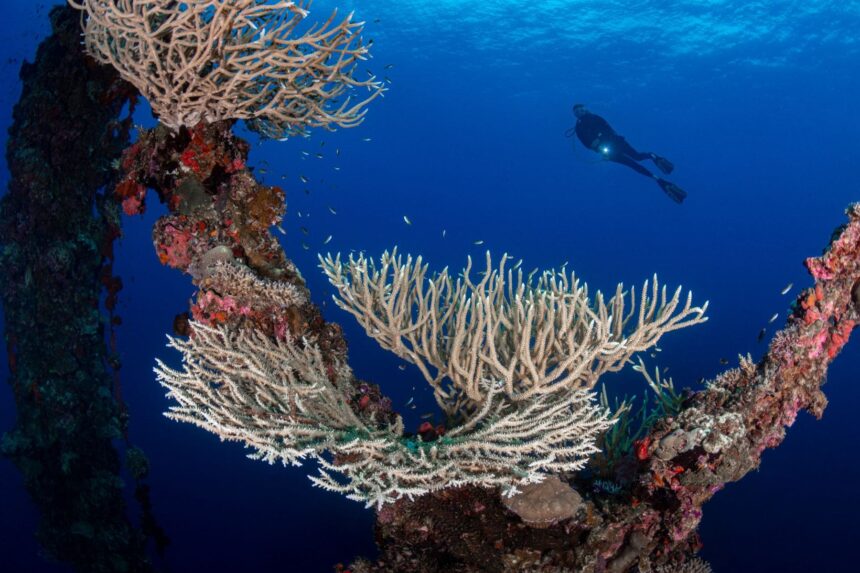


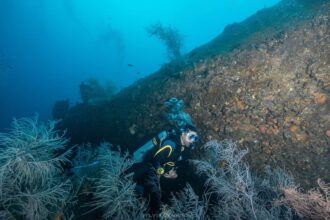
The Americans sank Iro Maru, a Japanese ship, in 1944 during WWII, similar to the wrecks in Coron. Iro Maru measures 430 feet (143 m) in length, with its shallow hull at 60 feet (18 m) and its deepest point at 130 feet (40 m).
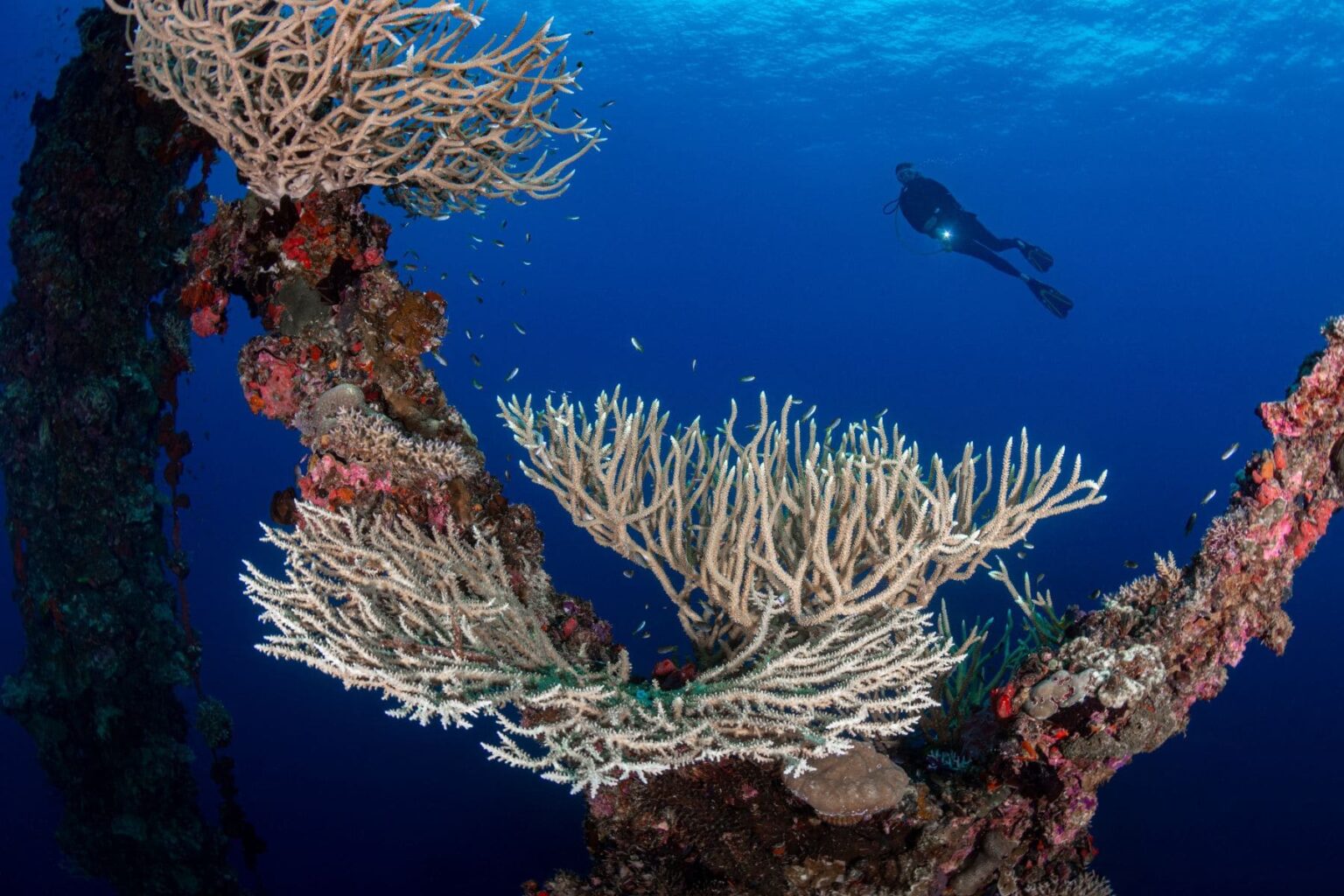
Despite its larger size and deeper depths, Iro Maru is reasonably easy to explore since it stands upright. Major hotspots such as the bridge and the bow gun are still intact. Wreck certified divers can penetrate to explore its cargo holds, machinery, and even living quarters. Hard and soft corals cover the wreck, and keep an eye out for amusing tomato clownfish, which call this shipwreck home.
Type: Wreck
Skill level: Intermediate
Access: Boat
Jellyfish Lake
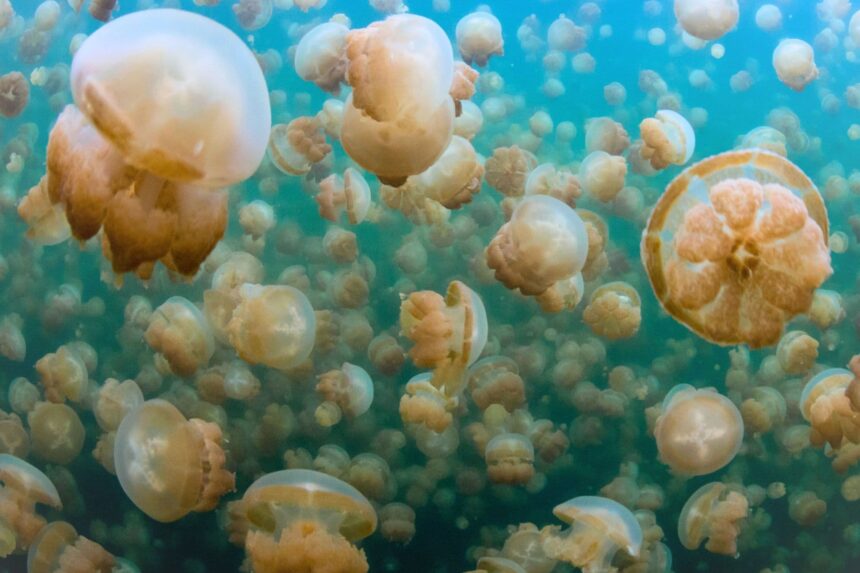
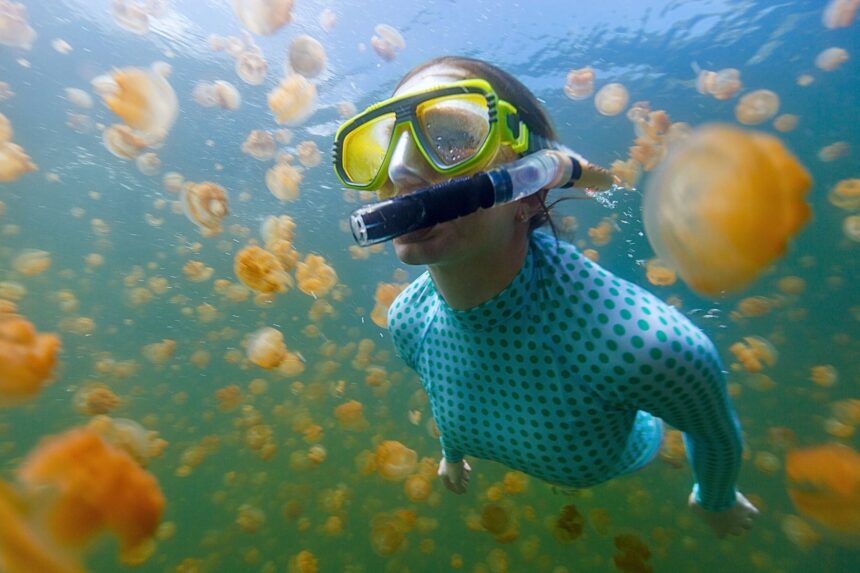


Although this is technically a snorkeling site, Jellyfish Lake on Eil Malk Island still deserves a spot. After being closed for two years due to die-offs, populations of moon and golden jellyfish in this lake have risen again and the lake is now open to snorkelers. Due to an absence of predators, these jellyfish have lost most of their stinging ability and are perfectly safe to swim with. If you do have sensitive skin, a rash guard is a good idea.
Top tip: If you’re after a jelly-jam-packed selfie shot, visit around noon. The jellyfish migrate across the lake in a dense swarm each day, following the lake’s algae as it follows the sun.
Scuba divers aren’t permitted here as their bubbles disturb the jellyfish and, beyond 50 feet (15 m) the lake has a layer of harmful hydrogen sulfide (also known as swamp gas). This can be absorbed through the skin, so diving deep isn’t an option.
Type: Snorkel
Skill level: Beginner
Access: Boat
Blue Holes
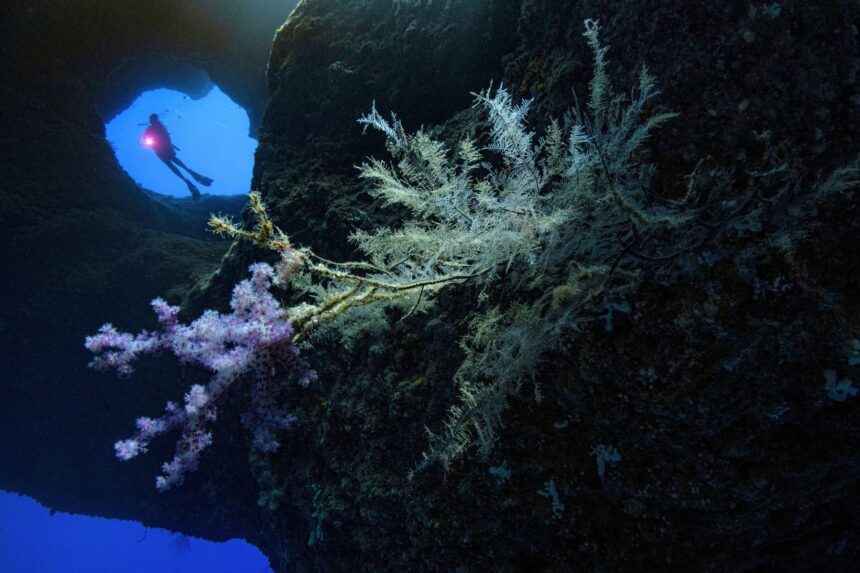
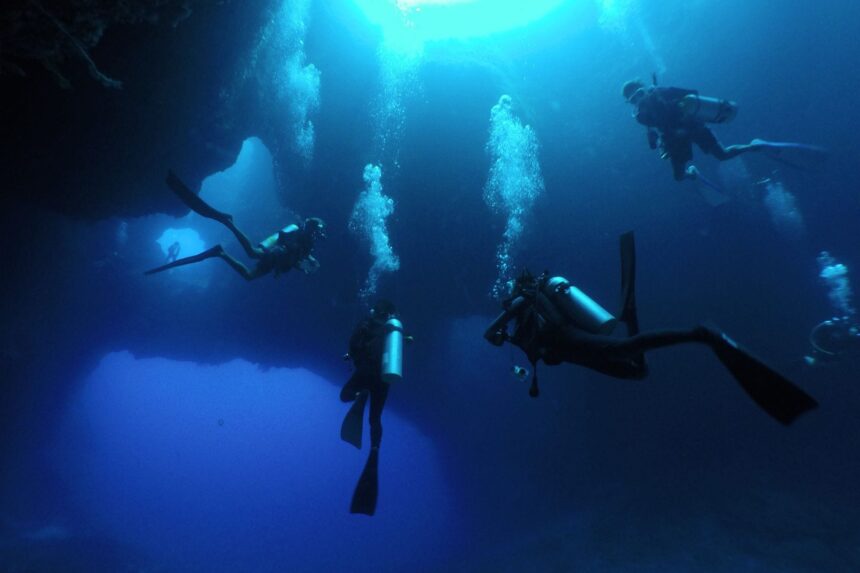


Blue Holes is a cavern in which the limestone ceiling has collapsed to create four large openings, giving the cavern an ethereal glow. Although the entrance here is just 0.3 feet (1 m) under the surface, only pro-cavers tackle certain areas because Blue Holes can quickly become a labyrinth of caves and dead-ends.
Regular recreational divers can explore its twists and turns, seeing plenty of fish as they hide away from the currents and bigger predators. Inside, the soft coral filters out the sunshine, enhancing the scene for underwater photographers. For the more adventurous, there is the Temple of Doom. Divers experienced enough to enter will encounter the skeletons of multiple turtles who sadly got lost and were trapped.
Type: Cave, cavern
Skill level: Intermediate
Access: Boat
Blue Corner
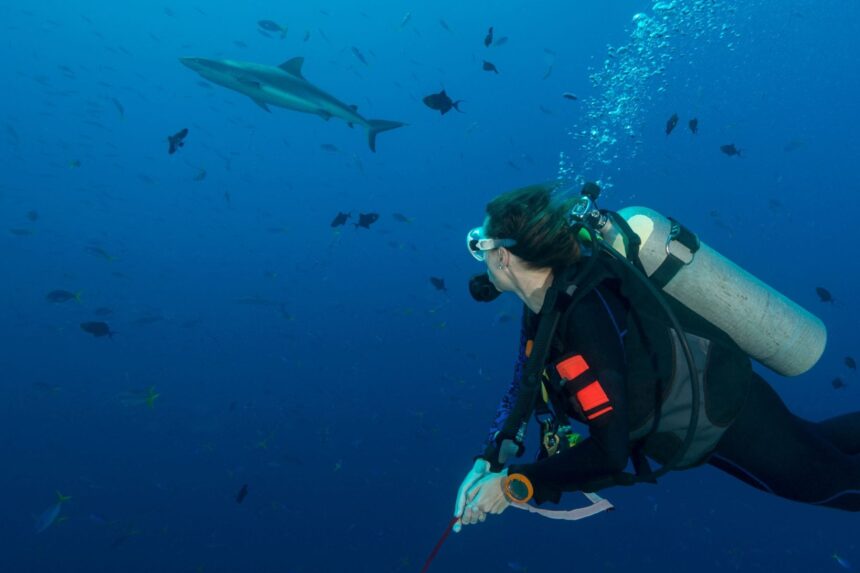
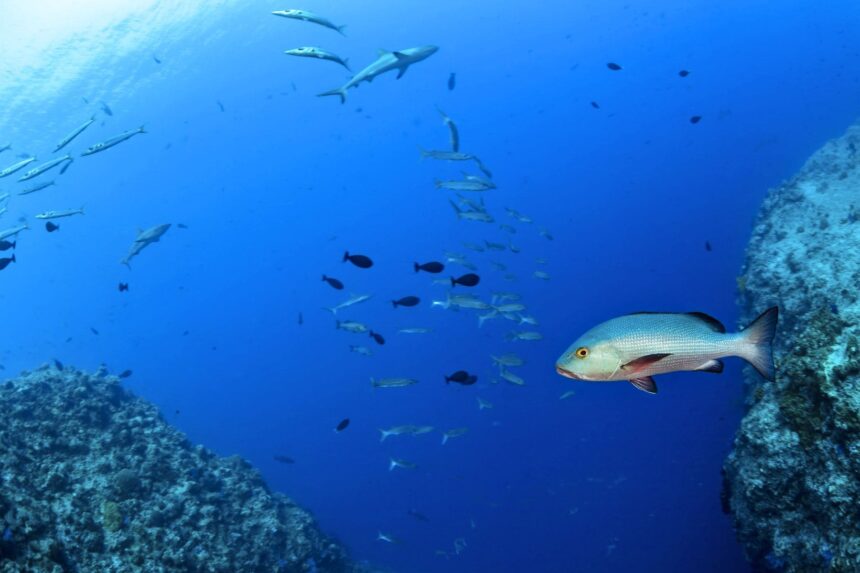
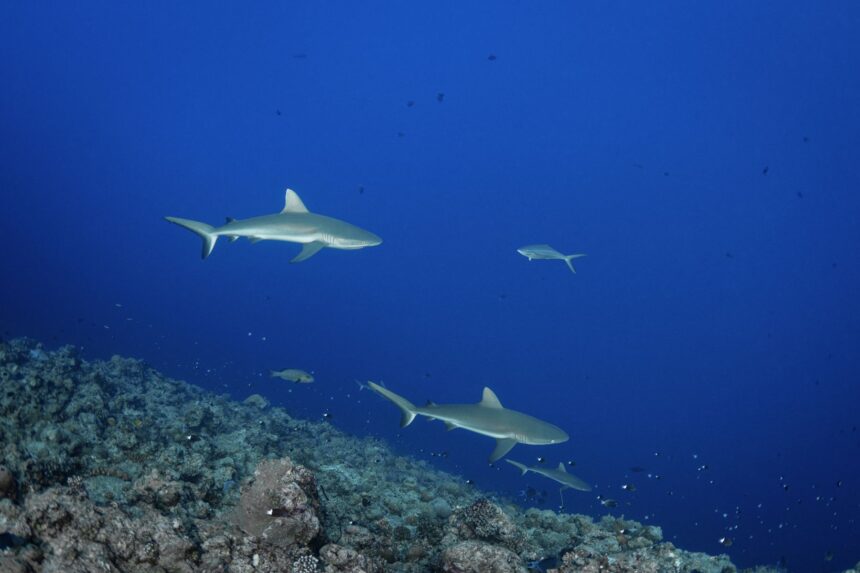


Approximately 100 feet (300 m) south of Blue Holes is the most famous dive site in Palau— Blue Corner. Divers usually do it as a second dive because it’s a little shallower, around 33 feet (10 m). Blue Corner is well-known for strong currents, which are a double-edged sword.
Although challenging for divers, the currents also bring in nutrient-rich waters that attract a plethora of marine life. Although perhaps controversial, divers deal with the strong currents by hooking onto the reef. If done correctly, reef hooking does little to no damage and is an energy-efficient way to dive.
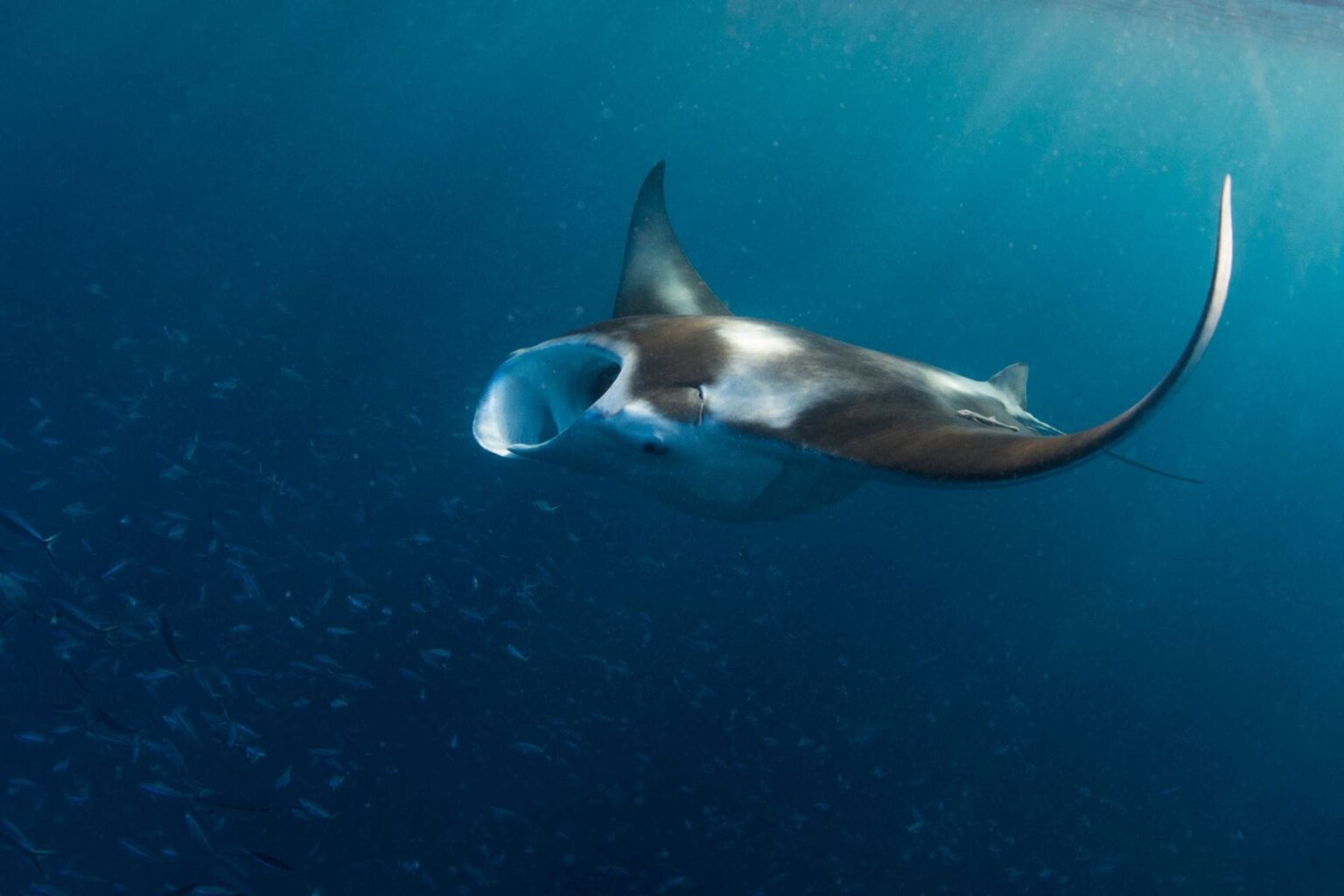
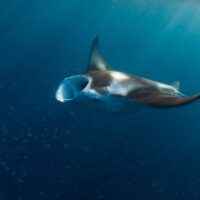
When divers descend a line to 33 feet (10 m), an impressive display of table corals greets them. But the real magic happens at the plateau’s edge that juts out into the big blue, creating a “corner.” Divers may find the whipping currents tricky, but trust us—this dive site is worth it. As divers hover above the reef, the bountiful current brings in a conveyor belt of sharks and rays. Whale sharks, gray reef sharks, manta rays, and eagle rays will often cruise by.
Type: Cleaning station
Skill level: Intermediate
Access: Boat
New Drop-Off
Divers often praise New Drop Off as Palau’s premier diving destination, offering spectacular wall diving and a kaleidoscope of colorful sea creatures. Begin your adventure from one of two mooring lines, then descend to a plateau ranging from 15 to 33 feet (5 to 10 m). Here, currents can swiftly change, growing strong, especially around a prominent projecting corner. Diving here usually involves hooking on due to the unpredictable currents.
At the plateau’s shallower, sunlight-kissed parts, vibrant reef fish like angelfish, clownfish, and butterflyfish swim around the coral. The wall itself features numerous overhangs and crevices, home to smaller nudibranchs, intriguing leaf scorpionfish, and occasionally, sharks taking a nap. Look into the open water and you may see large schools of jacks and barracudas, with gray reef sharks circling nearby.
Type: Wall, drift
Skill level: Intermediate
Access: Boat
Big Drop-Off
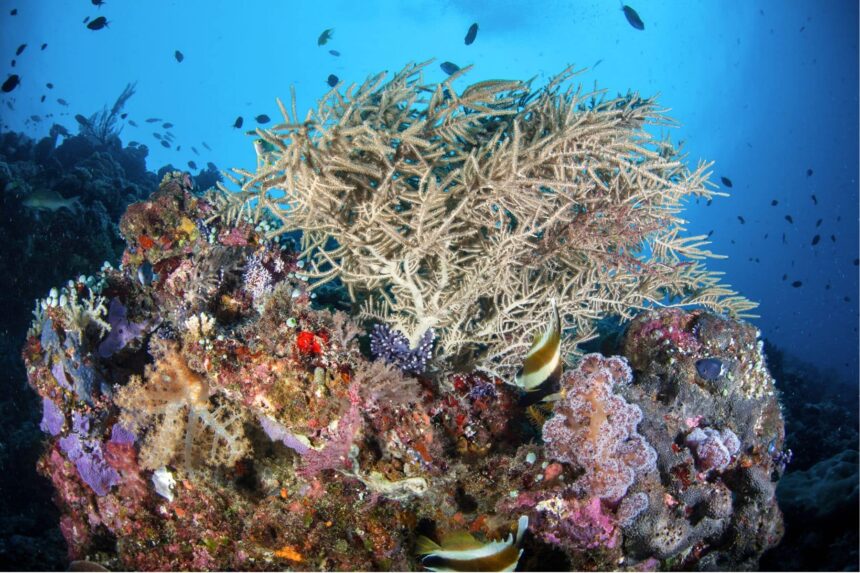
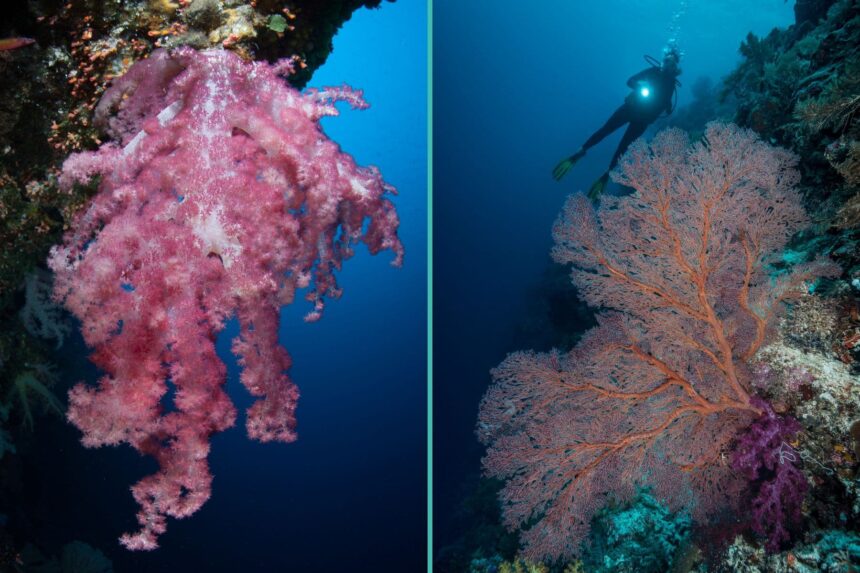


The Big Drop-Off spans the entire length of Ngemelis Island. Here the wall plunges to 900 feet (275 m) and there’s less current than the neighboring New Drop-Off. These calmer waters are an ideal place for divers to familiarize themselves with drift diving and refine their buoyancy. Moreover, the site’s profound depths attract tech divers, making the Big Drop-Off a versatile location suitable for all.
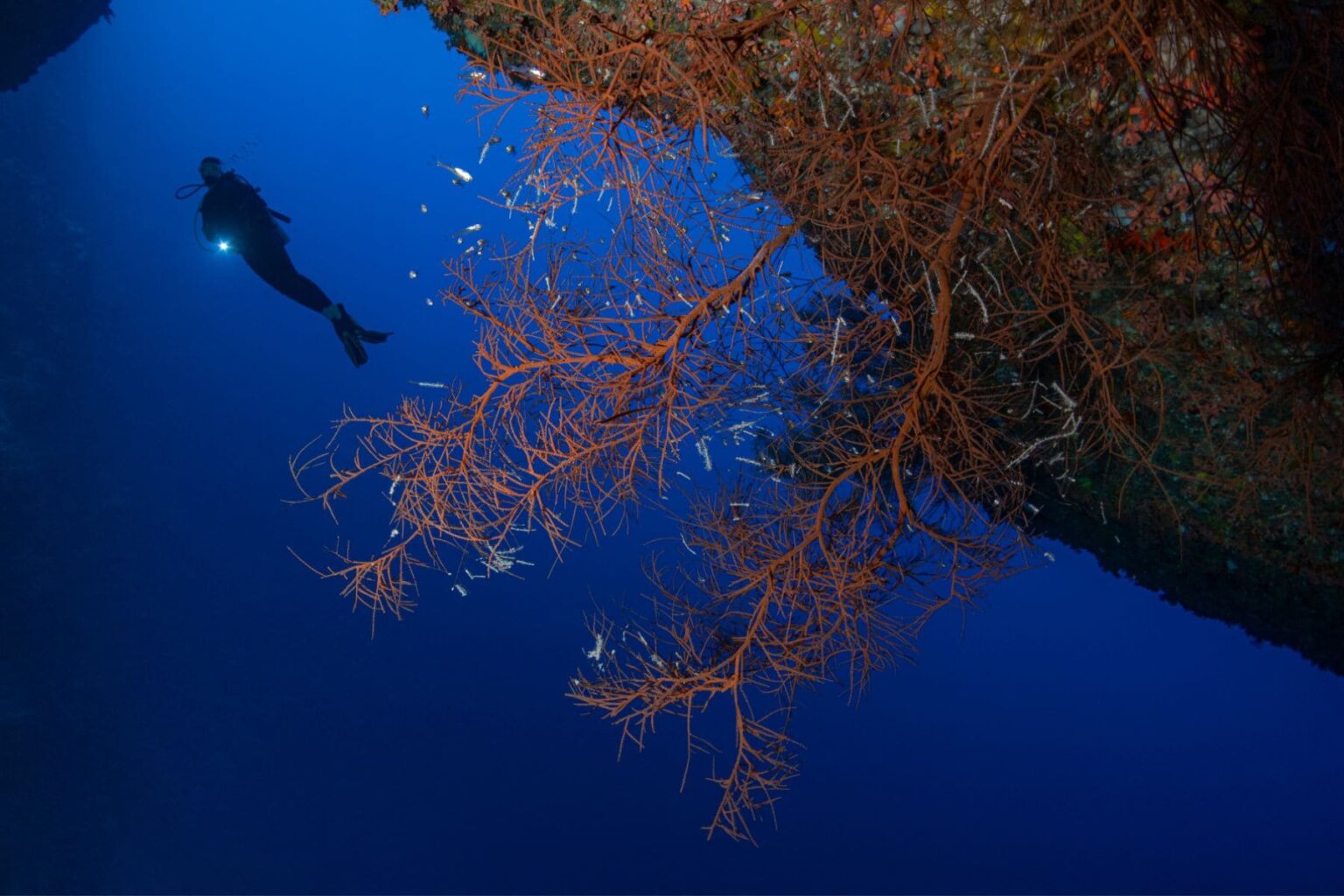
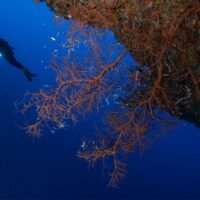
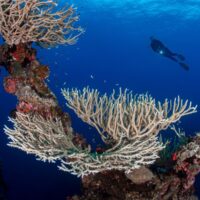
The shallow plateau at the top of the wall attracts not only snorkelers, but also lots of turtles. The wall itself hosts large gorgonian fans and carnation corals resembling cauliflowers, which sway in the gentler currents.
Although these vibrant corals provide perfect subjects for wide-angle photography, the real star here is macro life, which includes orangutan crabs and pygmy seahorses nestled among the corals. Divers should also remember to scan the open water, where schools of fish and reef sharks make their rounds, adding to the site’s dynamic ecosystem.
Type: Wall, drift
Skill level: Beginner
Access: Boat
German Channel
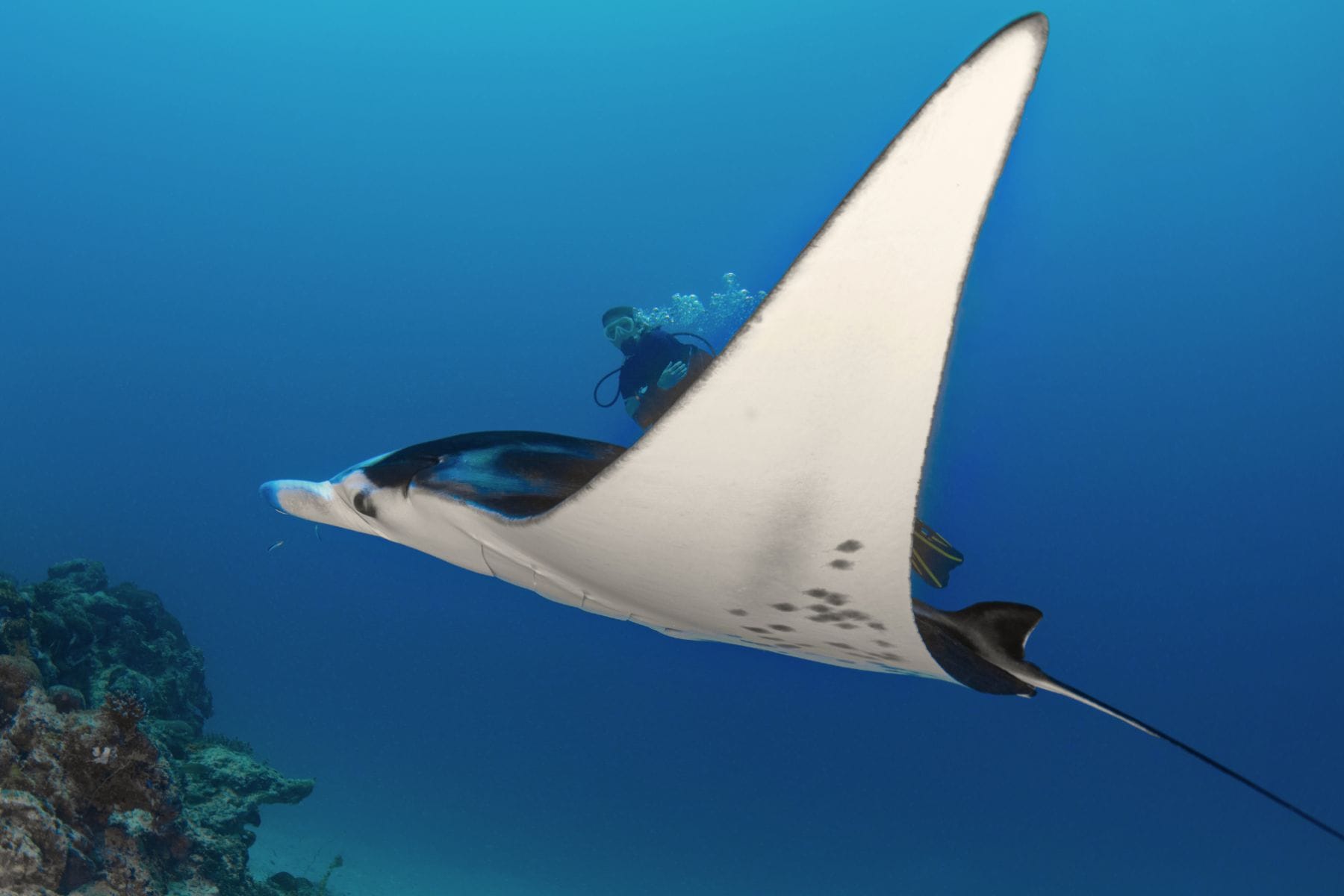
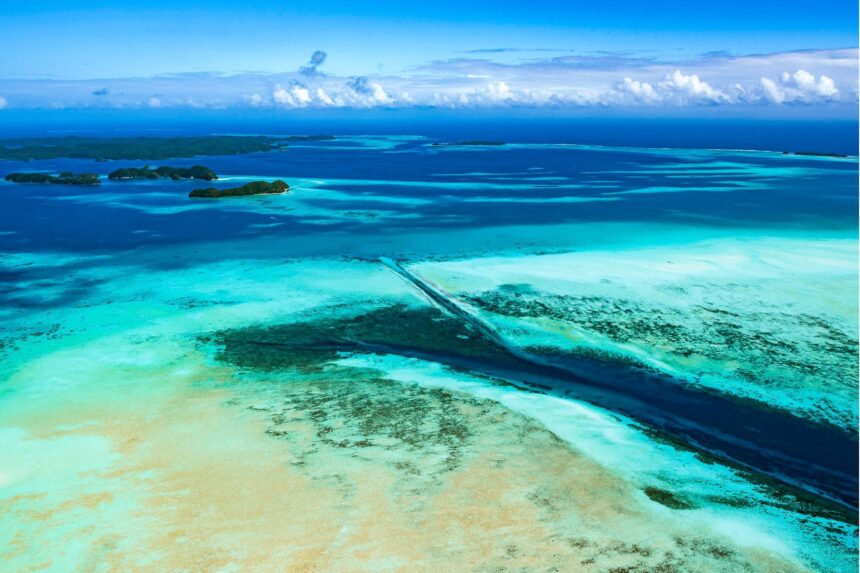


German Colonial workers originally constructed this man-made channel in 1908, starting from Blue Corner, to help ships travel between the inner lagoon and the open ocean. The channel itself is not very wide, so nowadays only smaller local speed boats traverse through.
Today, the channel thrives as nutrients concentrate at its southern end, which hosts newly developed coral growth. At a sandy bottom depth of 65 feet (20m), divers can kneel to watch the mantas above, who come here to feed. The area around the site is home to other bottom-dwellers as well, like rays, nurse sharks, garden eels, and shrimp gobies.
Type: Channel
Skill level: Beginner
Access: Boat
Peleliu Wall
The Peleliu Wall stretches along the southwest side of Peleliu Island and extends to Peleliu Corner at the southernmost tip. Here, marine currents intersect, making it a challenging dive. Starting from a plateau that slopes gently from 30 to 90 feet (10 to 30 m), the dive offers a breathtaking experience, well worth the extended boat journey for the chance to witness dense fish populations.
During the first half of the dive, divers encounter relatively calm waters teeming with vibrant corals and diverse marine life. Small reef fish like surgeonfish, damselfish, butterflyfish, and bumphead parrotfish populate the plateau.
Further along the wall, where the currents pick up, anthias swarm around large fan corals, and schools of jacks dominate the blue expanses. At the corner, the marine life grows larger, offering divers the thrilling possibility of sighting majestic pelagics such as whale sharks, blue marlin, and tiger sharks.
Type: Wall
Skill level: Intermediate
Access: Boat
About Palau
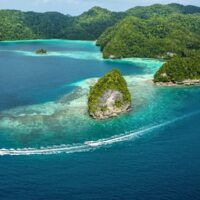
Located in the western Pacific Ocean, Palau comprises over 500 limestone islands and forms part of the Micronesia region, though it is an independent country. Palau is a tropical paradise that boasts an impressive topside terrain of lush jungles, limestone cliffs, and pristine beaches, all surrounded by turquoise waters.
Like most outstandingly beautiful places, reaching Palau proves to be tricky and costly. However, the silver lining for American citizens is that since Palau is an independent country in a Compact of Free Association with the United States, Americans do not need a visa and the US dollar is the official currency.
The main island of Palau is Babeldaob, which is home to the international airport and the commercial capital of Koror City. The best time to visit is between November and May, during the dry season. Tourists can expect blue skies, calm seas, and good visibility. Of course, this is great for diving, but if you need a dry day you can always kayak around the Rock Islands or visit some interesting WWII relics scattered across Peleliu.
 Take a moment to look at this.