

Diving with the Waydoo Subnado Plus and How We Tested

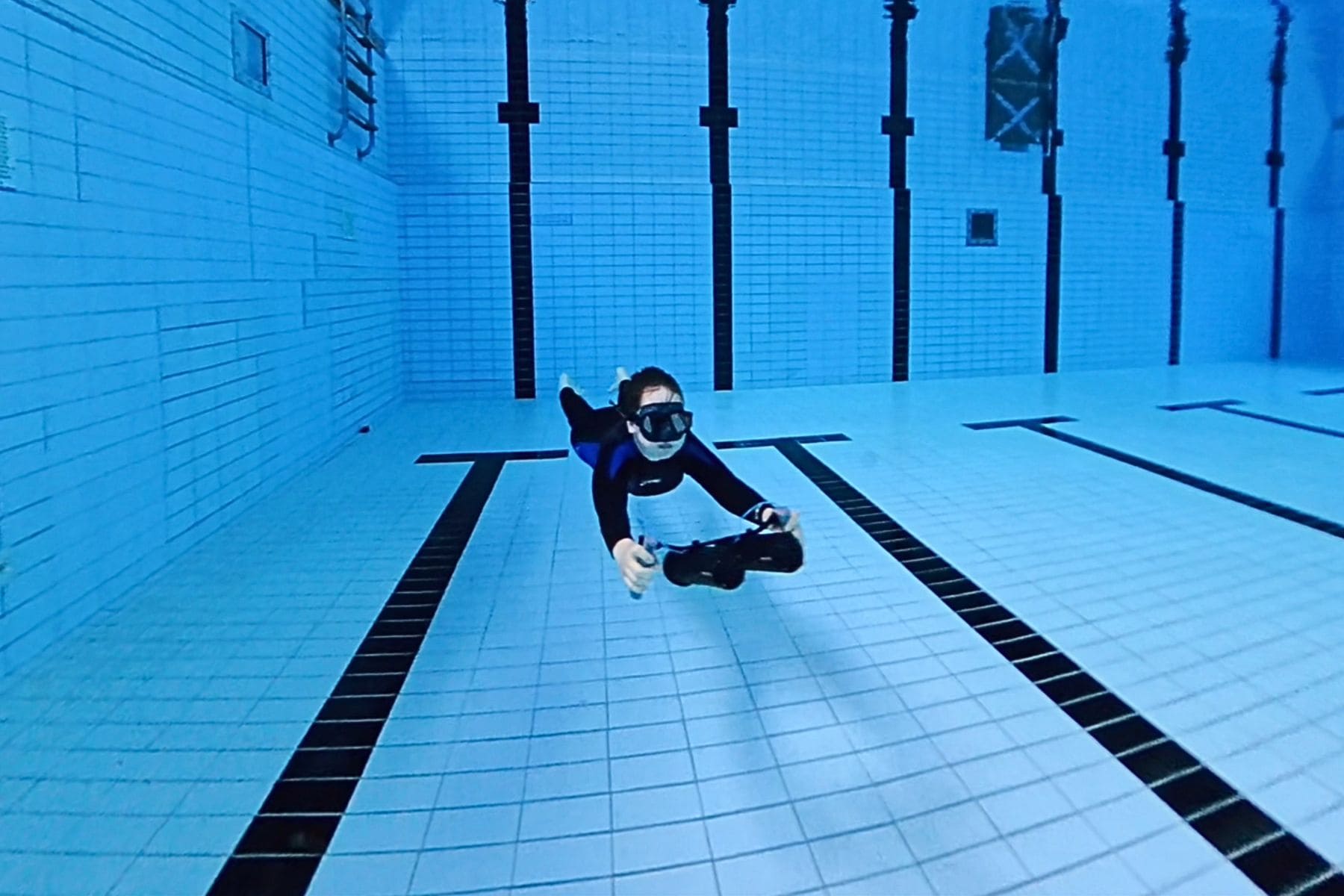
We have been using Waydoo Subnado scooters for years, including original units from the early production run that still work. The Plus is the new model, so we tested it the way we test every underwater scooter: timed sprints over an 80-foot (25 m) pool, flat out, taking the best time from repeated runs. Every test ran in three configurations: an adult in full scuba gear, the same adult with no gear, and Carl, our kid tester.
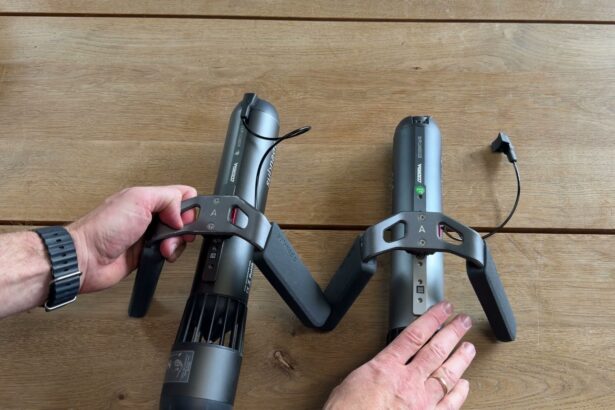
The double setup got the same treatment, two units on the twin rail with both engines running off one controller. Top-speed runs used the third gear, which is a timed burst. Between sprints we analyzed the features that decide whether you trust a scooter: does the prop stop the moment you let go, can you change gears by feel, and what happens when the battery gets low.
One test failed before the water: travel. We tried to fly with two Subnado Pluses and the airline rejected the request due to the battery, so all testing took place at home.
Testing Areas for the Waydoo Subnado Plus
Speed

The Plus is the fastest Subnado we have timed, and the gap large.
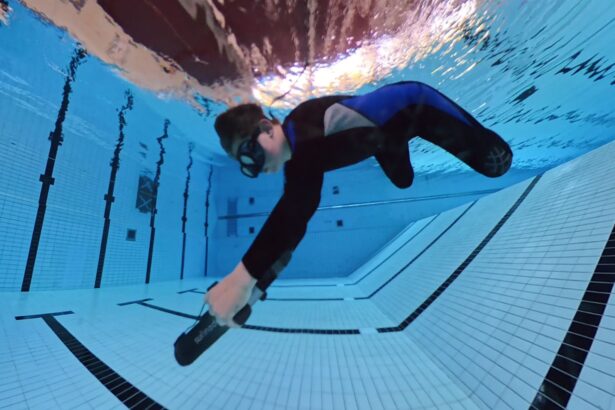
A single unit pulled an adult with no gear across 80 feet (25 m) in 19.8 seconds, about 2.8mph (4.5km/h). Carl was quicker at 15.2 seconds because his smaller body resulted in less drag. Full scuba gear slowed us to 27.1 seconds, about 2.1mph (3.3km/h). Doubles changed the picture again: 14.2 seconds with no gear; 12.0 for Carl; and 19.9 in full scuba.
Against the standard Subnado, the Plus won every single matchup we ran, by 20 to 40%. Single with no gear: 19.8 versus 24.8 seconds. Doubles in scuba gear: 19.9 versus 28.2. Waydoo claims 3.8mph (1.7m/s) for a single unit; our best real-world run reached about three quarters of that, which is normal for this segment.
Runtime

In our pool run-to-cutoff test the Plus held full speed for 11 min 31 s, then stepped down to its low-power reserve and ran another 26 min 30 s before stopping. That total is on par with the standard Subnado on the same test, lower than the Finmos, and strong for the power and size of this unit. Waydoo’s 60-minute box number assumes lower gears; treat 11 min 31 s as the figure that matters at full pull.
Charging depends entirely on your charger. With a 140W USB-C fast charger the claimed charge time is 1.2 hours; a phone-grade charger stretches that into many hours. There is no charger in the box, only the cable.
What we have seen on the water: at around 20% battery the scooter steps itself down to a lower speed instead of dying. That buffer matters more than the headline minutes.
Battery: Swap, Cost and Travel

The battery is the Plus’s biggest strength on the water and its biggest detriment at the airport.
It is a built-in 144Wh battery, with no swapping, no spare to run while the other charges, and no smaller pack for flights. The upside is simplicity: nothing to seat wrong, nothing to flood at a battery seam, and a slim body.
Flying is the issue. Anything over 100Wh needs airline approval these days, and approval is not a formality. We applied to bring two Subnado Pluses on a test trip and were rejected. Other owners have been approved with the same battery, so it varies by airline, but the risk is there and growing as airlines tighten up after battery fires. Because the pack is built-in, a rejected battery grounds the entire scooter.
Charging is USB-C with no wall plug included, which we actually like because it means one less plug in a drawer.
If you fly to most of your dive destinations, look at scooters with swappable sub-100Wh packs. If you drive to the water, or use it at home in the pool, none of this will ever bother you.
Size and Portability

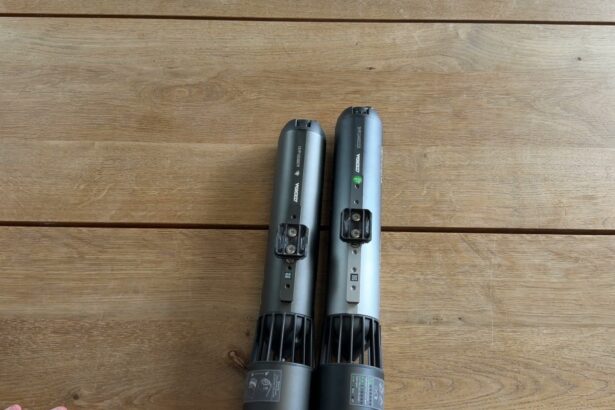
The Plus is bigger than the standard Subnado on every dimension, and it’s still one of the slimmer scooters you can buy.
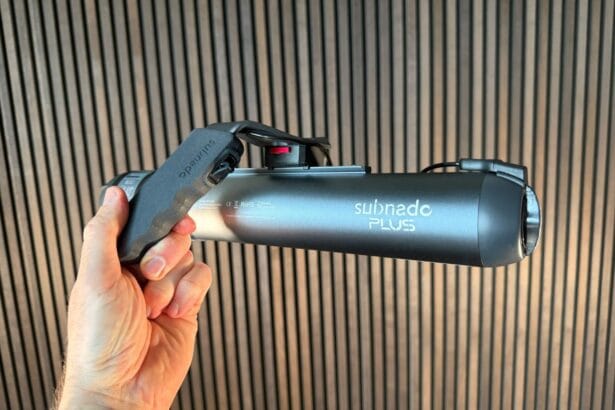
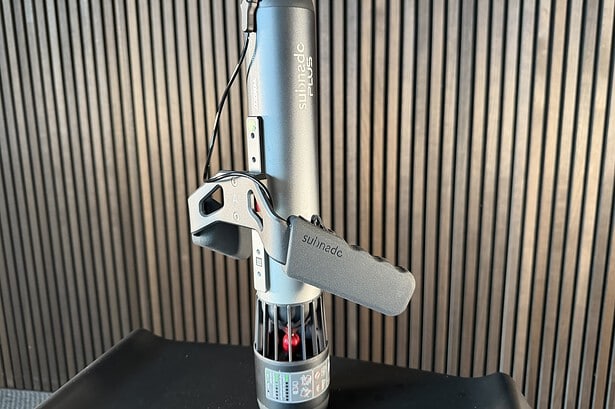
It weighs about 4 lbs. (1.8kg) and measures 15.6 inches (397 mm) long by 2.4 inches (60 mm) in diameter, about 20 mm longer than the standard Subnado but with the same narrow profile. The handle comes off for packing and carrying. On a dive, you can clip the unit to your BCD or mount it on the tank and use the longer coiled wire in your hand.
We like the coiled wire for a tank-mounted scooter. Tank-mounted scooters with wireless remotes have dropped connection on us before; a wire cannot do that.
In the water the Plus is negatively buoyant. Let go and it sinks. It is not so heavy that swimming home with a dead scooter becomes a problem, which is more than we can say for some heavier units we have tested.
Ease of Use and Handling

If you have used any Subnado, you already know the Plus. They work exactly the same, and that is a compliment.
On the rail, the trigger is controlled by your index finger. Two clicks wake it up with a beep and you’re ready to go.
Two clicks again step up to second gear, three clicks jump to third, and the beeps count your gear back to you: one beep for first, two for second, three for third. You always know your speed setting by ear. There’s no visual indicator of the speed. Third gear is a timed burst that drops back to second on its own after a minute.
Mounted on an arm, leg, or tank, the controls move to a coiled wire with a ring around your index finger and the trigger under your thumb. The arm mount is the one we keep coming back to.
“It gives you this feeling of being Superman, basically flying around controlled by the arms,” is how my son Carl put it after another session on the arm setup.
The leg mount divides people. Some love it; I personally didn’t like it.
The paddleboard mount is fun when you’re seated, with one limit: the trigger must be operated by hand, so you ride or you paddle, not both.
The double setup is where the Plus pulls ahead on usability. Both engines run off a single controller, so you steer one scooter with double the thrust instead of running a throttle in each hand.
Build Quality and Flood Resistance

Our original Subnados from the early production run still work, and the Plus feels built to the same standard.
The unit is rated to 197 feet (60 m), far beyond where anyone will take a recreational scooter.
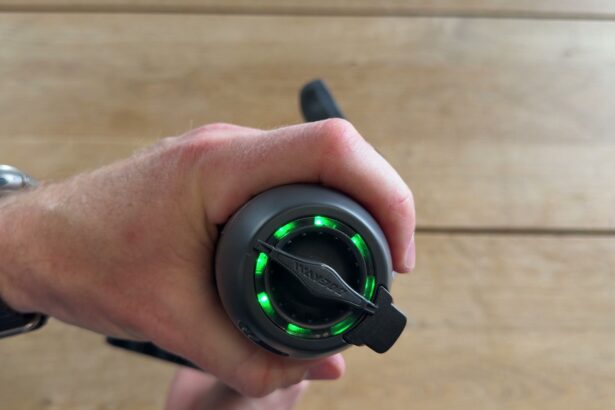
The charging port sits behind a big screw-on cap at the front, and the same screw locks the control wire in place. When the cap is closed, we have no flooding concerns.
One watch-out carried over from years with the standard Subnado: swapping rails or accessories with wet hands can let water into the front connector, and corrosion builds up on the contacts. Waydoo’s own manual warns about it as well. It is not a scooter-killer. Vinegar or a dry-out and a wipe clears the residue, but check the connector if you reconfigure a lot in wet conditions.
Waydoo’s wider track record backs the impression. Across the Subnado line and the eFoil we have tried, the gear lasts.
Safety

Release the trigger and it stops. That is the one thing an underwater scooter must do, and the Plus does it every time.
The prop sits behind a guard, and an extra clip-on finger guard ships in the box for family use. Low power is handled the right way: the scooter warns you as the battery drops, warns again when it is low, then steps the speed down around 20% so you can make it back to shore instead of swimming.
My kids have been using these scooters for years now with no issues, and that experience covers exactly the failure mode that worries parents: a scooter that keeps pulling after a kid lets go. The Waydoo never has.
Two things to respect: it sinks when released, so use the wrist strap. Also, there’s no child speed lockout, so younger kids need an adult within reach.
Versatility and Mounting

One scooter, many mounts: arm, leg, tank, paddleboard, single rail, dual rail, and Waydoo even shows a triple paddleboard setup, which we have but have not yet tested.
Extra accessories like a camera need a separate clamp that attaches to the front. You buy it only if you need it, and the unit stays clean in the water when you do not. I rarely mount anything on my scooters, so the clamp stayed in the box.
The accessory range goes well past diving. There is an inflatable float kids can ride with a scooter attached, and a water sprayer that turns the Plus into garden entertainment. None of it is necessary. All of it points at the same buyer: a family that wants one machine for the pool, the beach, and the dive.
If the budget allows, the double with two single handles is the setup we would buy. Two riders when you want company, double thrust when you want speed.
Maintenance

Maintenance is rinse, dry, and the occasional clearing of hair from the prop. Nothing more.
Wash the unit in clean, fresh water after use and then run the motor during the rinse to flush everything through. Dry it off before opening the charge cap, and make sure no water sits in the wire connection.
The propeller screws off without effort, which matters more than it sounds. Pool use wraps hair around any scooter’s prop shaft, and clearing the Plus after a heavy pool week took minutes instead of a workshop session.
Noise

The Plus makes the same noise every scooter in this class makes. No better, no worse.
It is annoying for everybody but you, and the speed is why you accept the trade, not a fix for the noise itself. Treat it like dive etiquette: keep it away from sensitive marine life, and in a group, run it when you need it or keep some distance. Other divers will hear you long before they see you.
Value for money
The Plus sits at the premium end of the portable scooter range, around $800, roughly double the standard Subnado. The extra money buys measurable speed (20 to 40% in our sprints), a bigger battery with a longer claimed runtime, and 140W fast charging. The mount ecosystem is the quiet part of the value: arm, leg, tank, and board mounts carry over, so the scooter grows with how you use it.
What you give up against travel-focused alternatives is battery flexibility. The 144Wh pack means flying needs airline approval, where lighter scooters with sub-100Wh swappable packs slip onto a plane without that conversation. If most of your scooter time is local, the Plus’s polish and ecosystem justify the price. If you fly often, that math changes.
Waydoo Subnado Plus compared to others
The portable scooter market splits into slim handheld units, modular systems with swappable batteries, and cheap pool toys that fade the moment there is any current. The Subnado Plus sits at the fast end of the slim handheld group, with the biggest mount ecosystem in its class. Two alternatives came up constantly during our testing.

Waydoo Subnado vs. Waydoo Subnado Plus
The standard Subnado is the lighter, cheaper way into the same ecosystem, and every mount works the same way. Its 98Wh battery sits under the 100Wh airline carry-on limit, so it is the easier choice if you fly with your scooter. Pick it if you cruise rather than sprint, or if you travel often. The Plus exists for the diver who timed the standard and wanted 20 to 40% more.
Finmos vs. Waydoo Subnado Plus
The Finmos beat the Plus in every matched sprint we ran and its swappable batteries include a pack you can fly with, no approval needed. Pick the Plus for the proven brand, the mount range, and doubles that run off one controller; pick the Finmos for raw pace and easier travel, accepting a brand that is only now launching.
Specs & Features
| Weight | 4 lbs (1.8 kg) |
|---|---|
| Depth rating | 197 ft (60 m) |
| Advertised top speed | 3.8 mph (1.7 m/s) |
| Our top speed, Torben in full scuba gear | 2.1 mph (3.3 km/h), 27.1 s over 25 m |
| Our top speed, Carl (kid tester, no gear) | 3.7 mph (5.9 km/h), 15.2 s over 25 m |
| Number of speeds/gears | 3, third gear is a timed burst that drops back to second after one minute |
| Advertised battery time | up to 60 min |
| Our battery time at full speed | 11 min 31 s at full speed, plus 26 min 30 s in low-power reserve before cutoff |
| Battery type | 144 Wh lithium, built-in |
| Removable battery | No |
| Charge time | ~1.2 h with a 140 W USB-C fast charger, much longer with a phone-grade charger |
FAQ’s
In flat water, a single Waydoo Subnado Plus moves an adult swimmer without gear at about 2.8mph (4.5km/h), and a kid-weight rider at about 3.7mph (5.9km/h). A diver in full scuba gear travels at about 2.1mph (3.3km/h). Waydoo’s claimed top speed is 3.8mph (1.7m/s).
Only with airline approval. The built-in battery is 144Wh, above the 100Wh limit for unrestricted carry-on, and the battery cannot be removed from the scooter. Some airlines approve it on request and some refuse; one airline rejected our request outright. Always apply before booking.
The prop stops the moment the trigger is released, the prop sits behind a guard, and an extra clip-on finger guard comes in the box. There is no child speed lockout, so younger kids need adult supervision, and Waydoo requires a guardian for riders under 16.
The Waydoo Subnado Plus is rated to 197 feet (60 m), which covers all recreational diving with a wide margin.
The Plus has a stronger motor, a bigger battery (144Wh versus 98Wh), faster 140W charging, and a longer, slightly heavier body. On our timed 80-foot (25 m) sprints the Plus was 20 to 40% faster than the standard Subnado in every configuration.
In our pool run-to-cutoff test the Subnado Plus held full speed for 11 min 31 s before stepping into low-power reserve, then ran another 26 min 30 s before stopping. Waydoo’s claimed 60 minutes assumes lower gears; at full pull, expect about 11 to 12 minutes plus the reserve. Charging takes about 1.2 hours with a 140W USB-C charger; no charger is included in the box.
Yes. Waydoo sells a dual-rail setup where both engines run off one controller. In our sprints the double cut an adult no-gear time from 19.8 to 14.2 seconds over 80 feet (25 m). Two single handles also work, so two people can ride separately.
 Take a moment to look at this.