 See here
Win Free Scuba Gear
We test new gear weekly and give most of it away to newsletter subscribers.
🤿 Join our newsletter to learn how you can get your hands on some free scuba gear!
New giveaways every month!

Build your dive bucket list
From the Great Barrier Reef to Raja Ampat — our editor-curated guide to the world's most spectacular dive destinations, with tips for every level.

Best smartwatch dive computers
Garmin, Apple Watch Ultra, Suunto — we tested every dive-rated smartwatch on the market. Here's what's worth wearing on your next dive.

10 wreck dives every diver should do
From WWII warships to ghost liners — the most spectacular wrecks on the planet, with dive plans and operators for each.

Diving in Central America spans two oceans and a barrier reef: mellow Caribbean walls and shallow gardens in Belize and Honduras, plus volcanic Pacific sites in Costa Rica and Panama known for mantas, bull sharks, and seasonal pelagics.
Beginners do well on the protected fringing reefs off Ambergris Caye and Roatán, and advanced divers can head over to Catalina Islands or book a liveaboard to Cocos Island, 36 hours off the Pacific coast of Costa Rica. This guide covers the best months by coast, airport-to-dock logistics, top dives sites and where divers like to stay.
What makes diving in Central America special?
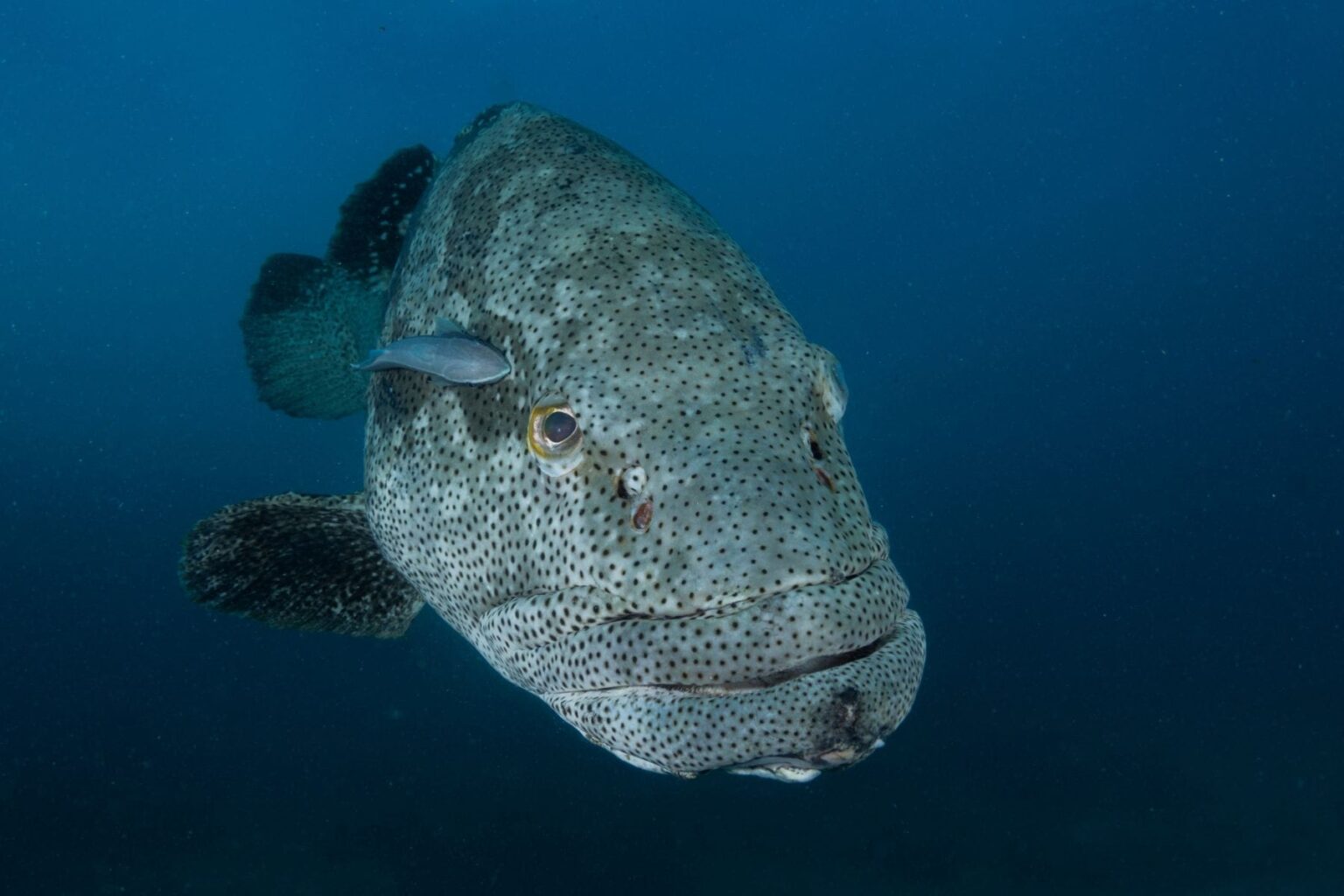
The Caribbean side hugs the Mesoamerican Barrier Reef with classic wall and gentle drift dives. Marine parks like Hol Chan and Turneffe keep fish life dense with nurse and reef sharks, turtles, eagle rays, and big schools.
On the Pacific, seasonal upwelling attracts pelagics: mantas around Catalina Islands, bull sharks at Bat Islands, and hammerhead schools at Cocos Island. Conditions are more dynamic, with cooler thermoclines and stronger current, so these sites suit experienced divers comfortable in surge and blue open-water.
Best time to dive in Central America
Belize and Bay Islands of Honduras
- February–June (dry season): Water temperatures are 79-84 F (26–29 C) and visibility is commonly 60 to 100 feet (18–30 m). Seas are generally calmer and clearer.
- July–November (wet season): Still very diveable, however with rougher waters and higher winds, visibility is reduced to 40–80 feet (12–24 m).
Costa Rica (North Pacific: Catalina & Bat Islands)
- December–April (dry season): Cooler upwelling and thermoclines can drop into low 70s F (22 C).
- May–November (wet season): Peak season for pelagics, manta rays, and sharks (June–October) at Bat Islands.
Costa Rica (Cocos Island)
December–May (dry season): Again generally calmer seas and better visibility.
June–November (wet season): Rougher waters means higher water circulation. More plankton and other nutrients come to the surface, attracting hammerheads, whale sharks and other pelagics.
Panama: Pacific Ocean & Caribbean Sea
Pacific: Diveable year-round. 79–86 F (26–30 C) water temperatures; 50–100 foot (15–30 m) visibilityCaribbean: Diveable year-round. Best visibility in February–April and September–October when seas go flat and outside reefs open.
Nicaragua (Corn Islands)
Year-round Caribbean conditions: 78-84 F (25–29 C) water temperatures. Summer and early fall are typically calmest.
El Salvador
November–March (dry season): Calmer seas and clearer water. Lake diving at Ilopango and Coatepeque runs all year.
Guatemala (Lake Atitlán, high-altitude)
Year-round: Freshwater training and fun dives. The most famous dive site is Lake Atitlán at 5,125 ft (1,562 m) so altitude diving rules apply.
Top 14 dive sites in Central America
Belize
Hol Chan Marine Reserve (Ambergris Caye)
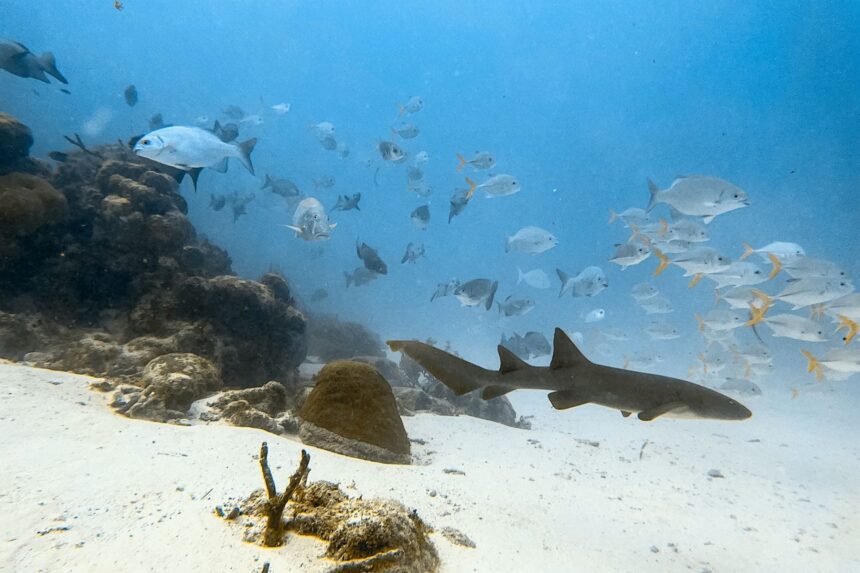
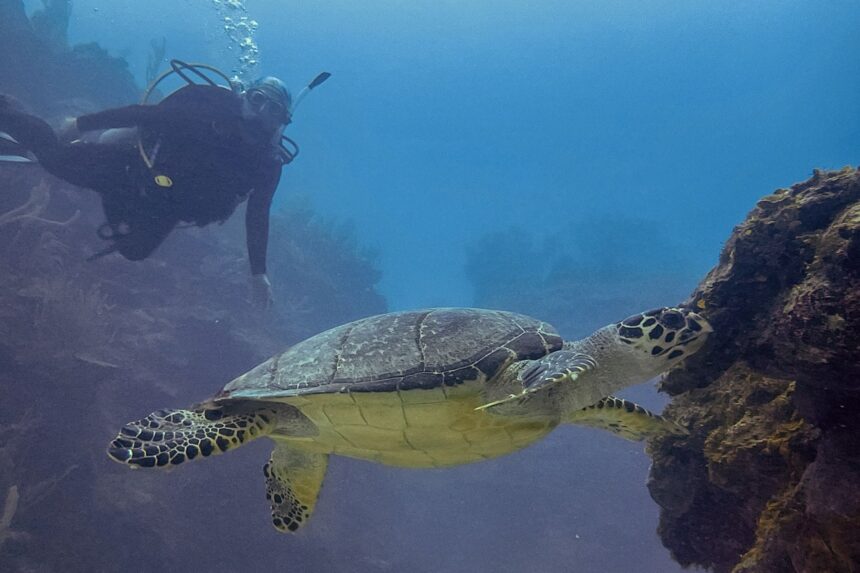


Hol Chan is a channel inside a protected marine reserve, a short run from San Pedro. Boats moor on the reef, then divers drop to the sand and move along the channel and reef top. Profiles are shallow and steady with light current on most days. Typical depths are 20-45 feet (6-14 m), with long bottom times and clear light for navigation.
What you’ll see at Hol Chan
Nurse sharks and southern stingrays cruise the channel, with grunts, snappers, and parrotfish along the reef top. Turtles pass through the seagrass edges. Visibility is usually good, so wide-angle and natural-light photos work well. Macro hunters find shrimp and blennies in coral heads.
Half Moon Caye Wall (Lighthouse Reef)
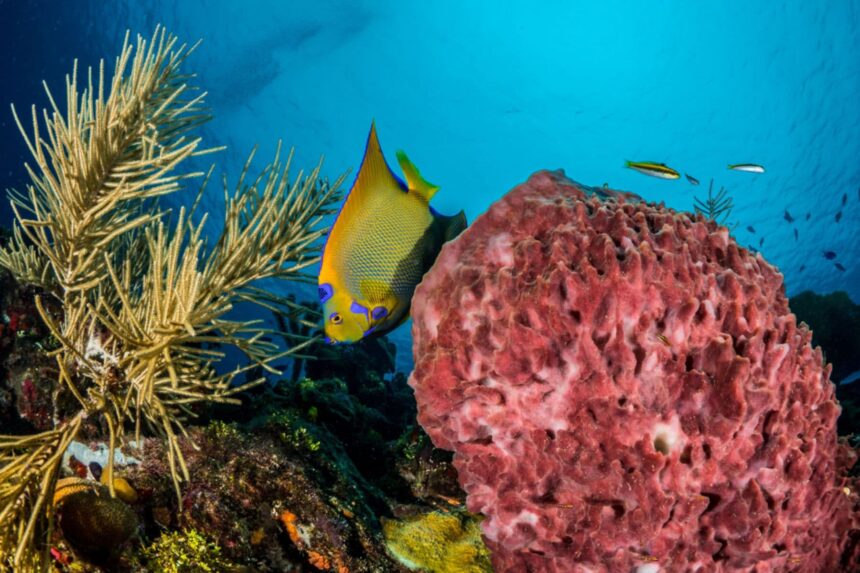
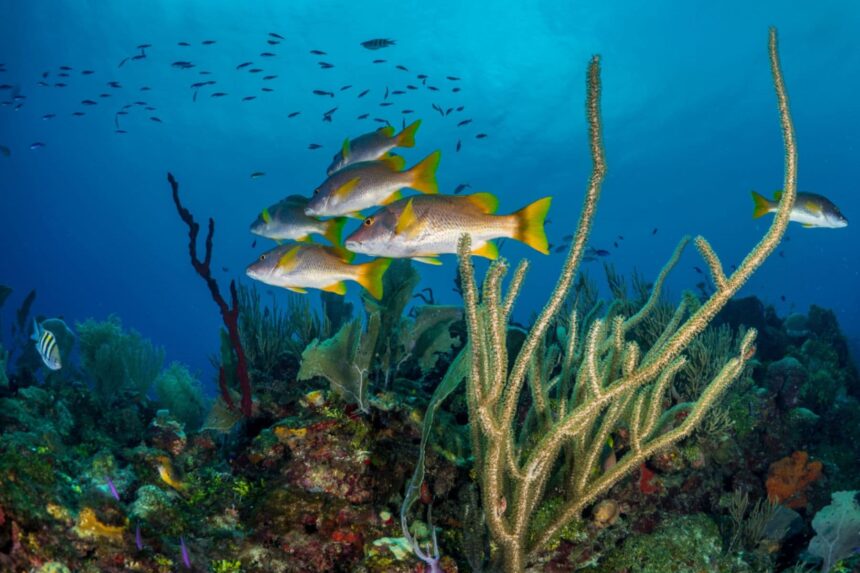


Half Moon Caye sits on an outer atoll with clear water and a deep wall. Trips run as full-day charters from Ambergris or Caye Caulker, often paired with The Aquarium or the Blue Hole. Dives begin on the reef top, then progress down the wall as conditions allow.
What you’ll see at Half Moon Caye Wall
Eagle rays and Caribbean reef sharks pass along the wall, while big sponges and sea fans fill the view. Turtles and horse-eye jacks show on many dives.
Great Blue Hole (Lighthouse Reef)

Even if you’ve never dived it, you’ve surely seen pictures of the Great Blue Hole from above. This iconic site is a deep sinkhole dive with a straightforward route led by local guides. Unless you’re on a liveaboard, boats leave before sunrise and run about 2–2.5 hours each way.
Divers descend to the formations at around 130 feet (40 m), spending just a short time among the stalactites and overhangs of this ancient cave. After a brief visit, dives ascend to finish on the surrounding reef top. Thermoclines and reduced light are common at depth, so bring a torch.
What you’ll see at the Great Blue Hole
Although sparse in fish life compared to other neighboring sites, divers come here for the unique geology: overhangs, limestone formations, and the currentless water. Caribbean reef sharks often circle the collapsed cave’s rim as if they were its guardians. Expect limited bottom time on the main descent, with gas planning and depth control as the focus.
Honduras (Bay Islands)
Mary’s Place (Roatán)
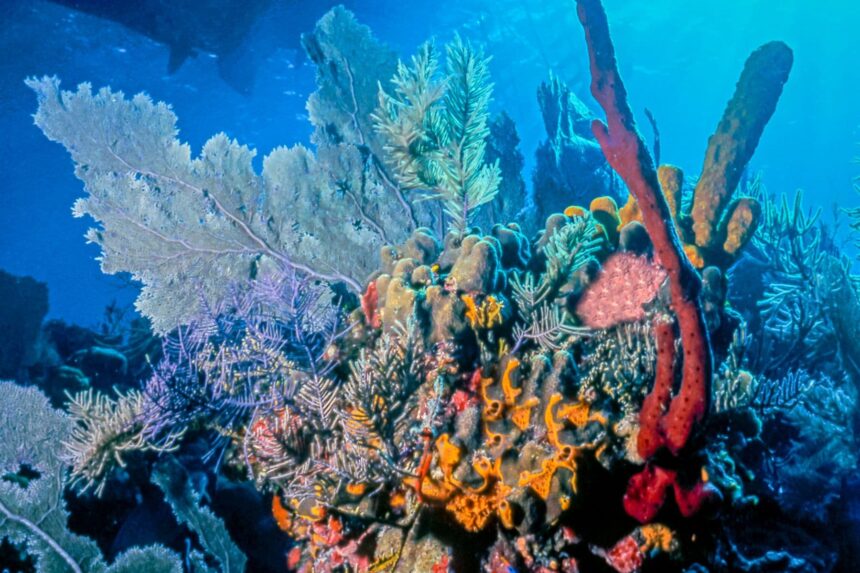
Mary’s Place lies on Roatán’s south side and is reachable via two-tank trips. Entries are simple, followed by a short swim to the main fissure. Divers move through high, narrow swim-throughs and along adjacent walls, then finish on the reef top. Typical depths are 50–85+ feet (15–26+ m).
What you’ll see at Mary’s Place
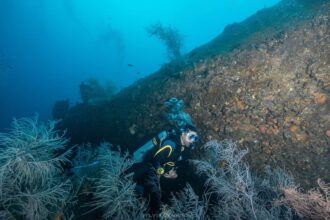
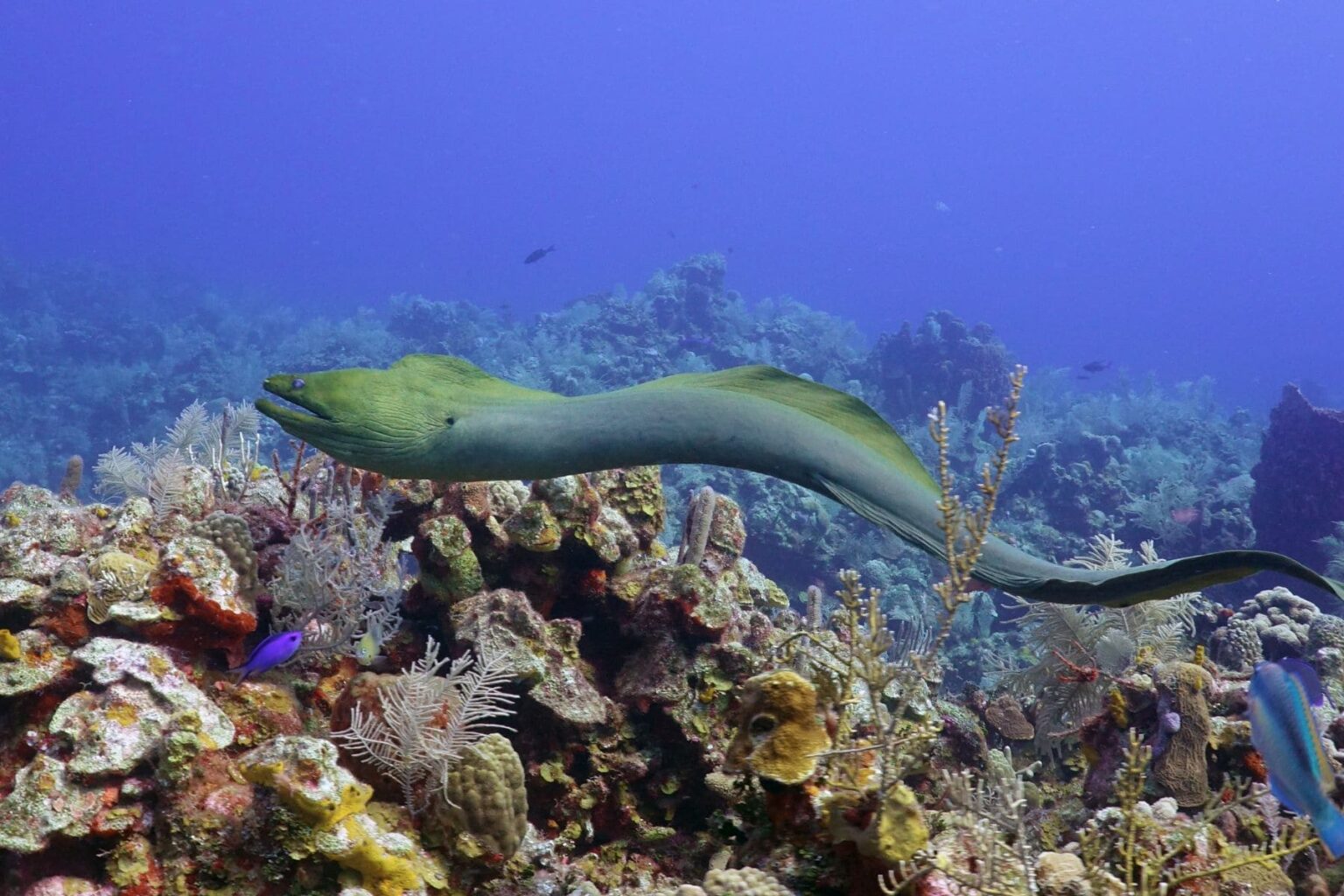
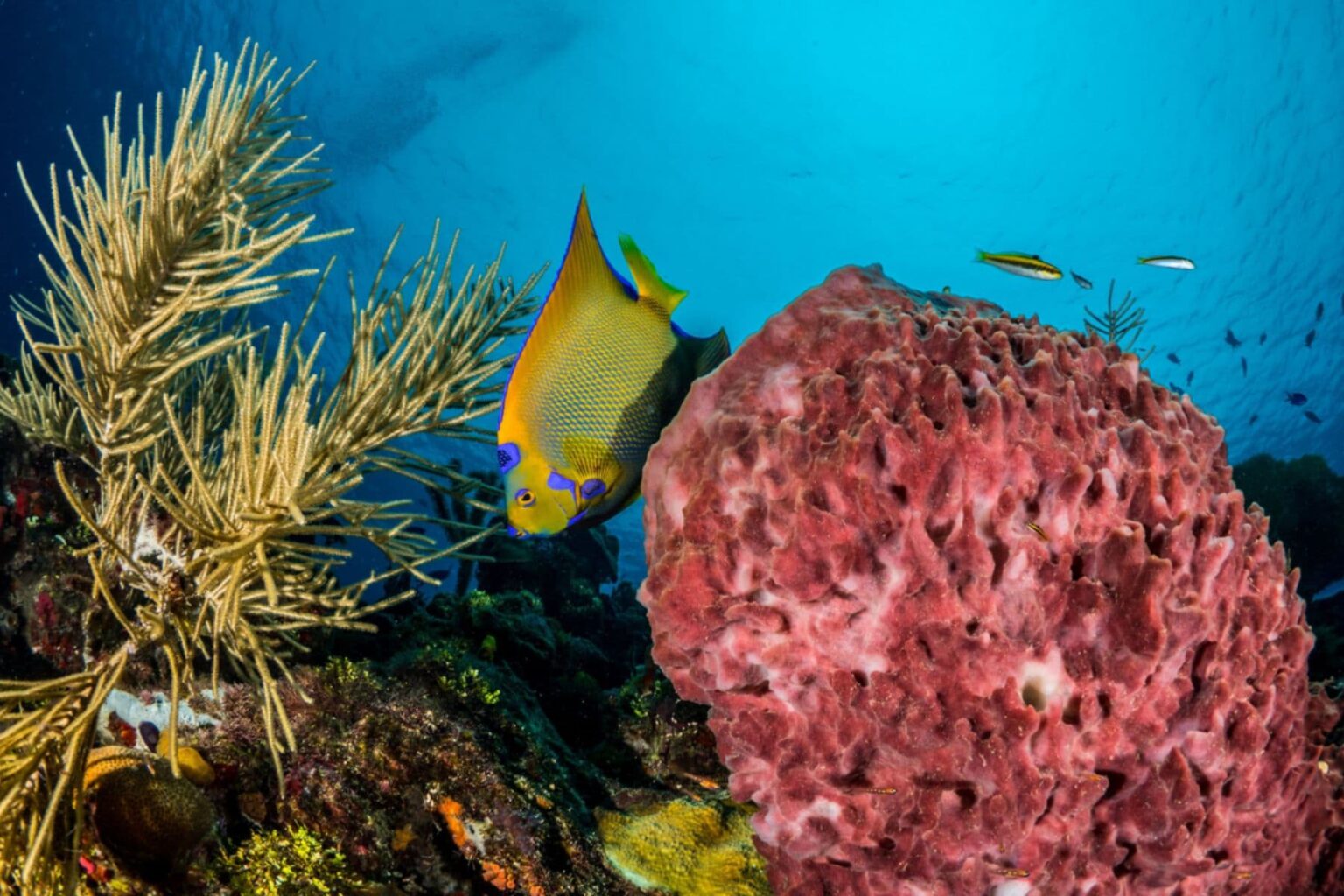
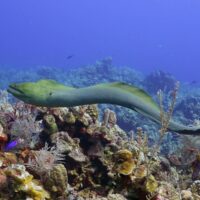
Black coral and barrel sponges line the walls, with glassy sweepers and small crustaceans in the shade. Atop the reef, expect turtles, moray eels and schools of chromis in bright light. Photographers will enjoy the swim-throughs and tunnels, capturing mesmerizing sunbeams peeking through and schools of fish can collect at the openings.
West End Wall (Roatán)
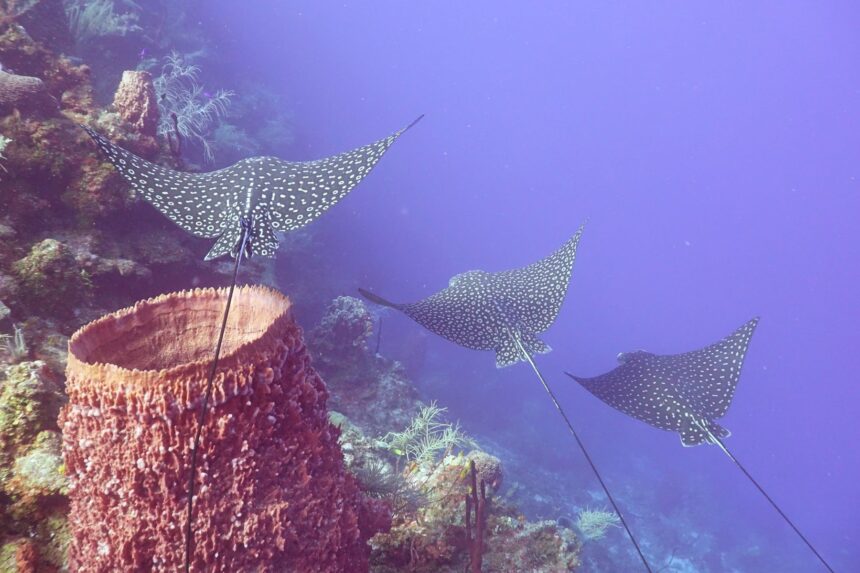
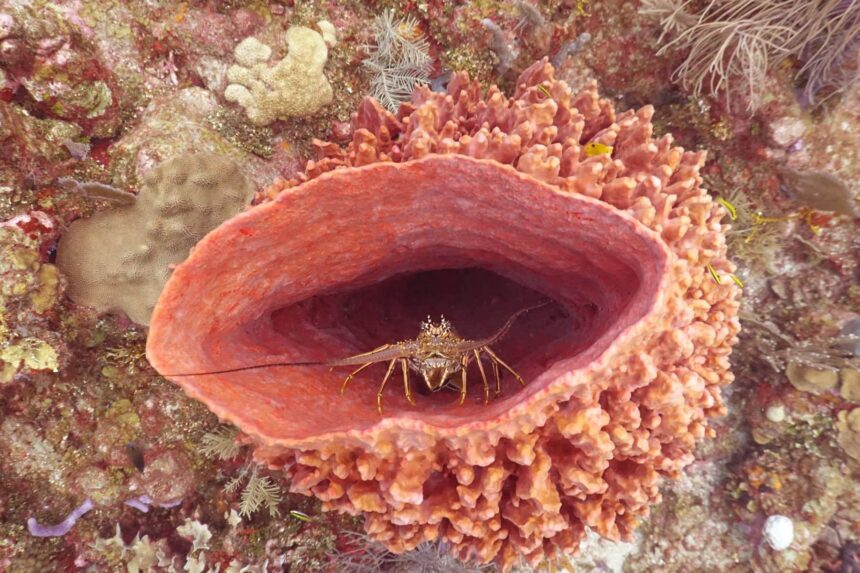


West End Wall sits off the island’s western tip with short boat rides from West End/West Bay. The dive starts on the reef top and steps down along a steep wall with ledges. With mild currents, divers will drift through the site with surge on the exposed corners. Typical depths are 40–80 ft (12–24 m), so it suits all levels.
What you’ll see at West End Wall
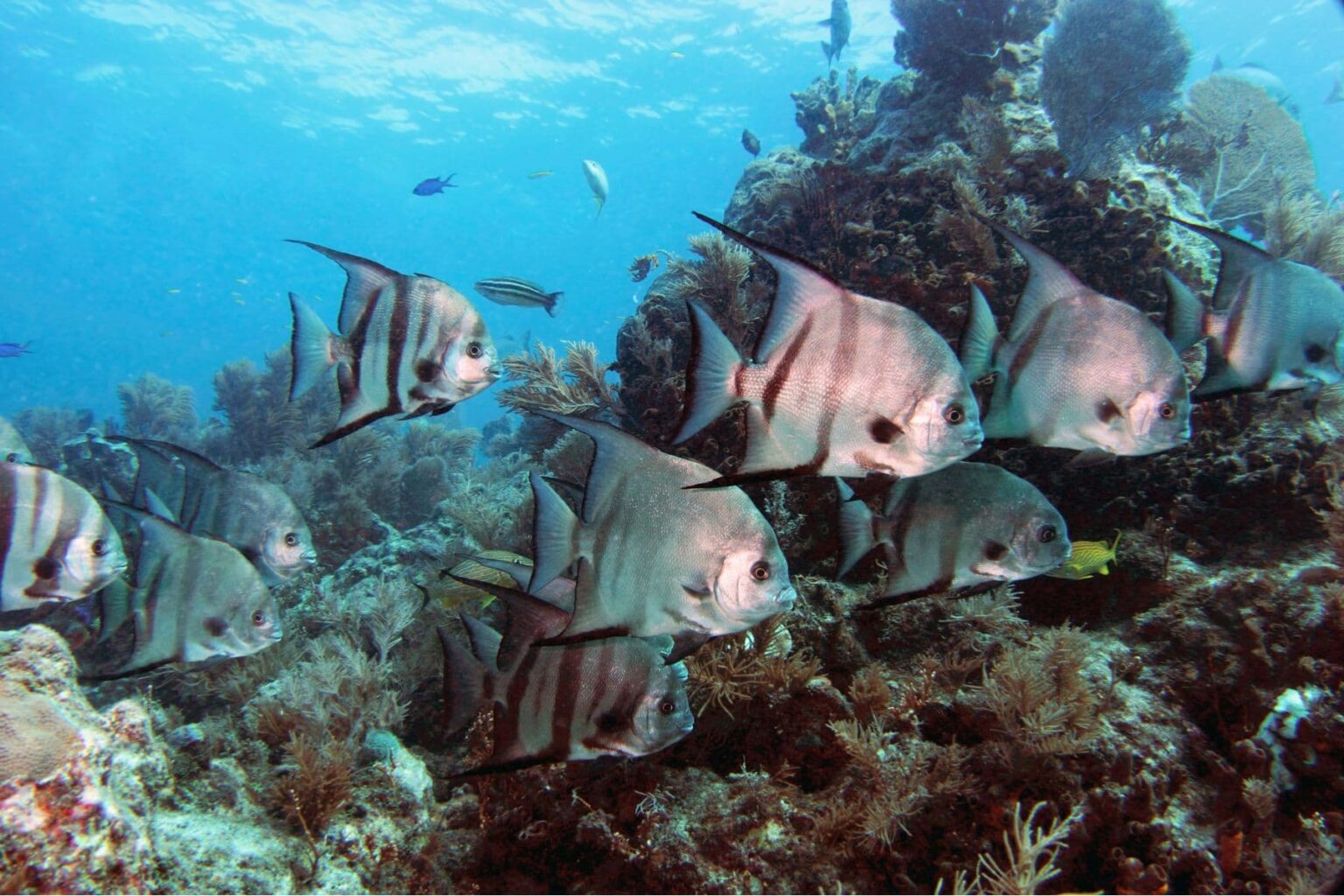
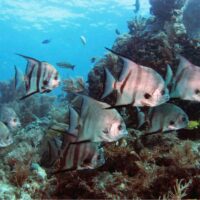
Eagle rays glide along the top, with spadefish and jacks schooling on the ledges. Groupers and snappers hide under sponges and small overhangs. On the reef’s plateau, colorful reef fish make for entertaining views on your safety stop. On clear days, blue-water views add chances to spot a passing pelagic.
Black Hills (Utila)
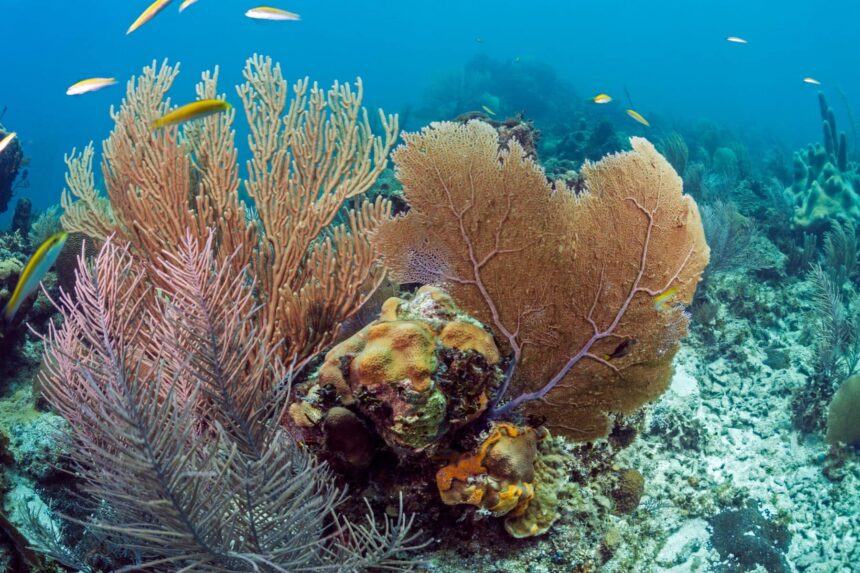
Black Hills is an offshore pinnacle south of Utila, where current will be present and visibility can swing quickly. The seamount is compact, and divers will usually spiral around the pinnacle one or two times, starting near 80–90 ft (24–27 m). The site does descend to 130+ feet, so newer divers should monitor their buoyancy.
What you’ll see at Black Hills
Horse-eye jacks and barracuda circle the high points, while eagle rays cross above the pinnacle. Creole fish stream along the slope in steady lines. Macro life hides in the rocks, so bring your dive torch to investigate those nooks and crannies.
Costa Rica
Catalina Islands
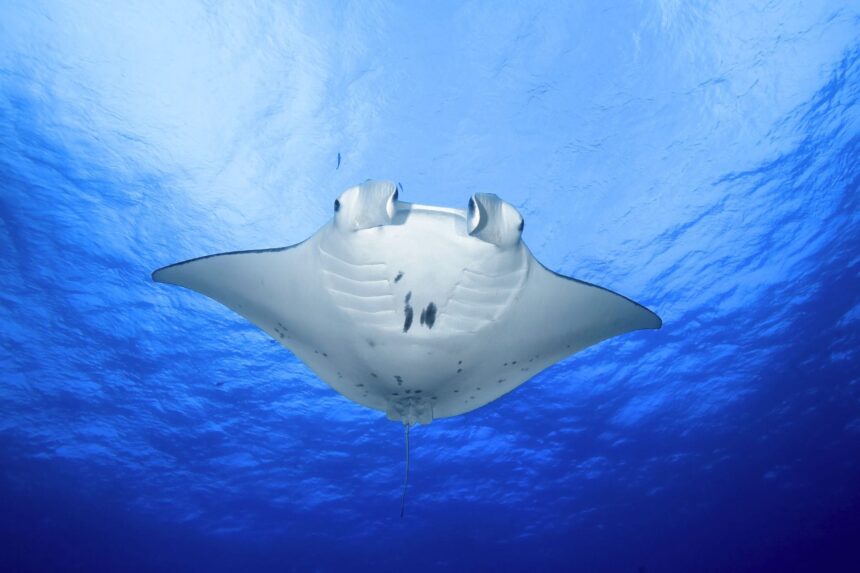
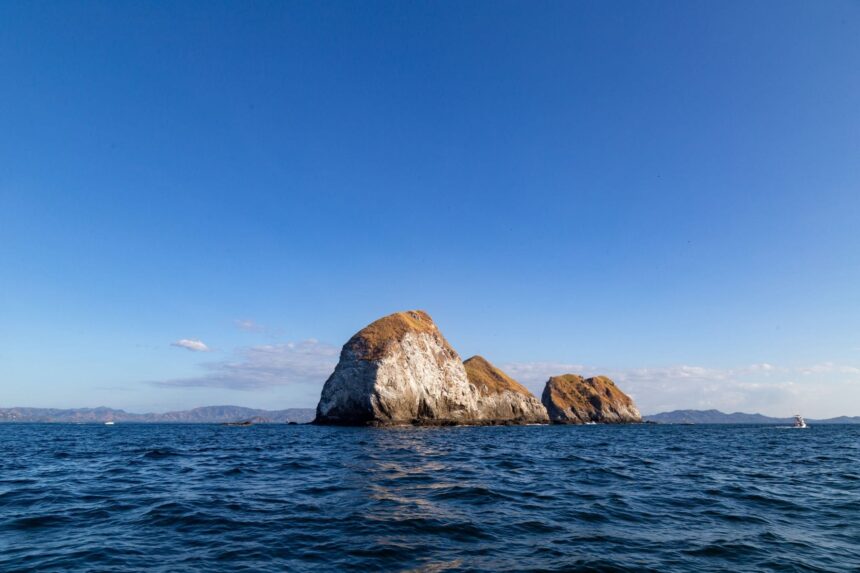


The Catalinas are volcanic islets and ridges with frequent thermoclines and light to moderate surge. Most dive sites sit between 40–80 feet (12–24 m). Many divers settle near a known cleaning area and minimize finning to avoid stirring the water. Conditions change by season: some days are blue with great visibility; other days are greener with more plankton and life closer to the rock.
What you’ll see at the Catalina Islands
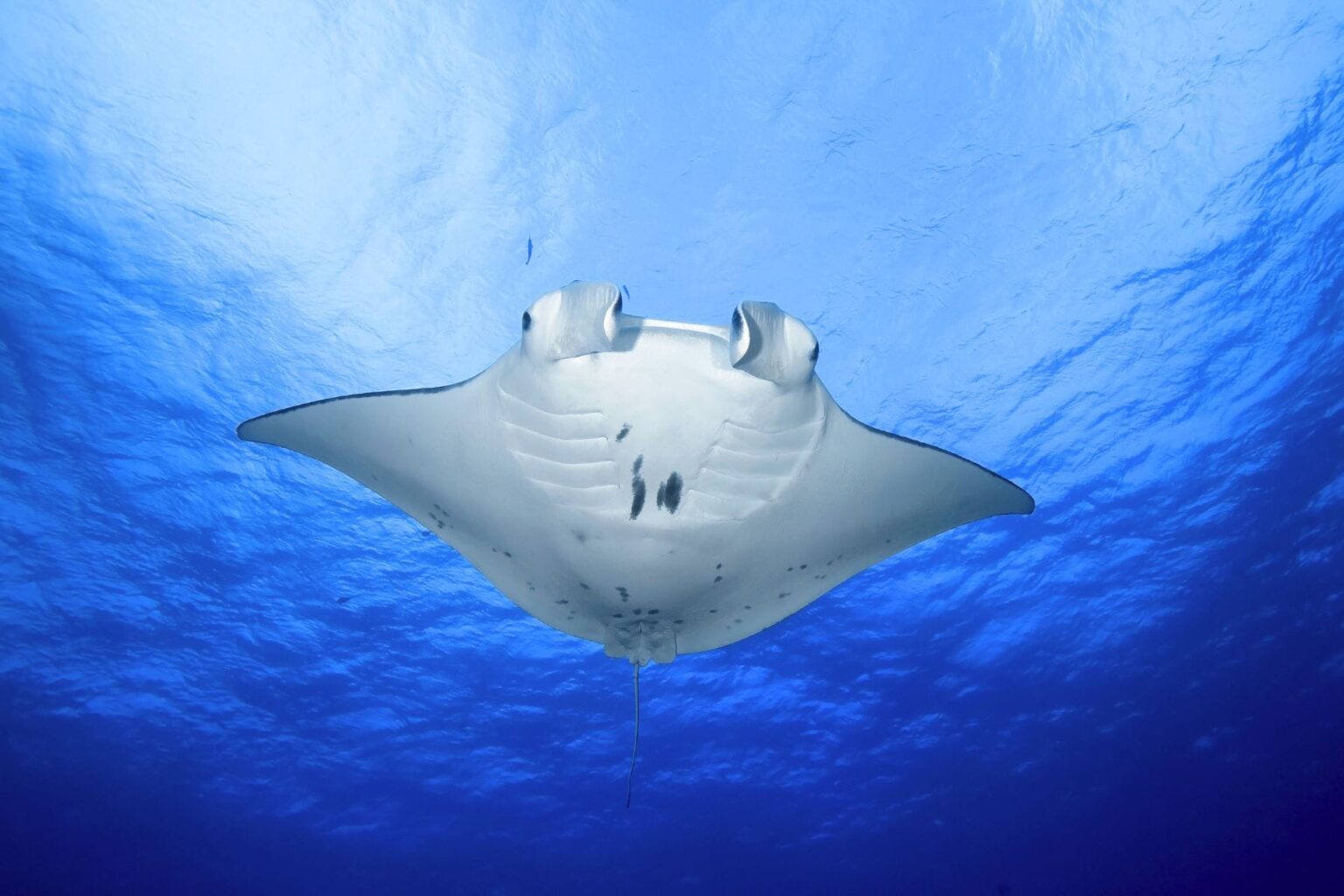
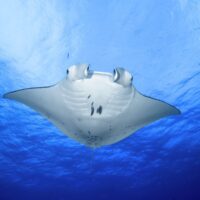
Oceanic mantas are the main event in the cool, dry months. They approach the ridge, pause over cleaners, and move on. Outside peak season, expect eagle rays, turtles, and schools of grunts and surgeonfish around the structure. Mobulas are regular sightings, especially when bait is present.
Bat Islands (Guanacaste)
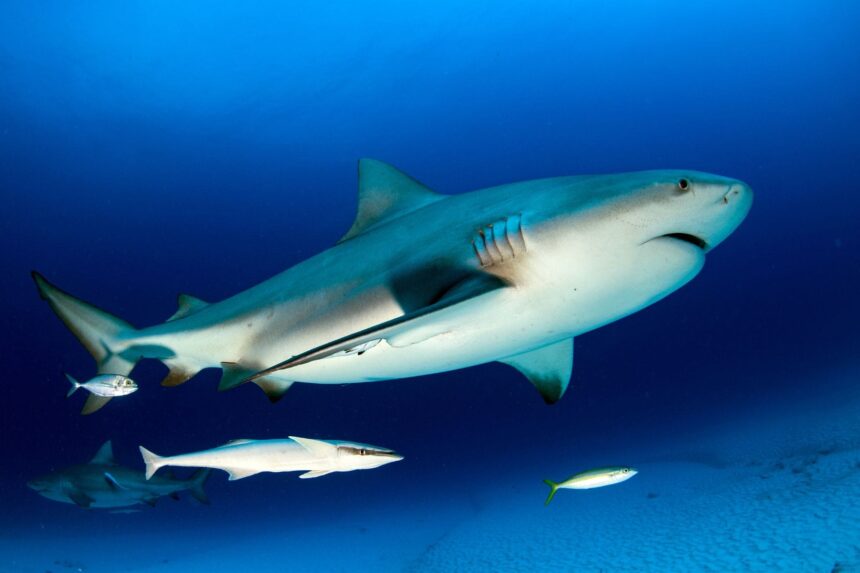
The Bat Islands sit off Santa Rosa National Park at the mouth of the Gulf of Papagayo. The Big Scare is the best-known pinnacle here. Most dives drop in around 80–100 feet (24–30 m) and move to the sheltered side of the rock to get out of the main current. Boat rides are longer and the area is exposed, so operators choose weather windows and time entries with the swell.
What you’ll see at Bat Islands
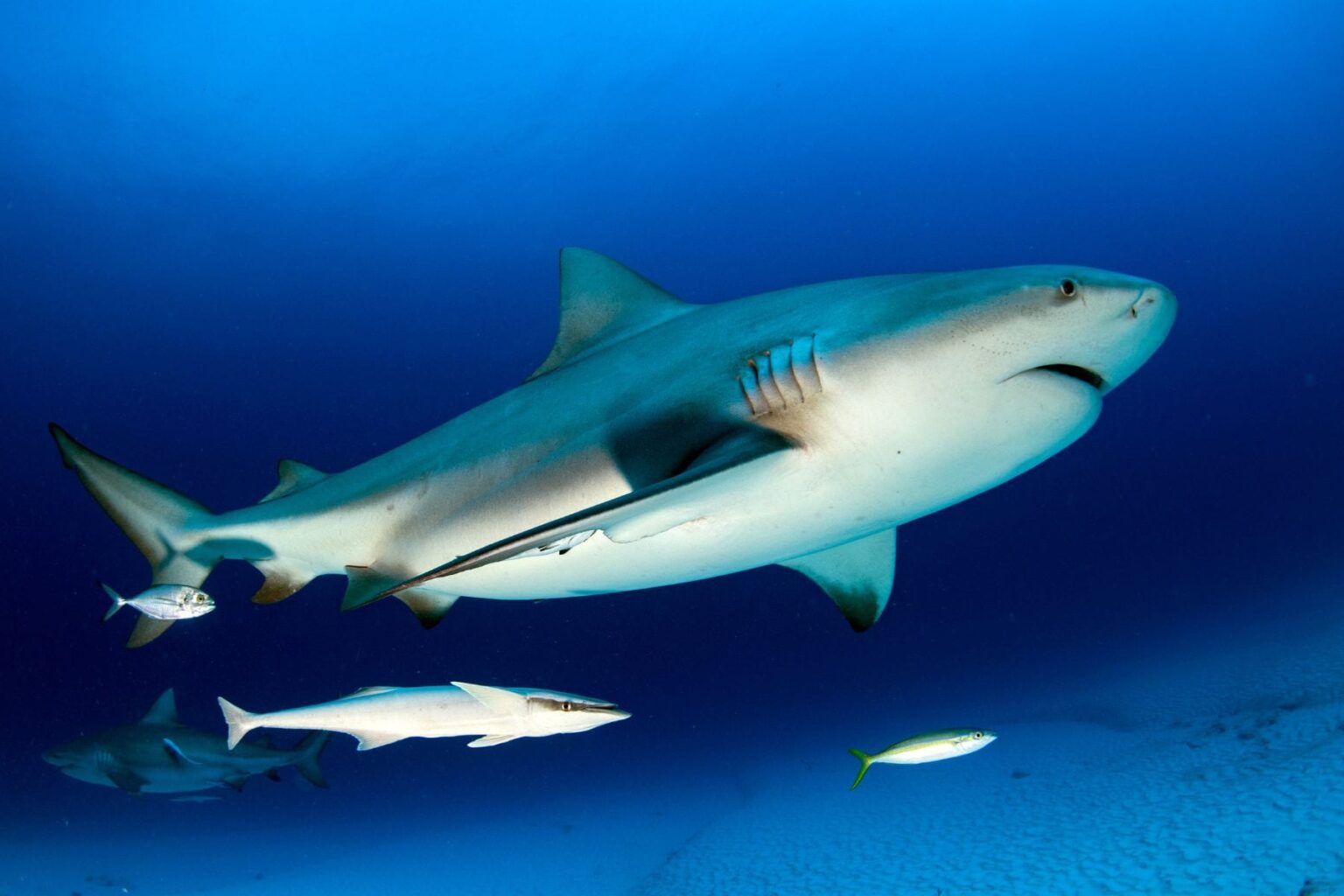
Bull sharks are the headline act and tend to appear steadily on well-timed drops. Between shark sightings, look for bigeye jacks, eagle rays, and morays in the ledges. On clearer days you’ll see black coral and sponges on the rock; when it goes green, the action often feels closer. Typical depths are 60–100 feet (18–30+ m).
Cocos Island (Offshore Pacific)
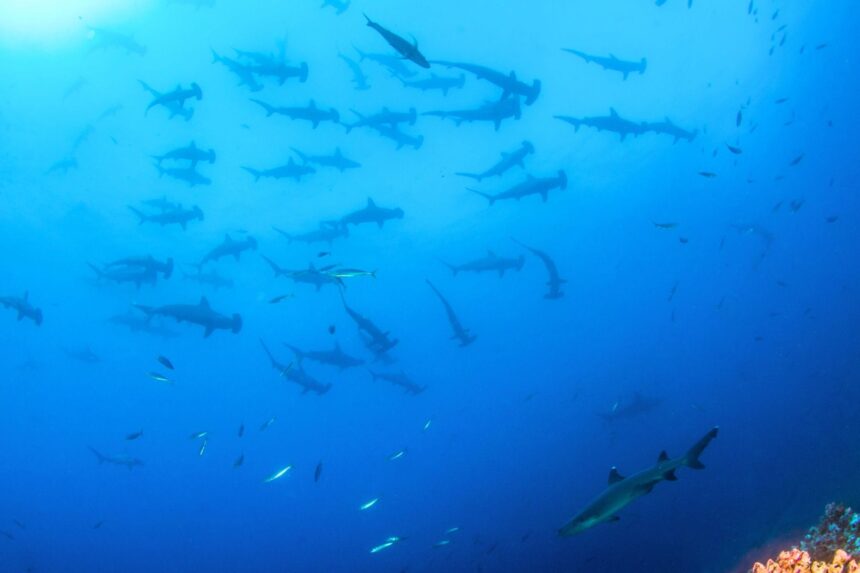
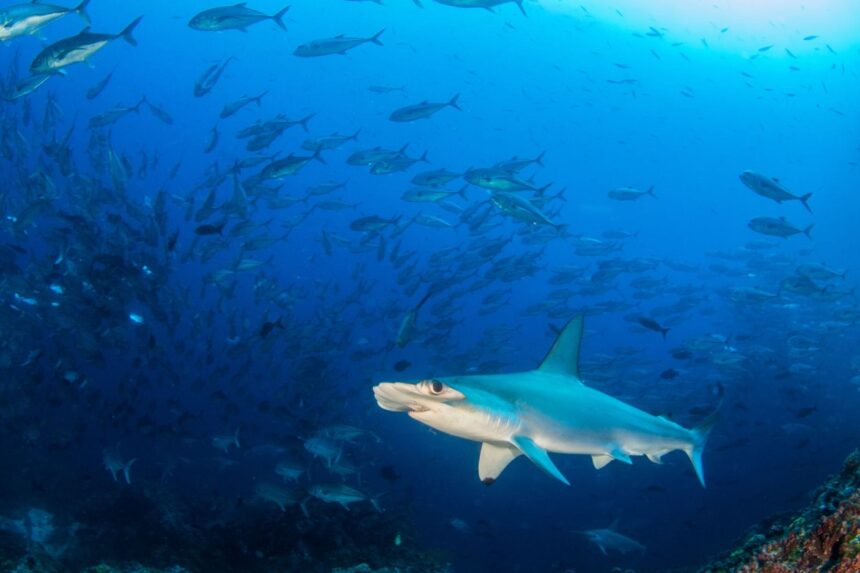


Costa Rica’s jewel, Cocos Island, is remote, open-ocean seamount diving. Most dives begin deeper and then work slightly shallower across the underwater topography. Typical depths are 60–100 feet (18–30 m), with current on many dives, negative entries at times, and blue-water safety stops.
At the signature site Alcyone, divers usually descend on a mooring line to 100+ feet (30 m), settle behind the ridge to get out of the strongest currents, and watch the water column for movement. Thermoclines are common, so expect temperature and visibility to change during the same dive.
What you’ll see at Cocos Island
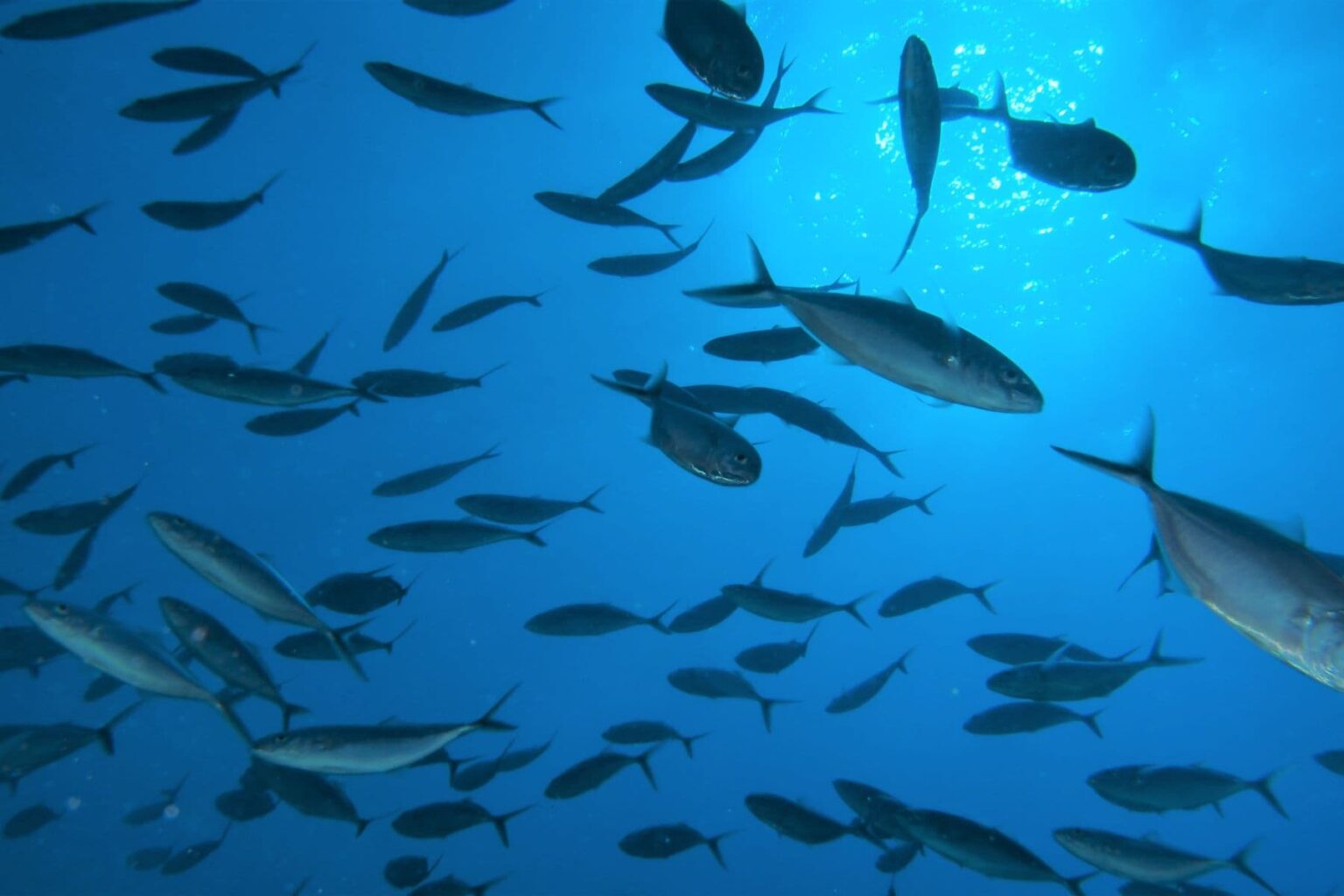
Schooling scalloped hammerheads are the main event. Galápagos sharks appear on many dives as well, while bigeye jacks and tuna move through the water column in tight groups. Marble rays and other rays stay closer to the rock.
Some days the fish density is so intense that divers can be tricked into thinking they’re on a night dive. Whale sharks and mantas appear on some trips, but hammerheads remain the primary draw.
Panama
Coiba National Park (Santa Catalina)
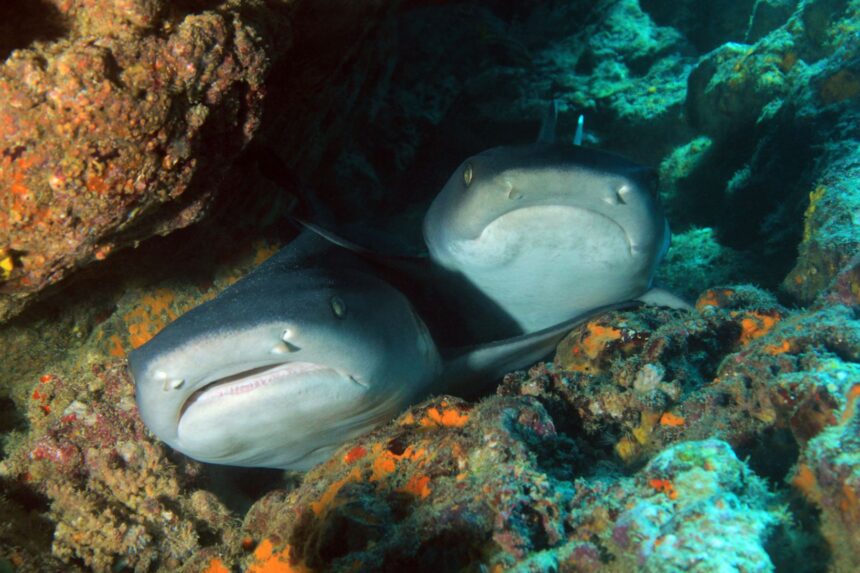
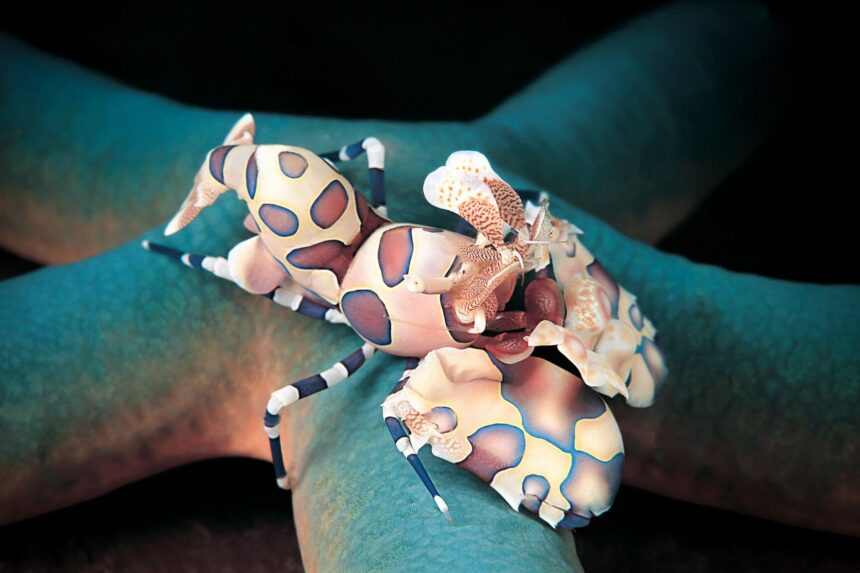


Coiba sits offshore and is reachable by 1–1.5 hour rides from Santa Catalina. Operators pick leeward sites when wind rises and choose islands to match the currents. Visibility and sea state can change across the day. Typical depths are 40–90 feet (12–27 m).
What you’ll see at Coiba
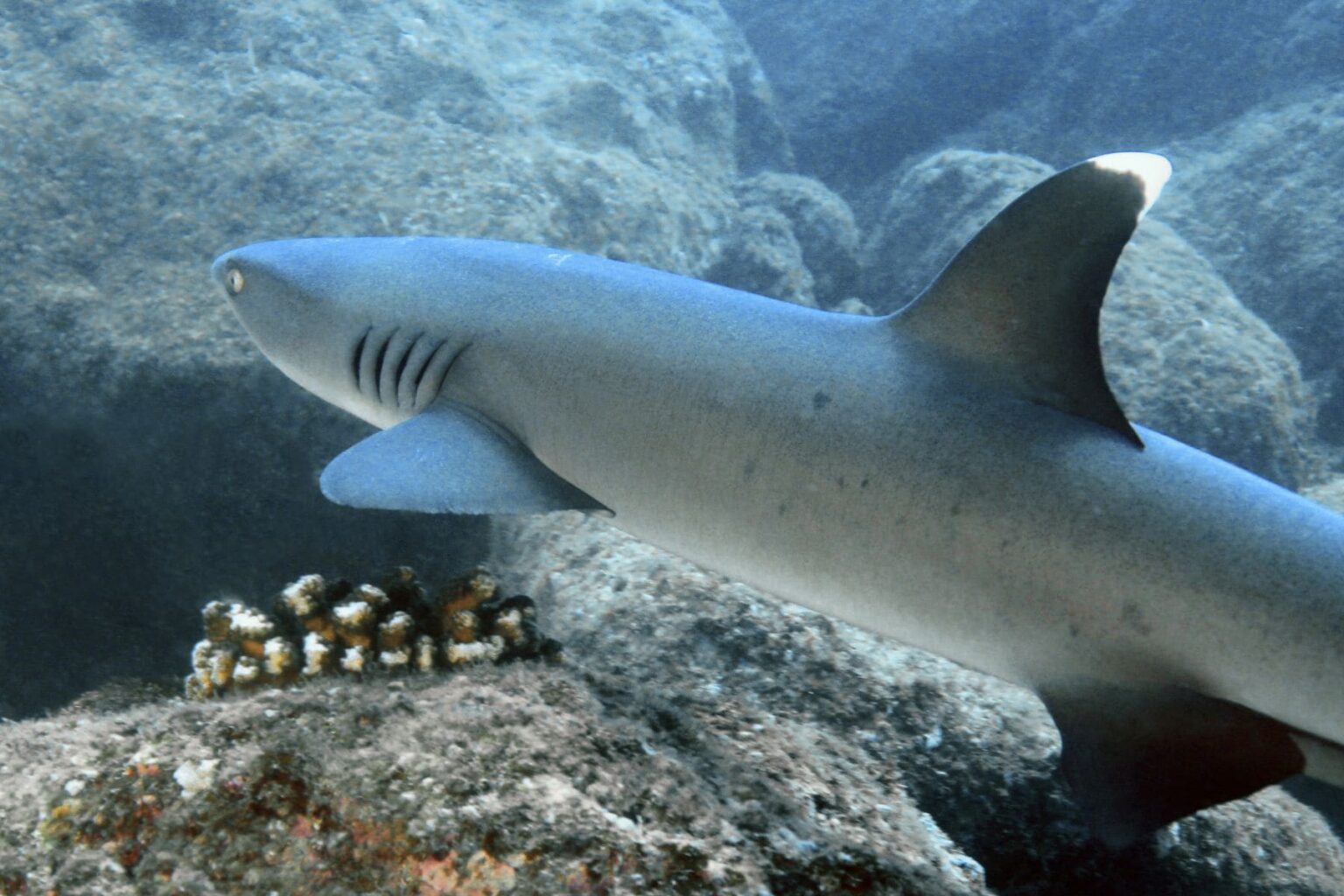
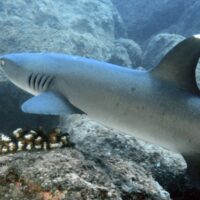
Whitetip reef sharks cruise through the channels while seasonal mantas appear on cleaning stations and humpbacks pass during migrations. There is extensive hard coral across many of the reefs, with sand patches for easy ascents and descents.
Bocas del Toro (Isla Colón)
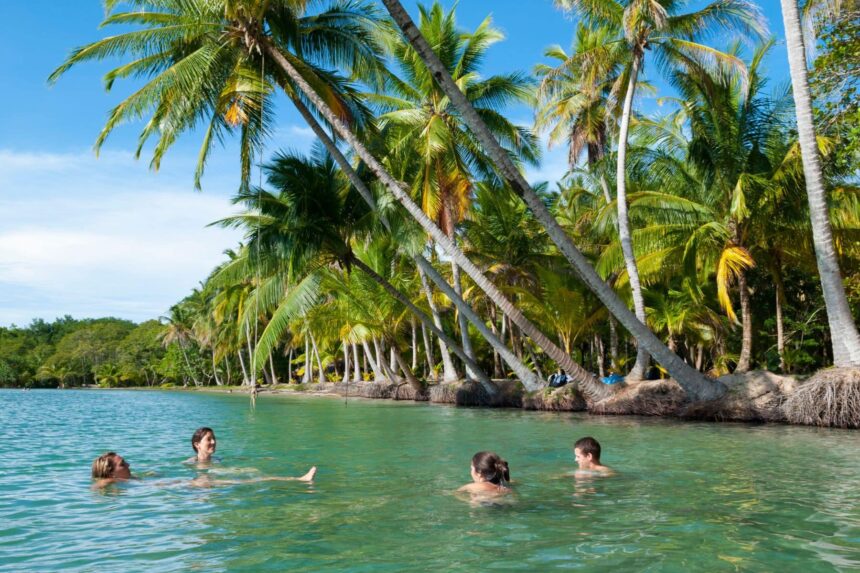
Bocas diving uses short skiff runs to reefs and mangrove edges, with outer sites opening in calmer sea months. Conditions are typically calm inside the archipelago, which is useful for training dives and photographers. Typical depths are 20–60 feet (6–18 m).
What you’ll see in Bocas del Toro
Shallow reefs offer bright color and long bottom times, while mangroves shelter juveniles and macro life. Small wrecks and planes create circuits near the sand. On calm, clear days, outer reefs bring better fish counts and wider vistas. The close site spacing makes for unhurried surface intervals. It’s a relaxed setup for families and mixed-level groups.
Nicaragua
Corn Islands Reefs & Pinnacles (Big Corn and Little Corn)
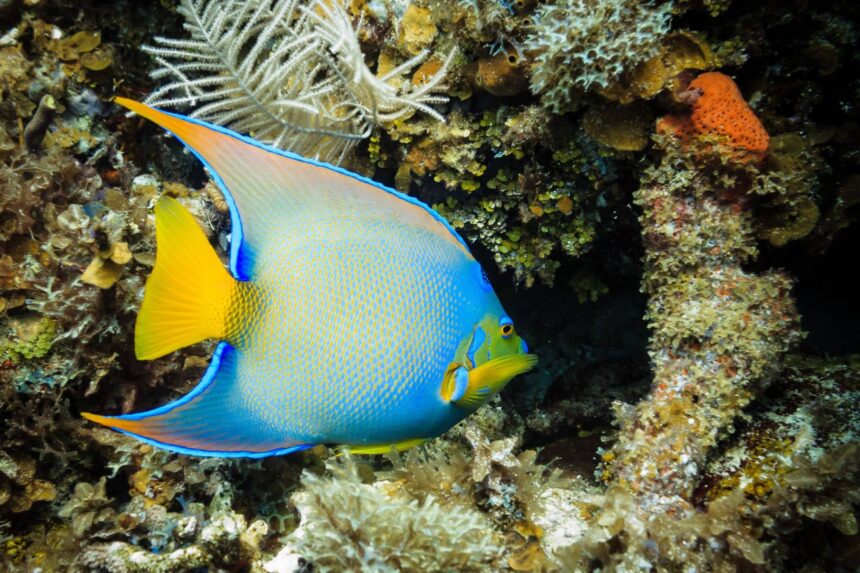
Access is via domestic flight to Corn Island Airport with a panga (local outboard) onward to Little Corn. Current is usually mild and navigation is simple around pinnacles and reef edges. Conditions are steady most of the year with warm water and good visibility. Typical working depths are 30-80 feet (9-24 m).
What you’ll see in the Corn Islands
Nurse sharks, eagle rays, and schooling fish circle around the structures. Coral cover is good on many sites, and sand patches make for easy descents. Macro life—shrimp, blennies, and small crabs—hides in ledges and sponges. Blowing Rock adds a faster, more exposed pinnacle when divers want more current.
El Salvador
Los Cóbanos Marine Protected Area (Sonsonate Coast)
Los Cóbanos is a coastal reef system near Acajutla with boat or shore access on calm days. The layout is straightforward, with broad reef flats and ledges. In the dry season, the water and visibility are most reliable, while rains bring more variation. Typical depths are 20–60 feet (6–18 m).
What you’ll see at Los Cóbanos
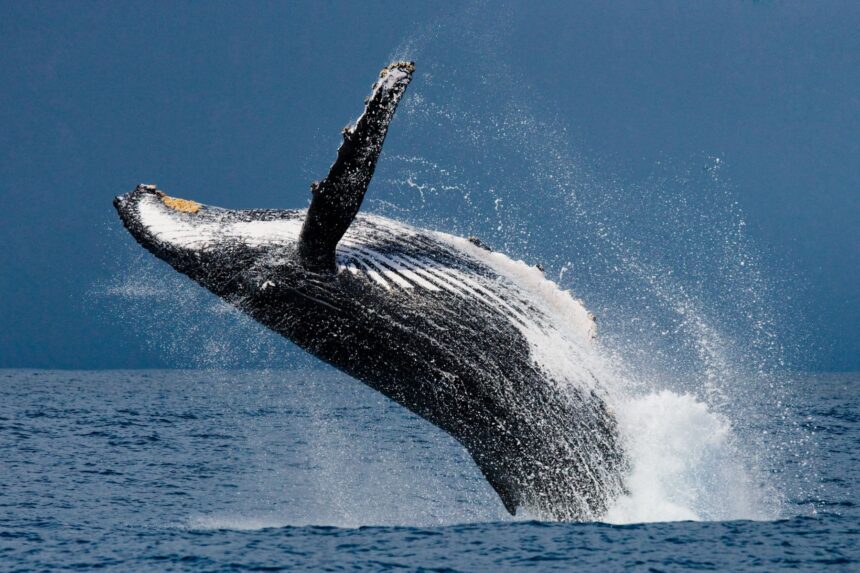
Basalt and coral create steady habitats for turtles, Moorish idols, and schooling grunts. Macro life hides in crevices and under small overhangs. On stable-viz days, the outer ledges show more fish movement. From October to February, humpback whales migrate through and whale watching tours are popular. Inland lakes Ilopango and Coatepeque provide year-round freshwater alternatives.
Guatemala
Lake Atitlán (Highlands)

Unique among the inclusions on this list, Atitlán is a volcanic caldera (collapsed crater) lake at altitude reachable by road and public boats between villages. Entries are from small docks or shore, with an easy, sloping terrain. Because it lies at 5,125 feet (1.5 km) above sea level, altitude procedures apply for planning and post-dive travel. Typical depths are 20–60 feet (6–18 m).
What you’ll see at Lake Atitlán
Lava formations, walls, and hot-sand vents create contrastingly different dives to those off the coastline. Heat shimmer is visible over some vents, and fish life is modest but present. The simple terrain works well for skills and altitude specialties. Macro opportunities sit in rock cracks and along man-made features.
How to get to and around Central America
Airports & entry
For Belize: Fly into BZE, then hop a 15-minute domestic flight or 25-minute taxi to the water-taxi terminal for a 90-minute ferry to Ambergris Caye. Offshore atolls (Lighthouse, Turneffe) run as full-day boats or week-long liveaboards from Belize City.
For Honduras: Fly to RTB for West End/West Bay in Roatán (roughly 11–20 minutes’ drive). Hop a short domestic flight from La Ceiba or San Pedro Sula for Utila or take the 1-hour ferry from Roatán.
For Costa Rica’s Pacific: Use SJO; Puntarenas is around two hours’ drive away to meet Cocos liveaboards. LIR is the gateway for Guanacaste day boats.For Panama: International flights land at PTY. Reach Santa Catalina for Coiba by road (4.5–5.5 hours). For Bocas del Toro, take a 50-75 minute domestic flight to BOC or bus/drive to Almirante plus a 30-minute water taxi.For Nicaragua: Connect via MGA, then take a 1-hour domestic flight to Corn Island (RNI) and a panga to Little Corn.
For El Salvador: Fly SAL and drive 76 miles to Los Cóbanos.
For Guatemala: Fly GUA and plan 75 miles (3-4 hours) by shuttle along mountain roads to Lake Atitlán.
Getting around
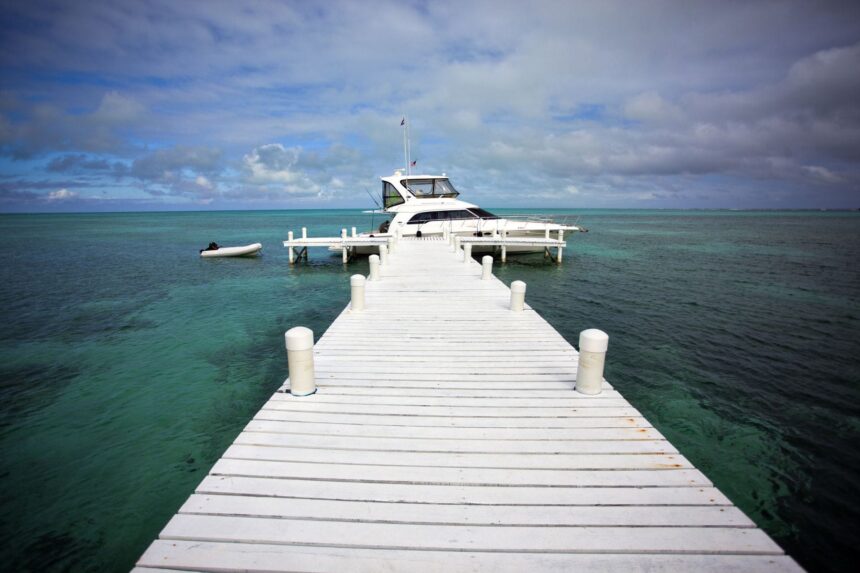
Highways vary by country. Cayes and islands rely on water taxis and skiffs (wet landings are common at outer atolls). Bay Islands use pangas with covered decks and dockside rinse barrels. Pacific Costa Rica and Panama involve longer boat rides over open waters. Bring a windbreaker and a dry bag. Park and marine fees are often collected in cash, so carry small bills.
Overland travel generally follows the Pan-American Highway through the isthmus — it’s the primary backbone for long road transfers — but note the route is interrupted at the Darién Gap, so there is no continuous road connection onward through to South America.
Where to stay in Central America as a diver
Belize: Base in San Pedro or Caye Caulker for 5–10-minute walks to docks, gear rooms, rinse tanks, early breakfasts, and shade for drying between dives. Liveaboards board in Belize City for atoll circuits.
Honduras: West End/West Bay lodgings on Roatán cluster near piers with lockable gear storage, shaded drying racks, and quick skiff access. Utila Town keeps you steps from boats and night-dive departures.
Costa Rica: In Coco and Flamingo/Tamarindo, look for dive-friendly hotels with early coffee, on-site rinse/dry areas, and parking for self-drivers. Boats often leave at dawn for Bat/Catalina runs.
Panama: Santa Catalina lodges support Coiba day boats with packed breakfasts, secure parking, and shaded rinse zones. Bocas Town guesthouses put you within 5–10 minutes of docks and freshwater rinses.
Nicaragua: On Big/Little Corn, choose beach cabanas with freshwater rinse and gear lockers. Boats load from village piers and beaches—expect wet landings.
El Salvador: Los Cóbanos beachfront stays and small shops focus on small groups, easy entries, and safe gear storage, especially in the calm November-March window.
Guatemala: Lakeside guesthouses in Santa Cruz/San Pedro sit near public docks, offer early breakfasts and hot showers, and coordinate altitude courses.
Final thoughts on diving in Central America
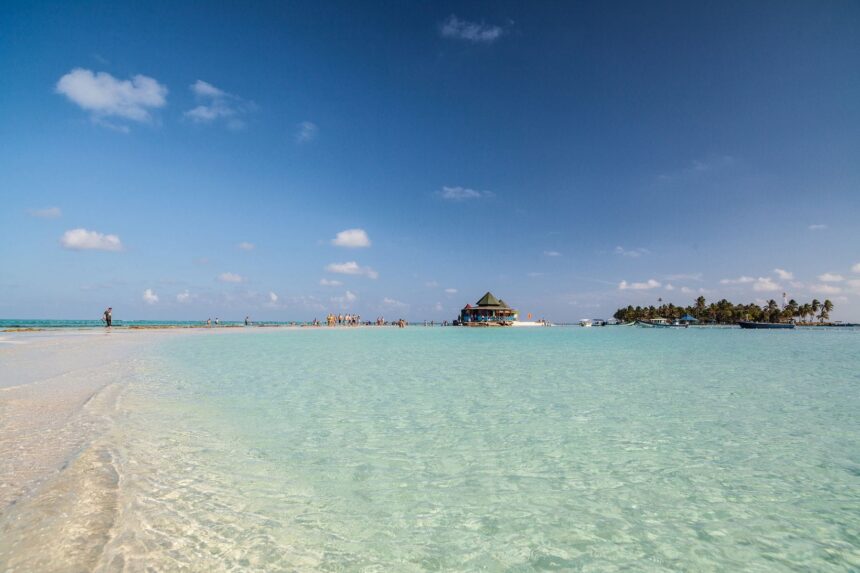
If you want a day-boat Caribbean vibe with clear water and mellow drifts, go to Belize or Roatán/Utila in February–June for easy entries and short rides. For Pacific pelagics, Guanacaste offers mantas and bull sharks from May to November.
If you crave an expedition, Cocos Island is the true adventure. Pick the coast that fits your skills, from shallow reef cruising to apex-predator arenas.
 Take a moment to look at this.