
















Earlier this year, I had a trip to Belize, so naturally I bragged about it to all my diving friends (and foes). Yet, when I talked about how excited I was for the Great Blue Hole, a lot of the feedback was that it was overhyped and just not worth it. Really? Doesn’t every website and dive book rave about the Belize Great Blue Hole? Isn’t this dive on everyone’s bucket list?
Well, now that I have done it, I can share my thoughts. Let me say first that I don’t agree with those naysayers. I really thought it was an incredible dive and just a very cool experience. However—there’s always a but—I can see where those naysayers are coming from.
What makes the Blue Hole so special?
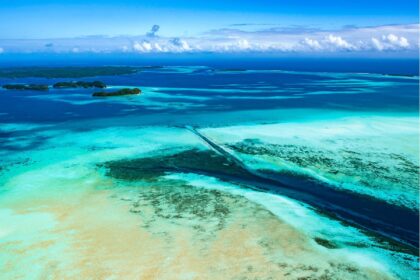
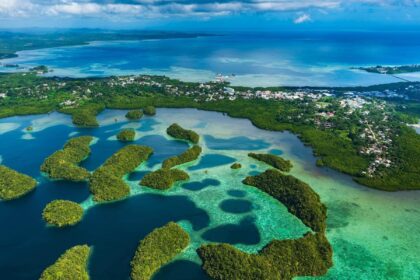
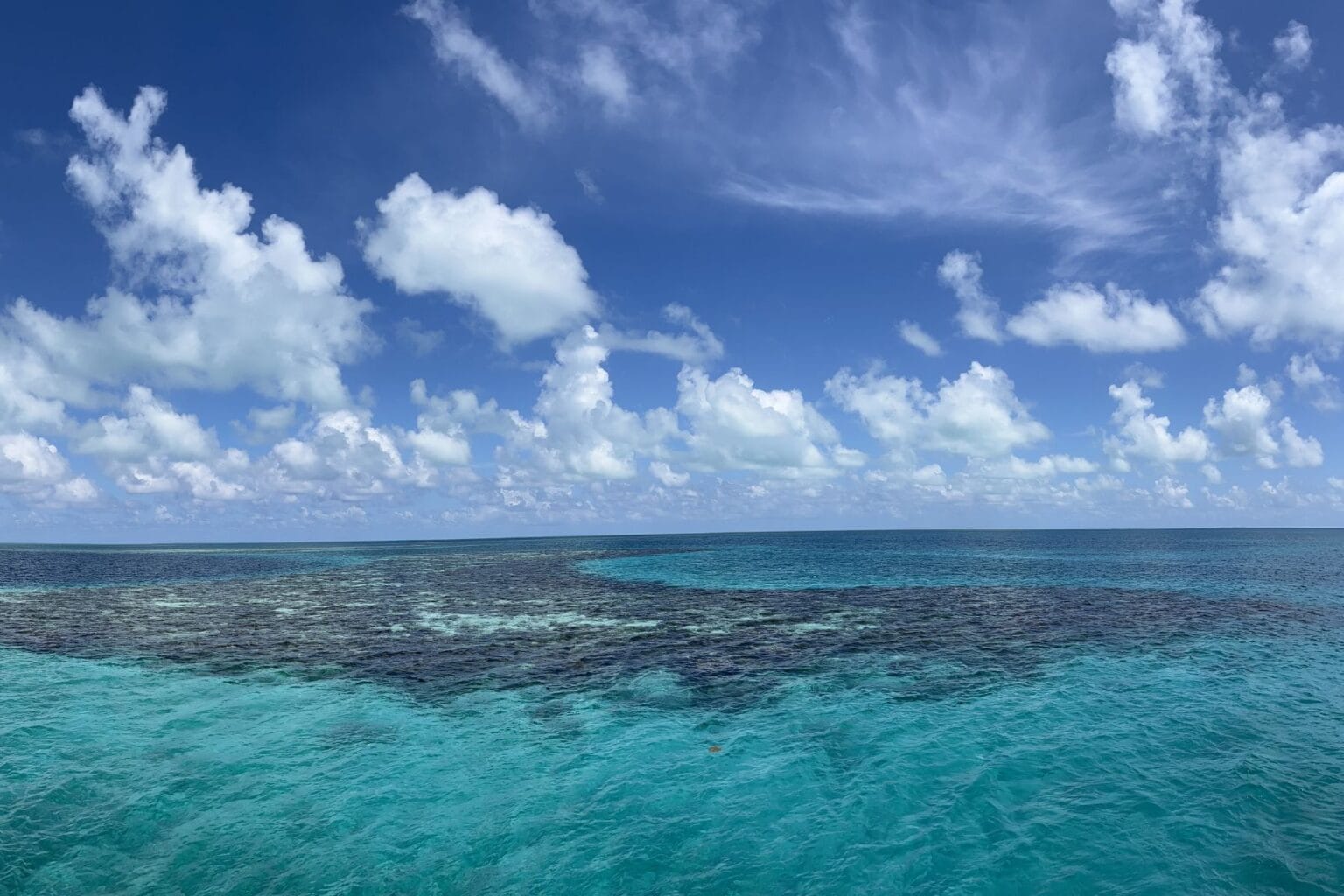
If you don’t know already, the Great Blue Hole is exactly that. It’s a massive marine sinkhole off the coast of Belize. It lies near the center of Lighthouse Reef, which is a small atoll about 50-60 miles (80-100 km) from Belize City or Ambergris Caye.
There are a few things that make the Blue Hole special for diving, the first being its scale. It’s almost 1,000 feet wide (305 m) and 400 feet deep (122 m), so it is a BIG blue hole. No matter if you’re used to wrecks, reefs, or walls, this will be very different.

Second is its geography. The Blue Hole is a collapsed cave system, and underwater you can swim between stalagmites and stalactites. This kind of view is normally reserved for experienced cave or cenote divers, not for open-ocean sites.
And lastly is just the atmosphere which, I can attest to, is otherworldly. You descend into a seemingly endless blue pit, with pockets of beautiful limestone columns that come into view at 100-130 feet (30-40 m). It’s not often in diving that we get to experience a truly unique dive site.
How to get there
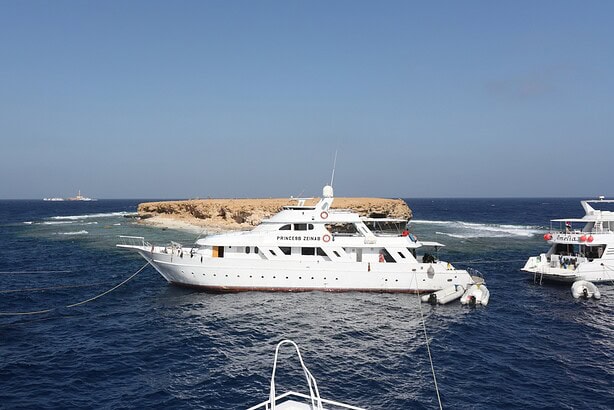
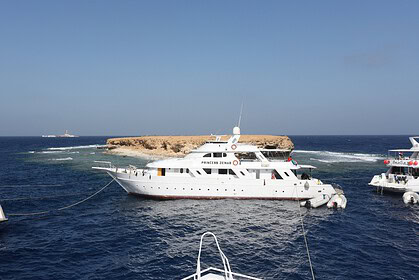
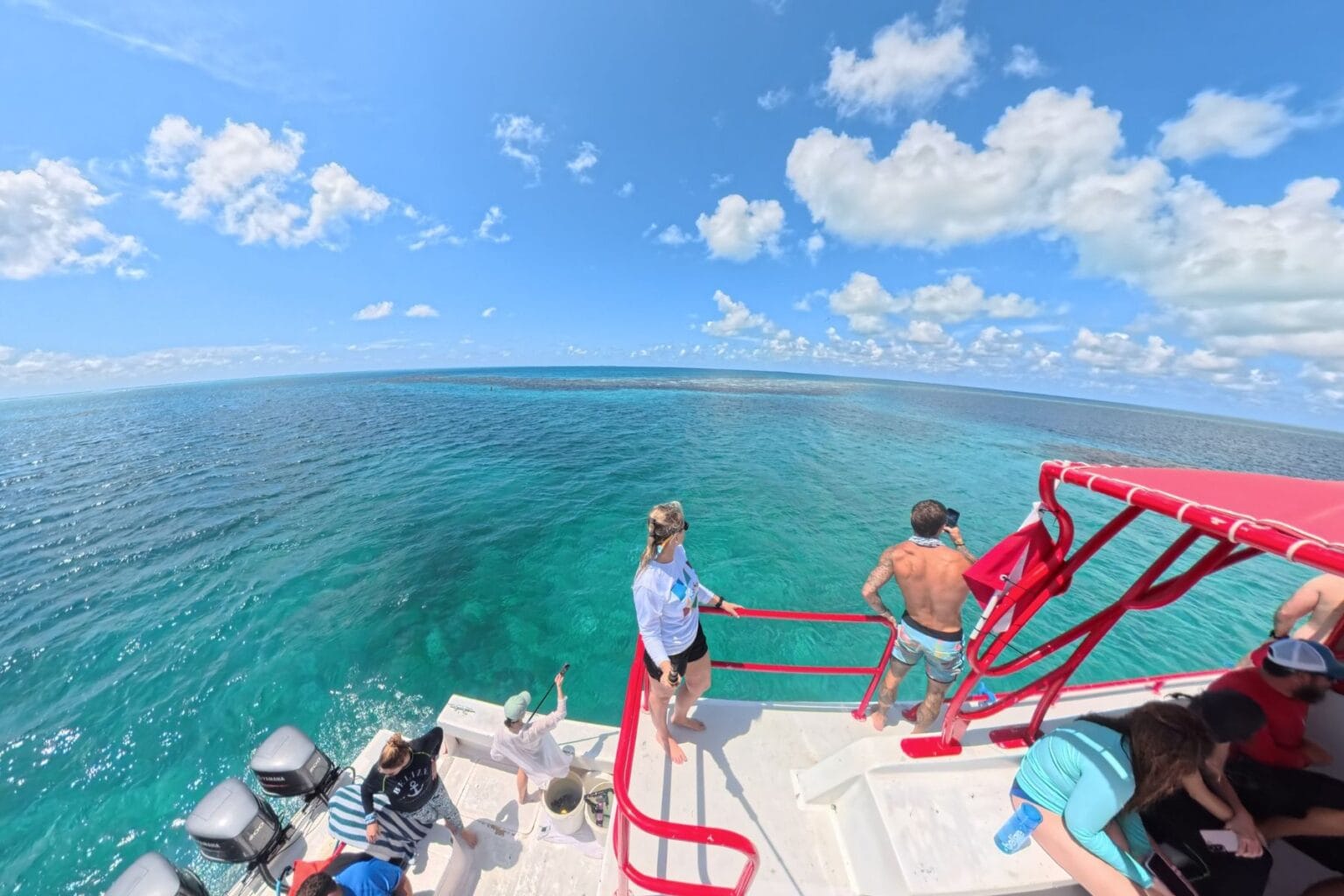
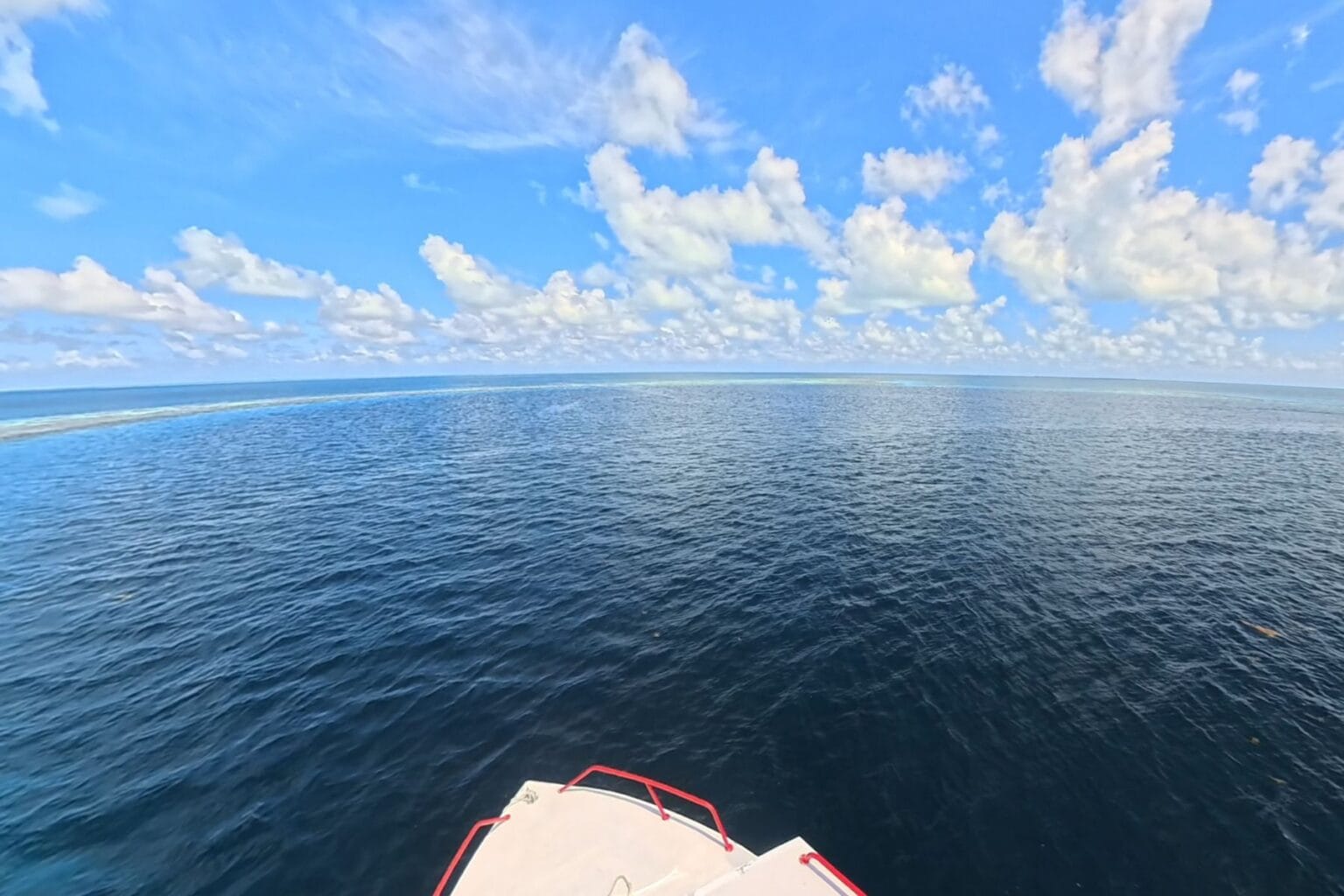
Just remember that in diving great experiences often mean forsaking some comfort. And if you’ve made it this far, you’ve probably picked up on a few potential red flags. The Blue Hole is at the Lighthouse Reef which, unless you’re on a liveaboard, will be a 2-3 hour boat ride. We had a 5 a.m. departure time, and even though we had relatively smooth waters, I would recommend seasickness pills if you are prone.

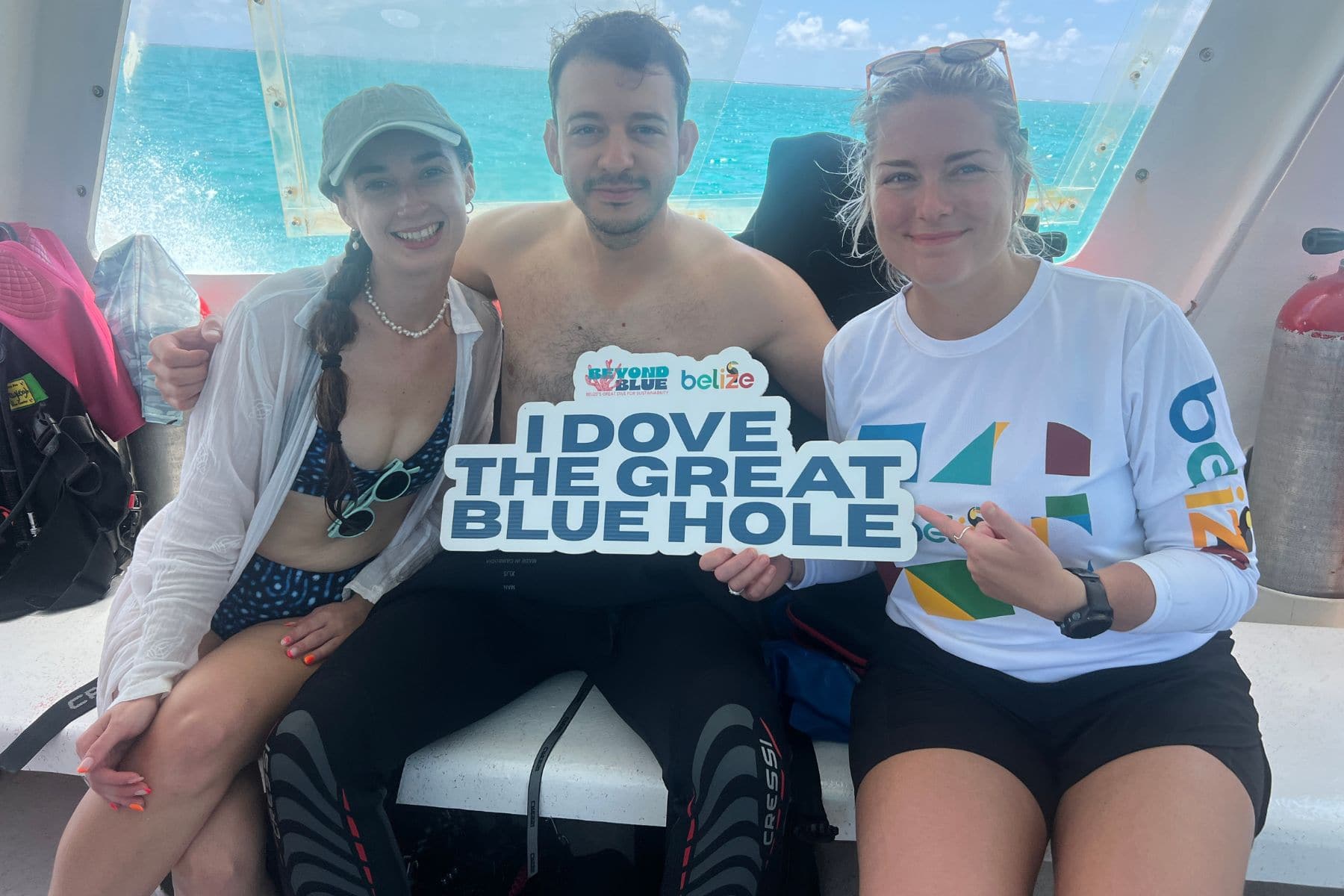
We were split into two groups, going to a maximum depth of 100 or 120 feet, according to our recreational certification level. At such depths, the main part of the dive was 10-15 minutes, with the rest being a slow ascent, chasing our NDLs. If you’re not comfortable with a bottomless dive site or your buoyancy, you might spend more energy on being anxious than amazed.

I had been hearing and thinking about this dive for nearly two decades, and I honestly believe it deserves to be a bucket-list dive. Would I have liked to have longer NDLs? Yes. Was it an expensive day trip? Yes. Was it a long ride to get there? Yes. But that’s not the point.
When I think back to the Blue Hole, I think back to the freeing feeling I had while freefalling. The glowing white opening above us contrasted against the surrounding deep blue. The cave features carved into the side of the sinkhole. And when I try to explain it to other divers, to compare it to something familiar, it’s simply not possible. I tell them to understand this one-of-a-kind site, you simply have to do it.
 Take a moment to look at this.