DIVEINDIVEIN
  • Scuba Gear Reviews
    Editor's Pick15+ Best Dive Computers in 2026Read review →
    Masks17 Best Dive Masks
    BCDs21 Best Scuba BCDs
    Fins25 Best Scuba Fins
    See all scuba gear reviews
    Dive Computers
    • Best Dive Computers
    • Best Beginner Dive Computers
    • Best Air-Integrated Dive Computers
    • Best Smartwatch Dive Computers
    Masks
    • Best Dive Masks
    • Best Snorkel Masks
    • Best Prescription Dive Masks
    • Best Prescription Snorkel Masks
    • Best Full Face Dive Masks
    • Best Full Face Snorkel Masks
    BCDs & Wings
    • Best Scuba BCDs
    • Best Backplate & Wings
    Fins
    • Best Scuba Fins
    • Best Freediving Fins
    Wetsuits
    • Best Wetsuits
    • Best Women's Wetsuits
    • Best Kids Wetsuits
    Dive Watches
    • Best Dive Watches
    • Best Seiko Dive Watches
    Underwater Cameras
    • Best Underwater Cameras
    • Best Waterproof Cameras
    • Best Action Cameras
    • Best Underwater Phone Housings
    • Underwater Cameras & Housings Buying Guide
    Dive Lights
    • Best Dive Lights
    • How to Choose a Dive Light
    Bags
    • Best Dive Bags
    • Best Dry Bags
    Regulators
    Drysuits
    Scuba Tanks
    Underwater Scooters
    Dive Boots
    Dive Knives
    Spearguns
    Metal Detectors
    Reef-Safe Sunscreens
  • Liveaboards
    Indian Ocean · Most popular10 Best Liveaboards in the MaldivesRead review →
    South America · Ecuador10 Best Liveaboards in the Galapagos
    Red Sea · Egypt10 Best Liveaboards in Egypt
    South-East Asia10 Best Liveaboards in the Philippines
    See all liveaboard guides
    CaribbeanReefs, wrecks, blue water
    • Bahamas
    • Belize
    Central AmericaCenotes & big-fish action
    • Costa Rica
    • Mexico
    South AmericaGalápagos & beyond
    • Galapagos Islands
    Red Sea & Middle EastCoral walls & wrecks
    • Egypt
    Indian OceanManta & whale sharks
    • Maldives
    South-East AsiaCoral triangle macro
    • Indonesia
    • Thailand
    • Similan Islands
    • Philippines
    • Myanmar
    PacificSharks & remote atolls
    • Australia
    • Fiji
    • Micronesia & Palau
    Plan Your TripTips · Operators · Resorts
    • All Liveaboards
    • Aggressor Fleet
    • Best Dive Resorts
    • Travel Tips & Tricks
  • Snorkeling Gear
    • Snorkeling Gear
    • Best Snorkeling Sets
    • Best Snorkels
    • Best Snorkel Masks
    • Best Full Face Snorkel Masks
    • Best Snorkel Fins
    • Difference Between Scuba and Snorkeling Fins?
  • Dive Destinations
    South-East Asia · 50 sitesBest Diving in IndonesiaRead review →
    South America · Bucket listBest Diving in the Galapagos
    Red Sea · IconicBest Diving in Egypt
    Indian OceanBest Diving in the Maldives
    Most popular destinations
    CaribbeanReefs, wrecks, blue water
    • Antigua & Barbuda
    • Aruba
    • Bahamas
    • Barbados
    • Bonaire
    • British Virgin Islands
    • Cayman Islands
    • Cuba
    • Curacao
    • Dominica
    • Dominican Republic
    • Grenada
    • Guadeloupe
    • Jamaica
    • Martinique
    • Puerto Rico
    • St. Lucia
    • St. Maarten & Saba
    • Tobago
    • Turks & Caicos
    Mexico
    • Mexico
    • Cozumel
    Central AmericaCenotes & big-fish action
    • Bay Islands
    • Belize
    • Costa Rica
    • Panama
    South AmericaGalápagos & beyond
    • Colombia
    • Galapagos Islands
    United States
    • California
    • Florida
    • Hawaii
    • North Carolina
    Europe & Mediterranean
    • Denmark
    • Mallorca
    • Malta
    • Turkey
    Red Sea & Middle EastCoral walls & wrecks
    • Egypt
    Indian OceanManta & whale sharks
    • Maldives
    AsiaCoral triangle macro
    • Indonesia
    • Bali
    • Gili Islands
    • Komodo
    • Raja Ampat
    • Sulawesi
    • Cambodia
    • Japan
    • Philippines
    • Thailand
    • Vietnam
    South PacificSharks & remote atolls
    • Australia
    • Fiji
    • Palau
    • Solomon Islands
    Plan Your TripThemed picks · Tips
    • All Destinations
    • Best of the Caribbean
    • World's Best Wreck Diving
    • Travel Tips & Tricks
  • Articles
    Recent ArticlesView all
    Infinity Bay Resort for Groups: Dive Trips, Family Reunions, & Everything In Between
    SunBreeze Hotel: Easy Reef Diving in the Heart of San Pedro
    Passport to Paradise: The Stress-Free Way to Dive North Sulawesi with Murex & Lembeh Resort
    Infinity Bay Spa & Beach Resort: West Bay Ease & Reef-Front Diving
    Ibagari Boutique Hotel: Intimate Luxury Meets Roatan’s Reef
    Dive Science Demystified: Gasses, Partial Pressure And Air For Diving
    Utila Lodge Resort & Marina: Where Relaxation Meets the Reef
    Where to Snorkel in Egypt: 5 Top Snorkel Spots
    Dive, Dine and Discover – A Culture & Cuisine Expedition through Raja Ampat with Tait Miller
    Golden Rock Resort: A Botanical Escape For Underwater Explorers
    Wave Goodbye to Underwater Hand Signals and Say Hello to Garmin’s SubWave Tech
    BVI Wreck Week 2025: Unveiling the Treasures of the Deep
    Featured Articles
    Featured
    Anthony’s Key: Sustainable & Stylish Dive Resort
    Featured
    Margaritaville Beach Resort: Subtle Sophistication at Ambergris Caye
    Featured
    Barefoot Cay Resort: A Private Paradise on Roatan’s South Shore
    Featured
    Choosing the Right Shearwater Dive Computer
    Browse Categories
    Scuba95Dive Travel11Scuba Gear8
  • Join our cool newsletter
  • About DIVEIN
  • Contact DIVEIN
Find Us on Socials
Reading: The 8 Best Wrecks Around Coron Bay Revealed!
DIVEINDIVEIN
  • Gear
  • Liveaboards
  • Destinations
  • Cameras
  • Snorkeling
  • Travel
  • Best Scuba Diving
  • Home
  • Dive Computers
  • BCDs
  • Regulators
  • Masks
  • Fins
  • Wetsuits
  • Egypt
  • Maldives
  • Galapagos
  • Philippines
  • Thailand
  • Bahamas
  • Egypt
  • Galapagos
  • Costa Rica
  • Cozumel
  • Bay Islands
  • St. Maarten & Saba
  • Action Cameras
  • Waterproof Cameras
  • Snorkels
  • Snorkel Sets
  • Snorkel Masks
  • Snorkel Fins
  • Full Face Snorkel Masks
Search
  • Scuba Gear Reviews
  • Liveaboards
    All Liveaboards
      • Bahamas
      • Belize
      • Costa Rica
      • Mexico
      • Galapagos Islands
      • Egypt
      • Maldives
      • Indonesia
      • Thailand
      • Similan Islands
      • Philippines
      • Myanmar
      • Australia
      • Fiji
      • Micronesia & Palau
      • All Liveaboards
      • Aggressor Fleet
      • Best Dive Resorts
      • Travel Tips & Tricks
  • Snorkeling Gear
    • Snorkeling Gear
    • Best Snorkeling Sets
    • Best Snorkels
    • Best Snorkel Masks
    • Best Full Face Snorkel Masks
    • Best Snorkel Fins
    • Difference Between Scuba and Snorkeling Fins?
  • Dive Destinations
    All Dive Destinations
      • Antigua & Barbuda
      • Aruba
      • Bahamas
      • Barbados
      • Bonaire
      • British Virgin Islands
      • Cayman Islands
      • Cuba
      • Curacao
      • Dominica
      • Dominican Republic
      • Grenada
      • Guadeloupe
      • Jamaica
      • Martinique
      • Puerto Rico
      • St. Lucia
      • St. Maarten & Saba
      • Tobago
      • Turks & Caicos
      • Mexico
      • Cozumel
      • Bay Islands
      • Belize
      • Costa Rica
      • Panama
      • Colombia
      • Galapagos Islands
      • California
      • Florida
      • Hawaii
      • North Carolina
      • Denmark
      • Mallorca
      • Malta
      • Turkey
      • Egypt
      • Maldives
      • Indonesia
      • Bali
      • Gili Islands
      • Komodo
      • Raja Ampat
      • Sulawesi
      • Cambodia
      • Japan
      • Philippines
      • Thailand
      • Vietnam
      • Australia
      • Fiji
      • Palau
      • Solomon Islands
      • All Destinations
      • Best of the Caribbean
      • World's Best Wreck Diving
      • Travel Tips & Tricks
  • Articles
    All Articles
    Browse categories
    • Scuba95
    • Dive Travel11
    • Scuba Gear8
    • Anthony’s Key: Sustainable & Stylish Dive ResortFeatured
    • Margaritaville Beach Resort: Subtle Sophistication at Ambergris CayeFeatured
Follow US
Home » World's best scuba diving » The 8 Best Wrecks Around Coron Bay Revealed!
Travel

The 8 Best Wrecks Around Coron Bay Revealed!

Sylvia Jenkins
Last updated: October 1, 2024
Published: November 16, 2020
By
Sylvia Jenkins
BySylvia Jenkins
Content Specialist at DIVEIN.com
Coming from London, UK, Sylvia has always loved traveling. During a family trip to Thailand in her early teens, it was of course a no-brainer to...
Follow:
- Content Specialist at DIVEIN.com
Share
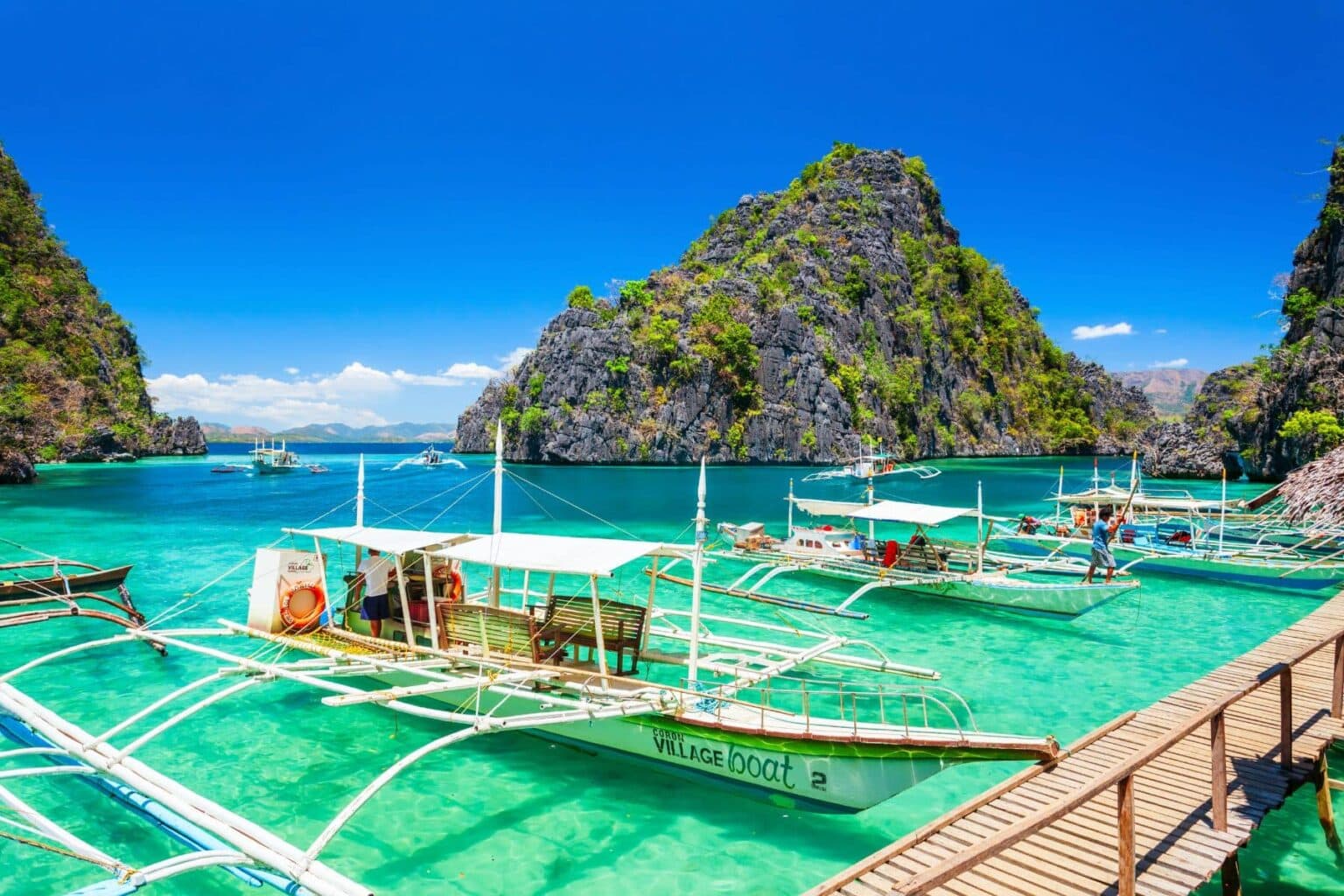
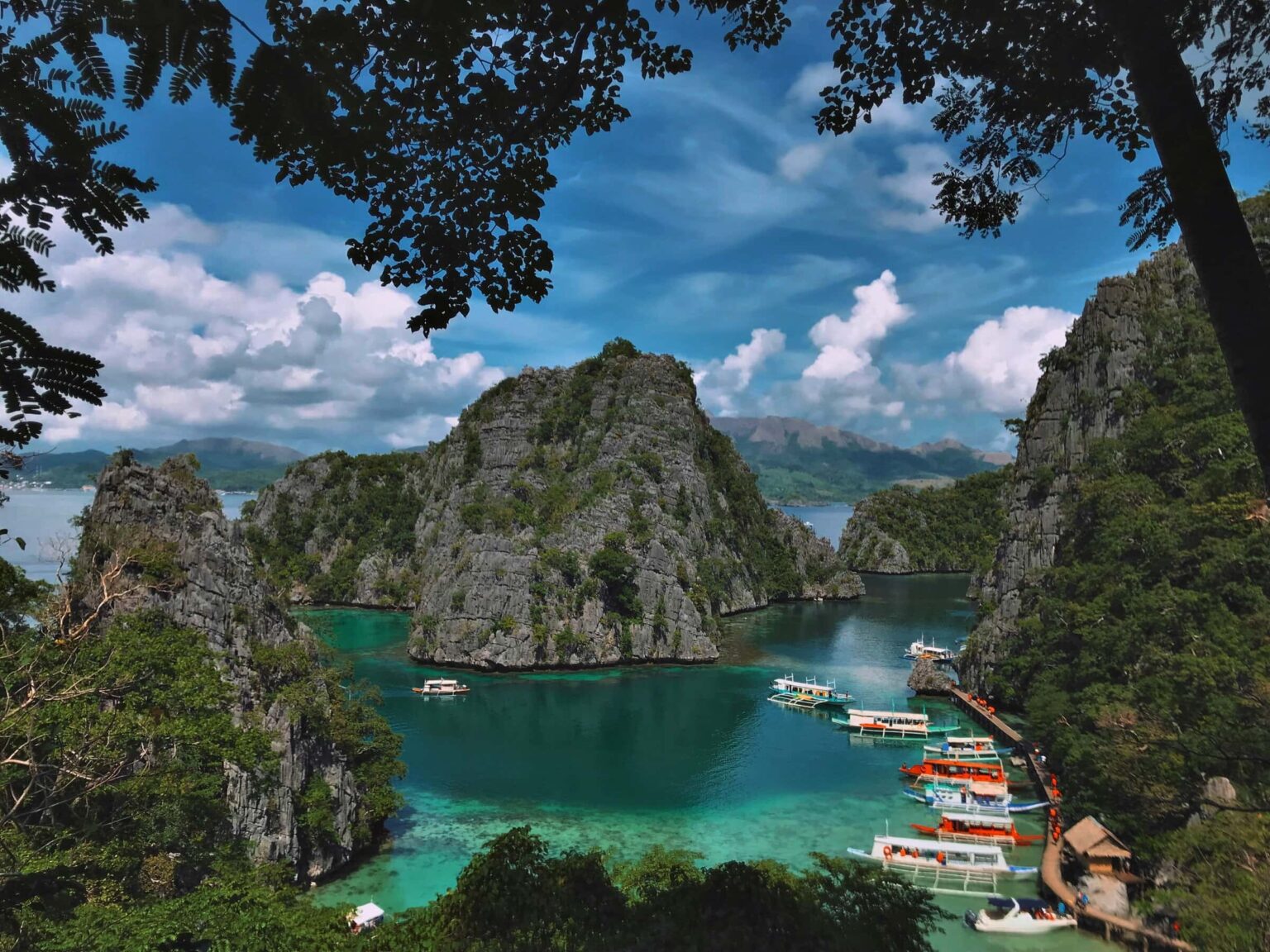
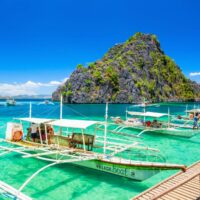
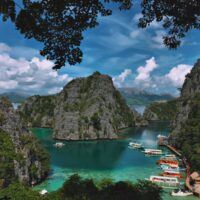
Limestone karst cliffs framing a clear turquoise lagoon in Coron Bay
Coron is known for what sits on the bottom, but the surface interval looks like this. The topside scenery is a real part of why divers keep booking the trip.
Shipwreck data sheet for the Irako with a hand-drawn side plan of the upright hull heeled slightly to port
The deepest of the Coron set, with the rudder at 42 metres, and one of the few sitting essentially upright with only a five-degree list. Depth plus a 147-metre hull means short bottom times.
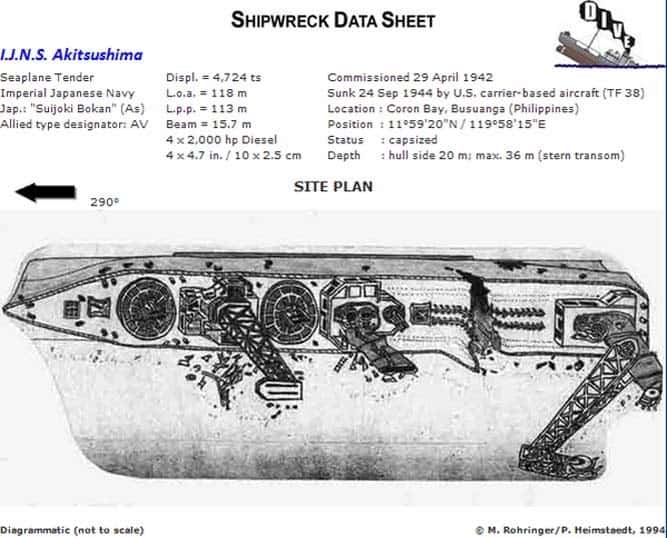
Shipwreck data sheet for the Akitsushima with a hand-drawn plan of the capsized seaplane tender and its crane
A navy seaplane tender rather than a cargo carrier, and the huge crane in the plan is the giveaway. Capsized with the hull side at 20 metres and 36 at the stern transom, it is the deepest commitment here after Irako.
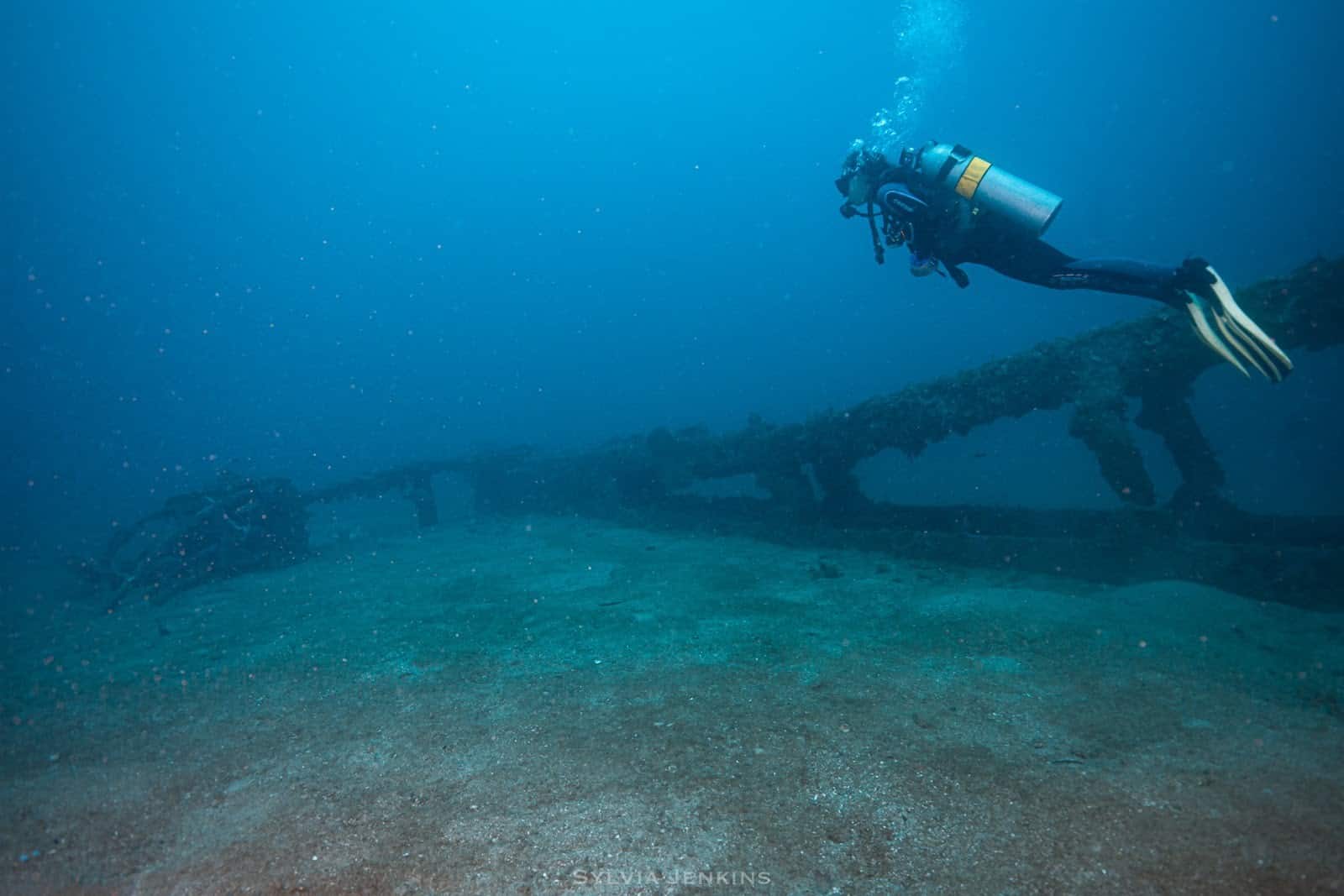
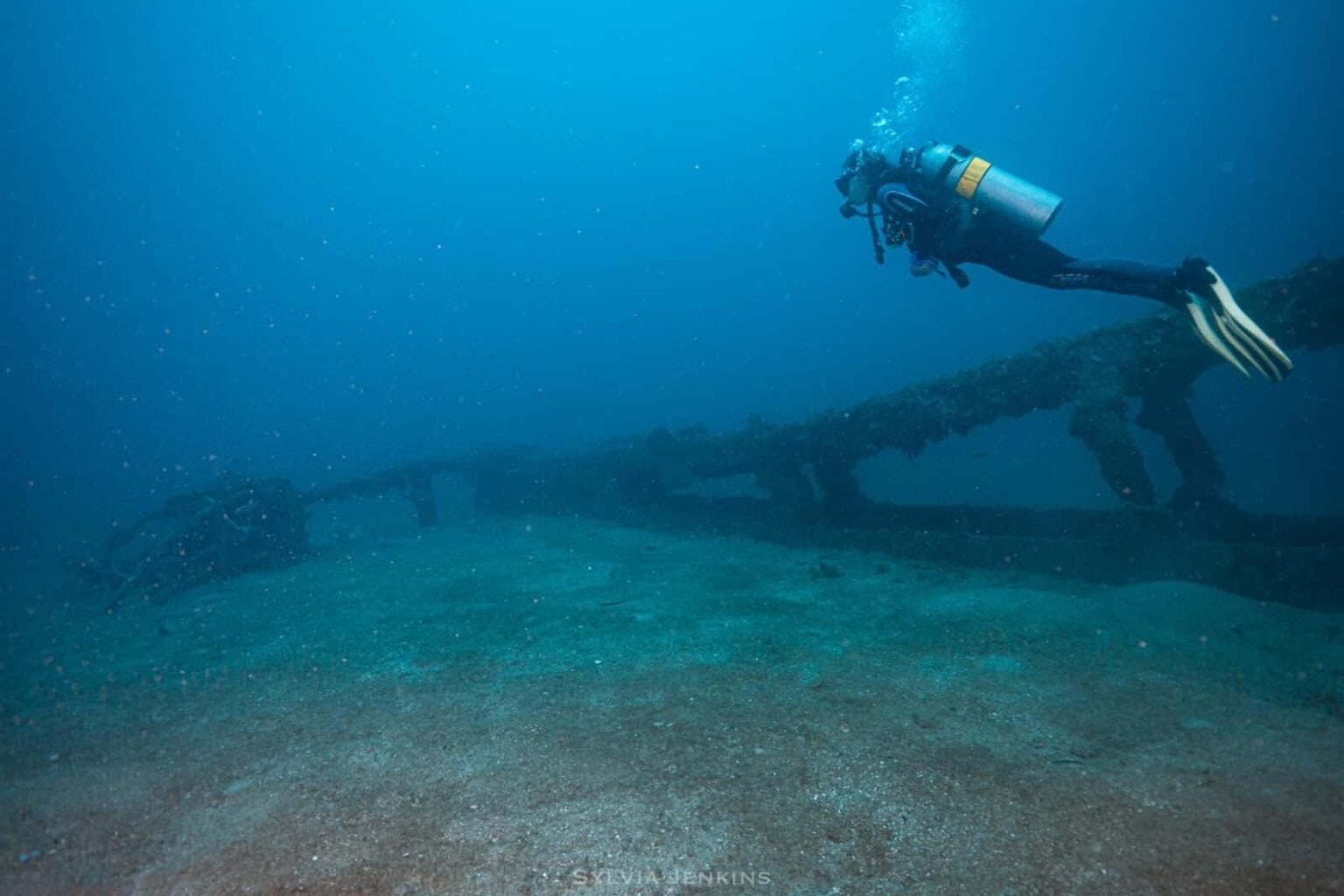
Diver finning alongside the long collapsed superstructure of the Akitsushima wreck in Coron Bay
Wide angle is the only way a hull this size reads on camera. Move in too close in Coron's silty water and the structure just dissolves into blue haze behind you.
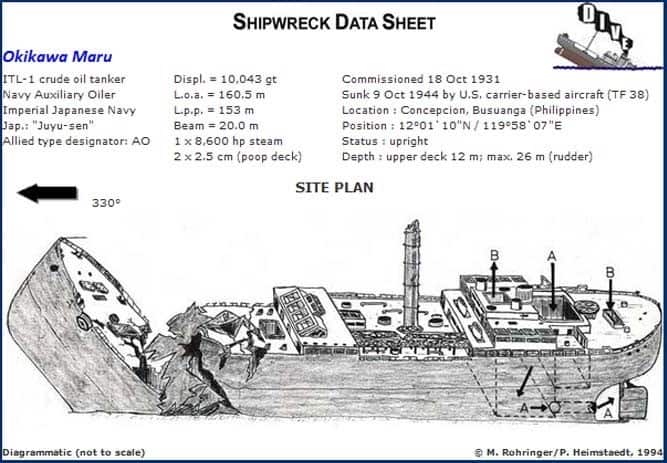
Shipwreck data sheet for the Okikawa Maru with a hand-drawn side plan of the upright tanker and its torn-open bow
The longest hull on this list at 160.5 metres, and the odd one out on timing: sunk 9 October 1944 rather than in the 24 September raid. It sits upright with the upper deck at 12 metres.
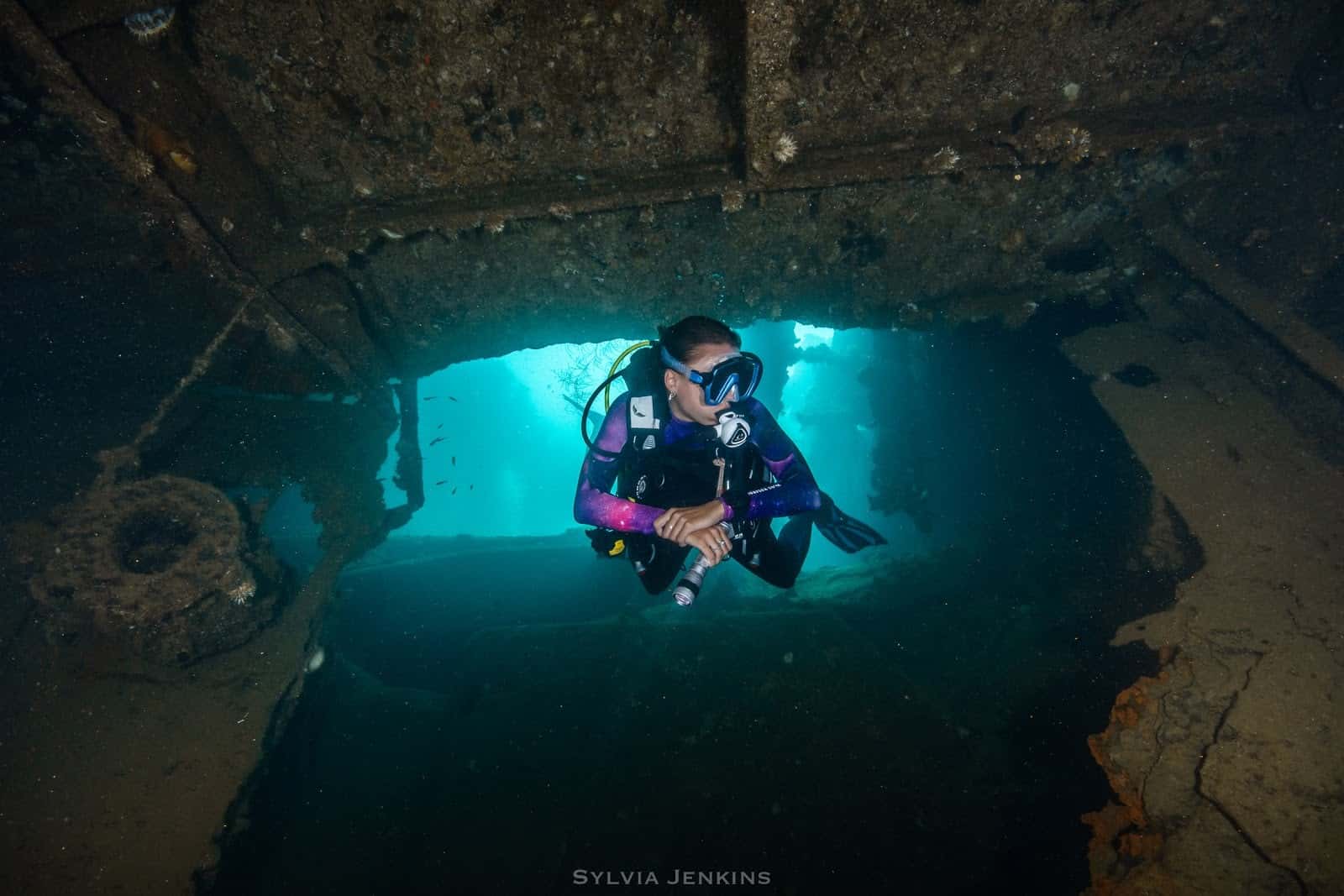
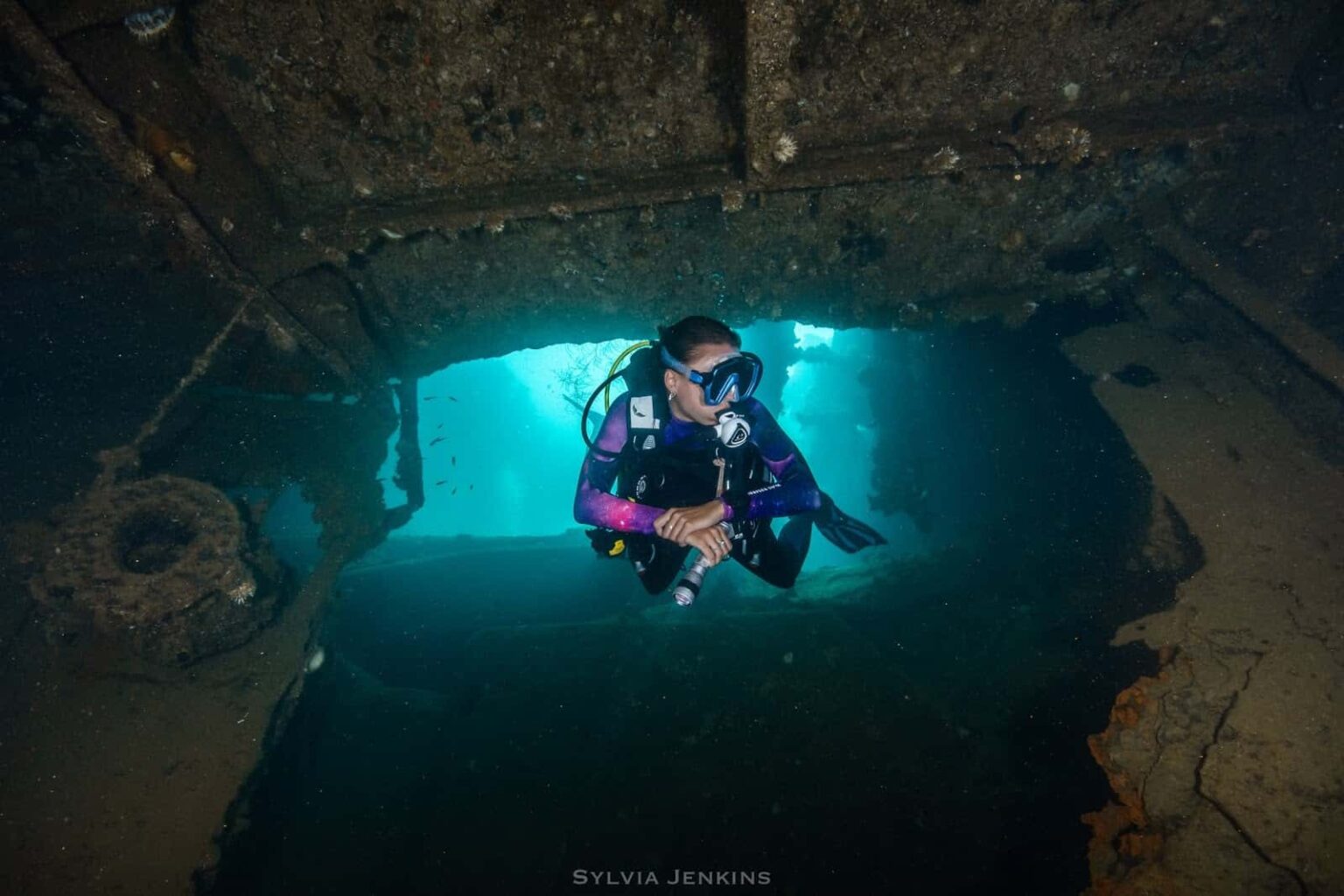
Scuba diver inside the Okikawa Maru wreck, backlit by daylight coming through an open hatchway
Swimming through a wreck is not the same as swimming past one. The open light makes it look casual, but an overhead environment needs training, a torch and a planned way back out.
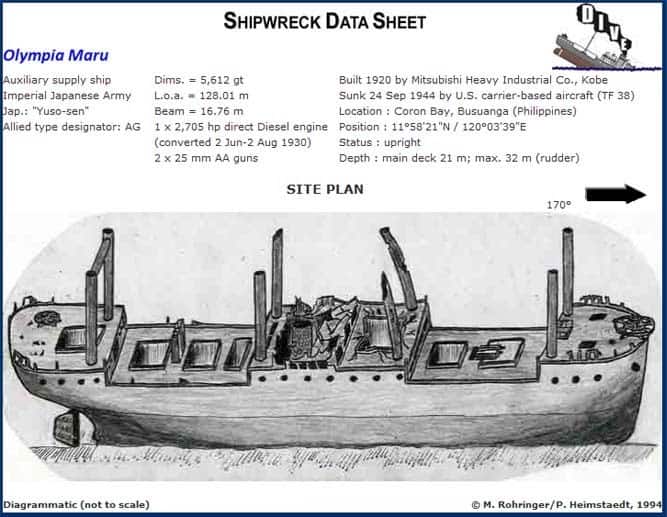
Shipwreck data sheet for the Olympia Maru with a hand-drawn side plan of the upright hull, masts and holds
Upright, main deck at 21 metres and the rudder at 32, so the profile stays friendly. The 1920 Mitsubishi-built hull still reads clearly in the plan, masts and cargo holds included.
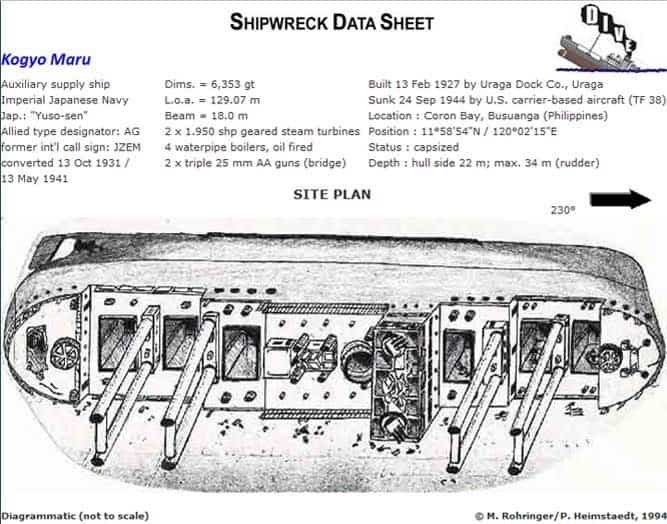
Shipwreck data sheet for the Kogyo Maru with a hand-drawn overhead plan of the capsized hull and cargo holds
At 129 metres and lying capsized, Kogyo Maru is one of the bay's real penetration wrecks. The sheet puts the hull side at 22 metres and the rudder at 34.
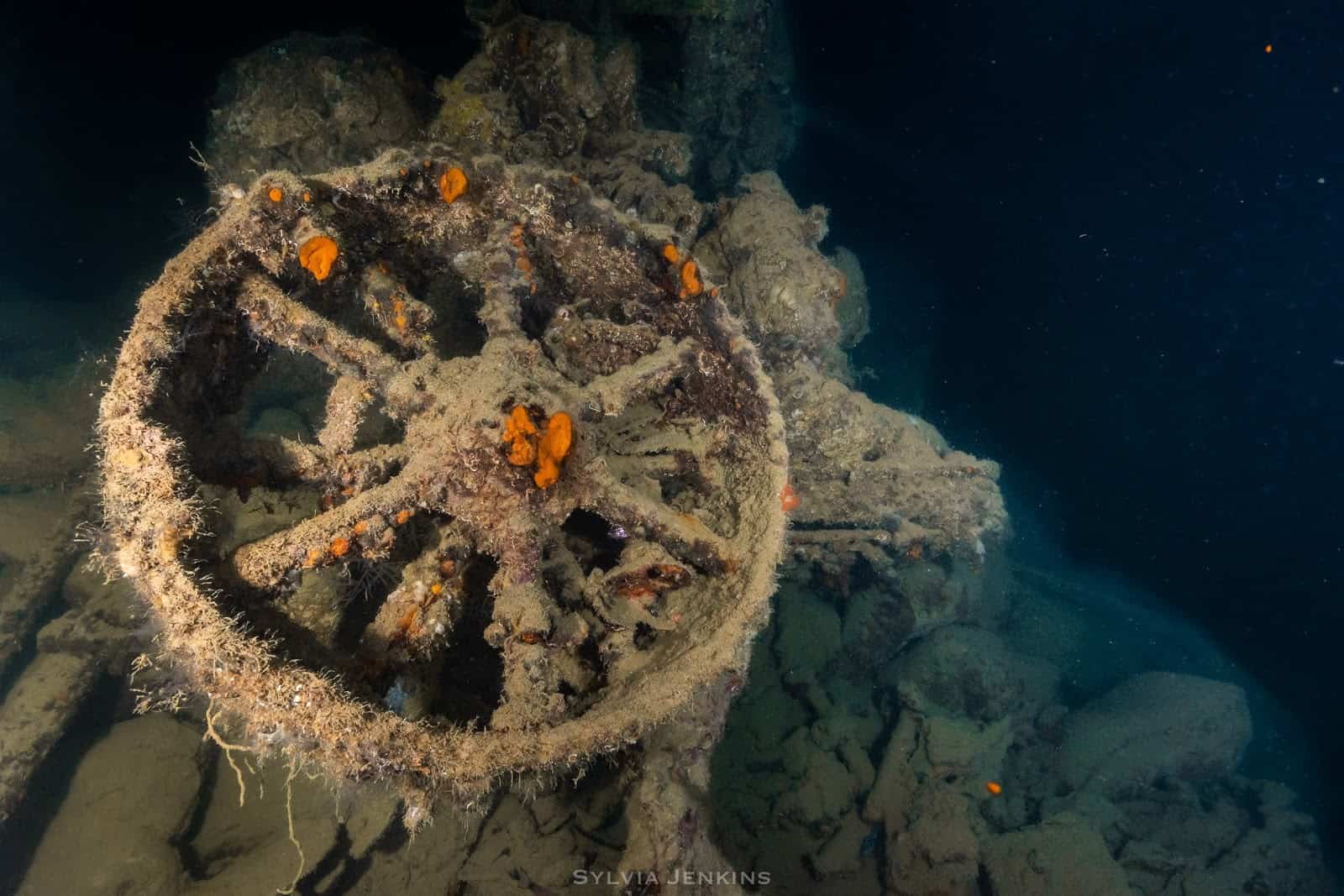
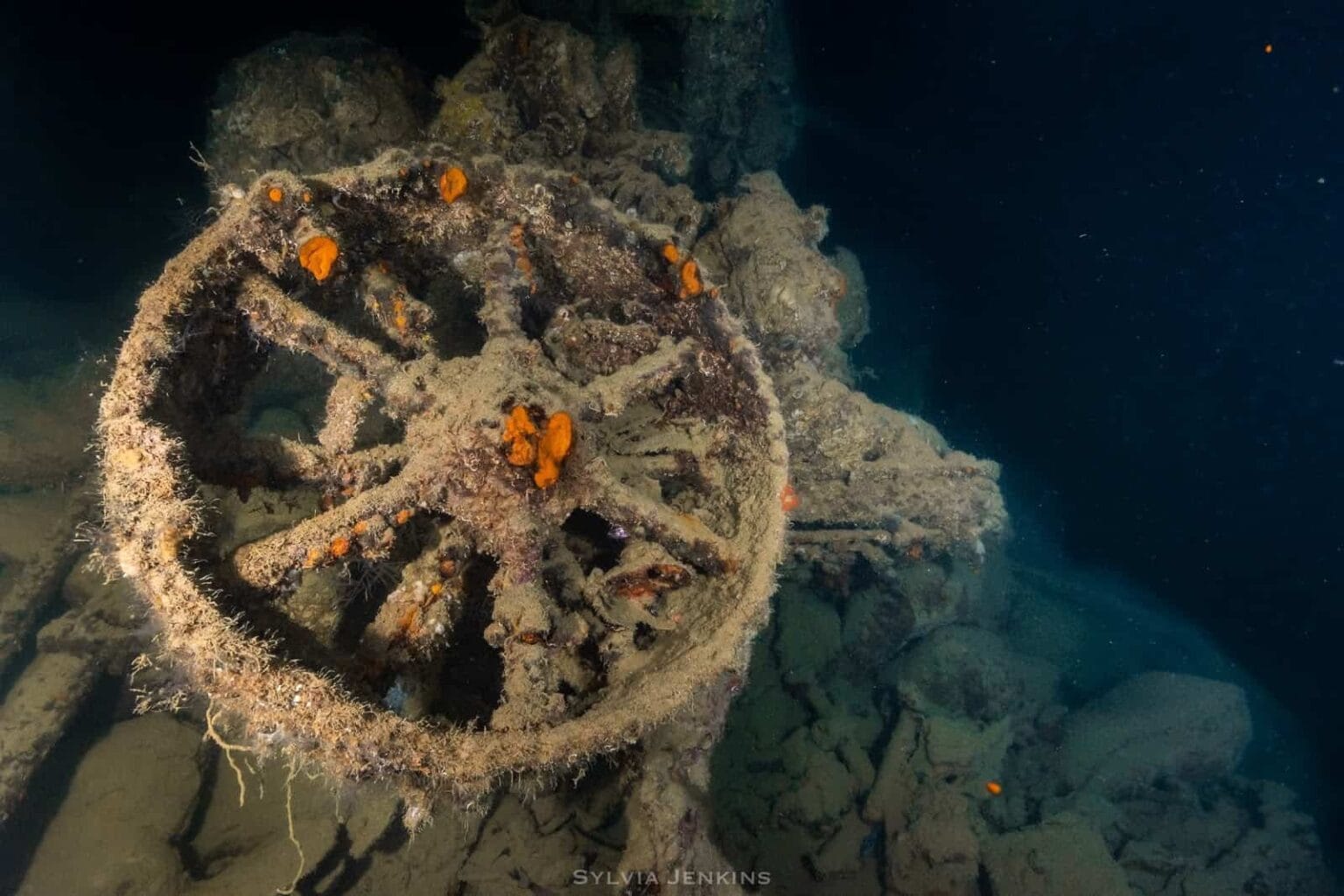
Wheel on the Kogyo Maru wreck thickly encrusted with orange sponges and marine growth
The growth is half the reason these wrecks are worth diving. Sponges this dense also give you scale on machinery that would otherwise be unrecognisable.
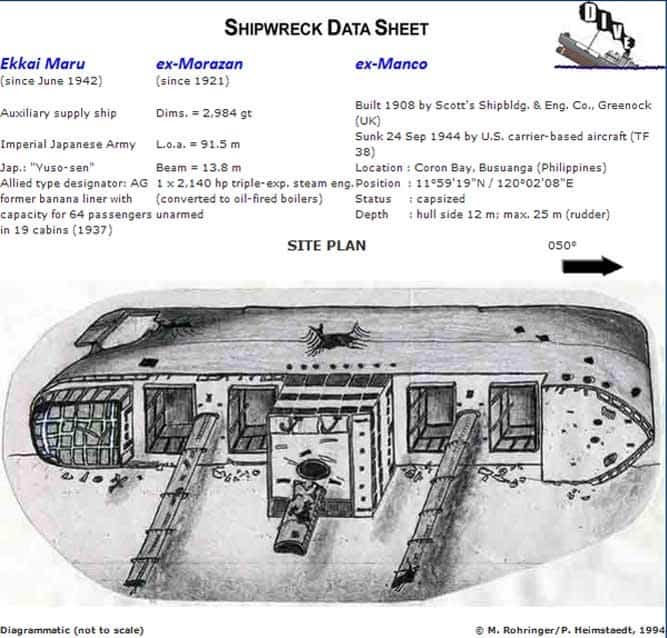
Shipwreck data sheet for the Morazan Maru with a hand-drawn overhead plan of the capsized hull
Listed here under its later name Ekkai Maru, a 1908 British-built former banana liner turned army supply ship. It lies fully capsized, hull side at 12 metres and rudder at 25.
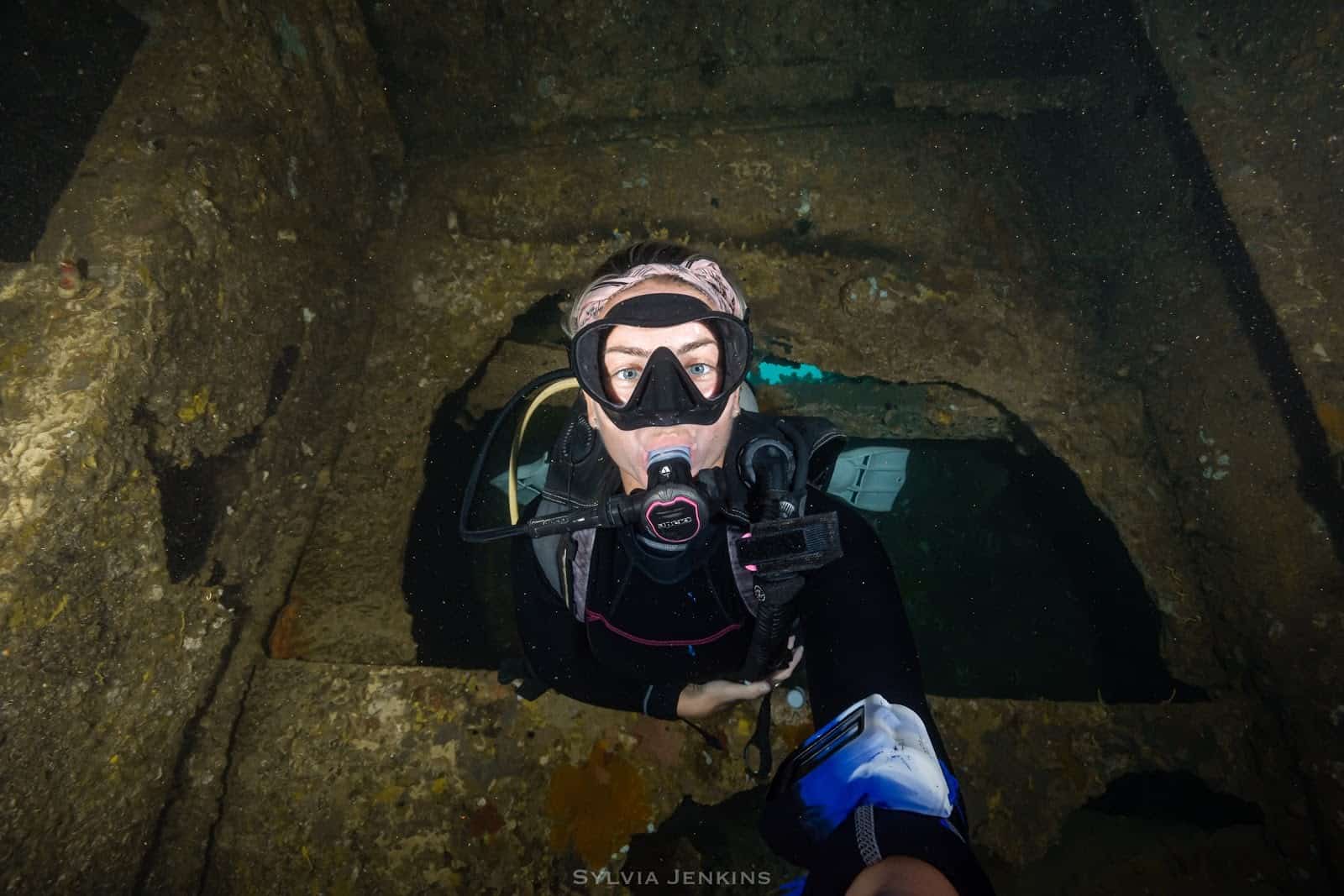
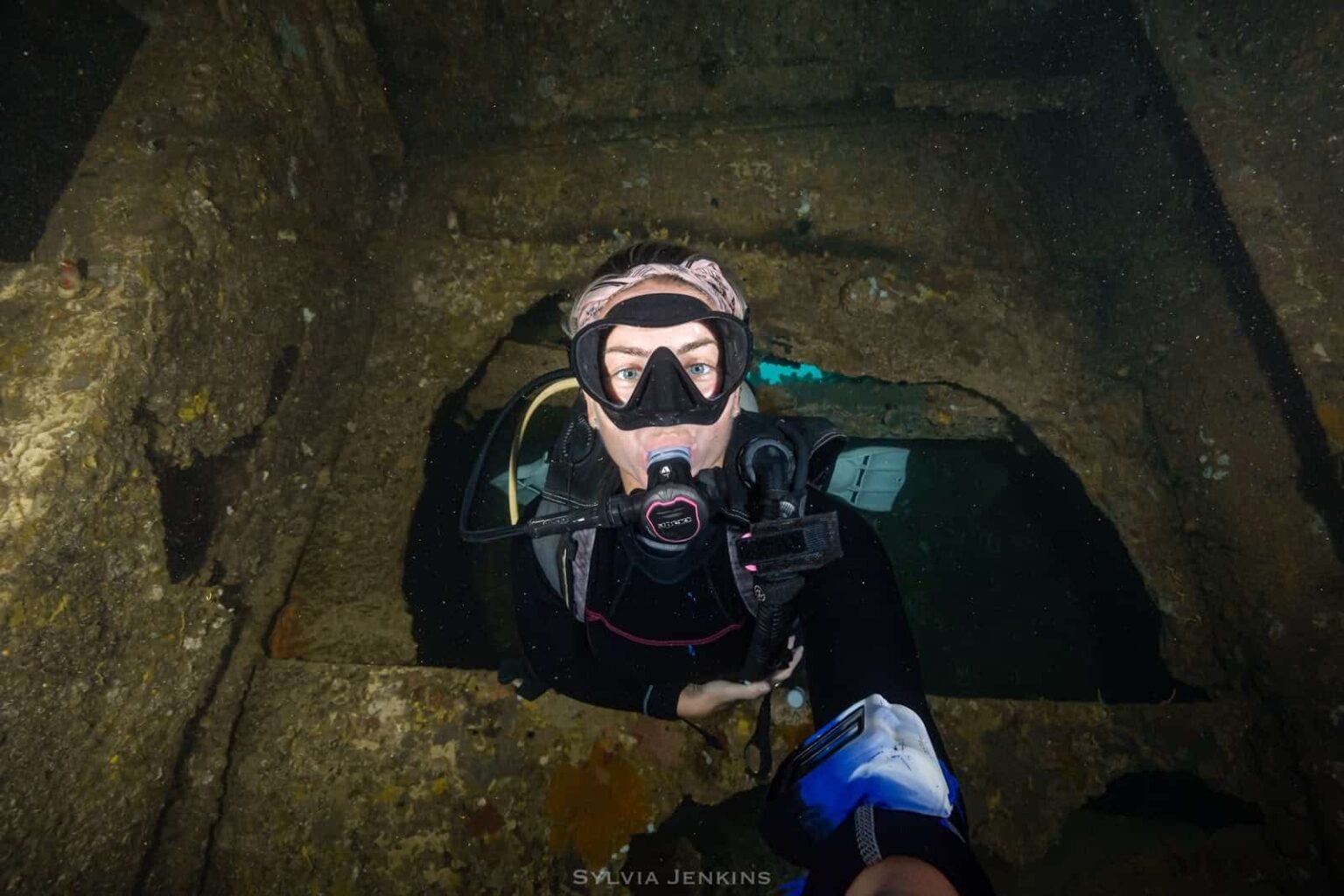
Diver looking up at the camera from inside a dark compartment of the Morazan Maru wreck
This is where the wrecks stop being scenery. Inside a compartment there is no direct route up, so the dive is decided by your training long before you reach the entry point.
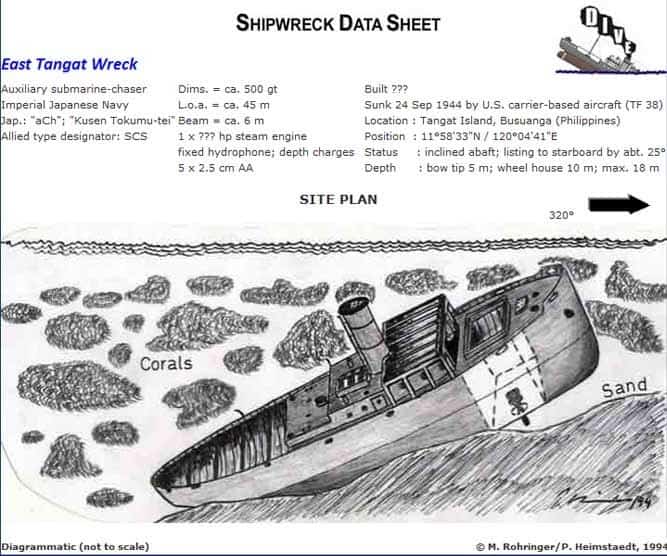
Shipwreck data sheet for the East Tangat wreck with a hand-drawn site plan of the hull listing to starboard
The sheet puts the bow tip at around 5 metres and the deepest point at 18, which makes East Tangat the gentlest way into the Coron wreck lineup. Sunk on 24 September 1944 like most of the bay.
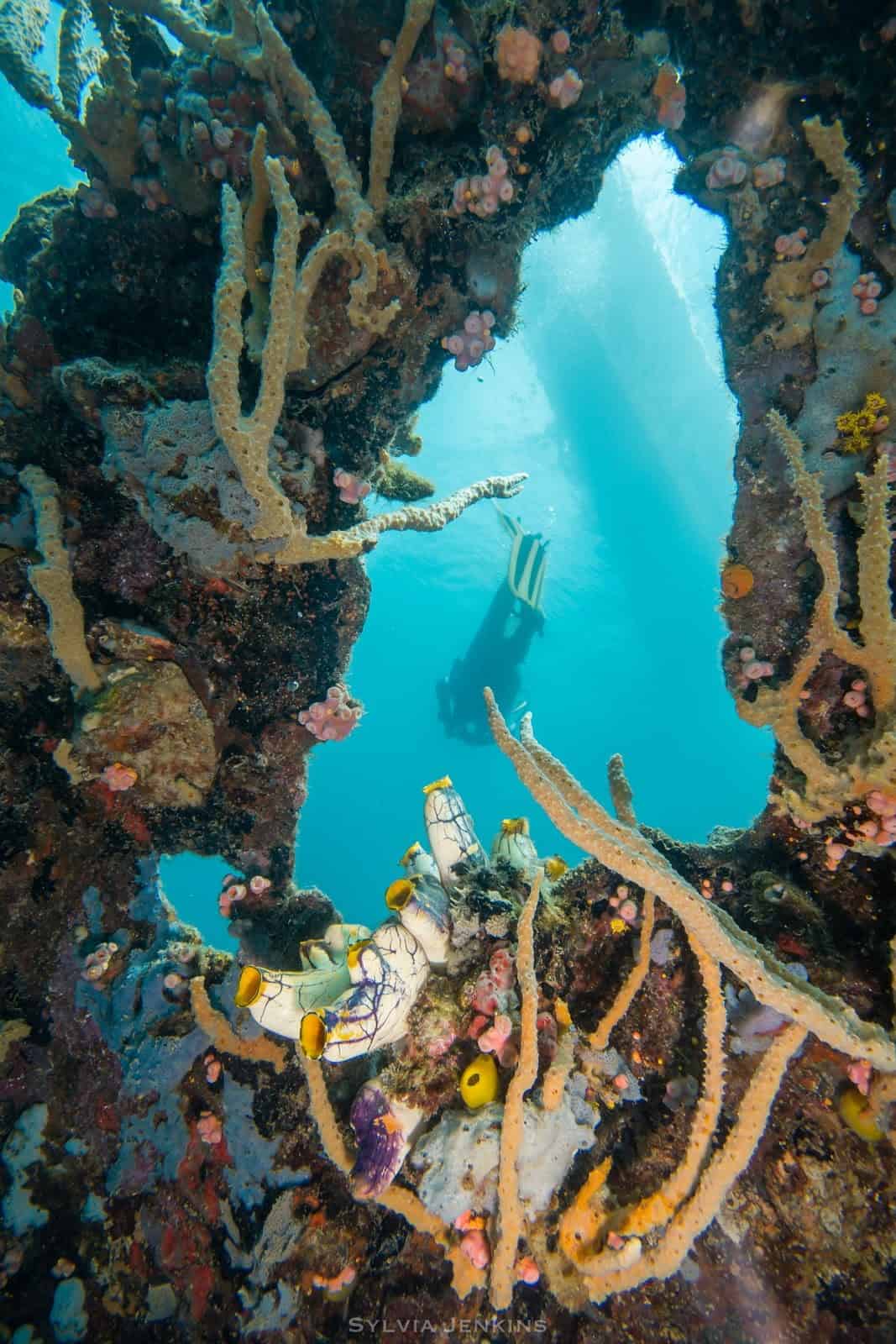
Sponges and soft coral covering the East Tangat wreck with a diver silhouetted in the blue above
Shallow wrecks get written off and then remembered. Sitting close to the surface, this one gets the light and the coral cover the deeper hulls in the bay never will.
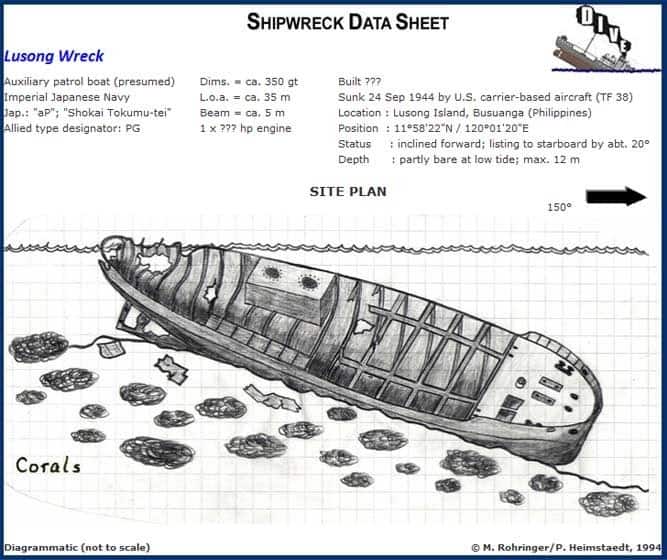
Shipwreck data sheet for the Lusong gunboat with a hand-drawn plan of the small hull tilted on a coral slope
The shallowest wreck in the bay by a wide margin. The sheet notes it is partly bare at low tide and never deeper than 12 metres, so snorkellers get a genuine look at this one.
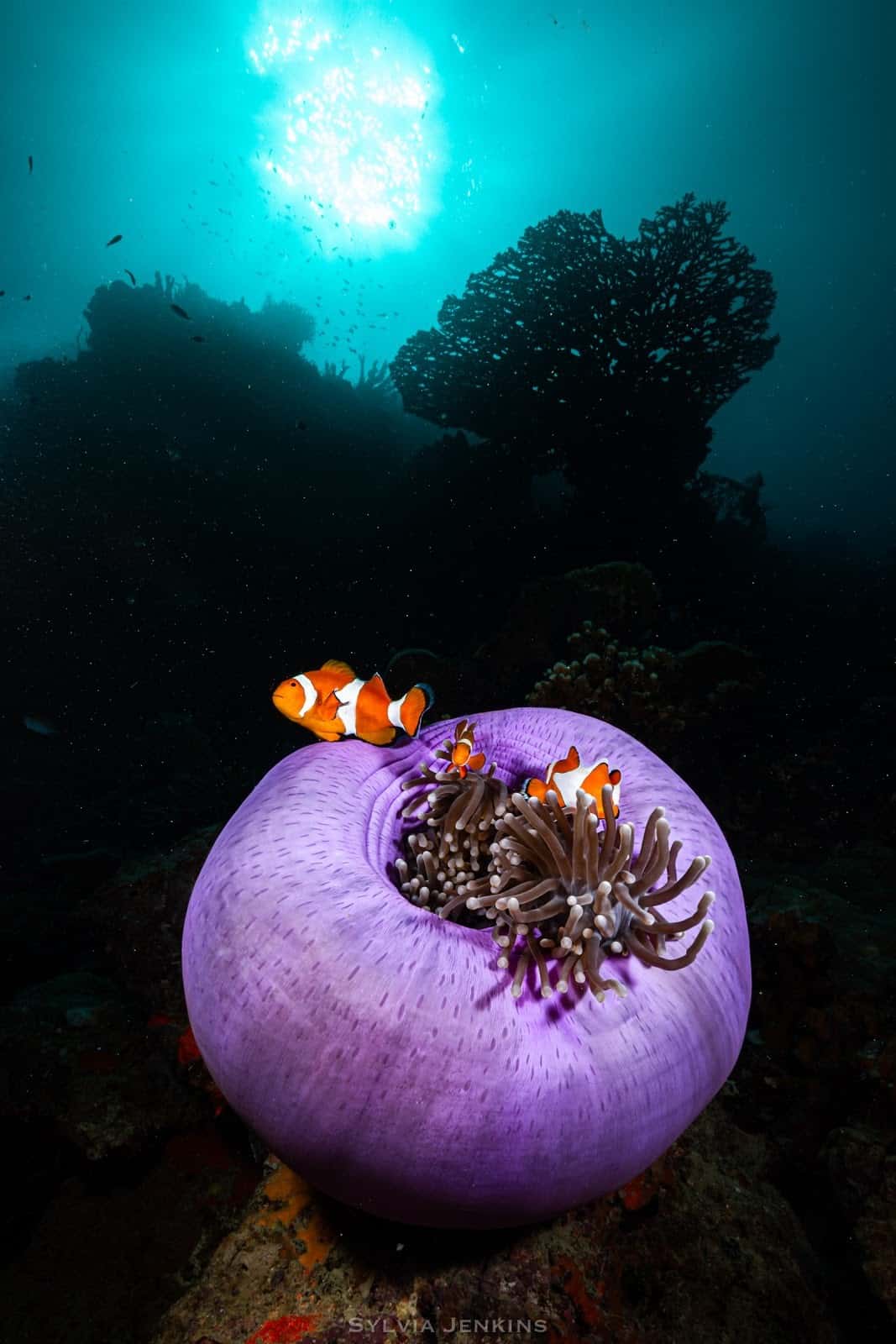
Clownfish in a purple anemone on the shallow Lusong Gunboat wreck with sunlight breaking through above
Wreck diving in Coron doubles as reef diving. Put steel this shallow and the residents move in fast, which is why the site works just as well for snorkellers.
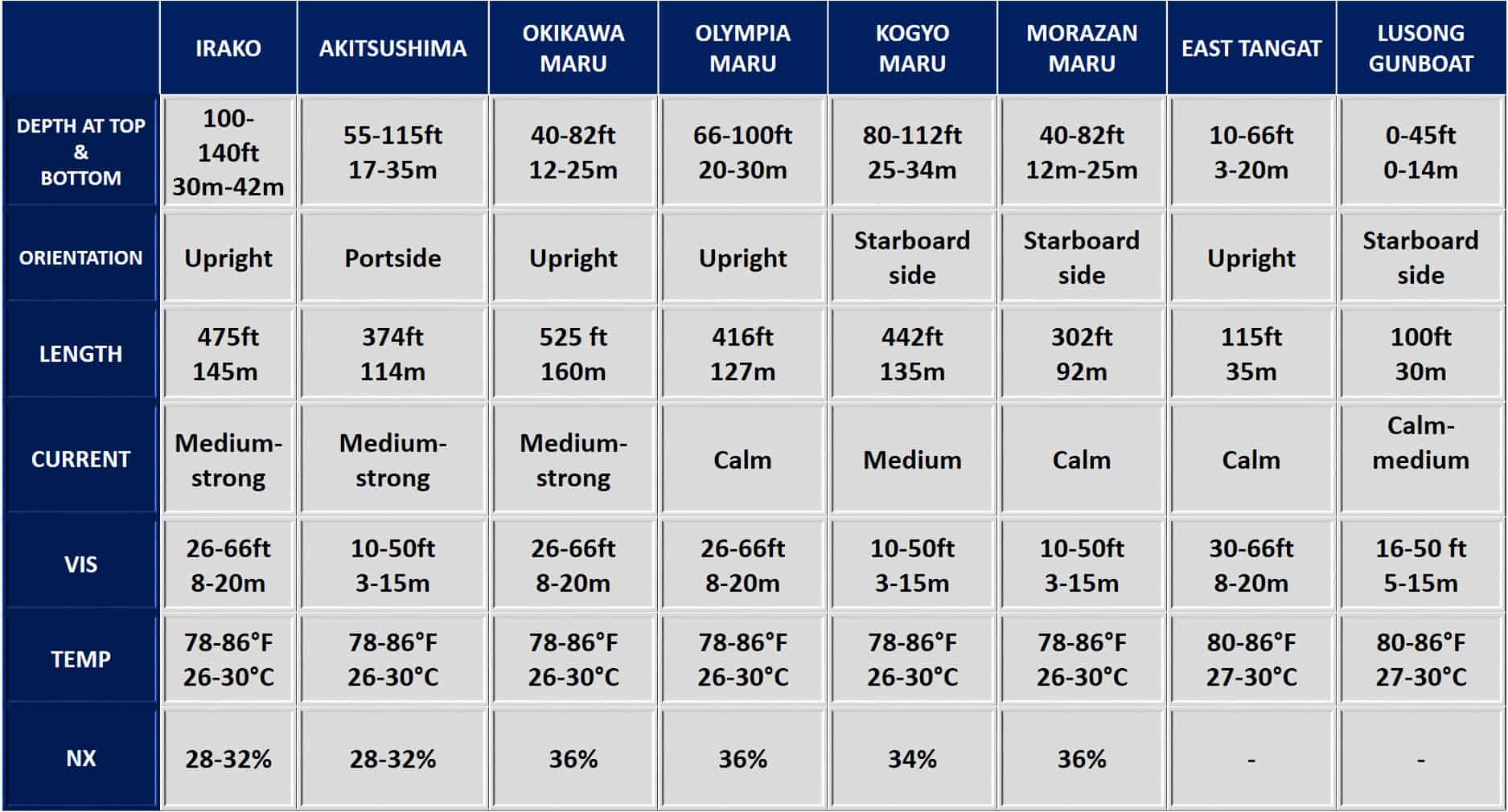
Comparison table of depth, orientation, length, current, visibility and temperature for eight Coron Bay wrecks
Depth decides which certification you need for each site, visibility decides whether the dive is worth the boat ride. Both swing widely across these eight wrecks.
List of Images 1/16
Limestone karst cliffs framing a clear turquoise lagoon in Coron Bay
Shipwreck data sheet for the Irako with a hand-drawn side plan of the upright hull heeled slightly to port
Shipwreck data sheet for the Akitsushima with a hand-drawn plan of the capsized seaplane tender and its crane
Diver finning alongside the long collapsed superstructure of the Akitsushima wreck in Coron Bay
Shipwreck data sheet for the Okikawa Maru with a hand-drawn side plan of the upright tanker and its torn-open bow
Scuba diver inside the Okikawa Maru wreck, backlit by daylight coming through an open hatchway
Shipwreck data sheet for the Olympia Maru with a hand-drawn side plan of the upright hull, masts and holds
Shipwreck data sheet for the Kogyo Maru with a hand-drawn overhead plan of the capsized hull and cargo holds
Wheel on the Kogyo Maru wreck thickly encrusted with orange sponges and marine growth
Shipwreck data sheet for the Morazan Maru with a hand-drawn overhead plan of the capsized hull
Diver looking up at the camera from inside a dark compartment of the Morazan Maru wreck
Shipwreck data sheet for the East Tangat wreck with a hand-drawn site plan of the hull listing to starboard
Sponges and soft coral covering the East Tangat wreck with a diver silhouetted in the blue above
Shipwreck data sheet for the Lusong gunboat with a hand-drawn plan of the small hull tilted on a coral slope
Clownfish in a purple anemone on the shallow Lusong Gunboat wreck with sunlight breaking through above
Comparison table of depth, orientation, length, current, visibility and temperature for eight Coron Bay wrecks
SHARE

On 24 September 1944, a squadron of US bombers appeared above the Japanese fleet hiding in Coron’s natural harbour and opened fire. The bombers’ fierce attack was viciously victorious, sinking ten ships in just fifteen minutes. Now with a new lease on life, these ships are well-preserved underwater sites, a boon to scuba diving in the Philippines and contributing to Coron’s world reputation.

Coron is an island in the province of picturesque Palawan, on the western side of Philippines. Like it’s bigger neighbour El Nido, the island offers limestone karst landscapes, white sandy beaches and crystal-clear freshwater lakes. But it’s what’s underwater that really draws the tourists in.

The wrecks are generally in pristine condition, allowing you to admire their military exterior covered in corals and swarming in marine life.

For the more confident and comfortable divers, one can zigzag through the wrecks and see what weird artefacts remain. The ships range in characteristics and depths, welcoming beginner, intermediate and experienced levels.

The 8 Best Wrecks Around Coron Bay

IRAKO

Shipwreck data sheet for the Irako with a hand-drawn side plan of the upright hull heeled slightly to port


Just around the corner from Kogyo Maru sits Irako, a must for wreck enthusiasts. Due to her depth of 108-138ft/33m-42m, challenging entry points and medium-strong currents that frequent the site, this is a wreck to be taken seriously.

What Will You See

Diving inside Irako means negotiating dark doorways and tight corners, and being mindful of messy mucky sand. Since she is in an upright position and in relatively good condition, inside the rooms are rewarding views. Journey through to see the engine rooms, cargo holds and transmission room.

There are lots of sponges, elephant ears, fans and black corals scattered with macro life. Habiting on the wreck are scorpionfish, crocodile fish, lionfish, groupers and schools of fusiliers residing around the black corals on the bow.

Level

She is definitely the most exciting wreck in the bay, but due to currents and depths, you have to earn the right to dive her!

AKITSUSHIMA

Shipwreck data sheet for the Akitsushima with a hand-drawn plan of the capsized seaplane tender and its crane


Upon seeing Akitsushima, you discover a truly awesome ship of war, 375ft/114m long and 65ft/20m wide, Akitsushima was a well-stocked battleship designed to carry friendly seaplanes. Lying on her portside, her deepest point is 115ft/35m on the sandy bottom.

What Will You See

This intriguing site has much to offer, both on the exterior and interior. A set of 25mm AA-machine guns can be seen alongside the massive crane lying on the seabed. Swimming along this crane, you get a true sense of size.

There are many different routes to take, weaving through the three decks and engine rooms. The main exit, near the back of the main deck, is the compartment created by the lethal torpedo that took down Akitsushima.

Due to a special coating used on navy ships, there is not much coral life as compared to some of the other wrecks. Yet this allows divers to appreciate her shape and beauty as the fish wiz around.

Level

You must be at least Intermediate level with the appropriate training in wreck diving. The current fluctuates from medium to quite strong, demanding more than a modicum of experience.

Diver finning alongside the long collapsed superstructure of the Akitsushima wreck in Coron Bay

OKIKAWA MARU

Shipwreck data sheet for the Okikawa Maru with a hand-drawn side plan of the upright tanker and its torn-open bow


Fifteen minutes ride from Akitsushima, and you arrive at Okikawa Maru. The shallowest part of this oil tanker is 40ft/12m and resting upright, 85ft/26m at the bottom.

What Will You See

Entering the wreck is done through its propellor shaft, traversing the reasonably well-lit floors. This is a tight spot so watch your fins! Inside you pass engine rooms where you see the oil barrels and its fuel leaked out. Divers’ bubbles have pushed and trapped the oil against the ceiling.

Due to the pressure increase, the oil has become like play-doh, and you can take and touch it with your hands. A rare opportunity to interact with an underwater site in a tangible way! But be careful, as it will rub off on your hands! Similar to Akitsushima, routes normally exit through the damaged cavity at the stern of the ship, or popping out through the manholes.

The entire superstructure has an array of corals, macro critters and reef scenes to enjoy. Carpeting the deck is an abundance of black and soft corals, nudibranchs, sweetlips, barracudas and turtles.

Level

With life comes currents, and at Okikawa they can get pretty strong, creating a challenging dive. Don’t be surprised if your dive is rescheduled to a later date for more favourable conditions. Only divers of intermediate level and experience with strong currents, low visibility and wrecks are recommended to visit Okikawa

Scuba diver inside the Okikawa Maru wreck, backlit by daylight coming through an open hatchway

OLYMPIA MARU

Shipwreck data sheet for the Olympia Maru with a hand-drawn side plan of the upright hull, masts and holds


Calm conditions, shallower depths, and easier to navigate, Olympia Maru is popular to those just arriving in Coron or new to wreck diving. In reasonably good condition and upright, Olympia’s shallowest point is 40ft/12m atop her funnels and meets the bottom at approximately 100ft/30m.

What Will You See

Olympia Maru, depending on the visibility, is normally approached by the mooring line attached to a stern funnel. At its base, a school of fusiliers encircles and surrounds the nearby gun turret. The large cargo holds and the bridge have collapsed, so entering and exiting is relatively easy. The engine room is mostly salvaged, leaving two boilers behind today.

Rounding the front of the freighter is lots of fan coral and other large bushy varieties with plenty of reef fish such as lionfish, massive scorpionfish, crocodile fish and sweetlips.

Compared to its cousins scattered across the bay, Olympia Maru has little to offer inside. However this makes it a good wreck for intermediate divers to practice their buoyancy before visiting the formidable wrecks.

Level

The current is generally calm, and can be enjoyed by intermediate and experienced divers.

KOGYO MARU

Shipwreck data sheet for the Kogyo Maru with a hand-drawn overhead plan of the capsized hull and cargo holds


Kogyo Maru is a 442ft/135m Japanese freighter lying on her starboard side, the shallowest part at 82ft/25m and deepest 115ft/35m.

What Will You See

There are six cargo holds making for easy penetration, and cool finds like cement bags, rolls of wires and even a bulldozer! These cargo holds are big and are easily accessible for a quick peek inside the wreck. Going deeper to see the engine room and its two enormous boilers requires wreck and nitrox training.

Exiting the wreck through the cargo gives wonderfully coral-framed views full of fish. Sea-life visiting Kogyo Maru includes the local grouper, scorpionfish, barracuda, turtles and macro critters like nudibranchs. Perfect for underwater photographers!

Level

Situated a little shallower then her neighbouring Irako, Kogyo Maru is popular with intermediate divers.

Wheel on the Kogyo Maru wreck thickly encrusted with orange sponges and marine growth

MORAZAN MARU

Shipwreck data sheet for the Morazan Maru with a hand-drawn overhead plan of the capsized hull

Diver looking up at the camera from inside a dark compartment of the Morazan Maru wreck

Morazan Maru is 302ft/92m and sits at 82ft/25m, making her one of the most popular wrecks of Coron. It was only recently that the origin and proper title was given to her, thanks to extensive mapping and research. Morazan Maru is an Auxiliary cargo vessel, so the four big cargo holds are easy penetration points.

What Will You See

One of the highlights is an engine room with two enormous boilers. A more stimulating dive for experienced divers, is a journey through the whole ship, bow to stern. On the way, pass through a room with a little air pocket, and you get to stick your head out at 65ft/20m deep–but keep your reg in your mouth! Definitely a niche novelty for scuba divers!

Morazan Maru is lying starboard side down, and so looking out the coral crusted portholes is great for underwater photography. Fish life includes barracudas, squid, turtles, lionfish and lots of macro as well.

Level

Morazan Maru has a variety of routes, and going deeper and further into the wreck requires more training like wreck and nitrox. But staying atop and just popping into the cargo holds is possible for beginner and intermediate divers.

EAST TANGAT

Shipwreck data sheet for the East Tangat wreck with a hand-drawn site plan of the hull listing to starboard

Sponges and soft coral covering the East Tangat wreck with a diver silhouetted in the blue above

Another great wreck for those new to wreck diving or wanting something easier. East Tangat is a 135ft/35m long anti-submarine chaser. At depths of 9-62ft/3-19m and close to shore, East Tangat has low currents and is easily accessible for new divers and snorkelers.

What Will You See

Visibility is increased with ample sunlight reaching the site. There is no direct penetration point, but it is possible to weave in and out of rusted bars on the exterior.

Taking shelter are lots of critters, such as flatworms, nudibranchs, banded boxer crabs, and fish like bat, butterfly and angel. Just at the bow, hiding in the antler coral, is the famous mandarin fish and beautiful polka dot cardinal-fish. Go a little further to the surrounding healthy reef, and colossal barrel sponges and elephant ear are sure to impress.

Level

East Tangat is the perfect dive to finish a day of deep diving, and enjoy the marine life that inhabits the area.

LUSONG GUNBOAT

Shipwreck data sheet for the Lusong gunboat with a hand-drawn plan of the small hull tilted on a coral slope


Lusong gunboat, situated just northwest of Irako, is a small wreck, popular with snorkelers, divers and free divers. Arriving at Lusong, you can see her from the surface, making an awesome view.

What Will You See

Like East Tangat, Lusong is a shallow, near-shore wreck, so good visibility and low currents. The feel of the dive is very similar to East Tangat, albeit a little less impressive.

However just off-site and offshore, there is great wall diving, with large groupers and lots of turtles and anemones. Photographers, perhaps a little fed up with mediocre visibility and mild currents, will enjoy Lusong’s calm conditions and beautiful reef scenes.

Level

The Gunboat is a welcoming break from the challenging Olympia or Irako, and a great way to end your diving day.

Clownfish in a purple anemone on the shallow Lusong Gunboat wreck with sunlight breaking through above

HOW TO GET TO CORON

VIA PLANE

The main airport of Coron is Busuanga Airport (USU) which services the entire Busuanga Island. This is a domestic airport only, receiving direct flights from Manila, Cebu and Luzon. If you are planning to fly to Coron, you will have to go through one of the hub cities. Domestic airlines such as Skyjet, Cebgo and Philippine Airlines offer flights.

Once arrived at Busuanga Airport (USU), you then taxi into Coron Town. This is 11miles/17km, taking approximately 45 minutes. You can share a minivan with other tourists for 150 pesos (around $3), or hire an entire van at 1500 pesos ($30).

VIA FERRY

If you are going El Nido – Coron, it is much easier to travel via ferry. The fast Montenegro ferry leaves 6am and 12pm, taking approximately 4 hours (weather depending). The price is 1848 pesos (40 bucks) per person. It parks in Coron Town pier, and there will be jeepney busses to take you to your hotel.

If you are going from Puerto Prinsesa – Coron, there is a ferry option. 2GO ferry leaves every Sunday at 5am and arrives at 4pm. Prices start at 1112 pesos ($23). The journey is 11 hours, and so it is an easy and cheap way to travel for those of us with huge dive bags; if you have the time.

WHERE TO STAY

Coron, being the epicenter of wreck diving and holiday makers alike, has a plenty of hotels, hostels and dive resorts to choose from. To see all the local dive shops and resorts, we recommend Divebooker as it shows many centers and offers free insurance! Alternatively, you can also visit the wrecks of Coron via liveaboard. Now you can easily cruise around the bay and usually you visit the beautiful coral rich Apo Island just around the corner.

BEST TIME TO VISIT

Being in the tropics, there are two seasons: a wet and a dry season.

Wet: June – October: frequent bursts of heavy rain

Dry: November – May: hot and dry
Comparison table of depth, orientation, length, current, visibility and temperature for eight Coron Bay wrecks
Subscribe
Notify of
guest
guest
0 Comments
Take a momnent Take a moment to look at this.
It's genuinely free…
Look at this
Shearwater Newsletter Form (widget sidebar) (#26)

Join our newsletter to win:

Free Scuba Gear!

We’ve partnered with Shearwater Research and are giving away a brand new Shearwater Peregrine TX with a Swift GPS Transmitter.

To enter the competition – Join the DIVEIN and Shearwater newsletters:

You can always unsubscribe for free
Learn more about our giveaways here!

Most read this week:

Divers on a boat looking out over turquoise water at the edge of Belize's Great Blue Hole

Diving the Great Blue Hole in Belize

Dozens of hammerhead sharks schooling in open blue water above the camera

Best Diving in South America: Pacific Pelagics & Atlantic Reefs

School of spadefish gliding over a coral outcrop in Panama's Pearl Islands

Best Diving in Central America: Calm Caribbean Reefs & Pacific Pelagics

Black and white view of a shipwreck resting on its side on the seabed in Egypt's Red Sea

Best Shipwreck Diving in Egypt | Eight Iconic Red Sea Wrecks

Aerial view of the German Channel cutting a dark line through Palau's shallow turquoise reef flats

Best Diving in Palau | 10 Top Dive Sites

Limestone cliff and sea stack on the Roatan coast with a small boat on flat blue water

20 Best Dive Sites in Roatan, Honduras in 2026

Aerial view of a marina in St Lucia lined with yachts against a tropical hillside

Diving in St Lucia

Hilltop view over a sheltered Antigua bay full of moored yachts, with green hills beyond

12 Best Dive Sites in Antigua and Barbuda in 2026

Show More

DIVEIN.com was founded in 2009 by the two brothers Torben and Nicolai.

We’re a free review guide – run by passionate Divers, Sports, and Outdoor fanatics.

Follow Us

YOUTUBE
FACEBOOK
INSTAGRAM

Our reviews: We can make the world a little bit better with great in-depth reviews.

Why? Because great in-depth gear reviews will help you select the right products for your specific needs, budget, and interests. And when you have the right product, you’re a little bit happier which affects the people around you!

Income disclosure: We are reader supported, and may earn affiliate commissions when you buy via links found on DIVEIN.com: If you find a good deal on our site, you click to the retailer and you buy the product, we get a commission of the sale. This is how we pay ourselves. It does not make the product pricier for you.

All content is copyright protected by either DIVEIN.com or respected copyright holders – © 2026

Your rights:

California Residents: Do Not Sell My Personal Information
EU Residents: If you have a dispute, you can use the Online Dispute Resolution platform. Our data practices comply with the GDPR.
Australian Residents: Your consumer rights are protected under the Australian Consumer Law (ACL).
Canadian Residents: Our data practices comply with PIPEDA.
UK Residents: Your rights are protected under the Consumer Rights Act 2015.

About this image

Related to:

wpDiscuz