Scuba diving in Belize is synonymous with the Blue Hole dive and yet Belize also has dramatic walls, drop-offs, diverse marine life and healthy coral reefs to explore. There are a variety of Belize destinations to choose from, with something for every diver, and Belize liveaboard diving offers the opportunity to explore the best of each dive area. Here are our top Belize dive sites.
Blue Hole, Lighthouse Reef
The Blue Hole is Belize’s iconic dive and is considered one of the top ten dive destinations in the world, with warm clear water and abundant marine life. This dive site is within the Lighthouse Reef area, about 60 miles off mainland Belize City, and forms part of the Belize Barrier Reef; a UNESCO World Heritage site.
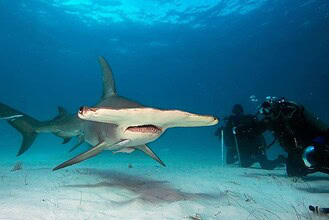
The Blue Hole stretches across 0.25 miles (0.4 kiometers) and reaches depths of around 145 meters (480 feet). Whilst the main attraction is the opportunity to experience the sinkhole, there is more to the Blue Hole than meets the eye. Divers can explore the coral-covered shelf at the boundary of the hole and enjoy the sheer walls of the sinkhole as they descend. After around 33 meters depth, the landscape changes into huge overhangs and stalactite formations. There is a visible thermocline and the deep waters are home to hammerheads, blacktips and Caribbean reef sharks. At 40 meters depth divers can level off to view the caverns before ascending to explore the shallow reef further.
Marine life is plentiful at the Blue Hole and sharks are commonly seen, as are groupers, angelfish, parrotfish, and shrimp cleaning stations. It is advisable to be an advanced diver and have strong buoyancy skills before visiting the blue Hole. Technical divers can descend the entire water column to the bottom of the sinkhole, though such dives are rare.
The Belize Aggressor III and IV both offer Belize safaris that include diving the Blue Hole.
The Elbow, Turneffe Atoll Reef
Turneffe atoll reef is mostly made up of mangrove islands, which act as spawning sites for the many fish species found there. It is a national marine reserve and is known for big wall dives and, in contrast, shallow sea gardens and flat sands. The atoll provides great drift diving and some of the best biodiversity of Belize. Manatees and American saltwater crocodiles can sometimes be seen in the area and the atoll has numerous pelagic fish such as trevallies, plus blacktip and hammerhead sharks.
The western side of the atoll offers calm waters and shallow reefs ideal for beginner divers, whilst the eastern and south sides have strong currents and more demanding diving conditions.
The Elbow, named for its location where several ocean currents meet, is one of the most well-known dive sites of the atoll. Divers can descend through huge schools of jacks and snappers to enjoy drop-offs and reef formations. It is common to see groups of eagle rays numbering up to 50 rays or more, plus the occasional hammerhead shark at this dive site. The currents can be strong at The Elbow and it is best suited to experienced divers.
Divers visiting Turneffe should also check out the Black Beauty dive site; a wall dive with coral formations and areas of rare black corals.
Half Moon Caye, Lighthouse Reef
Another dive highlight of Lighthouse reef, Half Moon Caye is known for its variety of wall dives. The island is crescent-shaped and is home to the red-footed booby; a protected species of bird only found in Belize and on the Galapagos Islands.
The reef crest is covered in staghorn coral, with a short and steep wall that descends to a shelf at 6 meters populated by garden eels. A sloping sandy area leads to the main drop off at 13 meters, descending down to over 30 meters depth. The reef wall is fissured and covered in corals, barrel and tube sponges, and gorgonians. Hogfish and toadfish are commonly seen by the sloping sand flat and stingrays can be spotted on the sandy shelves. Reef sharks and nurse sharks are seen at Half Moon Caye, and divers may also see eagle and manta rays passing along the outer walls.
The main dive depths at this site are 6 to 42 meters, though the wall drops to the depths of the ocean. The diving is suited to intermediate divers and there is little current to contend with.
Gladden Spit, Placencia
Placencia is a national park on the inner southern barrier reef and is a great area for new divers and those hoping to see rays and whale sharks. It is visited less often than other parts of the barrier reef and dive sites are still being discovered.
The inner reef of Placencia is the place to go for new divers to experience colourful reefs, whilst the outer reef is more suited to advanced divers looking for deep dives and steep walls. Laughing Bird Caye has a variety of ray species to enjoy and the outer reef has turtles, eels, reef sharks, and a diverse array of hard and soft corals.
Gladden Spit is the most well-known place in the area, as whale sharks visit from April to June and the likelihood of encountering them is high. Most operators snorkel with the whale sharks, rather than dive, and the best sightings are two days before the full moon and for a few days afterwards.
Shark Ray Alley, Hol Chan Marine Reserve
Hol Chan means ‘little blue channel’ but there is plenty to experience in this area of Belize. This area was established as a marine reserve in 1987 and has since flourished. It is one of Belize’s most popular dive areas, and one of the few places along the barrier reef that is approved for night diving. There are four zones to dive, covered in coral reefs, seagrass bed and mangrove forests.
Whilst technically not a dive, Shark Ray Alley is a highlight in the south of the reserve. It has shallow waters and is renowned for snorkelling with nurse sharks and stingrays.
Divers can also enjoy Eagle Ray Canyons for eagle ray sightings and the Hol Chan Cut for night diving amidst abundant corals, sea fans, sponges and fish life. Divers should be aware of strong outgoing currents within the channel.
Best Time to Dive In Belize
Belize can be dived year-round. The water temperature hovers around 30 °C (86°F) in the summer and drops to 26°C (78°F) in the winter. April is a particularly good month for calm conditions, great visibility, and whale shark sightings. Hol Chan’s best dive conditions usually occur in May and whale sharks are present along the southern barrier reef from April to June. Belize Barrier Reef and over 450 offshore Cays and Islands attract almost a million tourists every year.
Belize has put an emphasis on ecotourism in recent years, leading tours to various jungles, wildlife reserves, scuba diving, snorkeling, bird watching, and hiking trips. Belize also has the largest cave system in Central America for people who love to adventure and explore, and in the inland town of San Ignacio adventure tours are available for amazing explorations of ancient civilizations in the jungle.
This article was written by divers and writers at liveaboard.com
Also Read: Tourist Map of Guatemala and Belize
 Take a moment to look at this.