




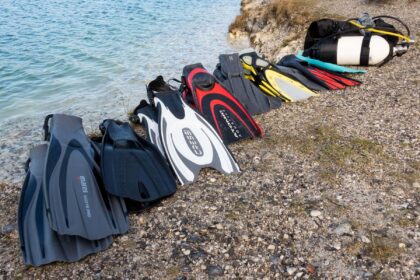









































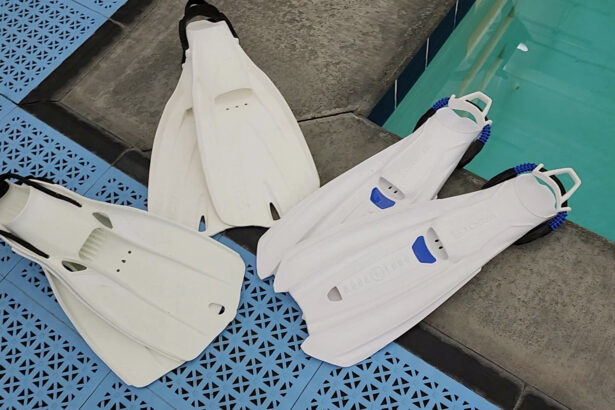

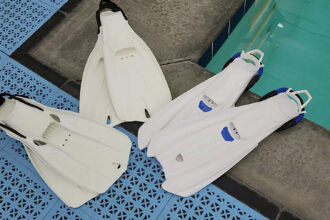
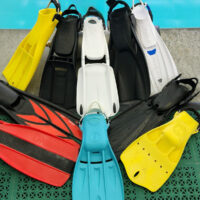
Travel fins must fit your bag and your feet, but they also need to suit the diving at your destination. We chose these four by looking at packed size and weight, footwear compatibility, comfort, and control underwater. A short fin is useful when luggage space is tight; it is less useful if your foot shifts inside the pocket or the blade feels wrong for the kicks you use.
The Aqualung Storm is our pick for firm barefoot control, while the Scubapro GO Travel saves weight for barefoot diving and snorkeling. The Apeks RK3 suits divers who need boots and prefer a short, wide blade. If you want a longer fin that comes apart for packing, the Scubapro Seawing Supernova offers that option. Our choices draw on our hands-on reviews and manufacturer specifications. See how we tested.
Aqualung Storm Fins


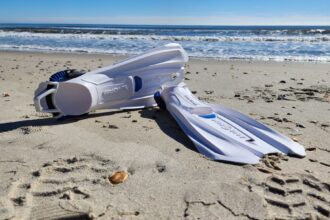
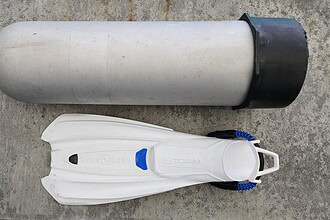
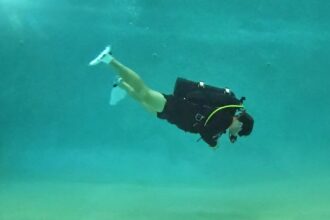



Aqualung Storm Fins Scuba Fin review
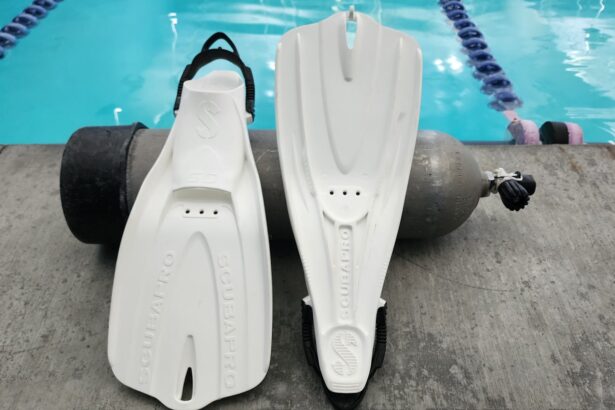
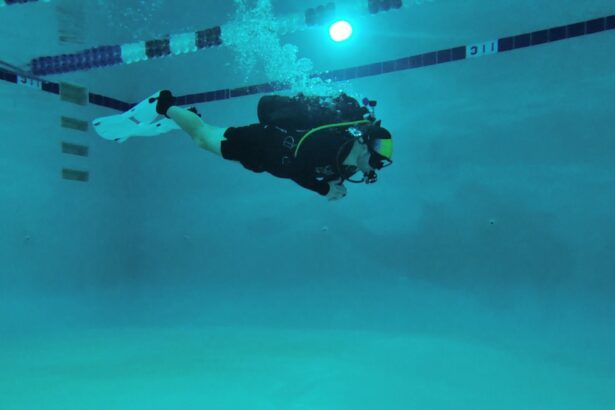
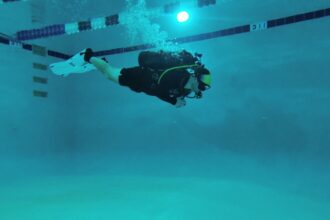
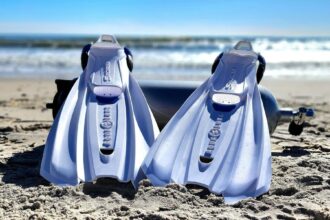
The Aqualung Storm is our barefoot travel pick when you want a firm blade and a secure feel. In the pool, we found it easy to use for flutter kicks, with alternating up-and-down leg movements, and frog kicks, sweeping the fins outward and then together. Turning on the spot and swimming backward were also easy to control. The blade felt firmer than the Scubapro GO Travel, and the thick silicone heel strap kept our feet from shifting in the foot pockets. Its heel pad was comfortable against bare skin, with enough stretch in the strap to pull it on and off easily.
The L/XL fins we tested measured 22 inches (56 cm) long and weighed 3 pounds (1.4 kg) per pair. Their short, wide blades make them a compact option for trips where you can dive barefoot, with no separate boots to pack. We selected this version for barefoot use; if your trip calls for boots, check the exact version’s footwear guidance before buying.
ScubaPro GO Travel


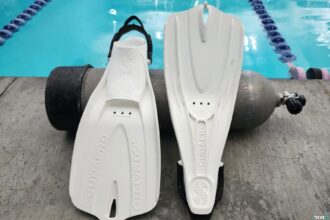

ScubaPro GO Travel Scuba Fin review
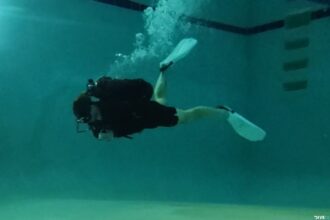
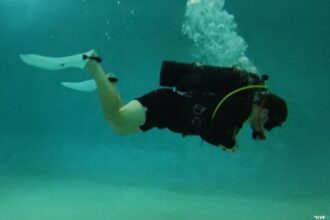
The Scubapro GO Travel is light and easy to put on and remove, with a finger loop on the bungee strap. In regular pool use, we found the fins comfortable, but the loose bungee allowed some foot movement during kicks. The blade also felt floppy compared with the Aqualung Storm, so we prefer the Storm when we want a firmer feel. Torben uses the GO Travel every week in the pool and took a pair to Roatan for two weeks.
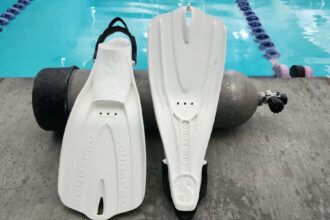
Scubapro designed these fins for scuba and snorkeling with bare feet or thin neoprene socks. Scubapro lists the M/L fins at 20.5 inches (52 cm) long and 2.6 pounds (1.2 kg) per pair, including straps. The Piggy Back Stack system uses a hook to interlock one blade with the other, keeping the fins nested together in your bag. It holds the pair together for packing without shortening the blades.
Apeks RK3


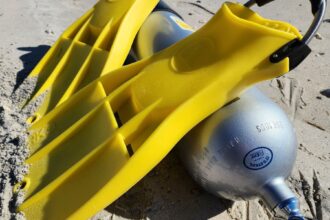
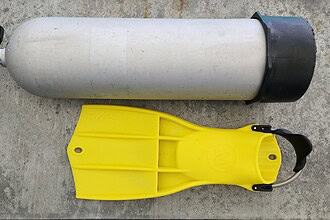
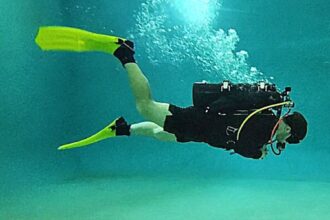
Apeks RK3 Scuba Fin review
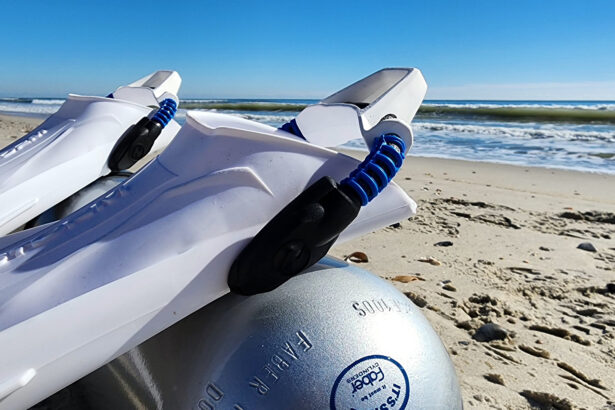
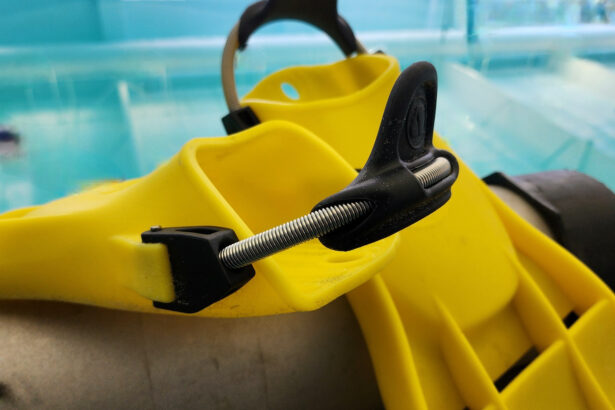
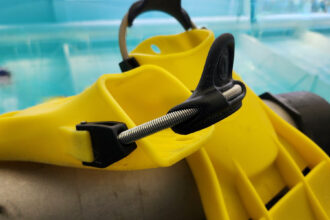
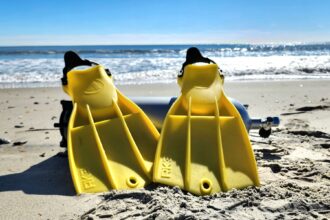
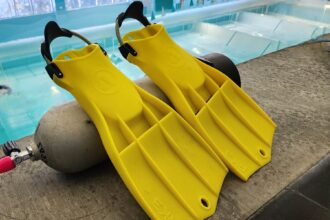
The Apeks RK3 is a compact fin for diving with boots, with a short, wide blade. Its stainless-steel spring strap has a rubber pull tab to help you get it over your heel. The fins were comfortable during our pool tests and worked well with both frog and flutter kicks. The wide foot pocket took some getting used to with simple neoprene boots, so it is worth trying the fins with the boots you plan to take. Apeks designed the pocket to accommodate bulkier footwear, including hard-soled rock boots.
For size Large, our full review lists a length of about 21.5 inches (55 cm) and a weight of 2.6 pounds (1.2 kg) per fin, or 5.2 pounds (2.4 kg) for the pair. That makes the RK3 a choice for saving length in your bag rather than keeping weight to a minimum. Choose it if you want the short blade and boot fit, and account for both fins and boots in your luggage allowance.
ScubaPro Seawing Supernova


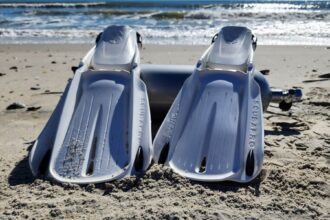
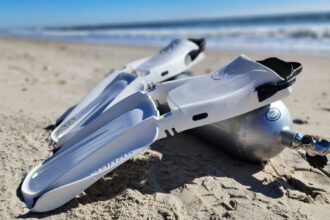
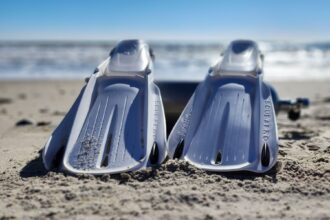

ScubaPro Seawing Supernova Scuba Fin review
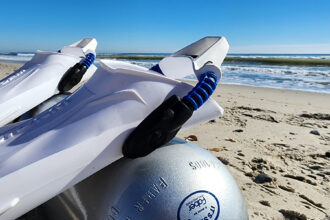
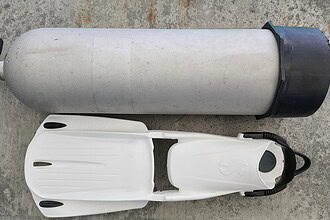
The Scubapro Seawing Supernova’s blade and foot pocket separate for packing, so you can bring a longer fin without packing it at its full length. The size Large fins in our review measured about 24.5 inches (62 cm) when assembled. The review lists a pair weight of 3.69 pounds (1.67 kg), though it does not identify the size for that figure. Scubapro includes the tool needed to separate and reconnect the parts; keep it with the lock plates when you pack.
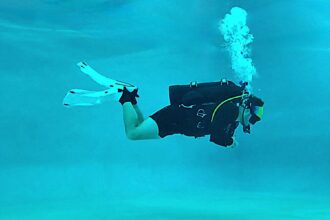
In the water, we found strong forward thrust and easy frog kicks, though backward swimming and turns on the spot were less impressive. The comfortable bungee strap has a loop that helps you pull it over your boot. This is our option if you want strong forward propulsion and detachable blades, and are happy to take the fins apart for travel. A full-foot pocket for barefoot use is sold separately.
How We Tested
Our fin testing approach, detailed in our scuba fins guide, uses return swims in a calm pool. We count kick-and-glide cycles with flutter and frog kicks, then test turns on the spot and swimming backward while staying level in the water. Control during those maneuvers is rated subjectively from one to five.

For this travel guide, we drew on Andrew Goad’s individual reviews rather than a single shared test of all four models. We considered how each fin felt underfoot and during kicks alongside its length, weight, and intended footwear. That let us choose options for different trips: barefoot diving, diving with boots, and packing a longer fin in separate pieces.
We checked manufacturer descriptions for footwear compatibility and packing features, and used review measurements where available. The sizes and weight basis are stated with the figures so you can compare them with your own gear. We also checked rental costs and airline baggage guidance for the buying advice below.
How to Choose Travel Fins
Keeping Familiar Fins, Buying a Travel Pair, or Renting
If your current fins fit your bag and work with the footwear and kicks you will use on the trip, there may be no reason to replace them. Renting saves luggage space and weight, but you will be limited to the operator’s models and sizes. Confirm what is available before you travel, then try the fins on with your socks or boots before the first dive. Even a familiar model can fit differently in another size or with different footwear.
Buying a dedicated travel pair gives you a familiar fit and kick feel on each trip, but adds an upfront cost and gear to carry. It makes most sense if you travel often and your usual fins are too long or heavy for the bag you want to use. Compare the purchase cost and any extra baggage charge with the total rental fees across the trips you expect to take.
Packed Size and Weight
If you already own the fins, pack them in your travel bag with the boots or socks and other gear you plan to take. This is the simplest way to check that everything fits. If you are buying online, compare the length and width for your fin size with the usable interior dimensions of your bag.
Weigh the whole bag after everything is packed. Check its exterior dimensions and weight against the airline’s allowance for your specific flight. Airline limits vary by carrier, cabin class, and aircraft. The same bag can be accepted on one trip and refused on another.
When you read a fin’s published weight, note whether the figure refers to a single fin or the pair. A weight listed per fin gives you only half the contribution to your bag.
For detachable-blade fins, measure the separated pieces inside your bag and check that you can reassemble them reliably. Make sure every required part is accounted for before you pack.
Footwear and Fit
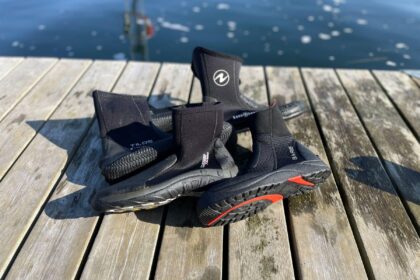
Start with the diving at your destination: the water temperature and entry points determine whether bare feet, thin socks, or boots make sense. A rocky shore entry may call for protective boots even on a warm-water trip, while cold-water diving calls for more insulation. Some travel fins accept boots; others are built for bare feet or thin neoprene socks only. Check the exact model’s compatibility, because an open heel alone does not mean a boot will fit.
Try the fin on with the intended sock or boot. Move your ankle and foot to feel for any shifting, pinching, or rubbing that could cause a problem underwater. Ask the dive operator about the shore or boat entry surface so you can match your footwear to what you will actually walk on.
Kick Feel and the Diving Planned
If you can try the fin in the water before you travel, swim with the kicks you normally use and see how the fin feels. Notice whether it stays controlled without making your legs tired at a comfortable cruising pace.
Ask the operator what swim distances and currents are typical at the sites you will visit. Use any demo session to pick the fin that feels balanced for the longest swims the trip demands, rather than relying on general statements about stiffness or power.
Mixed Scuba and Snorkeling Trips
If one pair must cover both scuba and snorkeling, start by checking the intended use for the exact fin model. Confirm what rental scuba fins the operator supplies before choosing to pack only a snorkeling-oriented pair that may not be suitable for diving.
Pick the fin that matches the activity you will do most, and check that it suits the conditions you expect for the other activity. A single pair whose stated use covers both activities can simplify your packing.