




Cornwall, in the southwest of England, may seem an unlikely place to go snorkeling with blue sharks, but the reality is quite the opposite. These sleek sharks frequent Penzance each year from May through October, drawn to feed here in the nutrient-rich waters. And where there are sharks, you’ll find divers and snorkelers—me included.
I’ve taken a few days out from a London visit to try my luck at snorkeling with blue sharks—a species I’ve not yet seen despite years as a diver. As my morning train from London pulls into Penzance, I couldn’t be more excited for the next day’s trip.
Checking in at Blue Shark Snorkel
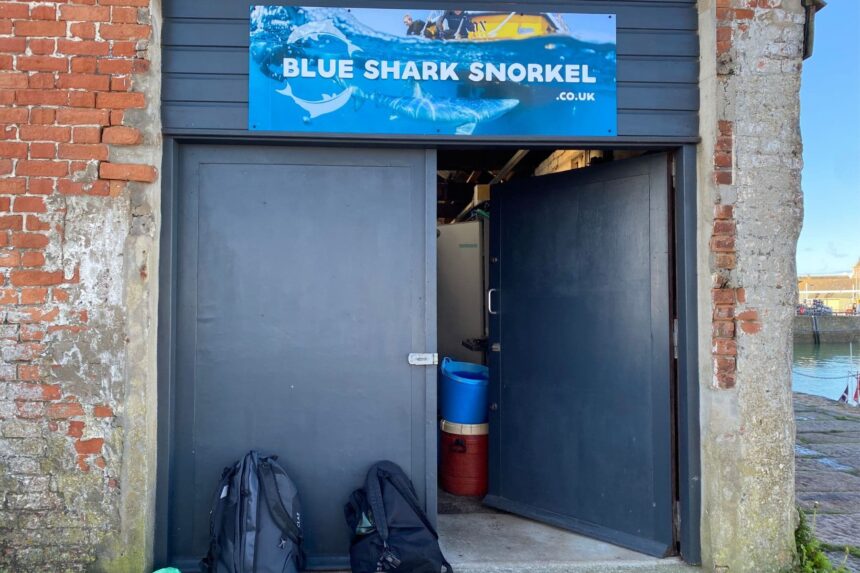
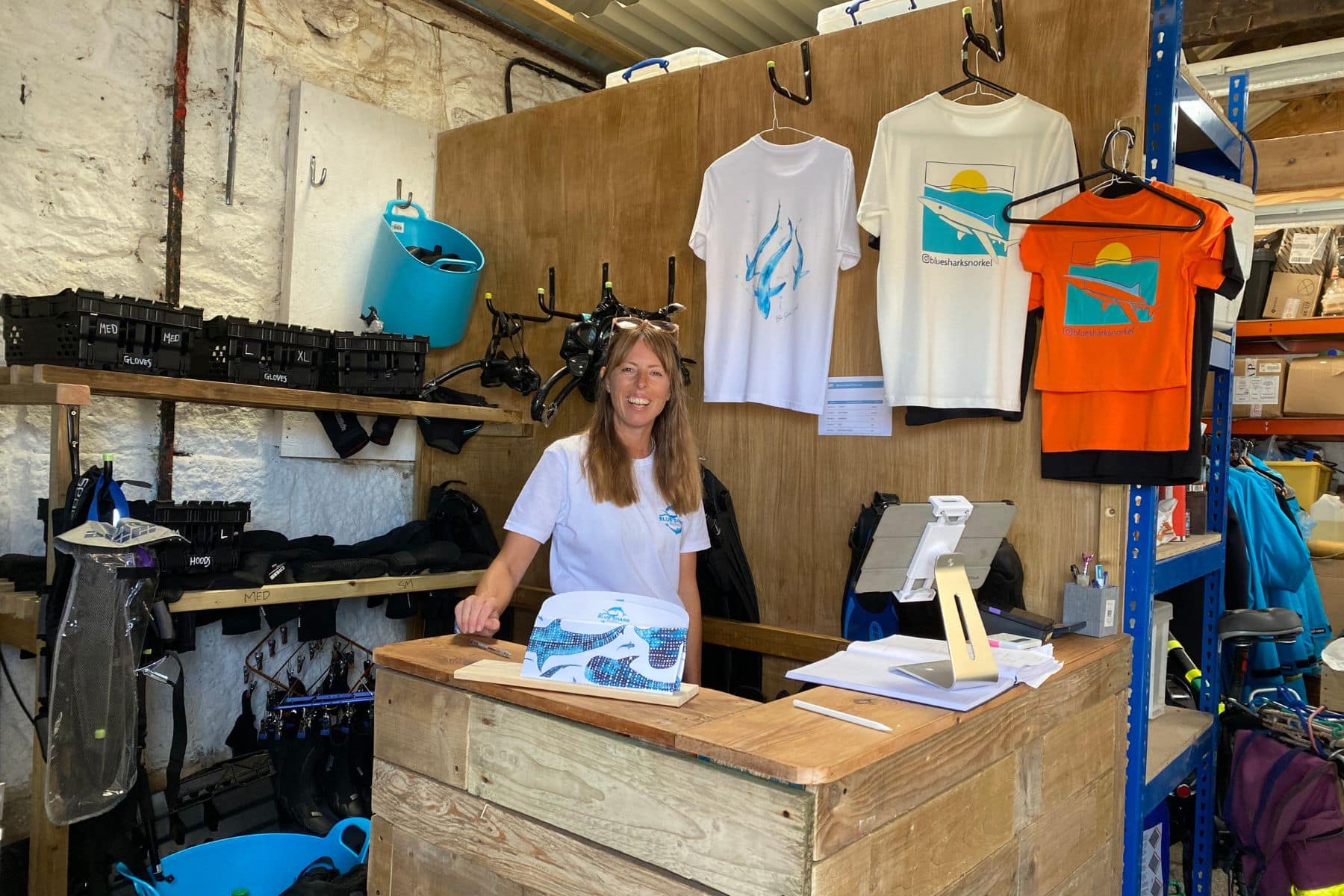
After a relaxing night spent at the utterly charming No. 38 PZ guest house, I arrive at the Blue Shark Snorkel office on the Albert Pier at 8 am to get kitted up for the day. Blue Shark Snorkel has been running day trips since 2020 on the Celtic Fox, which holds up to 10 guests. And today it’s completely full of excited snorkelers from Scotland, England, and me, the only American.
Crew will include lead snorkel guide, photographer, and business owner Victoria Fryer, who started the company in 2020. She checks me in and gives me some weights—I’ve brought the rest of my gear, including a new snorkel and mask, cozy 5 mm wetsuit, hood, boots, and gloves for this chilly Atlantic water, around 64 to 66 F (18 to 19 C) in August.
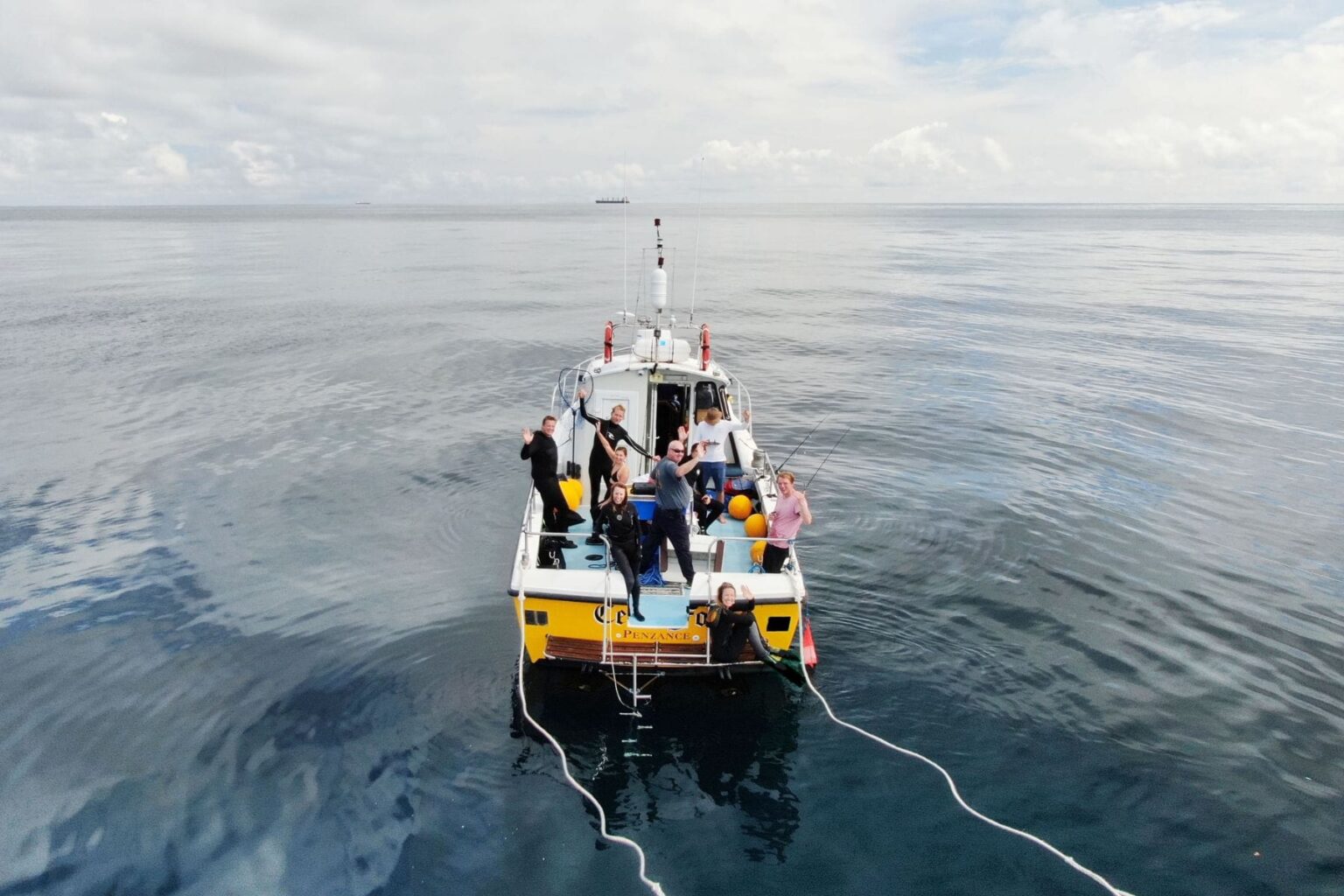
Our other guide for the day is Robin Fisher, who’ll give us the briefing on board. Once everyone is ready, we head down a set of steps, board the boat, and motor slowly out of the Penzance Harbor to try our luck with snorkeling with blue sharks.
On the Celtic Fox
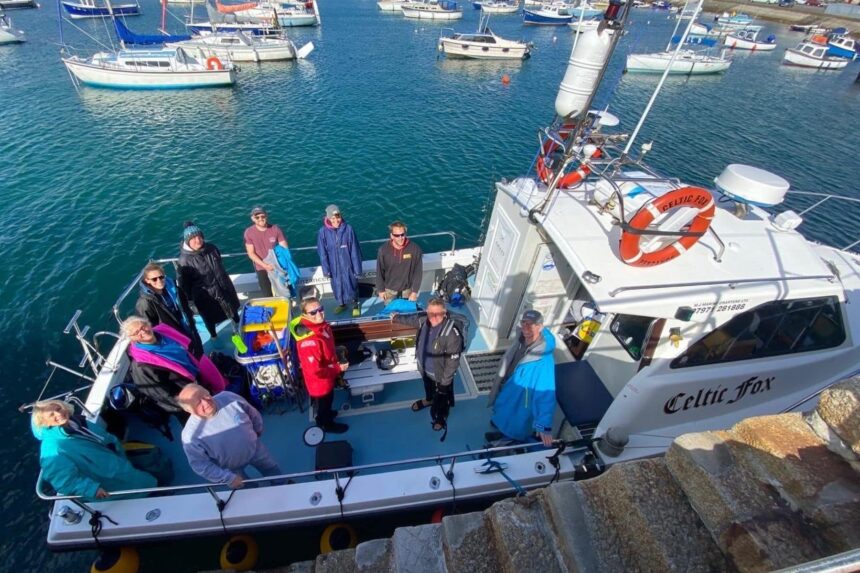
We head out around 10 to 20 miles off the coast, about an hour and 30 minutes each way. When captain Fred Buckingham is satisfied with our location, he cuts the engine and we drift as the crew drops a brick of chum, made with fish oil, minced pilchards, and bran into the water.
In effect, we’ll be creating a chum slick both horizontally on top of the water as we drift, and vertically down through the water column as bits of bran sink to the seabed. “They tend to stay deep so you have to draw them up,” says Robin of the sharks.
Once the brick is in the water, we wait. And wait. In the meantime, Robin explains in-water protocol. Groups of up to five snorkelers are allowed in at one time with a guide, so we’ll break into two groups. There’s a long safety rope tied off the back of the boat that we’re meant to either hold onto or use for spatial reference.
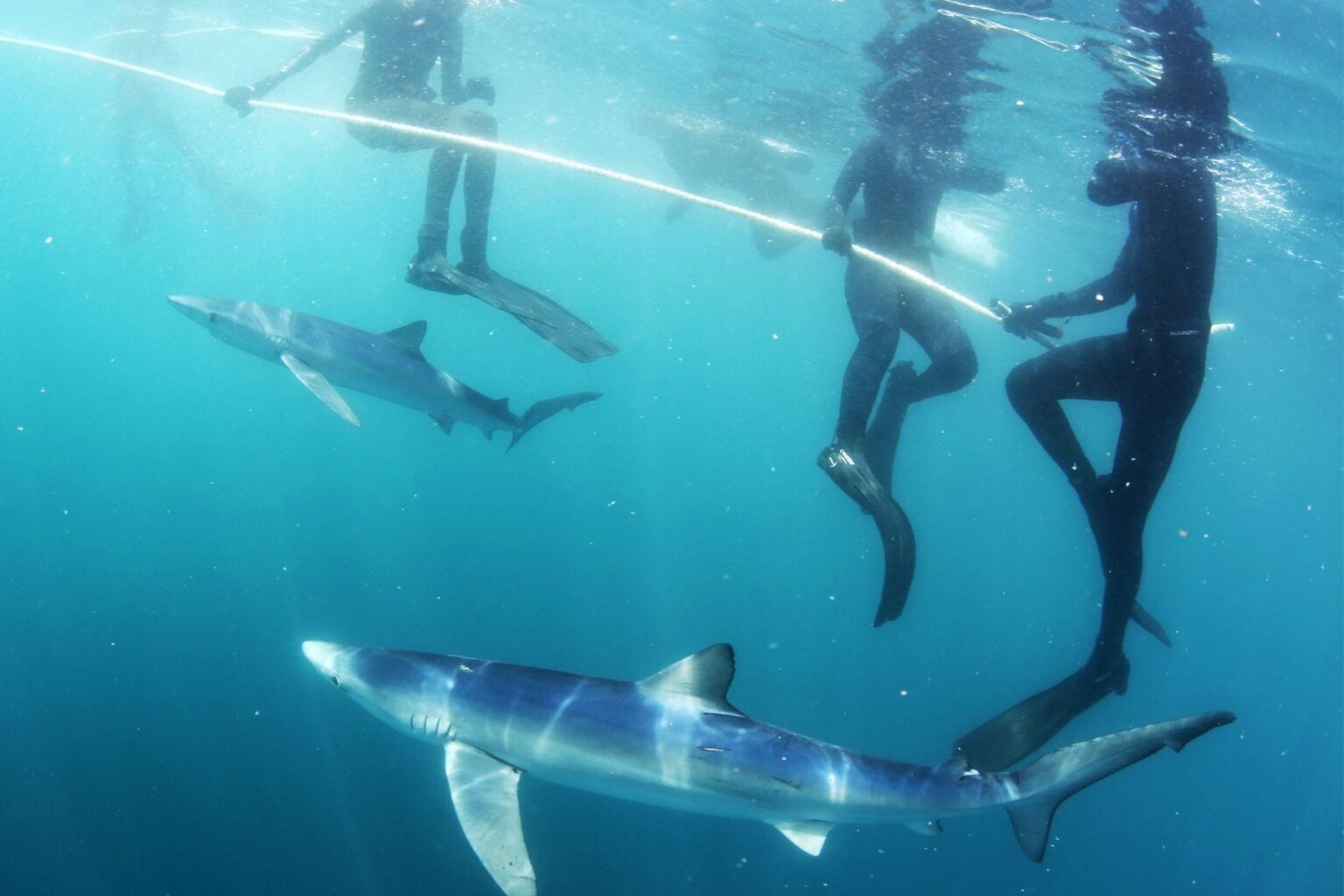
We won’t be doing any swimming per se; rather we’ll hold onto the line and peer below as the sharks come by to grab the bait. And, most importantly, we’re not to splash or approach the sharks—they’re in charge of the interactions and how close they want to come.
Almost three hours passes before a shark shows up, but sure enough, a blue slides into sight, checking out the chum and the “teaser” fish that’s attached to the end of a pole to draw it in. Group one, which I’m in, gets ready to go.
Snorkeling with blue sharks
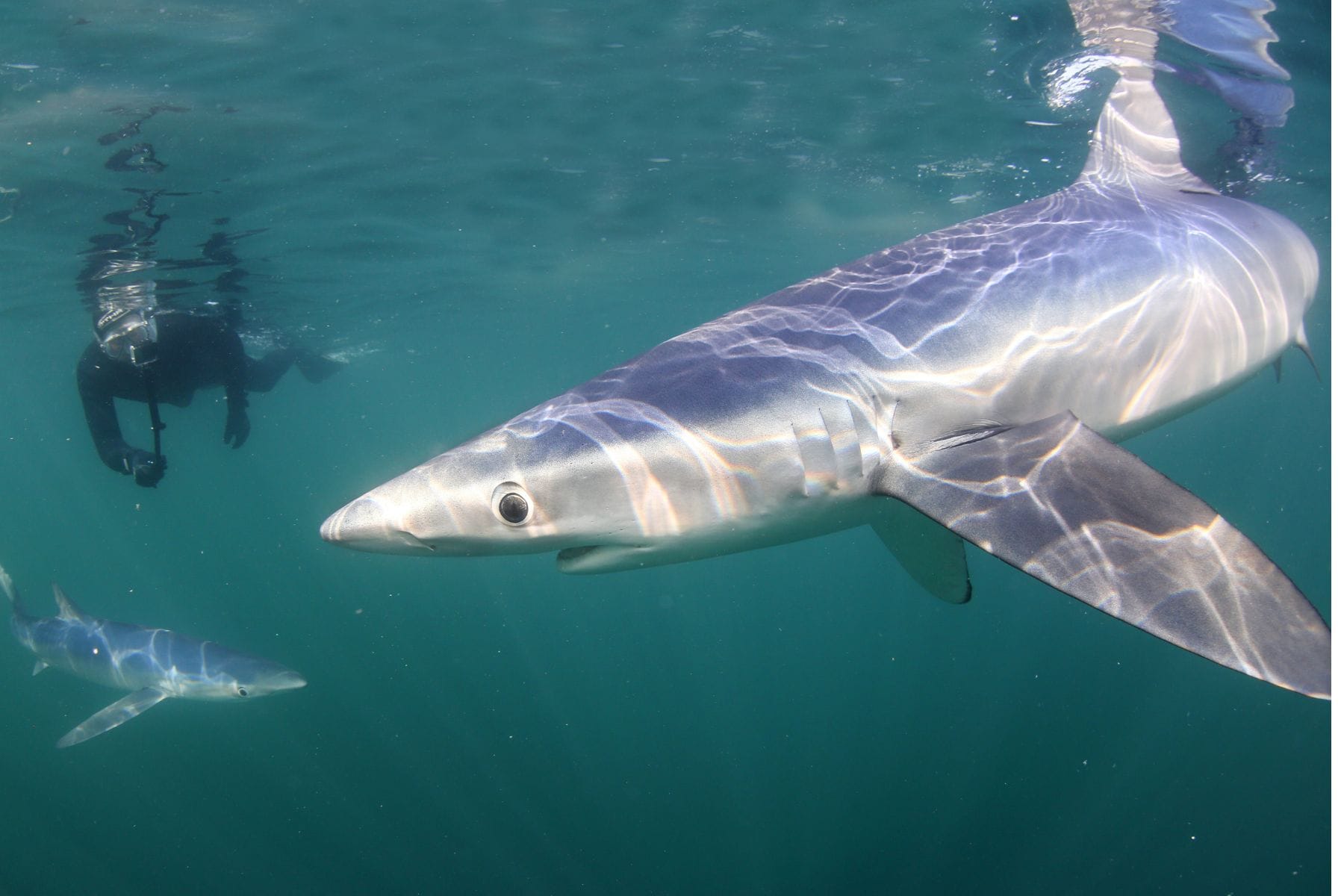
The shock of the cold water quickly subsides as I ease off the ladder and grab hold of the line. I’m the last one of the five snorkelers in the water, so I make my way across the surface to a few feet away from the next closest snorkeler.
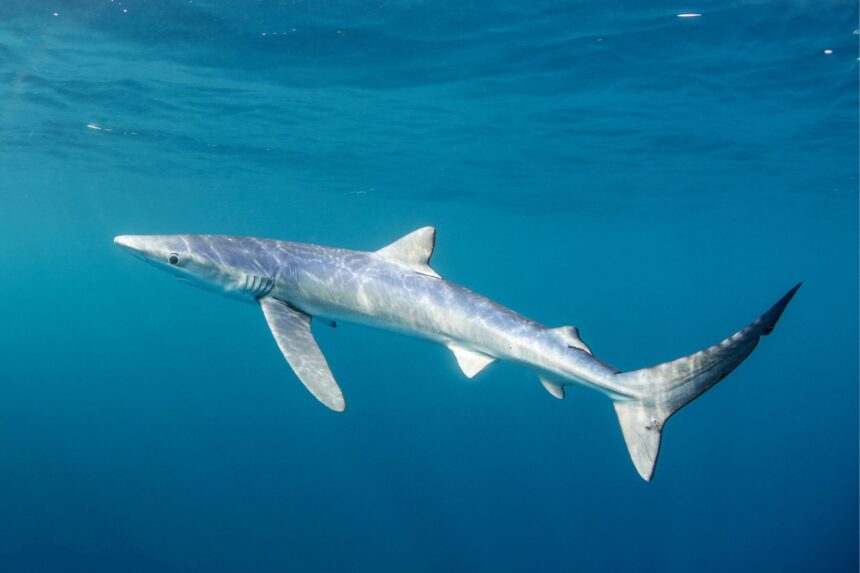
It’s a bit choppy, so all five of us are holding the line as our feet dangle below and a sleek, shimmering blue shark slides into view. It’s around six feet long, and probably a female, as most of them tend to be in this area.
They’re the most heavily finned and fished in the world—about 20 million killed every year—so it feels like a real privilege to see one up close. Her black eye fixes on us for a moment before she grabs the teaser bait and sinks below, out of sight to enjoy her snack. Visibility this day is around 35 feet (11 m), which is great for the area, so we all spend the next 20 minutes with our heads on a swivel, looking below, behind, left, and right for more sharks.
Two more show up during our turn in the water, each as luminous as the next. They’re called blue sharks because they’re “counter shaded,” says Victoria, meaning that they look blue when you look down on them from above and white when you look up at their bellies from below.
After 20 minutes, it’s the next group’s turn and I reluctantly get out of the water. Though it’s chilly on the boat, the gigantic, fleecy boat coats provided for our use cut the wind effectively, and I tuck into some cookies I brought for the trip. Each group gets several more turns, seeing a shark or two each time.
Heading home
Around 5pm, the captain says it’s time to call it a day and we start back for Albert Pier in Penzance. I’ve booked a pub dinner for the night and the chill of the wind has started to seep into my wetsuit, so I’m ready to call it a day.
Although none of the sharks stuck around for an extended visit, even the minutes I spent with them feel like a gift. And though I can now count blue sharks among the species I’ve seen, I’m not quite ready to check them off my bucket list—perhaps another visit to Penzance and Blue Shark Snorkel is in store for next year.
 Take a moment to look at this.


