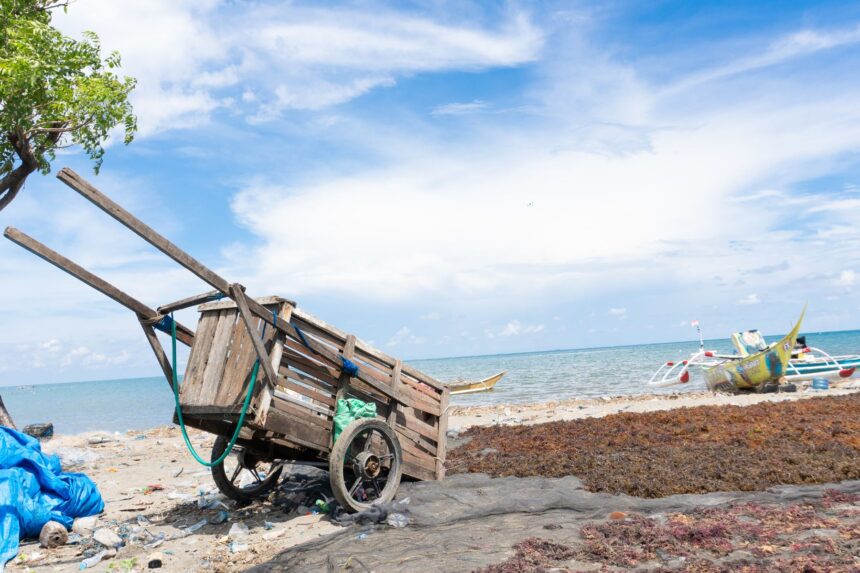
During the summer season in the United States, coastal areas become active locations for recreational fishing, family outdoor activities, and marine-related operations. Many anglers and outdoor users face the challenge of transporting fishing equipment across sand, uneven paths, and long shoreline distances. A beach fishing cart provides a practical solution by improving mobility and reducing the physical effort required to move heavy equipment in coastal environments.
For equipment managers, operators, and buyers, understanding the design principles behind beach transport carts helps identify suitable solutions for different outdoor applications while maintaining safe handling practices.
Technical Overview of Beach Fishing Cart Systems
A beach fishing cart is designed to transport fishing gear, marine equipment, and outdoor supplies across surfaces where traditional wheels may struggle. The main engineering challenge is reducing resistance on soft terrain such as sand. Large wheels, stable frames, and balanced load distribution help improve movement efficiency.
Common applications include:
- Transporting fishing rods and tackle equipment
- Moving coolers, camping supplies, and outdoor gear
- Supporting shoreline fishing activities
- Assisting marine equipment preparation and storage
For example, an angler walking several hundred meters from a parking area to a beach fishing location can use a specialized cart to organize equipment and reduce repeated trips.
Efficiency, Safety, and Practical Benefits
Transport efficiency is important in outdoor environments because sand, gravel, and uneven surfaces increase physical effort. Carrying heavy equipment manually can lead to fatigue and reduce the time available for fishing or other activities.
A properly designed beach fishing cart improves workflow by allowing users to move multiple items in one organized load. It also supports safer handling by reducing unnecessary lifting and carrying.
Key advantages include:
- Reduced physical strain during transportation
- Better organization of outdoor equipment
- Improved movement across challenging surfaces
- More efficient preparation for shoreline activities
Technical Foundations and Design Considerations
The performance of a beach fishing cart depends on several technical factors, including wheel design, frame structure, weight distribution, and material selection. Soft surfaces require different solutions compared with paved roads because wheels must provide sufficient surface contact without sinking excessively.
Important considerations include:
- Wheel size and suitability for sand conditions
- Frame strength for repeated outdoor use
- Load balance during transportation
- Resistance to moisture and marine environments
A coastal fishing group, for instance, may require a cart that can handle fishing equipment, food supplies, and safety gear while remaining easy to move across changing beach conditions.
Performance Factors and Safe Operating Practices
The effectiveness of a beach fishing cart depends on proper loading methods and environmental awareness. Uneven weight distribution can make transportation more difficult, while excessive loading may affect stability.
Recommended safety practices include:
- Distributing weight evenly across the cart
- Checking wheels and connections before use
- Avoiding unstable slopes and deep soft sand when possible
- Cleaning equipment after exposure to saltwater environments
Types of Outdoor Transport Equipment
Outdoor transport equipment includes beach carts, fishing wagons, utility carts, marine gear carriers, and recreational transport solutions. Each type is designed for different environments. Beach carts focus on mobility across soft terrain, while general utility carts are usually optimized for hard surfaces.
Advantages and Limitations
Beach fishing carts provide improved mobility, equipment organization, and reduced physical effort. However, they are specialized tools designed for outdoor transport and may not replace general-purpose hauling equipment in industrial environments.
Future Trends in Outdoor Equipment Mobility
As outdoor recreation continues to grow across the United States, equipment design is increasingly focused on portability, durability, and user safety. Future beach transport solutions are likely to incorporate improved materials, ergonomic designs, and greater adaptability for different terrains.
Understanding the technology behind beach fishing carts helps users and equipment planners make informed decisions about outdoor transportation, safety, and efficient equipment management.
 Take a moment to look at this.